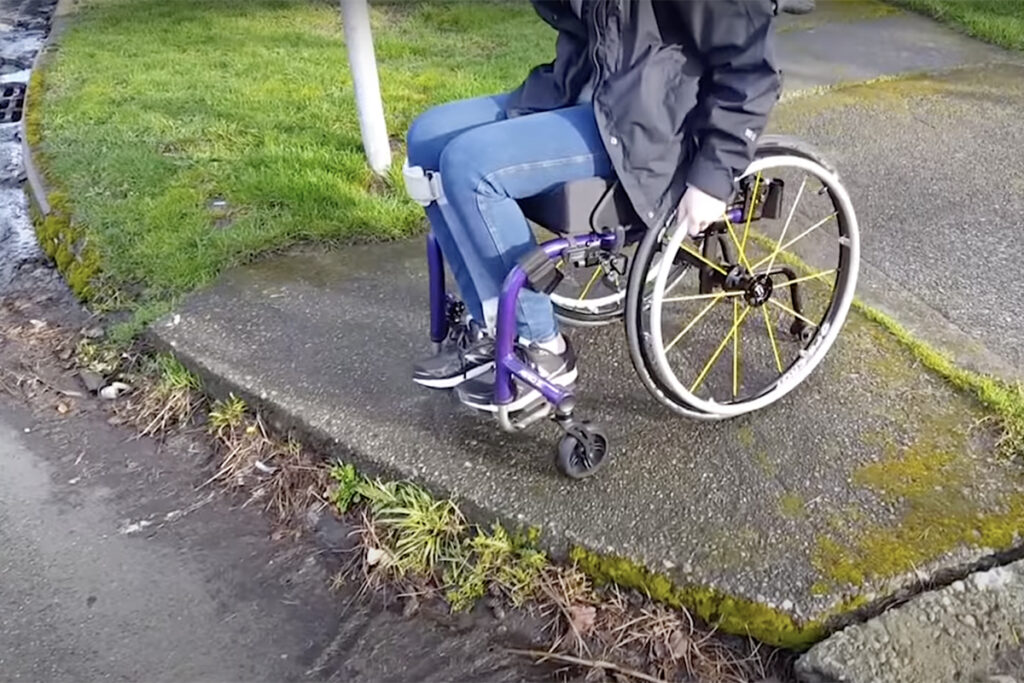
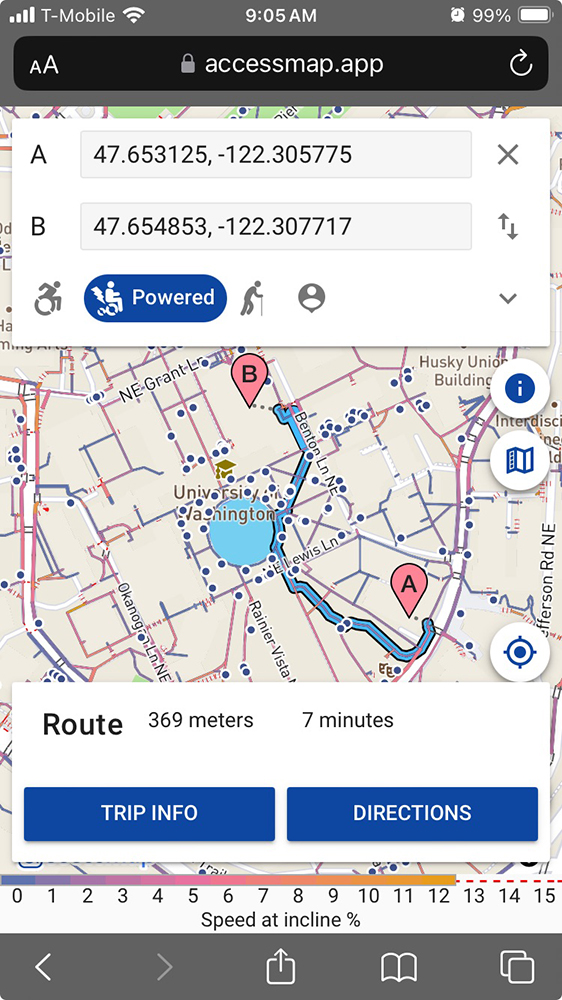
In the spring of 2015, the City of Seattle organized a competition and invited teams to “Hack the Commute” by using technology to improve mobility for residents across the city. Among the participants at City Hall was a group of University of Washington students calling themselves Team Hackcessible who had developed a prototype of a web-based trip planning tool called AccessMap. The tool, as envisioned, would combine publicly-sourced and user-submitted data to enable individuals to customize their route around Seattle based on their mobility needs, accounting for factors such as the steepness of hills and the presence or absence of curb cuts.
Under the tutelage of Anat Caspi, director of the Allen School’s Taskar Center for Accessible Technology, Team Hackcessible took home first prize — and the Taskar Center embarked on a journey that would take it from the streets and sidewalks of Seattle, Washington to Santiago, Chile.
Not long after its triumph at the civic hackathon, the Taskar Center launched OpenSidewalks under the auspices of the UW eScience Institute’s Data Science for Social Good program. OpenSidewalks aims to make data about the public right of way consistent through a publicly available data schema and data collection tools that allow for manual editing in addition to machine learning and automated tools. It also provides educational resources to overcome some of the socio-technical hurdles and misconceptions that people have about access in the public right of way.
With OpenSidewalks up and running, Caspi worked with King County Metro to incorporate the data specification and tooling into the agency’s own paratransit service planning and tools — including data it collects for the provision of paratransit services to people with disabilities in Seattle and across the county.
“Actual deployment into a large organization revealed a number of important points,” said Caspi. “It became clear to us that people’s understanding of what constitutes ‘accessible’ can vary wildly across transportation planners, administrators and well-meaning crowdsourcing mappers.”
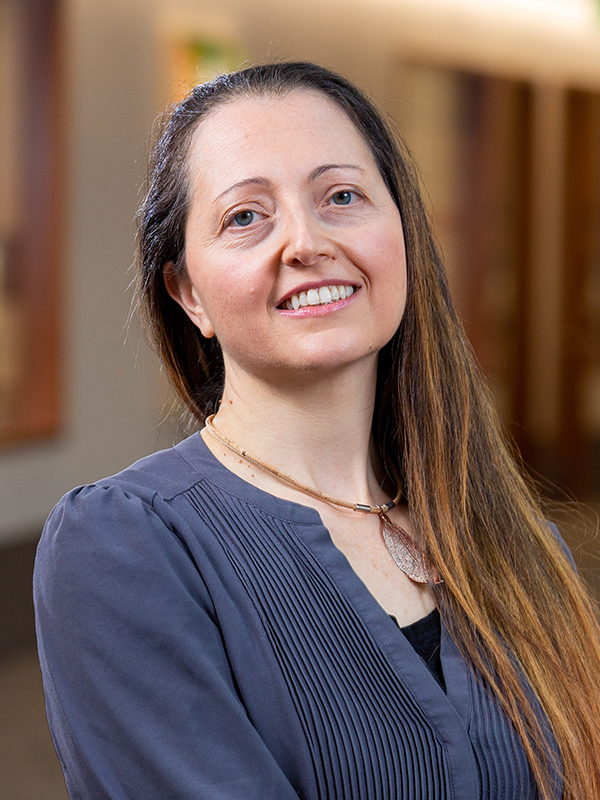
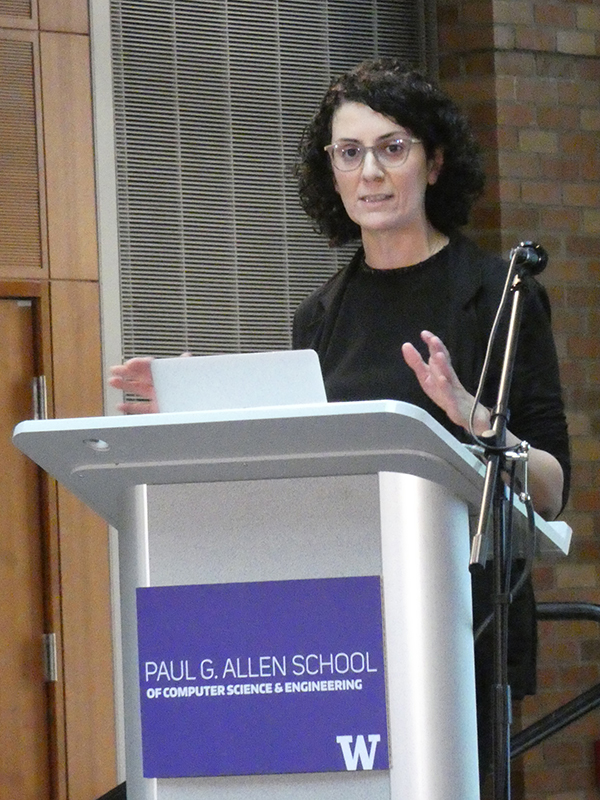
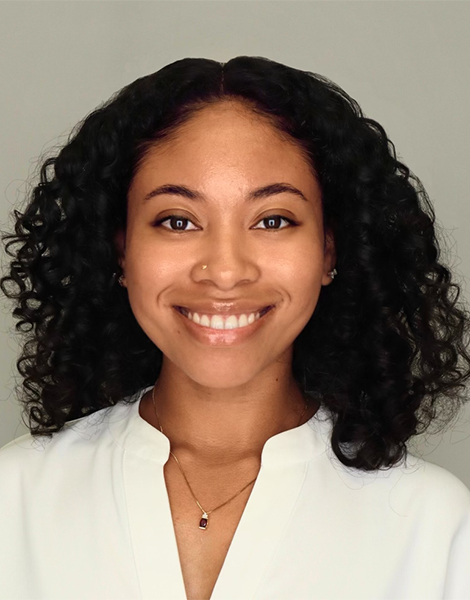
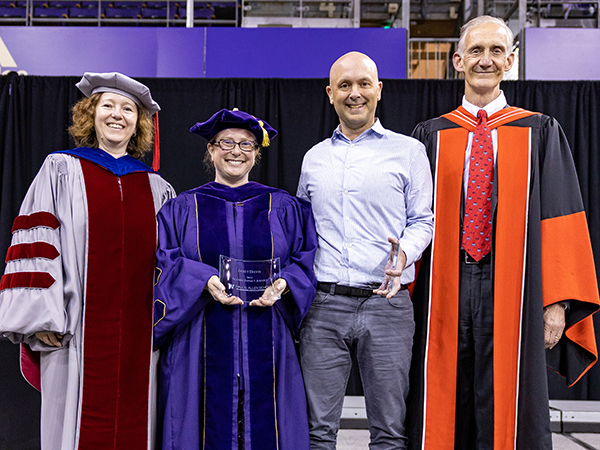
Anat Caspi, recipient of the Human Rights Educator Award from the Seattle Human Rights Commission.
Following the integration of OpenSidewalks into King County Metro’s processes, in 2019 the Taskar Center conducted a study of capacity building. Meanwhile, back on campus, Caspi was pouring her energy into building capacity of a different sort: the capacity to create and use artificial intelligence and data science in a way that addresses, rather than amplifies, ableist bias. For example, in 2017 she launched a vertically integrated project course, Responsible Data Science in Urban Spaces, that offers UW students hands-on experience with developing data-driven software tools to create more accessible, inclusive communities by applying innovation to a range of issues spanning social, economic, health and mobility justice. To date, 241 undergraduate and 23 graduate students have completed the course.
Caspi also leads AI4ALL at UW, a free workshop for high school and first-year college students co-sponsored by the Institute for Foundations of Data Science. Each year, 40 students spend part of the summer learning about how data science, geographic information science and machine learning can be applied to daily life. For current practitioners, Caspi developed a “Non-Ableist AI” workshop and toolkit; since she began offering the workshop four years ago, more than 420 people have participated.
For these and other contributions spanning nearly a decade of leadership at the Taskar Center, Caspi received the 2023 Human Rights Educator Award from the City of Seattle’s Human Rights Commission.
It just goes to show that, when it comes to advancing accessibility, there’s no place like home.
“I have always thought making an impact on local communities is where it starts,” said Caspi. “The Seattle commission’s focus on disability rights as civil rights serve as a reminder of the importance of collaborative efforts in creating a more inclusive and just society.”
Those efforts range from the expansive — mapping the accessibility of miles of urban infrastructure — to those of a more human scale. For example, the Taskar Center partnered with not-for-profit Provail Therapy Center to create a library of adapted technology for people with different abilities to borrow for free. The 800 artifacts in the Pacific Northwest Adaptive Technology Library were either donated or created through community education events, where volunteers don protective goggles and get a crash-course in safe use of a soldering iron before adapting battery-operated toys to be switch-accessible for players of different abilities.
The power of play has been a recurring theme for the Taskar Center. The same year that AccessMap began attracting city leaders’ attention, the center introduced attendees at the Seattle Design Festival to the Universal Play Kiosk. Aligning with the event’s theme of “Design for Equity,” the Universal Play Kiosk demonstrated how to design an immersive environment to engage people of all abilities in collaborative play.
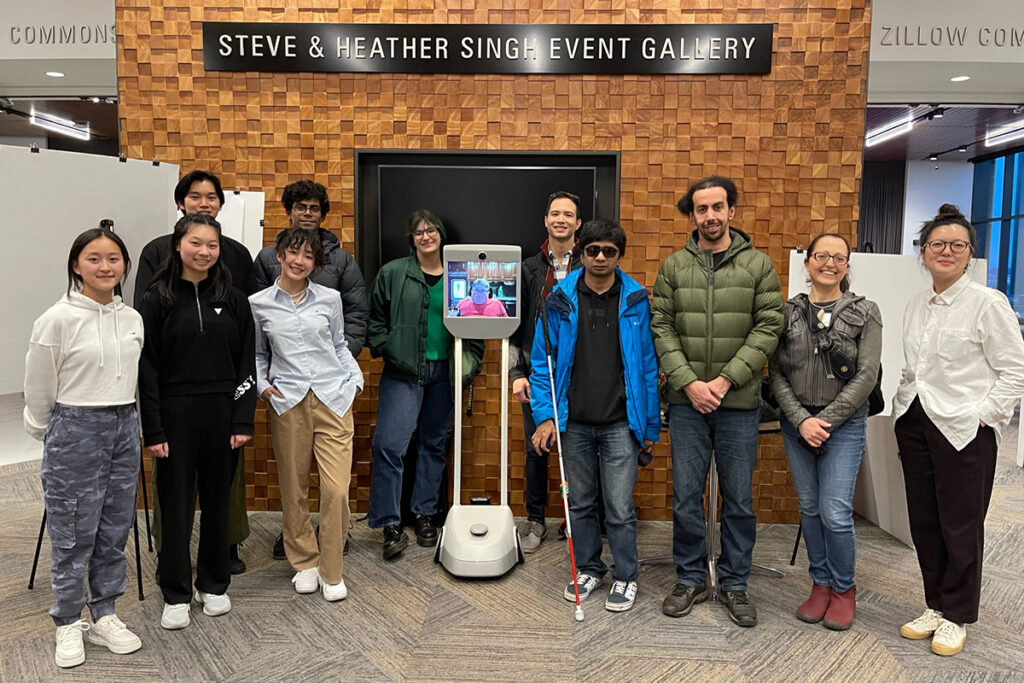
Caspi (second from right) with some of the aspiring accessibility researchers she has advised in nearly a decade of leading the Taskar Center at the University of Washington.
While they have a playful side, Caspi and her colleagues have shown they are serious about the Taskar Center’s motto, “designing for the fullness of human experience.” One of those colleagues — Olivia Quesada, the center’s manager of community engagement and partnerships — accepted the Seattle award on Caspi’s behalf during a ceremony to mark Human Rights Day last month. Quesada completed her UW honors thesis, “Disability Justice for Urban Planners and Designers,” working with Caspi; in her remarks, she shared what makes the center so effective.
“As an interdisciplinary team, we have built a space for recognizing and addressing systemic ableism in various technical and socio-technical systems,” she said. “Our practice of developing, deploying and translating artifacts, both in terms of technology and educational toolkits, is aimed at empowering individuals and communities to confront challenges related to disability justice with a growth mindset.”
AccessMap Multimodal offers accessible routing information for Seattle and 10 other cities, with the ability to customize results to individual mobility needs and preferences.
Around the same time, the Taskar Center teamed up with the United Nations advocacy initiative G3ict — short for Global Initiative for Inclusive Information and Communication Technologies — on AI for Inclusive Urban Sidewalks. The project combines artificial intelligence with on-the-ground community partnerships to improve pedestrian accessibility in cities around the globe, with support from Microsoft’s AI for Accessibility grant and the Open Data Campaign. In 2022, the Taskar Center and G3ict earned the SmartCity Expo World Congress Living & Inclusion Award, one of a set of honors recognizing pioneering initiatives and ideas to make cities around the world more livable, sustainable and economically viable.
Which brings us back to where it all began. In the years following Hack the Commute, members of the original AccessMap team — including Allen School postdocs Nick Bolton, Ricky Zhang, and Sachin Mehta, all graduates of the UW Department of Electrical & Computer Engineering — and a succession of new student researchers drove the project forward. In 2017, Caspi and the team introduced their AccessMap web-based tool for the public that, upon first release, offered personalized trip planning for the Washington cities of Seattle, Mt. Vernon and Bellingham. Fast forward almost seven years later, and the center released a new, expanded version called AccessMap Multimodal. The latest iteration incorporates indoor transit information, where available, along with sidewalk data and extends to 11 cities worldwide — including several participants in the aforementioned AI for Inclusive Urban Sidewalks project. After racking up 65,000 user routing requests, AccessMap and its user base continues to grow.
Whether in Santiago or Seattle, Caspi’s tireless efforts at advocacy and education have put the Taskar Center itself on the map. But she’s eager to share the plaudits with her collaborators.
“This recognition is not just a testament to my efforts but a celebration of the collective dedication to promoting disability human rights and inclusivity by the Taskar Center,” Caspi said.
Allen School professor and alum Leilani Battle (B.S., ‘11) originally wanted to be a game developer. As a kid growing up in Bremerton Washington, Battle saw a glimpse of her future every time she booted up her family’s Nintendo 64. Whether dodging shells and banana peels in Mario Kart or catching them all as a Pokemon trainer, she saw how imagination could manifest itself in new and inventive ways.
“I loved immersing myself in the worlds created by others through video games,” she said. “I saw games as a nice mix of creativity and problem solving. Computer science seemed like a sensible step towards this childhood dream.”
At the University of Washington, Battle’s interests shifted. The creative problem-solving spark remained, but instead of immersing herself in games she immersed herself in data — specifically, new and improved ways to explore the vast quantities available to scientists and analysts. Battle went on to earn her Ph.D. from MIT before returning to the Allen School to complete a postdoc in the Interactive Data Lab and UW Database Group. After spending three years as a professor at the University of Maryland, College Park, Battle returned once again to the Allen School in 2021 — this time as faculty — to co-lead the Interactive Data Lab with colleague Jeffrey Heer.
Drawing upon techniques from databases, human-computer interaction and visualization, Battle is not playing around when it comes to her current research focused on modeling user behavior to not only understand but optimize users’ ability to glean actionable insights from their data. She has earned a string of professional accolades for this work; the most recent came in October, when she received the 2023 VGTC Visualization Significant New Researcher Award from the IEEE Visualization and Graphics Technical Community for her contributions to “interactive data-intensive systems for exploratory data analysis.”
As one example of her contributions, last year Battle and collaborators at the University of Maryland examined how users incorporate languages like D3 into their implementation workflows when designing visualizations. They performed a mixed methods analysis of nearly 38,000 posts on Stack Overflow — a popular resource for D3 users — and noted that a gap exists between how creators of data visualizations conceptualize their designs versus how they reason about D3’s code structure. The authors found that the resulting disruption to their workflows discouraged more widespread adoption of these tools. Battle and her colleagues proposed multiple approaches for ameliorating these issues, including smoother integration of languages like D3 with other visualization tools, automating the process for generating example design galleries, and improving D3’s support infrastructure to enable users to more easily find and incorporate meaningful code components into their workflows.
“When visualization languages are developed and tested in a vacuum, without considering how and where people use them, they can fall short of addressing those users’ needs,” said Battle, who alongside her co-authors earned the award for Best Short Paper at last year’s IEEE Visualization and Visual Analytics Conference (VIS 2022). “By being mindful of how users interact with these tools in practice as they are developed, we can improve users’ information access and empower them to explore a broader range of effective visualization designs.”
Battle and another group of University of Maryland colleagues subsequently took a similar tack in an effort to understand how users approach sensemaking, an iterative process through which they refine their visualizations to deepen understanding of their data. This time, they applied their mixed methods analysis to more than 2,500 Jupyter notebooks — a popular tool for documenting the sensemaking making process in data science — on Github to understand how the sensemaking pipeline evolves over time in order to better support a variety of sensemaking activities, such as annotation, branching analysis and documentation. The team earned a Best Paper Honorable Mention at the Association for Computing Machinery’s Conference on Human Factors in Computing Systems (CHI 2023) this past spring for their work.
More recently, Battle took a deep dive into historical whaling data as part of Computing for the Environment, a cross-campus initiative aimed at applying interdisciplinary research in computing, engineering and environmental sciences to address challenges ranging from climate change to wildlife conservation. She and Allen School Ph.D. student Ameya Patil teamed up with Trevor Branch, a professor in the UW School of Aquatic & Fishery Sciences, and Zoe Rand, a Ph.D. student in the UW’s Quantitative Ecology and Resource Management (QERM) program, to develop WhaleVis, an interactive dashboard that enables scientists to explore roughly a century’s worth of historical data maintained by the International Whaling Commission to inform current whale conservation efforts — without consuming an onerous amount of computing resources.
“Scientific data is a really important aspect of big data, but scientists all over the world have access to completely different hardware and software. Maybe they can’t use big servers to process huge data sets quickly,” Battle explained to UW News. “So when creating WhaleVis we had to ask: How do we design a tool that can visualize millions of data points, but that doesn’t rely on super beefy servers?”
Battle and her colleagues presented WhaleVis at IEEE VIS 2023 held in Melbourne, Australia this fall — the very same conference at which she collected the VGTC recognition. The award follows her selection as a Sloan Research Fellow earlier this year, after having earned the TCDE Rising Star Award and a National Science Foundation CAREER Award in 2022. Battle previously was named among MIT Technology Review’s Innovators Under 35 for her earlier work on projects such as ForeCache, a system for reducing latency in large-scale data exploration by prefetching data based on user behavior.
Misinformation can spread like wildfire on social media, fueled in part by platforms’ tendency to prioritize engagement over accuracy. This puts the onus on individual users to determine the veracity of posts they see and share on their feed. Likewise, when it comes to violence, profanity and other potentially harmful content, users are often left to fend for themselves in the face of indifferent or inadequate moderation. The current state can make social media platforms a harrowing place — particularly for members of marginalized communities.
Researchers in the University of Washington’s Social Futures Lab led by Allen School professor Amy X. Zhang hope to change that by designing social media tools that empower users while minimizing the burden of managing their online experiences.
“A big problem to me is the centralization of power — that the platforms can decide what content should be shown and what should get posted to the top of one feed for millions of people. That brings up issues of accountability and of localization to specific communities or cultures,” Zhang explained in an interview with UW News. “I’ve been looking at what it would mean to decentralize these major platforms’ power by building tools for users or communities who don’t have lots of time and resources.”
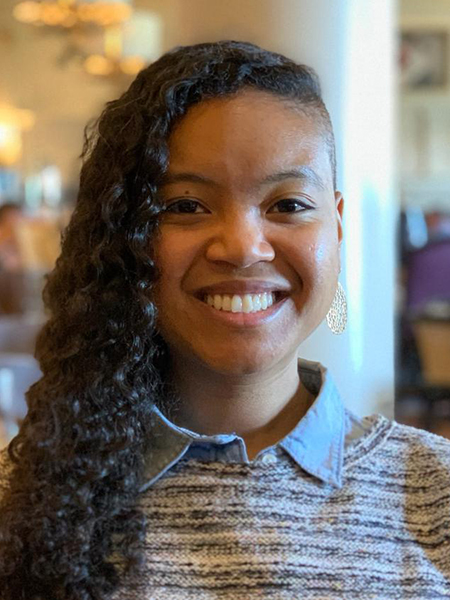
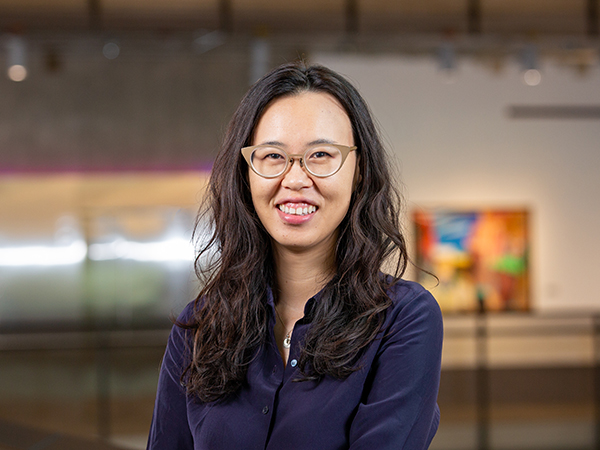
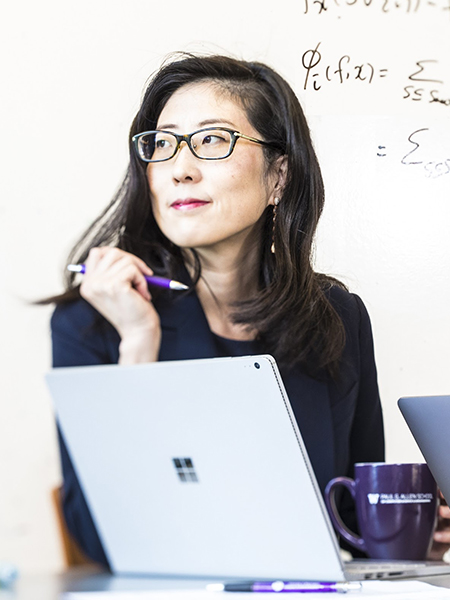
Amy X. Zhang: “I’ve been looking at what it would mean to decentralize these major platforms’ power by building tools for users or communities who don’t have lots of time and resources.” Photo by Matt Hagen
The proliferation of misinformation on social media platforms has led to a “credibility crisis” when it comes to online content — including that posted by local and national news organizations. Visual content, in particular, can be used to manipulate users’ understanding of and reaction to events. While reverse-image search allows users to investigate potentially problematic content, this approach has its limitations; the results are often noisy or incomplete, or both.
Lab member Kevin Feng, a Ph.D. student in the UW Department of Human Centered Design & Engineering, believes the introduction of provenance standards could provide a pathway to restoring trust in what he calls the “information distribution infrastructure.”
“Misinformation can spread through social networks much faster than authentic information. This is a problem at a societal scale, not one that’s limited to a particular industry or discipline,” said Feng, lead author on the CSCW paper. “Being able to access a piece of media’s provenance, such as its prior edit history and sources, with just a click of a button could enable viewers to make more informed credibility judgments.”
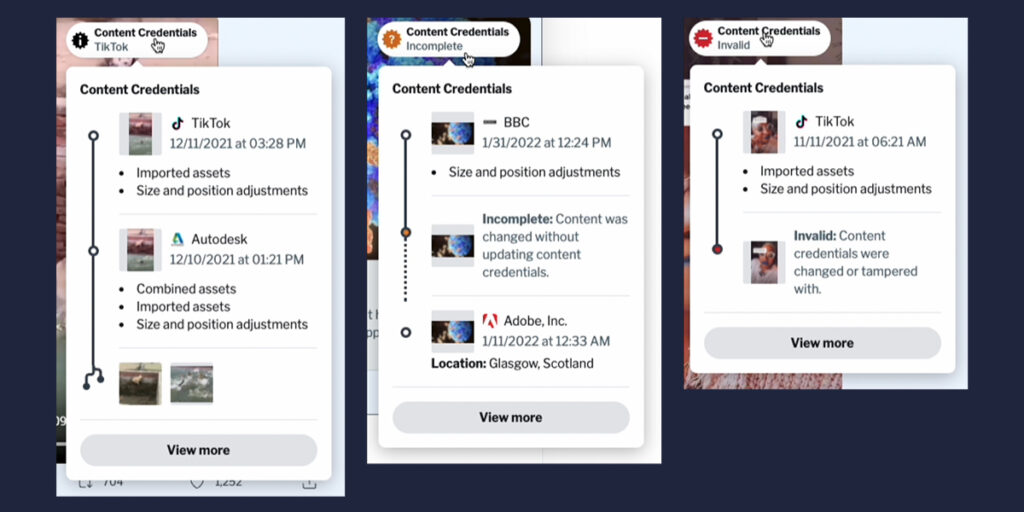
Feng turned to the Coalition for Content Provenance and Authenticity (C2PA), which at the time was in the midst of developing an open-source technical standard for media authoring tools such as Adobe Photoshop to embed a distinct signature into an image’s metadata every time someone edits it. The goal was to provide a verifiable chain of provenance information — essentially, a detailed edit history — to viewers of online content.
But given the overall erosion of trust in online media, an important question remained.
“Even if we can reliably surface provenance information, we still didn’t know if or how that would impact users’ credibility judgements,” Feng noted. “This is an important question to answer before deploying such standards at scale.”
Seeking answers, Feng and Zhang teamed up with Nick Ritchie, user experience design principal at the BBC, and Pia Blumenthal and Andy Parsons, lead product designer and senior director, respectively, of Adobe’s Content Authenticity Initiative. The team ran a study involving 595 participants in the United States and United Kingdom in which they measured how access to provenance information altered users’ perceptions of accuracy and trust in visual content shared on social media.
The researchers explored how giving users access to provenance information for visual content posted on social media changed their perception of an image’s credibility, aligned with the Coalition for Content Provenance and Authenticity (C2PA) standard.
The team developed dual Twitter-esque social media feeds for the study: one regular feed, and one containing provenance information accessible through user interfaces built in accordance with the C2PA standard. The team relied on pre-existing images and videos sourced mainly from the Snopes “fauxtography” archives, representing a mix of truthful and deceptive content. Participants were asked to view the same series of images on the control feed followed by the experimental feed and rate the accuracy and trustworthiness of each piece of content on a 5-point scale. This enabled the researchers to gauge how each user’s perception of media credibility shifted once they had access to information about the content’s provenance.
And shift, it did.
“With access to provenance information, participants’ trust in deceptive media decreased and their trust in truthful media increased,” Feng reported. “Their ability to evaluate whether a claim associated with a particular piece of media was true or false also increased.”
Kevin Feng: “As social computing researchers, we are the architects of our digital spaces. The design decisions we make shape the ways with which people interact online, who they interact with, how they feel when doing so, and much more.”
Feng and his co-authors found that the use of provenance information comes with a couple of caveats. For example, if an image editor is incompatible with the C2PA standard, any changes to the image may render the chain of provenance information “incomplete,” which does not speak to the nature of the edit. In addition, if a malicious actor attempts to tamper with the metadata in which the provenance information is stored, the provenance is rendered as “invalid” to warn the user that suspicious activity may have occurred — whether or not the attempt was successful.
The team discovered that such disclosures had the effect of lowering trust in truthful as well as deceptive media, and caused participants to regard both as less accurate. The researchers were also surprised to learn that many users interpreted provenance information as prescribing a piece of media’s credibility — or lack thereof.
“Our goal with provenance is not necessarily to prescribe such judgements, but to provide a rich set of information that empowers users to make more informed judgments for themselves,” Zhang notes. “This is an important distinction to keep in mind when developing and presenting these tools to users.”
The team’s findings informed the eventual design of the production version of the C2PA standard, Content Credentials. But that’s not the only distinction that is reflected in the standard. When the study launched, generative AI had not yet come into the mainstream; now, AI images seem to be everywhere. This poses important questions about disclosure and attribution in content creation that, in Feng’s view, make provenance standards even more timely and relevant.
“As AI-generated content inevitably starts flooding the web, I think that provable transparency — being able to concretely verify media origins and history — will be crucial for deciphering fact from fiction,” he said.
Everything in moderation
When problematic posts cross the line from mendacious to mean, there are a variety of approaches for reducing users’ exposure to harmful content. These vary from platform–wide moderation systems to user-configured tools based on personal preference in response to the content posted by others. The emergence of the latter has sparked debate over the benefits and drawbacks of putting moderation decisions on individual users — attracting fans and foes alike.
In their recent CSCW paper, lead author Shagun Jhaver and his colleagues investigated this emerging paradigm, which they dubbed “personal content moderation,” from the perspective of the user.
Shagun Jhaver: “With more and more people calling for greater control over what they do, and do not, want to see on social media, personal moderation tools seem to be having a moment.”
“With more and more people calling for greater control over what they do, and do not, want to see on social media, personal moderation tools seem to be having a moment,” explained Jhaver, a former Allen School postdoc who is now a professor at Rutgers University where he leads the Social Computing Lab. “Given the growing popularity and utility of these tools, we wanted to explore how the design, moderation choices, and labor involved affected people’s attitudes and experiences.”
Personal moderation tools fall into one of two categories: account-based or content-based. The former includes tools like blocklists, which prevent posts by selected accounts from being displayed in a user’s feed. Jhaver, Zhang and their co-authors — Allen School postdoc Quan Ze Chen, Ph.D. student Ruotong Wang, and research intern Alice Qian Zhang, a student at the University of Minnesota who worked with the lab as part of the Computing Research Association’s Distributed Research Experiences for Undergraduates (DREU) program — were particularly interested in the latter. This category encompasses a range of tools enabling users to configure what appears in their feed based on the nature of the content itself.
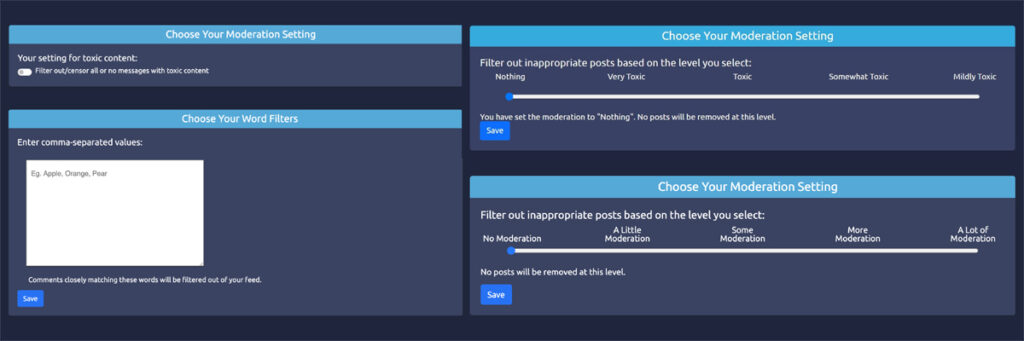
The researchers built a web application that simulates a social media feed, complete with sample content and a set of interactive controls that can be used to reconfigure what appears in the feed. The tools included a word filter, a binary toxicity toggle, an intensity slider ranging from “mildly” to “very” toxic, and a proportion slider for adjusting the ratio of benign to toxic comments. They then enlisted a diverse group of two dozen volunteers to interact with the configuration tools and share their insights via structured interviews.
The team discovered that participants felt the need to build a mental model of the moderation controls before they could comfortably engage with the settings, particularly in the absence of robust text explanations of what various moderation terms meant. Some users switched back and forth between their settings and news feed pages, using examples to tweak the configuration until they could verify it achieved their desired goals. The test interface supported this approach by enabling participants to configure only one of the four moderation interfaces at a time, which meant they could observe how their choices changed the feed.
This seemed particularly helpful when it came to slider-based controls that categorize content according to high-level definitions such as “hateful speech” or “sensitive content” — categories that users found too ambiguous. Context is also key. For example, participants noted that whether profanity or name-calling is offensive depends on the intent behind it; the mere presence of specific words doesn’t necessarily indicate harm. In addition, some participants were concerned that filtering too aggressively could curtail the visibility of content by members of minority communities reclaiming slurs as part of in-group conversations.
Researchers studied how users engage with a range of personal moderation tools to filter out toxic content on social media sites, including a binary toggle (top left), word filters (bottom left), intensity sliders (top right) and proportion sliders (bottom right).
“Whether at the platform level or personal level, users crave more transparency around the criteria for moderation. And if that criteria is too rigid or doesn’t allow for context, even user-driven tools can cause frustration,” Zhang said. “There is also a tradeoff between greater agency over what appears in one’s feed and the effort expended on configuring the moderation settings. Our work surfaced some potential design directions, like the option to quickly configure predetermined sets of keywords or enable peer groups to co-create shared preferences — that could help strike a balance.”
Another tension Zhang and her team observed was between content moderation policies and users’ desire to preserve freedom of speech. Although users still believe there is a role for platforms in removing the most egregious posts, in other instances, personal moderation could provide an attractive alternative to a top-down, one-size-fits-all approach. In what Jhaver terms “freedom of configuration,” users choose the nature of the content they want to consume without curtailing other users’ self-expression or choices.
“These tools are controlled by the user, and their adoption affects only the content seen by that user,” Jhaver noted. “Our study participants drew a distinction between hiding a post from their individual feed and a platform removing a post for everyone, which could be considered censorship.”
While it may not chill free speech, personal moderation could meet with an icy reception from some users due to another social media phenomenon: the dreaded FOMO, or “fear of missing out.”
“Many of our participants worried more about missing important content than encountering toxic posts,” explained Jhaver. “Some participants were also hesitant to suppress inappropriate posts due to their desire to remain informed and take appropriate action in response.”
Whether it has to do with moderation or misinformation, the researchers are acutely aware of the societal implications of their work.
“As social computing researchers, we are the architects of our digital spaces,” Feng said. “The design decisions we make shape the ways with which people interact online, who they interact with, how they feel when doing so, and much more.”
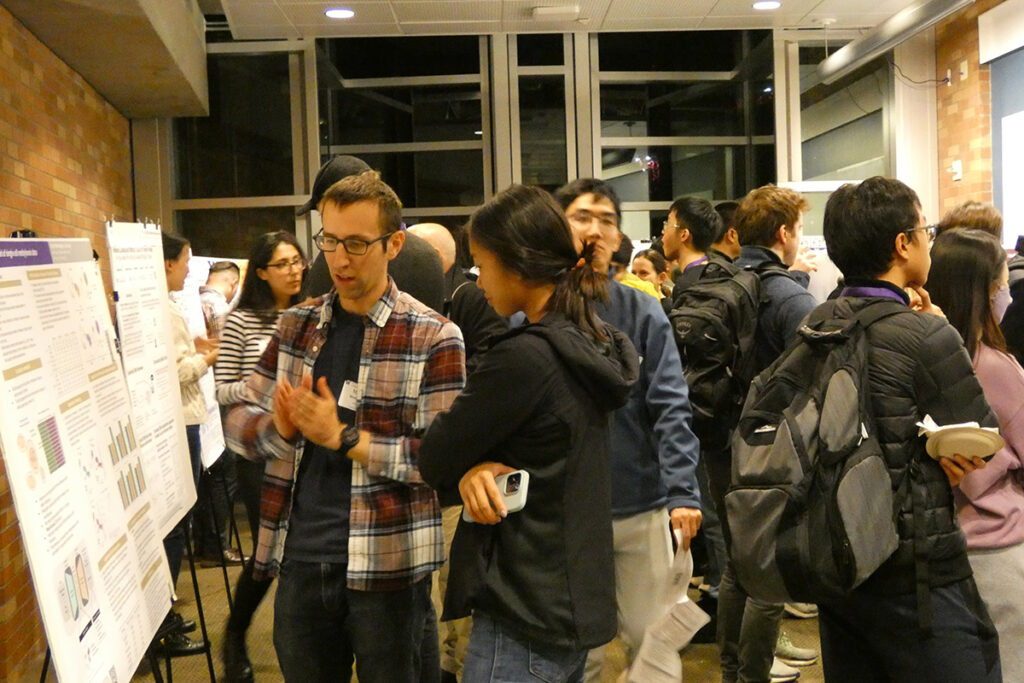
Participants packed the landings of the Paul G. Allen Center last Tuesday for an open house featuring posters and demos by student researchers. Roughly 300 people participated in the Allen School’s annual Research Showcase throughout the day and evening.
New approaches to finetuning large language models that decrease computational burden while enhancing performance. A robotic arm that safely delivers a forkful of food to someone’s mouth. A system that combines wireless earbuds and algorithms into a low-cost hearing screening tool.
These are just a sample of the nearly 60 projects that were on display during the Allen School’s Research Showcase and Open House at the University of Washington last week, capping off a day-long celebration of computing innovations that are advancing the field and addressing societal challenges. Nearly 300 Industry Affiliate partners, alumni and friends participated in the 2023 event, which included sessions devoted to computer science ethics, intelligent transportation, computing for sustainability, computing for health, natural language processing and more.
Hanna Hajishirzi opened up about her latest research in large language models over lunch
Everybody’s talking about LLMs
Attendees got the chance to sink their teeth into some of the latest advances in natural language processing during a luncheon keynote by Allen School professor Hannaneh Hajishirzi exploring the science behind large language models and the development of models to serve science.
“We have witnessed great progress in large language models over the past few years. These models create extremely fluent text — conversation-like text — and also code,” said Hajishirzi, who holds the Torode Family Professorship at the Allen School and is also senior director of AllenNLP at the Allen Institute for AI. ”Now they are being deployed in a diverse range of applications. And everybody these days is talking about their impact on society, their risks, their economic impacts, and so on.”
Those impacts and risks leave plenty of open questions for AI researchers to resolve, as LLMs continue to be computationally expensive, error-prone and difficult to maintain. They are also largely being developed by private companies.
“All of these models are proprietary,” Hajishirzi noted. “So it’s very hard for AI researchers to actually understand and analyze what is going on.”
Hajishirzi and her colleagues favor a more open approach to building models that are transparent, reproducible and accessible. But there are many definitions of “open.” Even if the company opens up the API or makes a model available for research purposes, restrictions remain — such as the inability to access the data on which the models are trained.
As an alternative, Hajishirzi and her collaborators created OLMo, short for Open Language Model. OLMo is a full language modeling pipeline in which “everything is open,” from pre-training to reinforcement learning through human feedback (and all stages in between). By being so transparent and engaging the broader AI research community, Hajishirzi hopes the project will help narrow the gap between the public and private sectors. Their good intentions are not limited to advancing AI research, either; the team is also developing the capability to advance scientific discovery in other disciplines by fine tuning and training on their data.
To that end, Hajishirzi and her colleagues developed a large-scale, high-quality pretraining dataset cleverly named Dolma, short for “data to feed OLMo’s appetite.” The dataset, which comprises 3.1 trillion tokens in total, is significantly larger than previous open datasets. A significant portion — 2.6 trillion tokens — is web data covering diverse domains, from Reddit to scientific data, filtered to eliminate toxicity and personally identifying information as well as duplication. Dolma has been downloaded 320,000 times in just the past month.
But how does this approach compare to that of state-of-the-art closed models? When it comes to the latter, “there are too many question marks,” Hajishirzi noted, pointing out that we don’t have sufficient information about the datasets — including not knowing how many tokens the models are trained on.
That is not a problem when it comes to the work of Hajishirzi and her collaborators — including the development of novel approaches to instruction tuning to enable pretrained models to generalize to new applications. Hajishirzi described the result of those efforts, a project called Tülu, as “the largest, best and open instruction tuned model at this point.” And the team continues to make improvements; for example, they have added the ability to extract information from scientific papers and to perform parameter-efficient finetuning for use in low-resource contexts. The researchers have also developed an effective evaluation framework that includes in-loop evaluation of the training at every step of the process.
Such progress does not come without a cost, however.
“This project required a lot of compute. It still requires a lot of GPUs and compute,” Hajishirzi observed, citing the need to improve computational efficiency so that more communities can make use of these models.
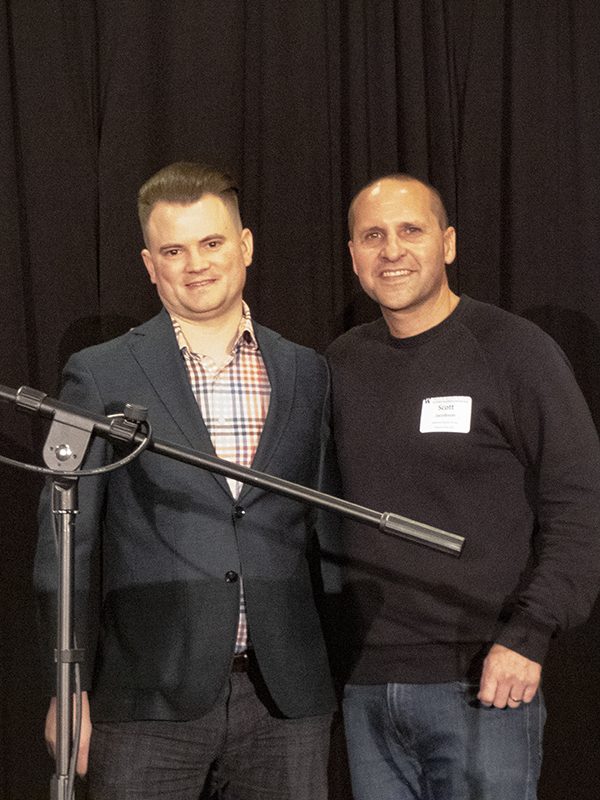
Tim Dettmers (left) accepted the Madrona Prize from Scott Jacobson for QLoRA
How low can you go?
As it happens, multiple Allen School researchers are attempting to answer this question — and answer Hajishirzi’s call — by exploring techniques for making LLMs more efficient. Teams shared their results from projects addressing this and a range of other challenges during the open house and poster session.
The event culminated with Scott Jacobson, managing director at Madrona Venture Group, announcing the recipients of the Madrona Prize, which highlights cutting-edge research at the Allen School with commercial potential. In his remarks, Jacobson highlighted the firm’s long standing partnership with the Allen School, which extends to supporting multiple startup companies based on student and faculty research that is helping to shape the future of the field.
”There’s so much great research here” said Jacobson. “Over the years, a number of themes that I think are now kind of commonplace in tech were really pioneered here. A lot of those themes you’ve seen in the poster session on Industry Affiliates day — cloud computing, edge computing, computer vision, a lot of applied machine learning and AI. And so it’s just really fun every year for us to get the opportunity to do this.”
Madrona Prize winner/ QLoRA: Efficient Finetuning of Quantized LLMs
Allen School Ph.D. student Tim Dettmers accepted the grand prize for QLoRA, a novel approach to finetuning pretrained models that significantly reduces the amount of GPU memory required — from over 780GB to less than 48GB — to finetune a 65B parameter model. With QLoRA, the largest publicly available models can be finetuned on a single professional GPU, and 33B models on a single consumer GPU, with no degradation in performance compared to a full finetuning baseline. The approach will help close the gap between large companies and smaller research teams, and could potentially enable finetuning on smartphones and in other low-resource contexts. The team behind QLoRA includes Allen School Ph.D. student Artidoro Pagnoni; alum Ari Holtzman (Ph.D., ‘23), incoming professor at the University of Chicago; and professor Luke Zettlemoyer, who is also a research manager at Meta.
Madrona Prize First Runner Up / Punica: Multi-Tenant LoRA Fine-tuned LLM Serving
Another team earned accolades for their work on Punica, a framework that makes low-rank adaptation of pre-trained models for domain-specific tasks more efficient by serving multiple LoRA models in a shared GPU cluster. Punica’s new CUDA kernel design allows for batching of GPU operations for different models while requiring a GPU to hold only a single copy of the underlying pre-trained model — significantly reducing the level of memory and computation required. The research team includes Allen School Ph.D. students Lequn Chen and Zihao Ye; Duke University Ph.D. student Yongji Wu; Allen School alum Danyang Zhuo (Ph.D., ‘19), now a professor at Duke; and Allen School professors Luis Ceze and Arvind Krishnamurthy.
Madrona Prize Second Runner Up / Wireless Earbuds for Low-cost Hearing Screening
Allen School researchers were recognized for their work with clinicians on OAEbuds, which combines low-cost wireless acoustic hardware and sensing algorithms to reliably detect otoacoustic emissions generated by the ear’s cochlea. The system offers an alternative to conventional — and expensive — hardware to make hearing screening more accessible in low- and middle-income countries. Allen School Ph.D. student Antonio Glenn accepted on behalf of the team, which also includes Allen School alum Justin Chan (Ph.D., ‘22), incoming professor at Carnegie Mellon University; professors Shyam Gollakota and Shwetak Patel, who has a joint appointment in the UW Department of Electrical & Computer Engineering; ECE Ph.D. student Malek Itani; Drs. Randall Bly and Emily Gallagher of UW Medicine and Seattle Children’s; and audiologist Lisa Mancl, affiliate instructor in the UW Department of Speech & Hearing Sciences.
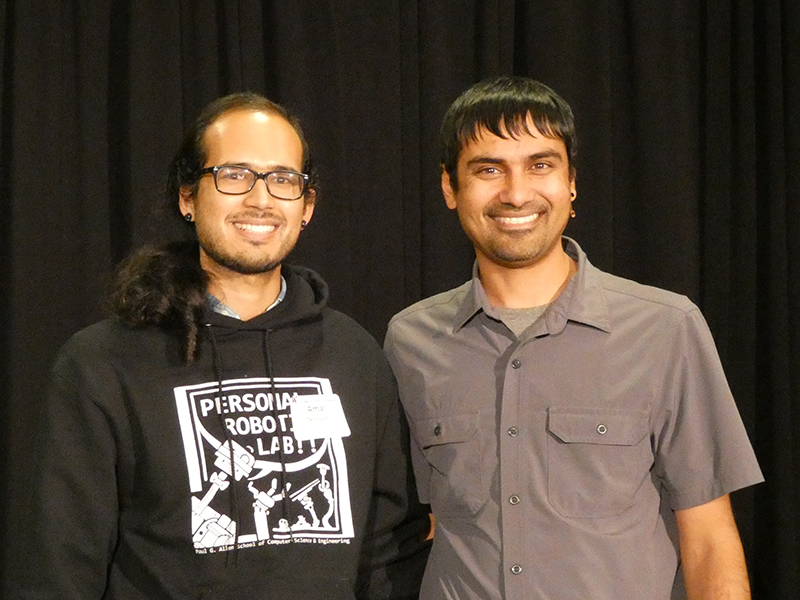
Amal Nanavati (left) accepted the People’s Choice Award from Shwetak Patel for the ADA robot-assisted feeding demo
People’s Choice Award / ADA, the Assistive Dexterous Arm: A Deployment-Ready Robot-Assisted Feeding System
Also affectionately referred to as “the food thing” to attendees who overwhelmingly voted it their favorite demo of the night, ADA aims to address a variety of technical and human challenges associated with robot-assisted feeding to improve quality of life for people with mobility limitations. The researchers invited visitors to try the system for themselves by using a smartphone app to direct ADA in feeding them forkfuls of fruit. Ph.D. student Amal Nanavati accepted the award from professor Shwetak Patel, the Allen School’s associate director for development and entrepreneurship. The team also includes Ph.D. students Ethan Gordon and Bernie Hao Zhu; undergraduate researcher Atharva Kashyap; Haya Bolotski, a participant in the Personal Robotics Lab’s youth research program; Allen School alum Raida Karim (B.S., ‘22); postdoc Taylor Kessler Faulkner; and professor Siddhartha Srinivasa. Read more about the robot-assisted feeding project in a recent UW News Q&A with the ADA team here.
It can feel lonely being the first in your family to pursue a four-year degree.
How do you apply? How will you pay for it? What major should you choose? How will you navigate your new surroundings, not to mention make new friends? If you run into difficulty, where do you turn for help?
And what are “office hours,” anyway?
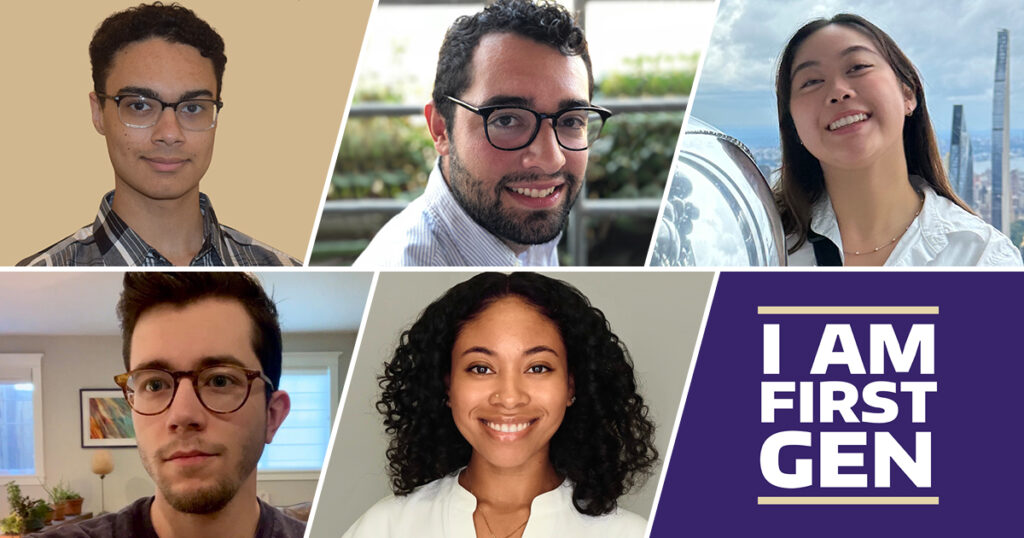
Nearly one-third of the more than 43,000 undergraduates enrolled at the University of Washington are first-generation. So while it may seem lonely at times, they are not alone. To remind them of this fact — and to remind everyone at UW of the many ways in which first-gen students enrich our campus community — each year on November 8th the University participates in the National First-Generation College Celebration. To highlight the Allen School’s diverse first-gen community, we asked students to share what it means to them to “be the first” and any wisdom they have for those who have yet to embark on their first-gen journey.
Zander Brumbaugh: Turning a hobby into an opportunity for connection and empowerment
While Zander Brumbaugh knew from a young age that he wanted to be a scientist, he didn’t know he wanted to be a computer scientist. Growing up in Tumwater, Washington, Brumbaugh turned his fascination with the inner workings of various systems into a hobby making video games in high school and, eventually, the beginnings of a career in computing. Currently pursuing his master’s degree in the Allen School’s combined B.S./M.S. program, Brumbaugh has refined his career goals to focus on artificial intelligence research — an “immensely important field” in which he hopes to make a positive impact. To start, he is writing a book on how to adapt and use language models effectively for specific needs as a way of promoting public literacy around these rapidly emerging technologies.
What does it mean to you and/or your family to be the first to pursue a bachelor’s degree?
My family has always been very supportive of the work that I do and my decision to pursue higher education. Both of my parents were unable to attend college due to financial limitations. Because of the scholarships I received, I was able to overcome this and be the first in my family to earn a degree, for which I am eternally grateful. In short, my degree is a source of empowerment; it gives me the ability to create new opportunities for myself and to connect with like-minded individuals who share similar goals.
What has been the most challenging aspect of being a first-gen student?
College is quite different from high school or anything else most students are likely to have encountered in their early academic careers. Finding the groove in my first few quarters wasn’t easy, especially with the start of the COVID-19 pandemic less than halfway into my first year. I made a group of close friends who came from many different backgrounds, and I found my experience improved greatly. Being a first-gen student, I didn’t have anyone at first to help me navigate student life, but we ultimately found our way through it together.
And the most rewarding?
By far the most rewarding part is simply being able to call home and tell my parents what I’ve been up to. Both of my parents are retired and enjoy hearing the details of my classes, activities with friends, and my research — though they say most of it goes over their heads! My father is my biggest promoter; oftentimes I’ll receive messages online from people who work as cashiers at stores or waitstaff at restaurants whom he’s cheerfully told about my books and games. My parents’ pride inspires me to be the best version of myself — and also thankful for the opportunities I’ve been given, knowing it’s something they didn’t have.
What motivated you to continue on and get your master’s?
As it was always my goal to become a researcher, I began looking for undergraduate research opportunities during my sophomore year. I first worked in AI for vision and language for creative applications and eventually found intersections with robotics that greatly interested me. I joined the ARK lab led by professor Noah Smith during my senior year and started my journey with natural language processing (NLP) research. Wanting to continue my research and eventually pursue a Ph.D. in the future, I applied to the B.S./M.S. program and was accepted. So far, the experience has been everything I imagined; the program provides an environment where I’m immersed in intriguing research, exchanging ideas with others both in and outside of my field and developing projects across various topics.
What advice would you give to other first-gen students?
Heading off for college is an exciting time, full of new experiences. Even if you have family or friends who went to college, it can be difficult to find advice on how exactly you should be approaching different problems — and if you don’t, it can be even more so. While everyone’s experience may be different, finding even a small, close group of friends can help to make a support system. You can help each other navigate your classes, work, or simply your social lives. I would encourage you to check out a club meeting, be outgoing whenever you can, and try to look for others with whom you might share something in common (or not!). There are also mentorship programs offered by multiple groups affiliated with the Allen School that may be helpful in getting you started.
Daniel Campos Zamora: Making a career out of making change and helping people at scale
Daniel Campos Zamora followed what he calls a “long and winding road” to computer science that extends back to his birthplace of Costa Rica. Growing up in New Jersey, Campos Zamora had always been interested in making interesting things; he just never considered making a career out of it. That changed after he began an interdisciplinary degree in psychology and art at Carnegie Mellon University. There, he discovered programming tools like Arduino and Processing that made him realize how powerful computing could be as a medium for change. After earning his bachelor’s, Campos Zamora worked for a professor of human-computer interaction, and later, for Disney Research; that combination of experiences caused him to realize that he wanted to do HCI research himself. The road eventually led him to pursue a Ph.D. in the Allen School’s Makeability Lab working professor Jon Froehlich — and to tap into his first-gen experience in his roles as a reviewer for the school’s Pre-Application Mentorship Service (PAMS) and faculty recruiting.
What does it mean to you and/or your family to be the first to pursue a bachelor’s degree?
I was raised by a single mom who immigrated to the U.S. because she had high hopes for us to get an education and get ahead. She always instilled in me and my siblings that she wanted us to go to college, but she didn’t really understand what that entailed. College didn’t really feel real to us; no one in our family had gone to college, and we didn’t know a lot of people in this country who had college degrees. My mom maybe took one class back in Costa Rica before she had to drop out to have my brother. So it meant the world to her that her three kids were able to get degrees. After graduating, I framed my diploma and gave it to her as a Christmas gift, because I knew how much it meant to her. And if you don’t know, the CMU diploma is gigantic!
What was the most challenging aspect of being a first-gen student?
I think the whole experience of college is really different when you’re first generation. I was the only one of us to move away for college and be away from family and live in the dorms. When you do that, you don’t have a support system, and you don’t know what kind of support is available at school. You don’t know about office hours; you may know they exist, but you don’t know what they actually mean, and you don’t know what any of the offices on campus mean or do. You don’t know what you don’t know yet — you’re dealing with “unknown unknowns.” I struggled because I didn’t identify with a lot of people at my institution, and it was really hard finding support.
How did you navigate those “unknown unknowns”?
I went back to what I knew: I can just work on the classes and do my best. I think I stumbled through some of the other parts, like eating, taking care of yourself, your mental health. You don’t realize, when you’re away from your family, it requires extra work to do that. The saving grace for me was that I met someone on my floor who has a similar background but who knew the school better after doing a summer program there. Through him I got involved in a minority organization and found a support system. And they led me to the campus resource center that assists minoritized students, including first-gen and low income. Through their counselors, I got a lot of support — but it took two years before I even knew that office was there.
What was the most rewarding aspect of being a first-gen student?
I feel like I’m in a much better place to help younger family members thinking about college to understand what it actually means to go down this path. I can take them to look at colleges and help them understand the processes and that there is so much more to the college experience than just getting good grades.
For me personally, what was most rewarding was being exposed to really talented people and really exciting ideas, and to be able to take advantage of resources once I knew they were available. I think it opened up a lot of doors for me, and I would not be at the Allen School if it was not for that experience at CMU. Also, the friends and connections that I made there — I know I have those relationships for a lifetime.
What advice would you give to aspiring first-gen students?
Advocate for yourself, but also be able to admit that you don’t know stuff. I feel that when you get to college, the imposter syndrome — that feeling like, “I don’t belong here” — is so aggravated because you are the first one. So I think it’s knowing that you do belong, but you might need help. Also, usually people who make it to these schools have done well academically, and they might not have struggled too much up until that point. And because so much importance is placed on going to college and getting good grades, when you do run into roadblocks, it’s so disorienting and discouraging.
It takes a lot of courage to acknowledge that you’re struggling and to ask for help. I think that’s very tough for first-gen students who may not even know that they are struggling. I wish someone had told me that it’s okay to ask for help. I’ve had to ask for help here doing my Ph.D. — I’m the first in my family to go to grad school, so that’s a totally new thing. The more you ask for help, and the earlier you do that, the better off you’ll be.
Ha Vi Duong: Choosing her own path while embracing the power of creative problem solving
As a high school student in Moses Lake, Washington, Ha Vi Duong envisioned a career in medicine. While she soon realized that she wanted to do something else with the rest of her life, she wasn’t sure what that something was. A conversation with an advisor — and an encounter with programming through Girls Who Code — helped her see how computer science would allow her to exercise her creativity while solving real-world problems. Duong entered the Allen School as part of the 2021-22 cohort of Allen Scholars. She later took on the role of chair of GEN1, a student group dedicated to empowering and guiding first-gen students, and joined the Vietnamese Student Association’s VSAUW Dance Team. Throughout her time at UW, she has been determined to work hard not just for her own future, but also for that of her parents — in appreciation for the sacrifices they’ve made.
What does it mean to you and your family to be among the first to pursue a bachelor’s degree?
My parents always emphasized the importance of education and believed it should be a top priority in life. I remember them sharing stories about their own experiences when they had to help provide for their families instead of continuing their education. For them, education didn’t always come first. They made the selfless decision to come to America in search of a better life, especially for their children. They’ve worked tirelessly to make this happen, running a restaurant that demands long hours and hard work.
One summer, I got a firsthand look at what they go through when I helped out at their restaurant. It was an eye-opener, and I gained a deep appreciation for what my parents do every day. When I talked to them about how tough it is, they told me something that has stuck with me ever since: “You should work hard to not have a job like ours. We didn’t know what else to do.” It made me realize how lucky I am. I have the chance to pursue higher education, to explore many career options, and choose my own path. This awareness has made me incredibly grateful.
What has been the most challenging aspect of being a first-gen student at the Allen School?
The most challenging aspect has been dealing with imposter syndrome. The rigorous coursework often makes it feel as though I’m behind compared to my peers. To this day, I still can’t believe that I am able to be where I am. However, amidst this struggle, I’ve discovered a valuable support system within the Allen School community and an understanding that we are all on our own paths and are here for a reason, which has been key in overcoming these challenges.
What about the most rewarding?
The most rewarding part of my experience has been the sense of accomplishment that comes from successfully completing those demanding courses. It’s immensely satisfying to see the progress I’ve made and to be able to connect the material learned in one class to another and eventually apply this knowledge in the real world. This interconnectedness between academic learning and practical application makes the educational journey at the Allen School both challenging and deeply fulfilling.
Any advice for other first-gen students at UW?
For first-gen students, it’s essential to remember that UW offers fantastic programs and a wide range of groups and organizations. While it may initially feel overwhelming, it’s all about the effort you put into discovering resources and building connections to support you in your college journey. Don’t hesitate to step out of your comfort zone and make connections; you never know where it might lead! It’s normal to feel a bit lost, but remember that everyone has their unique path and pace.
What are you hoping to do after graduation?
I’m currently in the process of exploring my post-graduation options, and I believe that finding a career where I can witness the tangible impact of my work is crucial. While I don’t have a specific plan in place just yet, I’m actively seeking opportunities that align with my interests and values. My goal is to pursue a path that allows me to make a meaningful difference in the world and see the results of my efforts come to life.
Derrik Petrin: Rediscovering his love of computing by leaving the lab and entering the arena
Derrik Petrin went all the way to Yale University to earn a bachelor’s degree in biochemistry before he realized that he did not, in fact, enjoy working in a lab. As a middle-school student in Issaquah, Washington, he had taken a programming class and liked it; he also liked the original Magic the Gathering card game by Wizards of the Coast. After he returned to this coast, Petrin eventually parlayed both into a position with the company as a software development engineer after spending some time as a freelance software consultant. Lately, Petrin has been working on the team that produces the digitized version of the game, Magic the Gathering Arena. When he’s not getting paid to play during work hours, he’s advancing his own story arc by pursuing a graduate degree in computer science through the Allen School’s flexible Professional Master’s Program (PMP) — which offered Petrin not only the opportunity to obtain a computer science degree but also to explore what his next chapter might be. He also has connected with his roots through his involvement in the local Hungarian-American Association.
What did it mean to you and/or your family to be among the first to pursue a bachelor’s degree?
It’s funny — I didn’t really start thinking of myself as first-generation until near the end of undergrad. I went to school on the Eastside, on the plateau, and didn’t really appreciate the differences. Some of my aunts and uncles went to college, but my dad’s parents didn’t, my dad didn’t, my mom emigrated from Hungary. So it didn’t really start dawning on me until I was in undergrad, when I realized that all of my classmates’ parents were professionals — lawyers, doctors, engineers and mathematicians — and mine weren’t. I started noticing how my parents didn’t have any advice they could give me. I always thought I would get a degree; I think my parents always expected that, too. So it was hard to imagine me not doing that.
What was the most challenging aspect of being a first-gen student?
My parents are not academically inclined. By late middle school and high school, I felt really comfortable in an academic setting and was used to planning and deciding everything myself. One of the reasons I ended up going to Yale was that it had the most generous financial aid package. I remember in my senior year seeing a statistic about the percentage of students who received no financial aid at all — and that’s a pretty high income cut-off — and it was a large number of students. And then I noticed that a lot of the classmates that I had formed close friendships with were also on some form of financial aid. So it dawned on me that this stuff tends to organically group us together without us realizing it.
I also had some pretty severe mental health struggles. Yale has had some publicity in recent years about their poor handling of student mental health. So it was not the easiest environment to not have parental support, but also I did not realize that that’s something that was making things more difficult. It was pretty overwhelming.
How has that experience shaped your career path since?
If I had not been first-generation, it’s more likely I would have continued straight into applying to Ph.D. programs. But also after college, I probably would have taken a less winding path than I have taken. And there are some benefits and disadvantages to that. One of the benefits is, when I ended up doing freelance consulting for a while, I dropped out of being in a cohort after spending most of my life in a cohort in an institutional setting. And I got used to being okay with doing things that are not necessarily the typical way to do them. For example, even though the PMP is typically an evening program, during one quarter the programming languages course was taught in parallel with the “normal” morning one. I had the flexibility to take that morning class instead and spend time with the Ph.D. students. One of the professors then invited me to spend time in the Programming Languages & Software Engineering (PLSE) lab, so I again got to interact with Ph.D. students there. It’s put me into a mentality where I think less in terms of a structured path.
That flexibility is useful, but sometimes it would be nice to have more structure. Another challenge is that if you don’t have this very clear box to show to people, they’re not sure what to make of you. So, for instance, maybe you’re interested in doing research — but people aren’t sure even logistically how that would work. The PMP is not a research program; but at the same time, it’s this great, very broad survey program. So as I’m taking courses in these different areas, I’m thinking about which one sparks the most interest. But one area where the first-gen experience comes in is, I don’t know how to take that and follow through to make an ongoing connection. A lot of students do PMP for professional development, and that’s what it is primarily set up for, but there are also students, like me, who have that intellectual itch and this is the most accessible foot back in the door.
What advice would you give to other first-gen college students?
Something that I think is good advice for undergrads in general is to go to office hours, which as an undergrad, I did not do. Coming back to school and paying for the classes myself — and being really excited about them — face to face time with the professors is so important. Go to office hours even if you are behind on the assignment, or don’t have questions about the assignment, just to listen to what other students are asking. Even if you don’t have anything prepared, some conversation will happen. That has been really helpful for me coming back to the PMP.
Some people who are first-gen students are very aware of it; it’s part of their identity right from the get-go. But for others, like me, we don’t realize right away how much being first-gen impacts our experience. So keep in mind that you are carrying a lot more weight than other students are. If it seems harder, if it seems things are not coming as easily to you, that’s not surprising. It’s also not your fault, so practice self-compassion.
Nicole Sullivan: Advancing science and sustainability while assisting others in their journey
Nicole Sullivan first began to consider a career in computing-related research as a high school student in Cerritos, California. After enrolling in a computer science course in the 11th grade, she became fascinated with the field’s potential to address environmental challenges such as nature conservation, climate change, agriculture and more. She found further inspiration as a Karsh STEM Scholar and undergraduate researcher at Howard University, an experience she credits with setting her on the path to earning a Ph.D. She followed that path across the country to the UW, where Sullivan is making meaningful contributions to data science and sustainability working alongside professor Magdalena Balazinska in the Allen School’s Ph.D. program. She is also helping to inspire a new generation of researchers by mentoring underrepresented minority students hoping to follow in her footsteps.
What did it mean to you and/or your family to be the first to pursue a bachelor’s degree?
I’m grateful for the opportunity to pursue higher education, which my parents fully support. They were proud of my independence during my undergraduate studies and are ecstatic about my pursuit of a Ph.D.
What was the most challenging aspect of being a first-gen student, and what was the most rewarding?
While it was overwhelming and challenging to figure out scholarship and college applications on my own, I’ve gained a solid understanding of the process. That has equipped me with valuable insights that enable me to assist others in their journey.
How have you applied your experience to assist others?
I am currently a graduate mentor for A Vision for Electronic Literacy and Access (AVELA). Before that, while I was at Howard University, I was a National Society of Black Engineers (NSBE) Jr. Mentor and a Microsoft Code Academy (MCA) Lead Learner. As an AVELA mentor, I create and teach original STEM content for Black, Brown, and Indigenous middle and high school students throughout greater Seattle. In NSBE Jr., I supported two teams on their way to the NSBE national robotics competition. Additionally, through MCA, I spent every other weekend teaching programming fundamentals to Black students in kindergarten through 5th grade.
What advice would you give to aspiring first-gen college students?
I highly recommend participating in programs like AVELA and NSBE. Engaging with AVELA, which offers free courses in coding basics, machine learning, hardware, and more, can provide an excellent foundation in various areas of study. Not only will you acquire valuable knowledge, but you’ll also have compelling experiences to highlight in your college application essays and add to your resumes. Furthermore, NSBE extends scholarships to high school students and organizes an annual conference where you might discover field-related opportunities and gain hands-on experience during your high school years. While the NSBE conference isn’t free, consider contacting your high school counselor or local NSBE chapter to explore potential funding options.
What do you hope to do after earning your Ph.D. from the Allen School?
Although I’m not exactly sure what will happen after I graduate, I know I will choose a path either in academia or in industry research. And I intend to continue mentoring underrepresented minority students to foster their enthusiasm for STEM Ph.D. programs and higher education in general.
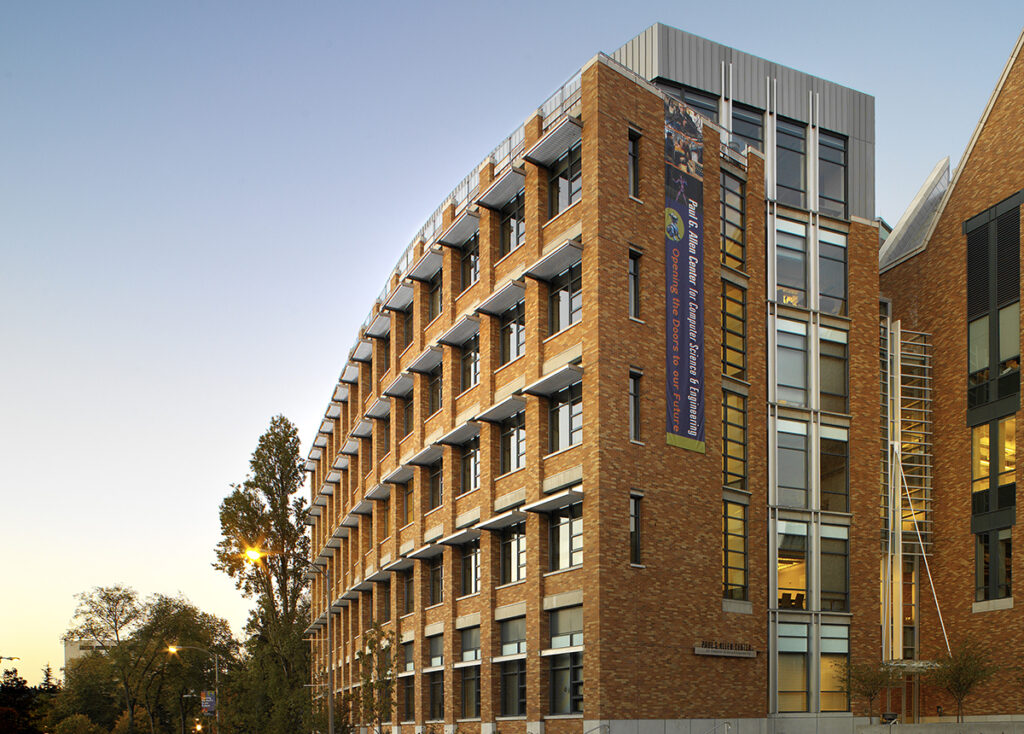
The Paul G. Allen Center for Computer Science & Engineering shortly after it opened in fall 2003. The theme of the dedication was “Opening the Doors to Our Future.” Photo by Ed LaCasse
In the late 1990’s, members of the Allen School faculty experimented with a new — some would say unorthodox — way to mark the conclusion of Visit Days, the annual pilgrimage made by prospective graduate students to computer science programs around the country. To commemorate the visitors’ time in Seattle, professors in what was then the Department of Computer Science & Engineering would cheerfully send them on their way with a surprise parting gift: a palm-sized chunk of concrete.
The concrete in question had, without any human intervention, become dislodged from the crumbling facade of Sieg Hall — the building that, should the recipients choose the University of Washington, would become a home away from home for the duration of their Ph.D.
“The souvenir definitely made us memorable, and it helped our cause when it came to recruitment,” Allen School professor Ed Lazowska, who chaired the department at the time, recalled wryly. “One student emailed that they just couldn’t say ‘no’ to us after we literally gave them a piece of our building. But giving out chunks of the building, like the building itself, was a joke. We were woefully behind other top computing programs when it came to facilities.”
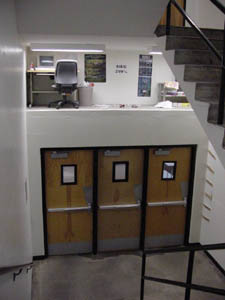
While outside the building was crumbling, inside it was cramped — so much so that, as a prank, someone set up a “graduate student office” on a ledge in the stairwell, complete with a handy rope ladder for access. More than two decades after it first housed UW’s burgeoning Computer Science & Engineering program, Sieg was no longer fit for the purpose. In 1999, the department stepped up its campaign for a new, permanent home.
Lazowska and local technology industry leaders led the charge, forging a public-private partnership that was unprecedented in UW’s history. All told, they raised $42 million in private funds — substantially more than half the project’s cost — from more than 250 donors. Lazowska’s faculty colleague Hank Levy oversaw the design and construction of the building in tandem with LMN Architects and general contractor M.A. Mortenson. He saw to it that the funds were put to good use.
“Our goal was to create a warm and welcoming environment that would facilitate teaching, research and collaboration,” said Levy. “Every aspect of the building — the materials, the artwork, the abundant natural light, the open spaces that encourage people to gather and exchange ideas — were intentional choices made with this goal in mind.”
Those choices were supported in large part by leadership gifts from the building’s namesake, the late Paul G. Allen, along with the Bill & Melinda Gates Foundation and Microsoft. Completion of the 85,000 square-foot facility, which was dedicated on October 9, 2003, tripled the program’s available space and set off a chain of events that made the Allen School into the powerhouse it is today.
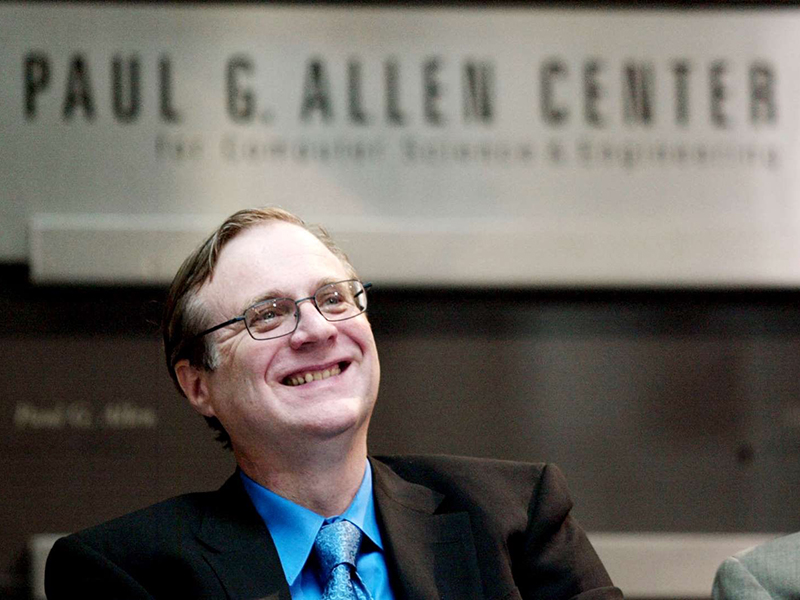
“What really sets UW’s computer science program apart are the people.” Paul G. Allen at the dedication of the building that bears his name.
Allen himself understood at the time that he was investing in something more meaningful than bricks and mortar.
“I’m proud to have supported this beautiful and unique facility, but what really sets UW’s computer science program apart are the people,” Allen observed during the grand opening celebration. “The faculty here is unparalleled, and the undergrad and graduate students are dedicated and inspiring.”
Allen’s faith would inspire a period of expansion that no one — including Lazowska, who has been the program’s most vocal cheerleader over the years — could have foreseen in 2003.
“I cannot stress enough the importance of the Allen Center to the trajectory of our program,” he said. “It provided us with competitive space for the first time in our history. It was the spark that set us on a path to triple our degree production, ramp up our ability to deliver computer science education to students across campus, and attract the brightest researchers in the field to Seattle.
On move-in day in the summer of 2003, fewer than 40 faculty members unpacked boxes in their shiny new offices; two decades later, that number is approaching 100. And faculty recruiting has barely kept pace with the explosive growth in student interest, with the Allen School the most requested major among freshman applicants to the University for several years running. It now serves roughly 2,800 students across its degree programs — and thousands more who take one or more courses as non-majors each year.
As the program grew in size, it also grew in stature, thanks in no small part to its new and improved laboratory space.
“Computer Science & Engineering at the University of Washington is an engine of opportunity,” Allen had said at the time, “and I want to ensure it’s an even more cutting-edge resource for the coming generation.”
That engine has been going full throttle ever since. One high-profile example of how the move to the Allen Center greased the wheels of innovation is UW’s emergence as a center for mobile health. By tapping into the built-in sensing capabilities of smartphones coupled with advances in machine learning, Allen School researchers, in conjunction with UW Medicine clinicians, have developed a range of mobile tools for screening and monitoring of a variety of health conditions spanning fever, pre-diabetes, sleep apnea, infant jaundice, reduced lung function, ear infection, newborn hearing loss and more. All got their start in the Allen Center’s labs, and several led to the creation of Allen School spinout companies.
The collaborations don’t stop there, as the Allen Center provided a launch pad for multiple cross-campus initiatives, some supported by significant federal and/or private investment. These include efforts to advance accessible technologies and more accessible communities, data science for discovery and innovation, neurotechnologies for people with spinal cord injury, stroke or other neurological disorders, next-generation cloud computing infrastructure, computing for environmental sustainability and more. In the past five years alone, the Allen School has secured more than $200 million in grants and contracts to support its research. Along the way, the school has strengthened its leadership in core areas such as systems, architecture and theoretical computer science even as it has expanded its expertise to encompass new areas, including cryptography, molecular programming, quantum computing and natural language processing.
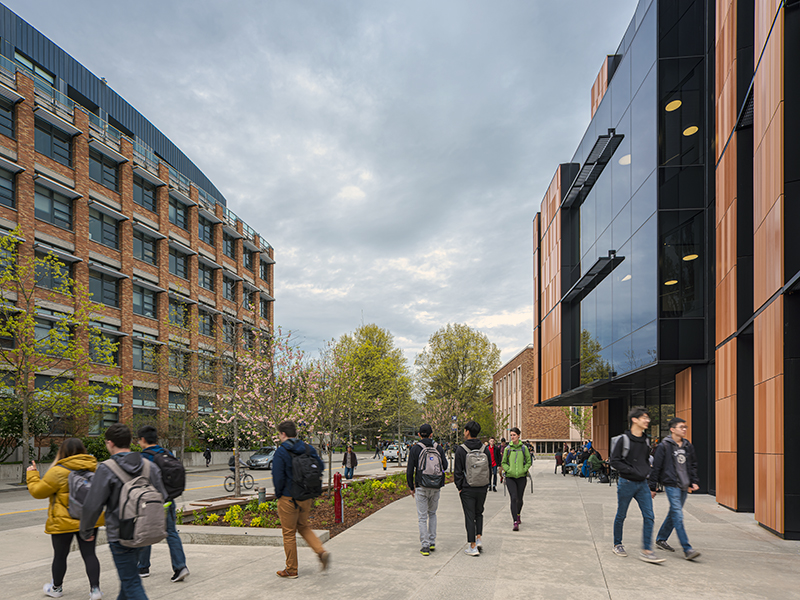
The Allen Center and Gates Centers on the UW campus provide a unified home for the Allen School, which has grown significantly in both size and stature over the past two decades. Photo by Tim Griffith, courtesy of LMN Architects
And that list is by no means exhaustive.
“We took Paul’s words to heart, and the impact of the community’s investment continues to be felt today far beyond the Allen Center’s walls,” said Magdalena Balazinska, director of the Allen School and Bill & Melinda Gates Chair in Computer Science & Engineering. “It is felt through the graduates we’ve mentored, the technologies we’ve developed, the companies we’ve started, the opportunities we’ve created, and the leadership we’ve provided.”
The growth sparked by the Allen Center eventually led UW to break new ground in computing literally as well as figuratively; nearly 16 years later, with its first building now bursting at the seams, the Allen School dedicated its second building, the Bill & Melinda Gates Center, which doubled its physical space.
That additional space came just in time, too. Thanks to advocacy by the University and additional investments from the state legislature, the school is currently on track to award 820 degrees annually and has cemented its place in the top echelon of computer science programs in the nation.
“I said back then that the true measure of this building will be what we do inside to take our programs to the next level of excellence,” said Levy. “I’d like to think that we lived up to that promise, and then some.”
In 2020, a group of researchers unveiled a tool called Face Depixelizer that would take a low-resolution image as an input and, with the help of a generative machine learning model called StyleGAN, produce a high-resolution image in its place. But the model, which was not designed to “fix” the original low-quality image but instead generate an imaginary replacement, had a tendency to predominantly imagine white people — even when the original image depicted someone of another race.
The following year, a group of web developers and accessibility experts signed an open letter urging website owners to avoid using accessibility overlays on their sites. The signatories had become alarmed by the growing reliance on these automated tools, which are marketed under the guise of helping website owners improve the user experience while avoiding potentially costly litigation, when it became apparent that they can actually make the experience worse for people with screen readers — to the point of making a site unusable. To date, nearly 800 individuals have added their names to the letter.
These are just two examples of how technology can have unforeseen, and ostensibly unintended, negative consequences in the real world. Spurred on by these and other cautionary tales, a team of researchers at the Allen School want to assist their colleagues in anticipating and mitigating the consequences of their own work. With support from a five-year institutional transformation grant through the National Science Foundation’s Ethical and Responsible Research (ER2) program, the team hopes their project will usher in a new paradigm in computing-related research not just at the University of Washington, but across the field.
One member of the team, Allen School Ph.D. student Rock Yuren Pang, already had begun thinking about how society increasingly bears the brunt of unintended consequences from new technologies. After enrolling in a graduate-level computer ethics seminar taught by professor Katharina Reinecke, he began to fully appreciate the difficulties researchers face in attempting to understand, let alone mitigate, what those might be.
“Emerging technologies are being used for a growing range of applications that directly impact people’s lives — from how communities are policed, to which job applicants are called for an interview, to what content someone sees online,” Pang said. “As a young Ph.D. student, I thought the question of how we as researchers might think about the downstream impacts of our work to be a really important problem. But I also felt overwhelmed and didn’t know how to even begin tackling it.”
Rock Yuren Pang (left) and Katharina Reinecke
In a new white paper, Pang, Reinecke and Allen School professors Dan Grossman and Tadayoshi Kohno offer a potential starting point. Dubbed PEACE — short for “Proactively Exploring and Addressing Consequences and Ethics” — their proposal offers a vision for empowering researchers to anticipate those consequences “early, often, and across computer science.”
The latter is important, Reinecke notes; while artificial intelligence may dominate the headlines at the moment, these issues extend throughout the field.
“We can’t just point fingers at AI; every technology, no matter how seemingly benign, has the potential to have undesirable impacts,” said Reinecke, the PI on the NSF grant whose research in the Allen School’s Wildlab includes investigating how people relate to technology differently across languages, cultures and abilities. “When we interviewed researchers across multiple subfields, they generally acknowledged the importance of trying to anticipate the consequences of innovation. But to translate that into practice, they need some scaffolding in place.”
To that end, Reinecke and her co-authors propose a holistic approach that would weave such considerations into the school’s teaching and research while making it easier for researchers to tap into existing resources for assistance in anticipating and mitigating undesirable impacts. Two of the resources the team intends to explore as part of the NSF grant, the Tarot Cards of Tech and guided stakeholder analysis, have Seattle roots. The latter is a pillar of Value Sensitive Design, co-conceived by UW iSchool professor and Allen School adjunct faculty member Batya Friedman, that engages individuals or groups who could be directly or indirectly affected by technology. As part of the process, researchers could save the results of their analysis in the form of a PEACE report that could be shared with collaborators on a particular project and updated anytime.
Researchers will also have the option to share their PEACE reports with an ethics board comprising faculty colleagues from across campus with expertise in areas such as law, bioethics, science and technology studies, and gender, women and sexuality studies. Members of this group will act as a sounding board for researchers who wish to follow up on the results of their exploration — and help them think through how they could address any potential unintended consequences they’ve identified in the process.
As with other elements of the proposed PEACE process, consultation with the ethics board would be entirely voluntary.
“We want to give researchers a low-friction, low-stakes mechanism for seeking diverse perspectives on how a technology might be used or misused. This could help surface potential implications we may not think of on our own, as computer scientists, that can inform how we approach our work,” Reinecke said. “We aren’t saying ‘don’t do this risky piece of research.’ What we’re saying is, ‘here’s a way to anticipate how those risks might manifest’ in order to mitigate potential harm.”
Tadayoshi Kohno (left) and Dan Grossman
In his role as co-director of the Allen School’s Security and Privacy Research Lab and the Tech Policy Lab at UW, Kohno has had ample opportunity to analyze the harm that can result when researchers haven’t thought ahead.
“Many times during my career have I wondered if the original researchers or developers could have prevented a problem before deployment,“ said Kohno. “For years, I and my colleagues have encouraged the people who build new technologies to apply a security and privacy mindset from the start rather than having to fix vulnerabilities later, after damage has been done. That’s essentially what we’re suggesting here — we’re asking our colleagues to apply a societal mindset, and to front-load it in the research process instead of relying on hindsight, when it may be too late.”
Grossman is vice director of the Allen School and often teaches the undergraduate computer ethics seminar, which the school began offering to students on a quarterly basis in 2020. He sees an opportunity for the PEACE project to eventually transform computing education and research on a massive scale.
“We are in a position to guide the future leaders of our field toward thinking not only about the technical aspects of computing, important as they are, but also the ethical ones — to train future researchers and technologists how to rigorously consider the potential ramifications socially, politically, environmentally, economically or any combination thereof,” said Grossman. “We need the people who understand their proposed technology to grapple with these issues as well as to learn how to interact with non-technologists, such as public-policy experts, who have complementary expertise.”
The team will deploy and evaluate the PEACE project within the Allen School to start, with plans to extend access to other academic units on campus in later years. Eventually, Pang and his colleagues plan to distill the findings from their evaluation of the UW deployment into detailed design guidelines that can be adapted by other institutions and companies.
“I want to create the go-to place for UW researchers to learn, anticipate and bounce ideas off other researchers about the potential consequences of our work,” Pang said. “But I hope this initiative encourages a broader culture in which computer scientists are unafraid to think critically and openly about these issues. And I believe we can do it in a way that supports, not stifles, innovation.”
Single-cell datasets are transforming biomedical research aimed at understanding the mechanisms and treatment of diseases such as acute myeloid leukemia (AML) pictured above. A new deep learning framework called ContrastiveVI enables researchers to explore single-cell data in finer detail by applying contrastive analysis, which is capable of revealing subtle effects that previous computational methods might miss. Credit: National Cancer Institute
In the days before single-cell RNA sequencing, researchers investigating the mechanisms and treatment of disease had to make do with running experiments on bulk cell profiles created by taking tissue samples and grinding them up, “sort of like putting them in a blender,” in the words of Allen School Ph.D. student Ethan Weinberger.
That milkshake may have brought all the biomedical scientists to the lab, but the bulk sequencing technique limited them to studying aggregations of populations of cells, with no way to distinguish among individual cell types. Nowadays, researchers can take measurements at the level of individual cells, enabling the exploration of such finer-grained distinctions and advancing our understanding of various biological functions. But without the right computational tools, even single-cell datasets can yield distinctions without a difference.
Weinberger is a member of the Allen School’s AIMS Lab, where he works with fellow Ph.D. student Chris Lin and professor Su-In Lee to leverage advances in artificial intelligence to help scientists get the most out of these increasingly robust datasets. In a paper published this week in Nature Methods, the team introduced ContrastiveVI, a deep learning framework for applying a powerful technique called contrastive analysis, or CA, to single-cell datasets to disentangle variations in the target, or treatment, cells from those shared between target and control cells when running experiments.
“Scientists want to investigate questions like ‘How does perturbing this particular gene affect its response to a pathogen?’ or ‘What happens when I hit a diseased cell with such-and-such a drug?’,“ explained Weinberger. “To do that, they need to be able to isolate the variations in the cell data caused by that perturbation or that drug from those that are shared with a control dataset. But existing models can’t separate those out, which might lead someone to draw erroneous conclusions from the data. ContrastiveVI solves that problem.”
“There are so many contexts in which scientists would want to do this”: Ethan Weinberger (left) and Chris Lin
CA has proven effective at this type of isolation in other contexts, but its utility in relation to single-cell datasets has so far been limited. That’s because existing computational models for analyzing single-cell data mostly rely on a single set of latent variables to model all variations in the data, effectively lumping them all together and precluding the ability to perform CA.
ContrastiveVI is the first deep learning model designed for performing CA on single-cell data. Unlike other approaches, the ContrastiveVI model explicitly separates latent variables into two categories, each with their own encoding function: shared variables, or those that are found in both the target and control cells, and salient variables, which are found exclusively among the target cells.
It is that second category that will excite scientists testing potential cancer drugs or analyzing the role of gene expression in the body’s response to disease.
“ContrastiveVI effectively distinguishes the factors that are salient — that is, relevant — to an experiment from confounding factors. This enables us to capture variations that are unique to the treated cells,” said Lee, senior author of the paper and holder of the Paul G. Allen Career Development Professorship in the Allen School. “ContrastiveVI will reveal tiny but important variations in the data that may be obscured by other models.”
Lee and her co-authors validated ContrastiveVI using real-world datasets with previously verified results as their ground truth. In one experiment, the researchers applied ContrastiveVI to a target dataset of measurements taken from two dozen cancer cell lines treated with idasanutlin. This small-molecule compound has shown therapeutic potential owing to its activation of a tumor-suppressing protein in wild type — that is, unmutated — TP53 genes. The team used ContrastiveVI to analyze data on both wild type and mutated TP53 cell lines, which are non-responsive to idasanutlin, using a background dataset from the same cell lines treated with a different compound, dimethyl sulfoxide, as the control.
“A good result — one that agreed with prior knowledge — would show separation by cell line accompanied by increased mixing of treatment and control cells in the shared latent space, but mixing across mutant cell lines with clear separation based on mutation status in the salient latent space,” said Lin, co-lead author of the paper with Weinberger. “And that is exactly what we observed. In addition, our model indicated a separation between wild-type cell lines in the salient space that suggested a differential response to treatment, which spurred us to run additional analyses to identify the specific genes that contribute to those variations.”
A comparison of ContrastiveVI’s shared and salient latent spaces in the idasanutlin experiment. Top row: Cancer cells in the shared latent space separate according to cell line and whether they are wild type or have the TP53 mutation, with treatment and control cells mixed within each cluster. Bottom row: Cells separate in the salient latent space based on whether they are wild-type or mutant, while displaying increased mixing across the mutant cell lines. Further analysis revealed four genes highlighted by ContrastiveVI that contributed to a differential treatment response observed in the wild-type cells. Credit: Nature Methods
Such findings, which could build upon prior knowledge and lead scientists to new hypotheses, is precisely the sort of progress Lin and his colleagues hope their model will support. In another demonstration of ContrastiveVI’s potential, the researchers applied the model to a dataset drawn from intestinal epithelial cells of mice displaying variations in gene expression due to infection with the bacteria Salmonella or the parasite H. polygyrus (H. poly), a type of roundworm, using healthy cells as the control. Once again, the model aligned with expectations by separating along cell type and mixing across infections in the shared latent space, while largely mixing across cell types and separating by pathogen in the salient latent space.
Like the cancer cell example, the pathogen infection experiment also yielded unexpected patterns that prompted the team to analyze further. These patterns included differences in the upregulation of multiple genes between H. poly–infected tuft cells and other infected cell types that may have been masked in prior experiments — and could point to a distinctive role in the body’s immune response.
Su-In Lee
The researchers also explored how the model could be adapted to isolate variations in multimodal single-cell datasets, such as a combination of RNA and surface protein expression data in CRISPR-perturbed cells. They layered their CA modeling techniques onto TotalVI, a deep generative model developed to analyze joint RNA-protein datasets, to create TotalContrastiveVI. In a series of experiments, they showed how their extended model could be used to identify clusters of cells in the salient latent space and apply downstream analysis to identify patterns that warranted further investigation.
TotalContrastiveVI may be a proof of concept, but the underlying model is no mere demonstration project. The team designed ContrastiveVI to make it easy for researchers to integrate the tool into existing workflows.
“Our software is essentially plug and play,” noted Lin. “Computational biologists can deploy ContrastiveVI right now in conjunction with standard tools in the field such as Scanpy to begin exploring single-cell datasets in greater detail than they could before.”
Those details could yield new hypotheses that could, in turn, lead to new biomedical breakthroughs.
“There are so many contexts in which scientists would want to do this,” said Weinberger. “People were already excited by the potential of single-cell datasets. With ContrastiveVI, they can unlock even more insights and expand our knowledge of the mechanisms and treatment of disease.
“To borrow a popular metaphor in biomedical circles: before, we had a smoothie; now we can zoom in on each part of the corresponding fruit salad.”
“Although not the community in which I normally publish my research, I am truly honored and amazed that my work has been recognized by leaders in computational mathematics.” Shayan Oveis Gharan in the Paul G. Allen Center for Computer Science & Engineering. Photo by Dennis Wise/University of Washington
Take a generous helping of mathematical brilliance, cover it in copious amounts of curiosity about the most vexing problems underpinning computer science, add a generous dash of humility, and what do you get?
Shayan Oveis Gharan, a professor in the Allen School’s Theory of Computation group, combines all the essential ingredients of a trailblazing researcher who, as his colleagues will attest, also happens to be a genuinely nice guy. The combination has also proved to be a genuine recipe for success, as he has racked up a series of accolades in theoretical computer science since he arrived at the University of Washington in 2015. His most recent honor, the Stephen Smale Prize from the Society for the Foundations of Computational Mathematics (FoCM), celebrated Oveis Gharan’s “breakthrough results on the applications of algebraic and spectral methods to the design of algorithms and to combinatorial optimization” that have made him “the architect of surprising and profound discoveries on foundational problems in computing.”
Oveis Gharan began acquiring the building blocks of those career triumphs as a middle school student in Iran, when he encountered the book “Mathematics of Choice: How to Count without Counting” by the Canadian-American mathematician Ivan Niven. Under Niven’s written tutelage, the young Oveis Gharan learned how to quickly count combinatorial objects — say, the number of ways one could assemble a basketball team consisting of 10 players and a captain from a class of 30 students — on paper. The lesson was a slam dunk, and counting problems still comprise a major portion of his research years later — only now, he’s designing computer algorithms to handle more sophisticated problems than the possible permutations with himself at point guard.
Later, as he prepared to do battle in regional and world informatics competitions, a teenaged Oveis Gharan practiced with hundreds of combinatorial and graph theoretic problems drawn from past Russian Mathematics Olympiads. That practice paid off, as he took home a silver medal from the 2003 Central European Olympiad; a year later, he won gold at the International Olympiad.
“Those experiences are the backbone of most problem-solving techniques I still use today,” Oveis Gharan noted, pointing out that old approaches can come in handy when it comes to new problems. It’s one of the aspects he loves most about his chosen line of work.
“One of the amazing characteristics of research in discrete mathematics and combinatorics is that there is rarely a unified theme to approach hard problems,” he explained. “One often needs to cook up a new method from scratch. So in one sense, it feels like we are going to fight with a challenging problem empty-handed, but in reality, previous work on related problems can offer a menu of ideas with which to approach this other problem.”
One challenge that Oveis Gharan found he could really sink his teeth into is the infamous Traveling Salesperson Problem, which he first encountered over a decade ago as a Ph.D. student at Stanford University. There, he and his colleagues set out to design an improved approximation algorithm for metric TSP.
At first, the team thought they had the solution — until they realized they didn’t.
“About halfway through we figured some of our intermediate conjectures were wrong,” Oveis Gharan recalled. “So, we made the problem simpler and instead only managed to prove that the algorithm breaks the long-standing barrier for a special family of metrics called ‘graph metrics.’ It wasn’t until two years ago that I and another group of co-authors finally achieved a result for all metrics.”
The aforementioned result was the first performance improvement in metric TSP in more than 40 years. Along the way, Oveis Gharan contributed to what co-author and Allen School professor Anna Karlin has described as a “deep mathematical machinery” mixing elements of graph theory and probability theory that researchers have since applied to other open problems. Among the tools in this expanded mathematical toolbox were the use of maximum entropy sampling, new theorems related to the geometry of polynomials, Strong Rayleigh probability distributions and negative dependence, and new insights into the combinatorial structure of the minimum and near-minimum cuts of a graph. Oveis Gharan and his co-authors, including Ph.D. student Nathan Klein, subsequently used the latter to build on their initial result by showing the integrality gap of the subtour linear programming relaxation for TSP is below 3/2 last year.
To commemorate the Smale Prize, Oveis Gharan was presented with a Gömböc, the first physically constructed example of a three-dimensional object famous in geometry for being mono-monostatic — meaning it has one stable resting position and one unstable point of equilibrium — as well as convex and homogenous. Its existence was first conjectured by Russian mathematician Vladimir Arnold in 1995 and proven in 2006 by the Hungarian scientists Gábor Domokos and Péter Várkonyi. Photo courtesy of FoCM
What is it about TSP that he finds so alluring? As Oveis Gharan explains it, TSP is different from most computational problems encountered by theoreticians, like the graph coloring problem, that require one to satisfy a range of local constraints. With TSP, one has to satisfy both a set of local constraints and a global constraint — connectivity — simultaneously.
“Oddly enough, each of these two sets of constraints is easy to satisfy optimally on their own, but the challenge is to satisfy both,” he said. “The quest in studying TSP is that you want to construct solutions which are locally correct while globally connected.”
For Oveis Gharan, satisfying that dual challenge is where the rubber meets the road.
”Think of a driver going from Seattle to San Francisco. They need to keep an eye on the road to make sure they are ‘locally’ driving safely — i.e., not ramming into the next car and not driving out of bounds,” he said. “But they also need to keep the bigger picture of the route in mind, choosing the right highway at every junction. Now in this example, perhaps, the bigger picture is easy to keep in mind when there’s only a single highway, I-5, running all the way south. But imagine how difficult it would be with millions of possible roads to choose from, and no GPS! That is similar to the dilemma in designing an algorithm for TSP.”
Despite his devotion to that problem, Oveis Gharan is also driven to tackle other challenges. For example, he is widely known for his work analyzing the Markov Chain Monte Carlo (MCMC) technique for sampling from high dimensional distributions and as a method for studying large, complicated sets. As part of that work, Oveis Gharan and his collaborators — including former student Kuikui Liu (Ph.D., ‘23), who will join the faculty of MIT this fall — developed the theory of spectral independence, a revolutionary approach for approximate sampling of Markov chains that has implications for computational biology, machine learning, physics and more.
The aforementioned work relates to expander graphs — which, in Oveis Gharan’s view, are “one of the most extraordinary inventions in mathematics.” He is keen to further explore the theory of high-dimensional expanders, which have numerous practical applications in computing.
“On one hand, these graphs are as sparse as, say, a cycle; on the other hand, they preserve almost all properties of a complete network,” Oveis Gharan explained. “If one wants to build a sparse routing network that will be as reliable as possible against node or connection failures, the best design is to use an expander graph. High dimensional expanders are a generalization of expander graphs to hypergraphs, which have been a subject of intense study over the last decade leading to several breakthroughs, from improved analysis of MCMC algorithms, to the construction of new locally testable codes.”
To someone whose work is typically celebrated in optimization and algorithm design circles, the Smale Prize came as a pleasant surprise.
“Although not the community in which I normally publish my research, I am truly honored and amazed that my work has been recognized by leaders in computational mathematics,” he said. “This certainly motivates me and my research group to pursue a deeper understanding of problems at the intersection of math, computer science and efficient computation.”
The Smale Prize — named for Stephen Smale, one of the founding members of FoCM — is awarded every three years. The organization formally honored Oveis Gharan, who joins rarefied company as only the fifth recipient since the prize’s inception, during its annual conference in Paris last month. Read more →
On Friday, June 9, more than 4,000 family and friends from near and far gathered on the University of Washington campus to celebrate the Allen School’s 2023 graduates. The celebration commenced with a casual open house and meet-and-greet with faculty and staff in the Paul G. Allen Center and Bill & Melinda Gates Center. It culminated in a formal event in the Hec Edmundson Pavilion at the Alaskan Airlines Arena, where graduates made the brief journey across the stage to mark the start of a new journey as Allen School alumni.
‘Remember tonight‘
In her remarks opening the evening’s program, Magdalena Balazinska, professor and director of the Allen School, observed that most of those seated before her in their caps and gowns started their Allen School education prior to the COVID-19 pandemic. Balazinska congratulated them for overcoming the challenges and isolation of the intervening years to emerge victorious. She also noted that, while this milestone is cause for celebration, still more challenges — as well as opportunities — await them. And they should fear neither.
“When opportunities arise, take them. If you hesitate because opportunities are often scary and they often look like a lot of work, remember tonight. Remember how loud your families, your friends, the faculty, the staff have cheered for you, how much they believe in you, and take the opportunity,” Balazinska advised them. “Like generations that preceded you, you will face personal challenges, and the world around you will face challenges. Remember: you have a very strong education. Use that education, your passion, your kindness, your cleverness to have an impact on the people and the world around you.”
Recognizing the impact of those who came before
From left: Magdalena Balazinska, Janet Davis, Paul Mikesell and Ed Lazowska
As if to illustrate the point, the Allen School welcomed back two graduates who have applied their education, along with their passion, kindness and cleverness, in very different ways: 2023 Alumni Impact Award recipients Janet Davis (Ph.D., ‘06) and Paul Mikesell (B.S., ‘96).
Allen School professor and Bill & Melinda Gates Chair Emeritus Ed Lazowska noted that the award is not only intended to honor outstanding alumni for their contributions throughout their careers, but also to remind the new graduates that they are joining a long and distinguished line of former Allen School students who have built on their education to change the world. Davis’ contributions include building Whitman College’s computer science program from the ground up to reflect that institution’s liberal arts traditions. Mikesell helped build scalable data storage company Isilon Systems into a multi-billion dollar company before expanding into agricultural technology by founding Carbon Robotics, a Seattle-based startup whose LaserWeeder provides farmers with a cost-effective, environmentally friendly alternative to pesticides.
‘Take advantage of the doors that open’
This year’s graduation speaker, Barbara Liskov, traveled from Boston to share her wisdom and encouragement with the newly minted graduates. Liskov is an Institute Professor of MIT — the highest institutional honor bestowed upon faculty — and received the A.M. Turing Award from the Association of Computing Machinery for her contributions to the theory and practice of programming language and systems design. She is also, as Lazowska noted in welcoming her to the stage, ”a wonderful human being — an example of what we should all strive to be.”
Barbara Liskov encouraged the graduates to be open to the unexpected
Before she touched down in Seattle, Liskov was asked what message she hoped the newly minted graduates would take away from their big day.
“One thing that strikes me when I look back on my career is the importance of the unexpected,” Liskov explained. “Doors close and doors open. It’s important in your career not to be discouraged when doors close and to take advantage of the doors that open. You may end up doing something quite different from where you started, and this is absolutely ok.”
Liskov delivered that message and more to those gathered in the arena, drawing from a career spanning six decades. As the first woman in computer science at MIT — at a time when there were only 10 women on the entire faculty numbering nearly 1,000 — Liskov was a trailblazer in more ways than one. Having reluctantly accepted a position with industry when she couldn’t land a faculty position following her own graduation with a Ph.D. from Stanford, she relayed how she turned that disappointment into opportunity by transitioning her research from artificial intelligence to systems.
Noting that where she ended up “was not at all where I might have predicted when I got started,” Liskov suggested that many of the graduates seated before her are likely to experience the same. And while they should not be deterred by detours, they should remain true to themselves.
“There will be setbacks, and there will be opportunities,” she said. “When there are setbacks, you want to persevere. When there are opportunities, you want to decide whether it’s a good idea for you to accept them. And these decisions that you make, you need to make by thinking about what’s going to work for you.”
Liskov also hoped the graduates would think about what that work will mean for the world at large. Pointing to technologies that enabled remote learning during the pandemic, computer-assisted surgery, and other contributions, she noted that computer science has created “marvelous opportunities.” But it also has created problems like fake news, bias stemming from the naive use of machine learning, and potential misuse of recent developments in AI.
“As you do your job, think about what’s ethical to do. If you develop tools, think about tools that will be good for humanity,” Liskov advised, noting that the entire field has an obligation to contribute its technical knowledge to mitigating such problems.
“I had a wonderful career. I had a lot of fun,” she concluded, “and I hope all of you have the same in your careers.”
Celebrating scholarship and service
Outstanding Senior Awards
Liskov’s words would have resonated with the recipients of the Allen School’s Outstanding Senior Awards, which recognize superior scholarship, potential for leadership and the ability to both apply and create new knowledge. While it is a nearly impossible task to choose from among the outstanding graduates each year — all of whom would have demonstrated some combination of those qualities to be admitted in the first place — five were singled out for their extraordinary contributions.
Magdalena Balazinska (right) with recipients of the Outstanding Senior Award, from left: Katherine Murphy, Alex Mallen, Lansong (Ryan) Li, Sarah Khan and Maggie Jiang
Maggie Jiang distinguished herself as an insightful and creative researcher in the Allen School’s Security and Privacy Research Lab who wasn’t afraid to ask questions about technology and scientific methodology. Operating at a level associated with experienced Ph.D. students, Jiang contributed to the publication of a longitudinal study of public opinion around the use of contact tracing apps to slow the spread of COVID-19 and concerns over individual privacy. She will continue on at the Allen School as a student in the combined B.S./M.S. program.
Sarah Khan was honored for her contributions as a teaching assistant for CSE Startup, a course for first-year students focused on problem solving, communication and computational thinking skills. In that role, Khan contributed to the development of curriculum for the Allen School Scholars Program and STARS with an emphasis on interdisciplinarity and the diversity of student experiences. Khan, who double-majored in computer science and education, communities and organizations, will continue her studies in the Allen School’s B.S./M.S. program.
Lansong (Ryan) Li was recognized for his remarkable contributions to interdisciplinary research projects bridging natural language processing and social computing. As a member of the Social Futures Lab, Li worked with UW and external collaborators to develop a harm-reduction framework for assessing and triaging misinformation online. He also explored how to leverage state-of-the-art neural network models to assess misinformation believability. Li will pursue a master’s degree at Stanford University following his graduation from the Allen School.
Alex Mallen is known as an ambitious and talented researcher with a passion for AI safety. As a member of the H2Lab, he spearheaded a project that sought to identify when large language models’ outputs can become untrustworthy — revealing his skills at building diagnostic datasets and running experiments in the process. Mallen, who is an active member of the grassroots research collective EleutherAI, previously earned a prestigious Goldwater Scholarship on his way to earning his undergraduate degree in just three years at the Allen School.
Katherine Murphy earned recognition as an outstanding leader as a teaching assistant for Software Design and Implementation for nine quarters. Having taken over the course software infrastructure when many experienced TAs were about to graduate, she worked with the rest of the teaching team to keep the course running smoothly and ensure continuity across multiple instructors and offerings. Although many of her contributions were behind the scenes, Murphy was responsible for the positive experiences many of her fellow graduates had in the course.
Ximing Lu
Best Senior Thesis Award
Each year, the school recognizes an undergraduate student for original research contributions through the Best Senior Thesis Award. The recipient of this award has completed an independent research project under the supervision of one or more faculty members culminating in a thesis presenting their results. The school received eight nominations this year, from which it selected one award winner and one honorable mention recipient.
Ximing Lu received the 2023 Best Senior Thesis Award for “The Art of Algorithm and Knowledge in the Era of Extreme-Scale Neural Models.” In her thesis, Lu demonstrated how to empower small to moderate sized neural language models to work competitively against industry-scale models. A prolific researcher working under the supervision of Yejin Choi, the Brett Helsel Career Development Professor in the Allen School and Senior Research Director at AI2, Lu has already published multiple papers in the preeminent venues for natural language processing. She is currently pursuing her Ph.D. at the Allen School.
Since 2011, the Allen School has recognized graduating seniors who devoted their time and energy to building community and benefiting their fellow students through various events and activities throughout their time on campus. This year, the school recognized five outstanding graduates with Undergraduate Service Awards.
Crystal Eney (left) and Jenifer Hiigli (right), members of the Allen School’s Undergraduate Student Services Team, flank the recipients of the Undergraduate Service Awards, from left: Lynn Nguyen, Eman Mustefa, Samuel Levy, Hayoung Jung and Camila Christensen
Camila Christensen (B.S., ‘22) has been “an amazing Allen School ambassador” — particularly to transfer students. Christensen served as a teaching assistant for the school’s transfer seminar, which supports newly arrived students to acclimate to the program, in addition to supporting various outreach efforts and serving as a frequent volunteer for Allen School events.
Described as “an incredible leader,” Hayoung Jung has been an engaged member of the student group Computing Community (COM^2) throughout his time on campus. He applied his leadership skills during the pandemic to analyzing and reporting on how COVID-19 was impacting his fellow students. Jung, who double-majored in computer science and political science, was recognized in the Husky 100 last year.
Samuel Levy has served as a developer for Impact++, a student group focused on the intersection of computing and social good, and as an Allen School peer adviser, assisting his fellow students with advice and resources. For the past year, Levy has served as a lead peer adviser and is known as “an exceptional leader, advocate, and student employee.”
Eman Mustefa co-founded GEN1, a student group focused on building community among Allen School students who are the first in their families to pursue a four-year degree. Passionate about supporting women of color in computing, Mustefa has also “generously stepped up, time and time again” to share her experiences with K-12 students as an Allen School Ambassador.
Earning a reputation as an “outreach and recruitment rockstar,” Lynn Nguyen volunteered for more high school visits and information sessions than any other member of the Allen School Ambassadors team. A community-minded leader who is exceptional at supporting students, Nguyen is also described as the glue that held various events and activities together.
A tip of the hat to great teaching
Bob Bandes Memorial Awards
Teaching assistants play a vital role in the Allen School’s educational mission, serving not only its own majors but also thousands more students across campus who enroll in computing courses. More than 750 students served as Allen school TA’s in 2022-2023, supporting student learning through office hours, tutoring and review sessions while assisting instructors with various course administration duties. As teaching professor Justin Hsia observed, “We could not do what we do without you.” During the annual graduation celebration, the school recognizes outstanding TA’s from the preceding academic year with the Bob Bandes Memorial Award for Excellence in Teaching. Out of over 700 total nominations spread out over 200 individual TA’s, the school selected three winners and three runners up who went above and beyond to provide a supportive student experience.
From left: Magdalena Balazinska, Bandes Memorial Award winners Wen Qiu, Sylvia Wang and Anthony Chung, and teaching professors Justin Hsia and Ruth Anderson
Winner Anthony Chung has supported six different courses over nine quarters as an undergraduate TA, including multiple courses in the Allen School’s Introduction to Computer Programming series, Data Structures and Algorithms, and Distributed Systems. Chung was lauded for his “clear intent to do right by all of his students” through his diligence in providing them with clear feedback and consistent grading. He was also proactive in identifying areas where students were struggling, offering solutions such as the creation of alternative visualizations to assigned problems and hosting one-on-one Zoom calls with students outside of office hours.
Fellow winner Wen Qiu has been a TA for 12 quarters, first as an undergraduate and then as a graduate student in the Allen School’s B.S./M.S. program, for Web Programming, Data Programming and Intermediate Data Programming. In addition, she served as the instructor for the latter course last summer. Known for her going to “tremendous lengths” to share her expertise not only with students in her courses but also her fellow TA’s, Qiu earned accolades for “seeing something needed to be done and jumping in and doing it.” One student nominator noted, “She would be an amazing professor!” Qiu also founded and served as president of the Association for Computing Education (ACE).
From left: Sudheesh Singanamalla, Melissa Lin and Ben Zhang
The final winner, Sylvia Wang, served as a TA or head TA for nine quarters across five different courses, including Intermediate Data Programming, Data Structures and Parallelism, Systems Programming and Database System Internals. Wang’s teaching style resonated with her students, who described her as kind, encouraging, supportive, patient and helpful. “She stays with each student until they understand the concepts they’re struggling with and does not let any student leave with any confusion.” She was also an excellent advocate for both students and other TA’s, including being proactive in identifying how an assignment that multiple students struggled with could be adjusted to improve the experience of everyone in the class.
Lin, a student in the B.S./M.S. program, has served as a TA for eight quarters spanning the introductory series, Foundations of Computing I and II, and Data Structures and Algorithms and earning students’ appreciation for giving 110% to her students — even at 8:30 in the morning.
Singanamalla, a Ph.D. student, served as a TA for graduate-level courses in Computer Systems and Computer Security and Privacy, where his wisdom and compassion for students “shined brightly in all aspects of his work.”
Zhang, an undergraduate, TA’ed for multiple offerings of the Foundations of Computing series, earning plaudits for being thorough and proactive, making his sections “very welcoming and open” and responding to questions that seem ambiguous with examples generated from his own understanding.
Magdalena Balazinska (left) and Andrea Coladangelo
Undergraduate Teaching Awards
Each year, student leaders in COM^2 — formerly the UW chapter of the Association for Computing Machinery — recognize selected faculty members for contributing to the Allen School’s educational mission and enriching the student experience through the Undergraduate Teaching Awards. This year, the group highlighted two professors for their role in “shaping our minds and inspiring our achievements.”
Andrea Coladangelo, a professor in the Allen School’s Cryptography and Theory of Computation groups, was honored for his first quarter of teaching. “He has worked tirelessly this quarter to build up the quantum computing course, expanding the frontiers of knowledge for his students,” COM^2 Chair Vidisha Gupta said.
“What distinguishes him, however, is his ability to discern the ‘real’ question behind the question.”
Known not only for his technical expertise but also for his kindness and generosity with his time, Coladangelo earned students’ admiration for his willingness to provide one-on-one help and to modify his teaching to better accommodate his class.
From left: Magdalena Balazinska, Ryan Maas and Vidisha Gupta
Teaching professor Ryan Maas (M.S.’18) was recognized for his impact that reaches far beyond the classroom.
Maas is known for his “captivating lectures” that make challenging concepts seem easy. But what truly sets him apart, Gupta noted, is his extraordinary care and dedication to his students.
“No question is too repetitive or silly for him, as he treats each inquiry with patience and thoughtfulness,” she said. “Ryan’s commitment to his students’ success extends beyond teaching, as he provides guidance and support to help them excel academically and grow as individuals.”
Congratulations to all of our Allen School graduates!And remember — our doors will always be open to you!Read more →