UW CSE’s James Fogarty recognized with CMU’s Allen Newell Award for Research Excellence

James FogartyUW CSE professor James Fogarty just returned from collecting the prestigious Allen Newell Award for Research Excellence at his Ph.D. alma mater, Carnegie Mellon University.

The award, which James shares with his Ph.D. adviser, Scott Hudson; fellow CMU alumni Daniel Avrahami, Chris Harrison and Johnny Lee; and current CMU student Robert Xiao, honors an impressive body of research into “innovative and practical physical interaction techniques.” Their work produced more than 25 papers on subjects ranging from novel uses of sensors, to wearable displays, to 3-D printing.

According to award committee chair Mahadev Satyanarayanan, “The Newell Award committee was impressed with the highly innovative and deep contributions to user interface design made by this team over a decade-long period. Their work spans the full spectrum of research in this space, with a high degree of originality in every aspect.”

The annual award pays tribute to Newell’s research style, summed up in his observation that, “Good science responds to real phenomena or real problems. Good science is in the details. Good science makes a difference.”

We couldn’t agree more. Congratulations to James and his colleagues for this well-deserved recognition of their outstanding work!

Read CMU’s press release on the award here. Read more →

UW CSE’s Team Hillarious* places 2nd at Pacific Rim Collegiate Cyber Defense Competition

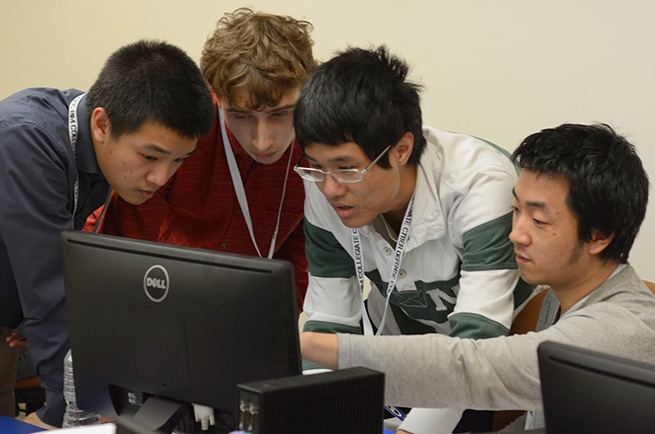
Team Hillarious members battle hackers at PRCCDCWe’re celebrating our own version of March Madness after Team Hillarious*, a group of students from UW CSE, captured second place at the Pacific Rim Collegiate Cyber Defense Competition (PRCCDC) over the weekend. PRCCDC is an annual competition that serves as the regional semi-finals for the National Collegiate Cyber Defense Competition, a.k.a. the “big dance of data defense.” Teams of college students from Washington, Oregon and Idaho do battle against teams of hackers composed of cybersecurity industry experts who volunteer their time to test the students’ mettle. Fourteen teams participated in this year’s regional competition, which took place at Highline College.

Congratulations to Team Hillarious captain Kristina Savelesky, co-captain Kevin Fan, teammates Daniel Arens, Matt Carver, Stanley Hsieh, Alex Kirchhoff, Spencer Walden and Bo Wang, and team advisor Melody Kadenko – way to go!

*If you are wondering if that is a typo, it isn’t. Team Hillarious got its name when, a few years ago, the UW students frustrated a team of hackers with their defensive prowess. In response, the hackers left a note on the door that said, “You think you’re so hillarious, don’t you?” We thought that was hilarious, and so the name stuck.

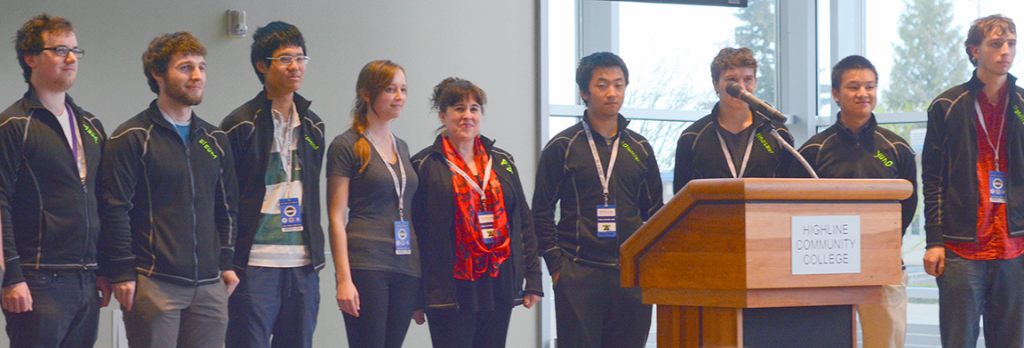
Team-Hillarious-photo-1024x348 copy

UW CSE’s Team Hillarious, left to right: Spencer Walden, Matt Carver, Stanley Hsieh, Kristina Savelesky, Melody Kadenko, Bo Wang, Dan Arens, Kevin Fan, and Alex Kirchhoff

Read more →

UW CSE’s Jeffrey Heer on the future of data visualization at Strata + Hadoop World

Jeffrey HeerJeffrey Heer, director of UW CSE’s Interactive Data Lab and co-founder and chief experience officer of big data visualization company Trifacta, was a keynote speaker at the recent Strata + Hadoop World 2015 conference in San Jose, California.

Strata + Hadoop World gathers leading minds in data science and data-driven businesses to explore new developments and best practices in data management, visualization, security and other topics of importance in the growing field of big data. Jeff focused on the future of visualization tools – specifically, how we can move from tools that serve designers to tools that enable better decision making by businesses and governments. To help end users get the most out of their data, Jeff described how visualization tools need to “move from specification to exploration” so that they inspire users to consider new questions, exercise skepticism, and gain better insights.

Watch Jeff’s talk on YouTube here.

Read our recent blog post about big data in Washington State here. Read more →

“I Am CSE” video series shows why UW CSE is the place to be!

Irene Zhang in "I Am CSE"Every March, UW CSE welcomes prospective Ph.D. candidates for two action-packed days of lab tours, social events, and one-on-one meetings with faculty. This week, a record-high 104 candidates spent two days at the Allen Center exploring what it means to be a UW CSE graduate student.

Now, thanks to a new video series, everyone can learn about the people and projects that make UW CSE one of the most innovative and forward-thinking computer science programs in the nation.

“I Am CSE” is a series of short clips in which students, postdocs and faculty describe their work addressing real-world challenges including consumer privacy, health care, and global development. They also depict how UW CSE researchers are advancing the field of computer science with breakthroughs in areas such as computer vision and mobile systems.

Learn how the UW CSE community engages in high-impact projects! Check out the “I Am CSE” series on YouTube here. Read more →

2015 Washington State Algebra Challenge: April 27-May 1

Algebra Challenge logoUW CSE’s Center for Game Science announced the next Washington State Algebra Challenge will take place April 27th to May 1st. This statewide contest challenges Washington’s K-12 students to solve 250,000 algebra equations in one week.

During the 2013 Algebra Challenge, students far exceeded expectations by solving nearly 391,000 equations in just one week. For the 2015 challenge, the Center for Game Science will provide participating classrooms with access to its new math learning game, Riddle Books. Previously only available to students who visited the center or through summer learning programs at selected libraries, Riddle Books teaches kids pre-algebra as they solve word problems in a friendly, game-based environment.

Registration will open soon at the Algebra Challenge website. Stay tuned for more details, and please help spread the word to classrooms around the state! Read more →

UW lands Air Force Center of Excellence with help from CSE and eScience

mothThe University of Washington announced today that it has landed the Air Force Center of Excellence on Nature-Inspired Flight Technologies and Ideas (NIFTI), a collaboration among UW’s Department of Biology, the College of Engineering, the Institute for Neuroengineering, and the eScience Institute. The five UW leads include UW CSE and EE professor Matt Reynolds, UW CSE adjunct professor and eScience Institute Senior Data Science Fellow Tom Daniel (who will direct the center), and eScience Institute Data Science Fellow and Mechanical Engineering professor Steve Brunton.

NIFTI aims to solve complex engineering and technical challenges related to unmanned flight using lessons learned from nature. Researchers will examine how animals use their senses to locate objects and navigate in complex environments or under sensory deprivation. Although the center is housed at UW, it will involve researchers from institutions around the nation and the world, including Imperial College London and Oxford University in the United Kingdom and Lund University in Sweden.

The Air Force Office of Scientific Research plans to provide $9 million to the center over the next six years, with additional funding coming from UW’s Office of the Provost, the College of Arts & Sciences, the College of Engineering, and the Departments of Biology and Applied Mathematics.

Read the UW media release and view a video demonstration here.

Read about the center on GeekWire here. Read more →

Famous photo, lost for over 25 years, finally returned to UW CSE

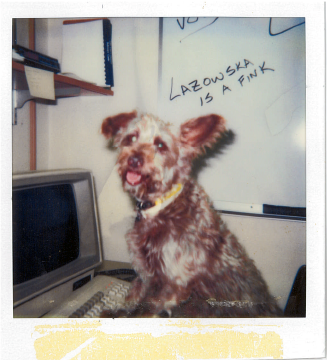
Monkey-W-DuncanA famous historical UW CSE photo, lost for over 25 years, has been located in North Carolina. This photo, of CSE graduate student Monkey W. Duncan (ABD ‘89), graced the grad student photo board on the lower level of Sieg Hall (CSE’s home prior to the Allen Center) in the late 1980s. The photo also shows the advanced technology that was available to CSE graduate students at that time.

Unfortunately, Mr. Duncan never completed the program, as the Ph.D. quals in the 80s required students to pass a long written exam, and he was unable to hold a pencil. He did pass the oral theory exam, however, correctly responding to the question about whether P equals NP with a series of barks. After failing the quals he ran into legal troubles, and Prof. Hank Levy had to provide a character witness to a Seattle judge when Mr. Duncan was charged by the Seattle police for “walking without a leash.” He eventually relocated to Chapel Hill, NC, along with his office mate Kevin Jeffay, now Chair of UNC’s Department of Computer Science. Read more →

Improving education with technology: Enlearn, founded by UW CSE’s Zoran Popovic, bringing adaptable curricula to market

Zoran PopovicUW CSE’s Zoran Popovic, director of the Center for Game Science, founded the non-profit Enlearn to bring what he calls the “generative adaptation” approach to student learning. Now, through a new partnership with education publisher Voyager Sopris Learning, it is bringing its adatable curricula to market. The deal will make new tools in English language arts and reading comprehension, built on the Enlearn platform, to K-12 schools across the country.

Frank Catalano of GeekWire writes:

“Initially developed for tablets and now web-based so as to be device-agnostic, Enlearn’s platform – and promises – at first sound a lot like other edtech personalization plays …

“But the differences, according to founder and Chief Scientist Zoran Popovic, are that Enlearn also adapts to the classroom environment and the teacher, and isn’t just focused on mastering specific subject content, but also gauges students’ engagement and ‘persistence’ to aid in motivating them.”

Zoran will officially announce the partnership in a presentation at the SXSWedu conference in Austin next week. Read the excellent profile of Enlearn on GeekWire here, and learn more about the new publishing partnership, also courtesy of GeekWirehere.

Read our previous blog posts on Enlearn here and here. Read more →

Big, and Getting Bigger: UW CSE and Washington’s Leadership in Big Data

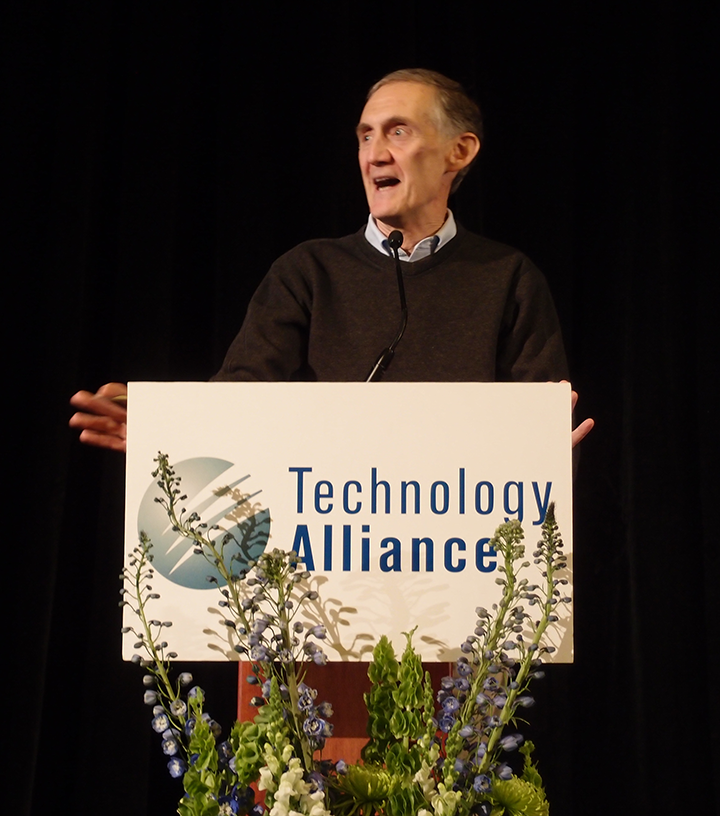
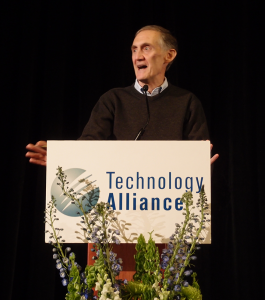
Ed Lazowska at the podium

UW CSE’s Ed Lazowska

On Tuesday, UW CSE, the non-profit Technology Alliance, and more than 150 business and research leaders participated in a day-long conference, “Insight to Impact: Transforming Washington’s Industries Through Big Data,” that examined the role of data science, sensing, machine learning, and data visualization in driving our economy. From optimizing airline routes and building efficiency, to personalizing health care and retail customer interactions, it is clear that our region has the infrastructure and expertise to take full advantage of rapidly expanding opportunities in big data.

The Ever-Expanding Sphere

UW CSE’s Ed Lazowska kicked off the program with an overview of the big data ecosystem, including how big data is enabling computer scientists to “put the smarts in everything” and empower people to put data to work for the civic good.

Characterizing computer science as an “ever-expanding sphere,” Ed pointed out the many ways the field is enabling the things that people care about. These include personalized recommendations, fraud detection, predictive pricing, real-time traffic guidance, and a host of other applications that are driven by big data infrastructure and services – many of them based here in Washington State.

The Democratization of Data
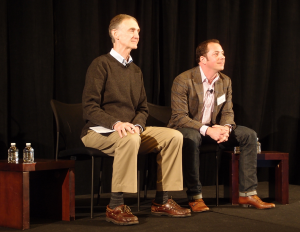
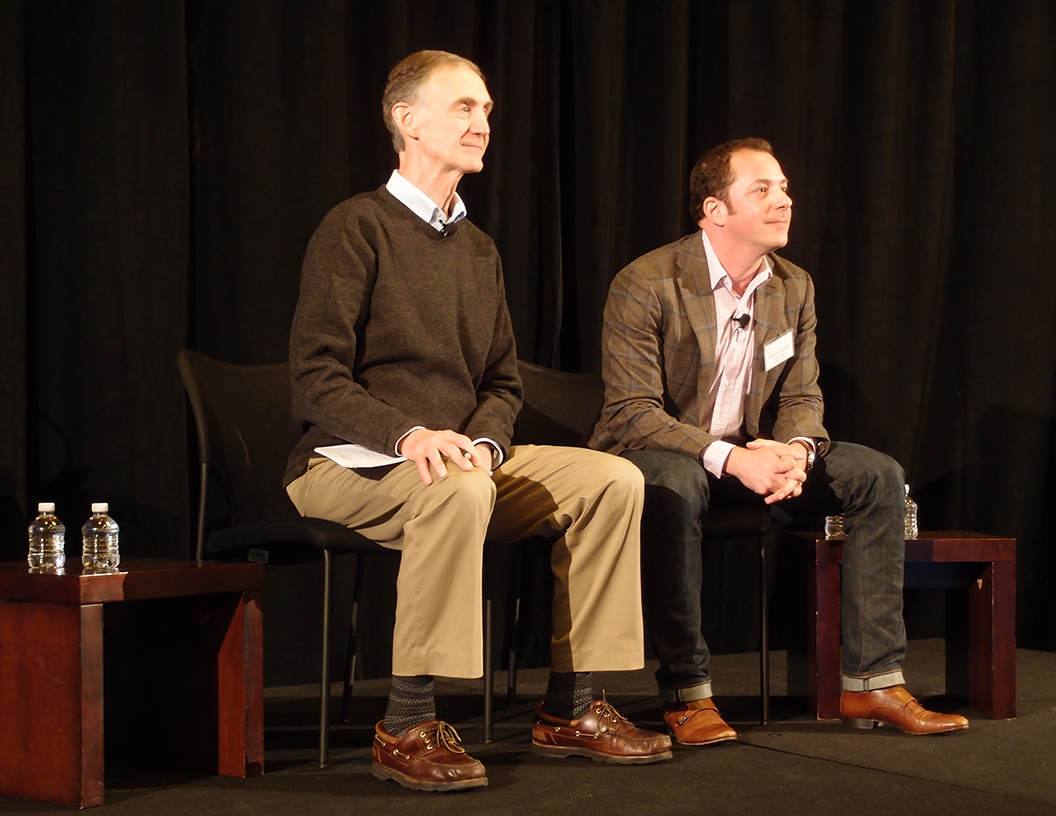
Ed Lazowska and Francois Ajenstat onstage

Ed Lazowska (left) and Tableau’s Francois Ajenstat

It is no surprise that Seattle is the epicenter of the big data revolution: it is home to Amazon Web Services and Microsoft Azure, two of the biggest cloud computing platforms in the world that enable big data, and UW CSE and the UW eScience Institute have built up critical expertise and launched new educational programs on the Seattle campus to stay at the forefront of the big data revolution.

Our region is also home to Tableau Software, the rapidly growing company that brought big data to the masses through user-friendly visualization tools. Tableau’s Vice President of Product Management, Francois Ajenstat, explained how Tableau’s tools empower people to work with their own data and share their findings with the world.

Big, and Getting Bigger
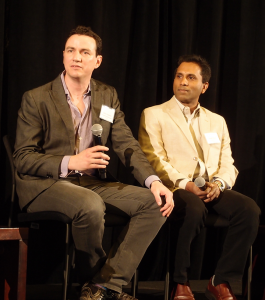
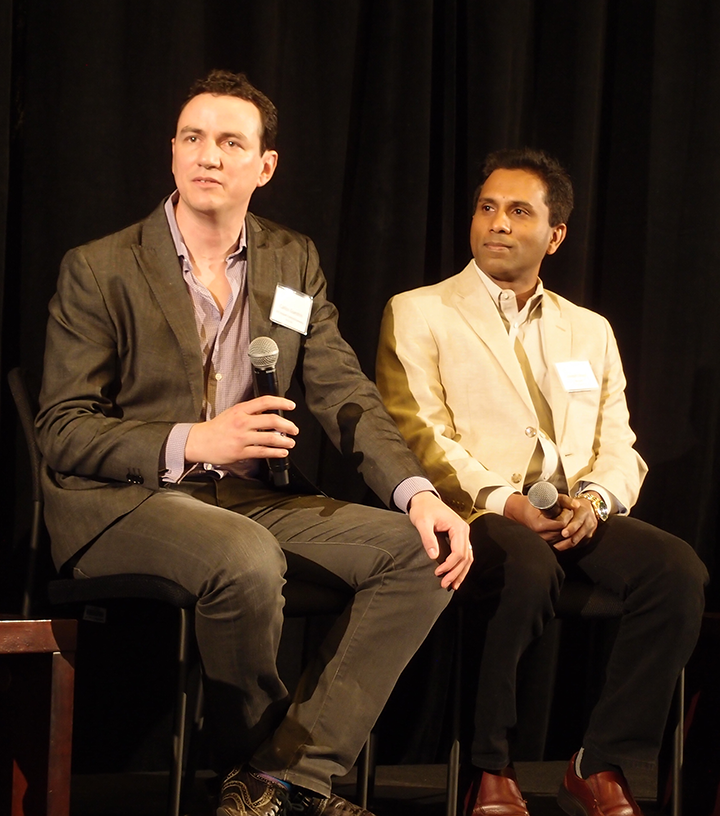
Carlos Guestrin and Joseph Sirosh onstage

UW CSE’s Carlos Guestrin (left) and Joseph Sirosh of Microsoft

Ewan Duncan from McKinsey & Company quantified Washington’s present leadership in big data and the future economic opportunity. He noted that Washington owns 40% of the cloud computing market and ranks second among its peer states, as defined by the Technology Alliance, in both venture investment in big data companies and the percentage of total state employment in big data fields.

On the flip side, Washington ranks low in production of graduates to fill these jobs – a situation we need to rectify in order to maintain our leadership position in the future.

According to McKinsey, the payoff could be huge: the firm estimates the global market for big data technologies to grow to between $24 billion and $45 billion by next year, and productivity gains and cost savings as a result of big data innovations in the U.S. alone to reach as high as $610 billion by 2020.

UW CSE’s Carlos Guestrin, who is also CEO of machine learning startup Dato, is particularly bullish on big data’s potential. In a panel discussion that followed the McKinsey presentation, he proclaimed 2015 as “the year intelligent applications transform how we interact with the world” and emphasized that we need two things to succeed in big data: talent (“We can’t mint these people fast enough!”) and tools.
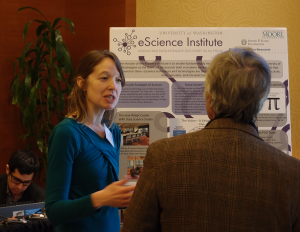
Sarah Stone presents a poster on UW's eScience Institute

Sarah Stone of UW’s eScience Institute

Carlos was joined onstage by Madrona Venture Group’s Matt McIlwain, Joseph Sirosh of Microsoft, and panel moderator Dina Bass of Bloomberg News. All of the panelists were enthusiastic about the opportunities for our region when it comes to big data.

Matt highlighted opportunities up and down the stack, from enabling infrastructure, to data intelligence, to the development of data-driven applications and services, and he suggested that Seattle was a particularly attractive place for startups working in the last category. Joseph followed this up by noting that Microsoft has the muscle to build platforms at scale, upon which others can build.

Carlos noted that the market for data intelligence and machine learning is nascent and evolving, but that startups operating in this space have an advantage in their ability to be agile. When asked why he thought Seattle is the place to be for big data, Carlos observed, “There is a tremendous amount of energy, a tremendous amount of vision, and a real sense of going places.”

Spotlight on UW Research
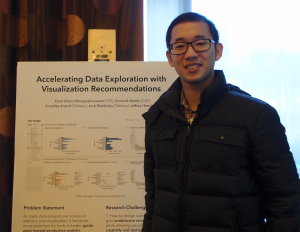
Kanit "Ham" Wongsuphasawat presents a poster on UW's Interactive Data Lab

Kanit “Ham” Wongsuphasawat, a PhD student in UW’s Interactive Data Lab

Several UW CSE researchers, joined by colleagues representing interdisciplinary efforts from across campus, were on hand for a poster and demo session. Members of the audience had a chance to interact with the individuals doing cutting-edge research in a variety of fields either driving or driven by big data.

Mayank Goel and Edward Wang of the UbiComp Lab and Kanit “Ham” Wongsuphasawat and Dominik Moritz of the Interactive Data Lab represented UW CSE. The university’s multi-disciplinary initiatives were also well-represented by Sarah Stone of the eScience Institute; Jess Hamilton of the College of Built Environments; Tyler McCormick of the Center for Statistics and the Social Sciences; and Jevin West of the iSchool.

The breadth of projects featured during the session served to illustrate the increasing importance of big data in advancing innovation across a variety of fields, including medical diagnostics, scientific discovery, global development, public utilities management, and urban planning.

Getting Vertical
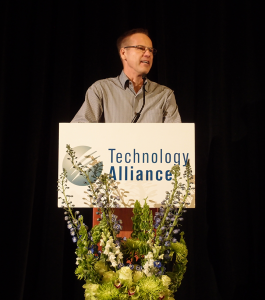
Jeremy Jaech at the podium

Jeremy Jaech of SNUPI Technologies

The remainder of the day was spent examining how specific industries are putting data to work to deliver better service, cut costs, and spawn the emergence of whole new industries, including deeper dives on big data in aerospace, retail, health care and building management.

Bryan Mistele of Inrix delivered a keynote on the growing use of data in the automobile industry and traffic management. Later, UW CSE alum Jeremy Jaech, CEO of SNUPI Technologies – a company spun out of UW CSE – took to the stage to explain how low-cost sensors are enabling the collection of new categories of data that inform the development of exciting new applications, such as systems for creating a “smart home.”

The afternoon culminated in a closing keynote by Matt Wood, general manager of data science at Amazon Web Services, which brought home the recurring theme of the day: our region’s indisputable leadership in big data.

UW CSE is proud to be a big part of that.

Read more about the McKinsey report on Washington’s leadership and opportunity in big data here.

Read an excellent summation of the session on big data in aerospace here.

Learn more about the event here. Read more →

Meet the next generation of UW CSE student

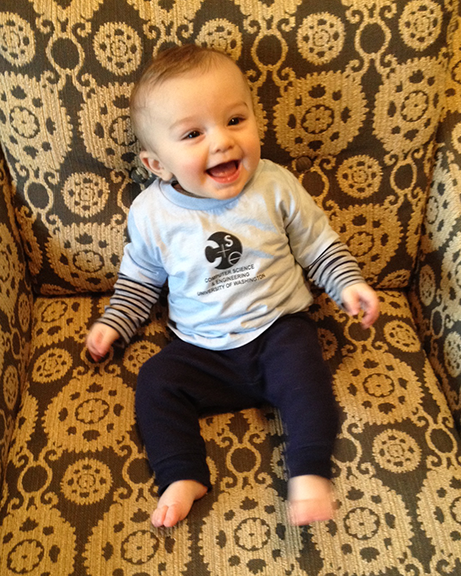
We better get a move on with the construction of our new building, if this photo is any indication of future demand! Kudos to mom, a former colleague in the UW College of Engineering, for steering him toward the right major. Maybe we should relax our early admission policy …

Cute baby wearing UW CSE t-shirt Read more →

« Newer PostsOlder Posts »