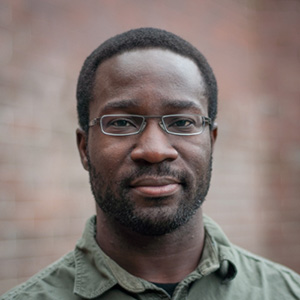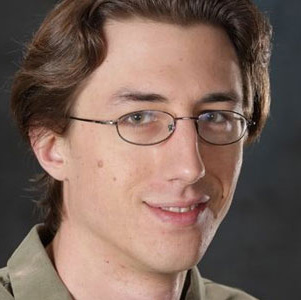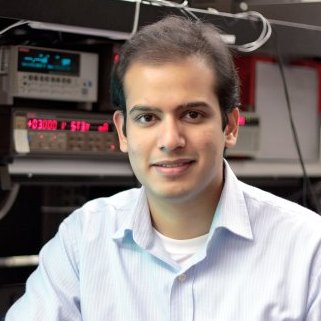
Huffington Post Science cites the brain-to-brain communication achieved by UW CSE’s Rajesh Rao and collaborators as one of “5 Amazing Advances In Brain Research In 2014.”
“The idea of telepathy may not be as far-fetched as it seems. This year, scientists achieved direct brain-to-brain communication between humans.
“Building upon early research started in 2013, this fall, researchers from the University of Washington were able to repeatedly transmit signals from one person’s brain via the Internet, and used these signals to control the hand motions of another person in less than a split second.” Read more →
As we’ve said twice before recently (here and here), you can’t just make up stuff this good!
2015 is off to a great start! Read more →
Put down whatever you’re reading and turn your attention to the hot-off-the-digital-presses Winter 2014/15 issue of Most Significant Bits, the UW CSE alumni newsletter! In this issue:
- Low-power computing
- Hank’s view of the world: a new building for CSE … Stuart “Cookie Monster” Reges … new faculty hires
- The Taskar Center for Accessible Technology
- Pedro Domingos wins KDD 2014 Innovation Award
- Profiles of six super new faculty
- Alum Kuang Chen and his startup Captricity
- Age progression software from the UW CSE Graphics and Imaging Lab
- Brain-to-brain communication over the web
- Dieter Fox named IEEE Fellow
- TR35 Awards to Shyam Gollakota, Kuang Chen, and Kurtis Heimerl
- Zillions of Datagrams
- Tom Anderson wins USENIX Lifetime Achievement Award and Software Tools Award
Read it in pdf or html! Read more →
William P. Gerberding, the University of Washington’s longest-serving President (1979-1995), passed away on Saturday at age 85.
Bill was a superb leader of UW, a true friend of Computer Science & Engineering, an extraordinary human being, and, along with his wife Ruth, delightful company. Our thoughts are with Ruth and the rest of the Gerberding family.
Two particularly nice tributes appeared in the Puget Sound Business Journal authored by Patti Payne, here, and in Crosscut authored by Ted Van Dyk here. A University of Washington tribute may be found here.
But, better, read an extraordinary January 1965 Life Magazine profile of Bill as a 35-year-old UCLA assistant professor of political science here. It reveals the scholar, the person, the husband, the father. Read more →
Today’s arrival in the mail of the University of Washington’s 2013-14 Report to Contributors triggers this end-of-year message of deep gratitude to the thousands of UW CSE alumni and friends who support us in so many ways, including contributing time, financial support, and political support.
UW CSE is public in spirit – UW is, after all, The University of Washington, and we in CSE embrace this role and all that it entails. But private support is essential to fulfilling our mission. (For example, state support comprises somewhere between 4% and 7% of UW’s operating budget, depending on what you count.)
The Report to Contributors notes that CSE’s Innovation Endowment is among the top ten “operating and research endowments” at UW, generating more than $500,000 per year to support new initiatives. (Let’s try to blow past Ivar in 2015!) And several weeks ago, 150 donors and 7 sponsors added $189,334 to UW CSE’s Google Endowed Scholarship during G-Give 2014, bringing the total of this endowment to more than $1 million – CSE’s largest undergraduate scholarship endowment, essential to allowing top Washington State students obtain a UW CSE education regardless of means.
These are but two examples. Our thanks to all of you as we launch into 2015! Read more →
CACM features exciting work by Hadi Esmaeilzadeh (UW CSE Ph.D. alum now on the faculty at Georgia Tech), Adrian Sampson (UW CSE graduating Ph.D. student), Luis Ceze (UW CSE faculty), and Doug Burger (Microsoft Research and UW CSE affiliate faculty).
CMOS scaling is no longer providing gains in efficiency commensurate with increases in transistor density. Today, we can choose any two of performance, energy efficiency, and generality at the expense of the third. One approach to gaining performance and energy efficiency at the expense of generality is the use of GPGPUs and FPGAs. This paper explores another approach: approximate computation, or trading off accuracy in order to gain performance and energy efficiency. The core idea is to learn how a region of approximable code behaves and automatically replace the original code with an efficient computation of the learned model.
Read the paper here. Read more →
As the new year approaches, we salute some of those recognized by Seattle Magazine as among “Seattle’s Most Influential People of 2014” – individuals who have particularly impacted UW Computer Science & Engineering through their words and deeds:
- Nick Hanauer, “Person of the Year,” a Seattle-raised entrepreneur and venture capitalist, the first non-family investor in Amazon.com, and a prime mover behind many forward-looking regional and national civic initiatives.
- Jeff Bezos, Amazon CEO, transforming Seattle and the world.
- Ed Murray, Seattle Mayor: a tremendous first-year record, and steadfast support for UW, UW CSE, and a wide variety of social issues.
- Satya Nadella, Microsoft CEO, focused on making Microsoft – UW CSE’s strongest partner – a “learning organization.”
- Brad Smith, Microsoft General Counsel, a person of tremendous principle who seems to be on the enlightened side of every issue.
Thanks to all, for what you do for UW CSE, for Seattle, and for the world. Read more →

You can’t actually expect much work to get done on December 24 …
Grand Prize Winner: Chris “Strong Arm” Cunnington
First Runner Up: Hank “The Watchdog” Levy
Best Form: Rebecca “High Kick” DeGaris
Most Creative (if unhelpful) Form: Sophie “This’ll Work, I Swear” Ostlund
Best Action Shot: Kathy “Big Shot” Swan
Best Attitude/Sportsmanship: Raven “Miss Congeniality” Alexander
Coolest Uniform: Crystal “Shades” Eney
Best Scorekeeper, pin re-setter, and referee: Kayla “Multitasking really IS my middle name” Mackenzie
Read more →
“For decades, every time a visitor heads downstairs into the Caltech Athenaeum Rathskellar for a burger and a brew, s/he has been confronted with a poster-size, blown-up, grainy but still magnificent black-and-white photograph of one of the greatest of the Caltech pranks …
“At the center of the picture, where the Washington fans had meant to spell out their own brand in a mosaic of thousands of hand-held cards, the word ‘Caltech’ appears instead …
“Thirty million viewers on NBC also saw it. Then that black-and-white photo was published later that January in a follow-up article in the Pasadena Star-News. But the original color image had gone missing for decades – until now.”
Read more here. Read more →
You can’t make up stuff like this! Check it out here and here.
Previous related post here. Read more →