UW researchers show how to tap into the sensing capabilities of any smartphone to screen for prediabetes

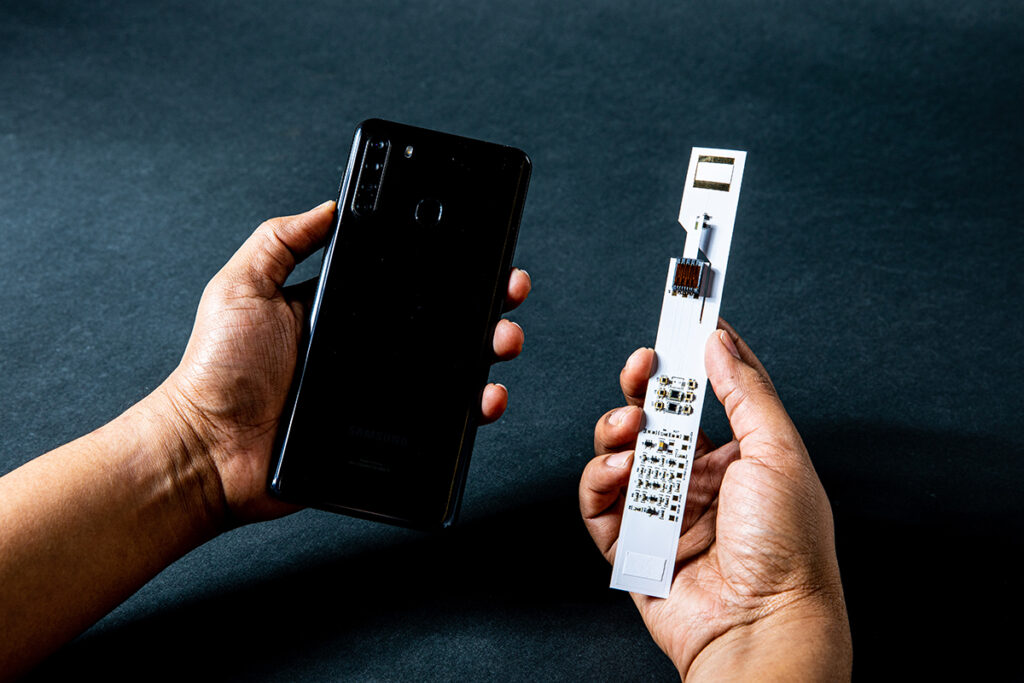
A person holds a black smartphone with the rear of the phone facing the camera in their left hand, and a narrow rectangular glucose test strip with various tiny circuitry attached in the other hand. Only the person's hands and wrists are visible in the frame. The shot is professionally lit against a dark grey, almost black, background.
GlucoScreen would enable people to self-screen for prediabetes using a modified version of a commercially available test strip with any smartphone — no separate glucometer required. Leveraging the phone’s built-in capacitive touch sensing capabilities, GlucoScreen transmits test data from the strip to the phone via a series of simulated taps on the screen. The app applies machine learning to analyze the data and calculate a blood glucose reading. Raymond C. Smith/University of Washington

According to the U.S. Centers for Disease Control, one out of every three adults in the United States have prediabetes, a condition marked by elevated blood sugar levels that could lead to the development of type 2 diabetes. The good news is that, if detected early, prediabetes can be reversed through lifestyle changes such as improved diet and exercise. The bad news? Eight out of 10 Americans with prediabetes don’t know that they have it, putting them at increased risk of developing diabetes as well as disease complications that include heart disease, kidney failure and vision loss.

Current screening methods typically involve a visit to a health care facility for laboratory testing and/or the use of a portable glucometer for at-home testing, meaning access and cost may be barriers to more widespread screening. But researchers at the University of Washington’s Paul G. Allen School of Computer Science & Engineering and UW Medicine may have found the sweet spot when it comes to increasing early detection of prediabetes. They developed GlucoScreen, a new system that leverages the capacitive touch sensing capabilities of any smartphone to measure blood glucose levels without the need for a separate reader. Their approach will make glucose testing less costly and more accessible — particularly for one-time screening of a large population. 

The team describes GlucoScreen in a new paper published in the latest issue of the Proceedings of the Association for Computing Machinery on Interactive, Mobile, Wearable and Ubiquitous Technologies (IMWUT).

“In conventional screening, a person applies a drop of blood to a test strip, where the blood reacts chemically with the enzymes on the strip. A glucometer is used to analyze that reaction and deliver a blood glucose reading,” explained lead author Anandghan Waghmare, a Ph.D. student in the Allen School’s UbiComp Lab. “We took the same test strip and added inexpensive circuitry that communicates data generated by that reaction to any smartphone through simulated tapping on the screen. GlucoScreen then processes the data and displays the result right on the phone, alerting the person if they are at risk so they know to follow up with their physician.”

The GlucoScreen test strip samples the electrochemical reaction induced by the mixing of blood and enzymes as an amplitude along a curve at a rate of five times per second. The strip transmits this curve data to the phone encoded in a series of touches at variable speeds using a technique called pulse width modulation. “Pulse width” refers to the distance between peaks in the signal — in this case, the length between taps. Each pulse width represents a value along the curve; the greater the distance between taps for a particular value, the higher the amplitude associated with the electrochemical reaction on the strip.
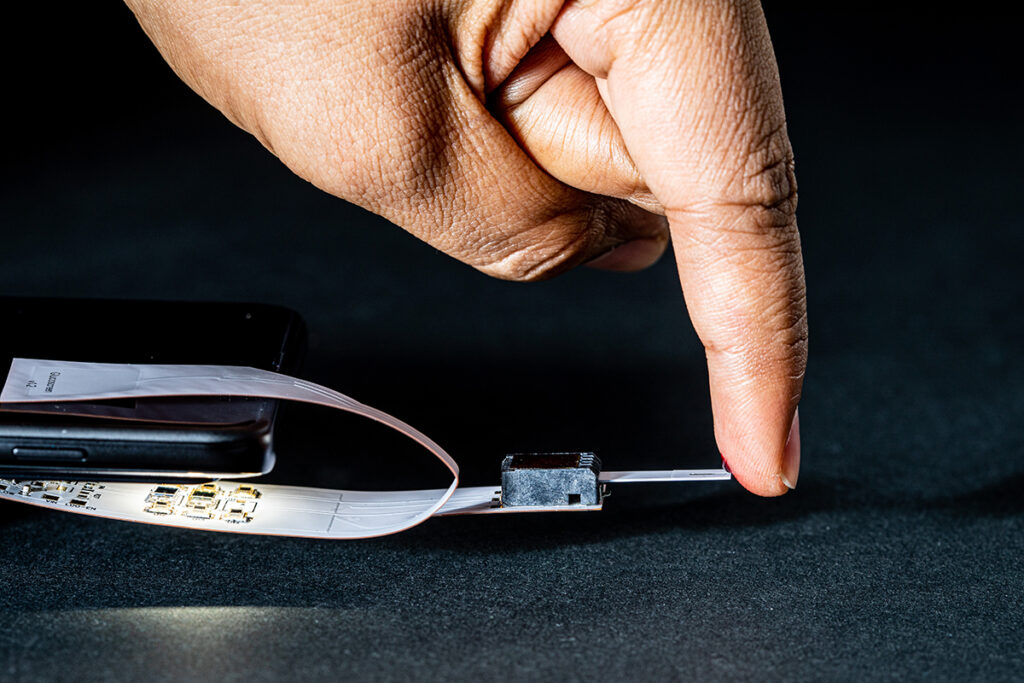
Closeup of a person conducting a glucose test by applying blood from their finger to the biosensor attached to the GlucoScreen test strip, as seen from the side. The strip is folded in half over the top of the smartphone, with tiny photodiodes and circuitry facing the flash, which is illuminated, on the rear of the phone and one end of the strip affixed to the upper third of the phone's front touch screen.
The GlucoScreen app walks the user through each step of the testing process, which is similar to a conventional glucometer-based test. Tiny photodiodes on the GlucoScreen test strip enable it to draw the power it needs to function entirely from the phone’s flash. (Note: The blood in the photo is not real.) Raymond C. Smith/University of Washington

“You communicate with your phone by tapping the screen with your finger,” said Waghmare. “That’s basically what the strip is doing, only instead of a single tap to produce a single action, it’s doing multiple taps at varying speeds. It’s comparable to how Morse code transmits information through tapping patterns.” 

The advantage of this technique is that it does not require complicated electronic components, which minimizes the cost to manufacture the strip and the power required for it to operate compared to more conventional communication methods like Bluetooth and WiFi. All of the data processing and computation occurs on the phone, which simplifies the strip and further reduces the cost.

“The test strip doesn’t require batteries or a USB connection,” noted co-author Farshid Salemi Parizi, a former Ph.D. student in the UW Department of Electrical & Computer Engineering who is now a senior machine learning engineer at OctoML. “Instead, we incorporated photodiodes into our design so that the strip can draw what little power it needs for operation from the phone’s flash.”

The flash is automatically engaged by the GlucoScreen app, which walks the user through each step of the testing process. First, a user affixes each end of the test strip to the front and back of the phone as directed. Next, they prick their finger with a lancet, as they would in a conventional test, and apply a drop of blood to the biosensor attached to the test strip. After the data is transmitted from the strip to the phone, the app applies machine learning to analyze the data and calculate a blood glucose reading.

That stage of the process is similar to that performed on a commercial glucometer. What sets GlucoScreen apart, in addition to its novel touch technique, is its universality.

“Because we use the built-in capacitive touch screen that’s present in every smartphone, our solution can be easily adapted for widespread use. Additionally, our approach does not require low-level access to the capacitive touch data, so you don’t have to access the operating system to make GlucoScreen work.” explained co-author Jason Hoffman, a Ph.D. student in the Allen School. “We’ve designed it to be ‘plug and play.’ You don’t need to root the phone — in fact, you don’t need to do anything with the phone, other than install the app. Whatever model you have, it will work off the shelf.”
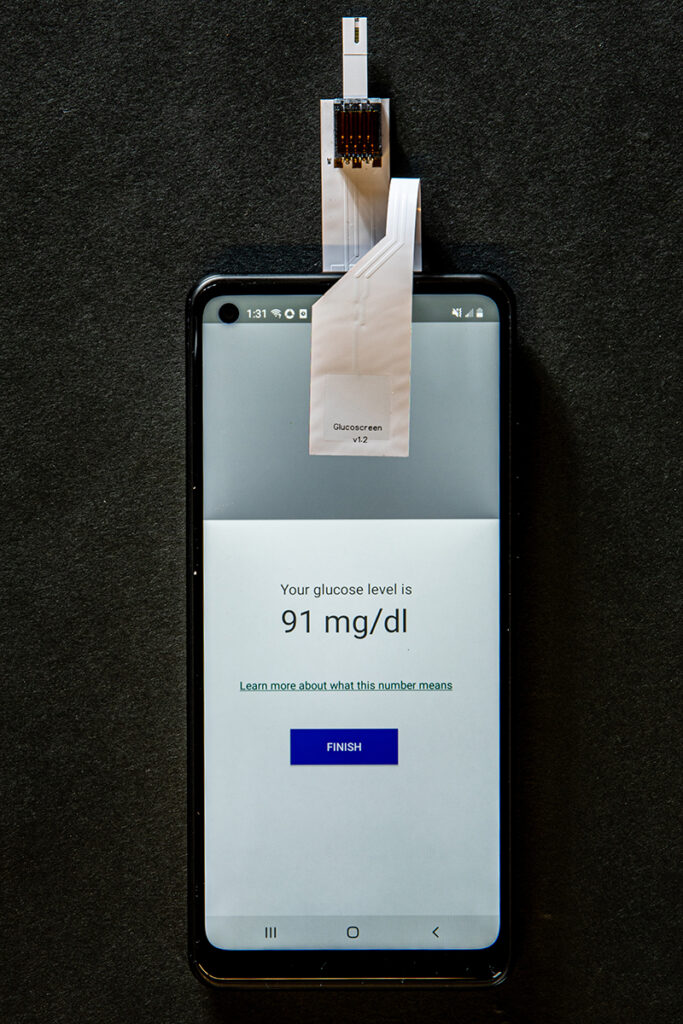
A smartphone with a glucose test strip affixed to the front and rear, with a biosensor and strip for applying a drop of blood sticking out above the phone's top edge. The phone's touch screen is displayed, with the end of the test strip that comes up over the top edge of the phone affixed to the upper third of the screen, which is blank except for a pale grey. The rest of the screen is white with text: Your glucose level is 91 mg/dl, a text link: Learn more about what this number means, and a blue button labeled: Finish.
After processing the data from the test strip, GlucoScreen displays the calculated blood glucose reading on the phone. Raymond C. Smith/University of Washington

Hoffman and his colleagues evaluated their approach using a combination of in vitro and clinical testing. Due to the COVID-19 pandemic, they had to delay the latter until 2021 when, on a trip home to India, Waghmare connected with Dr. Shailesh Pitale at Dew Medicare and Trinity Hospital. Upon learning about the UW project, Dr. Pitale agreed to facilitate a clinical study involving 75 consenting patients who were already scheduled to have blood drawn for a laboratory blood glucose test. Using that laboratory test as the ground truth, Waghmare and the team evaluated GlucoScreen’s performance against that of a conventional strip and glucometer. 

While the researchers stress that additional testing is needed, their early results suggest GlucoScreen’s accuracy is comparable to that of glucometer testing. Importantly, the system was shown to be accurate at the crucial threshold between a normal blood glucose level at or below 99 mg/dL, and prediabetes, defined as a blood glucose level between 100 and 125 mg/dL. Given the scarcity of training data they had to work with for the clinical testing model, the researchers posit that GlucoScreen’s performance will improve with more inputs.

According to co-author Dr. Matthew Thompson, given how common prediabetes as well as diabetes are globally, this type of technology has the potential to change clinical care. 

“One of the barriers I see in my clinical practice is that many patients can’t afford to test themselves, as glucometers and their test strips are too expensive. And, it’s usually the people who most need their glucose tested who face the biggest barriers,” said Thompson, a family physician and professor in the UW Department of Family Medicine and Department of Global Health. “Given how many of my patients use smartphones now, a system like GlucoScreen could really transform our ability to screen and monitor people with prediabetes and even diabetes.”

GlucoScreen is presently a research prototype; additional user-focused and clinical studies, along with alterations to how test strips are manufactured and packaged, would be required before the system could be made widely available. According to senior author Shwetak Patel, the Washington Research Foundation Entrepreneurship Endowed Professor in Computer Science & Engineering and Electrical & Computer Engineering at the UW, the project demonstrates how we have only begun to tap into the potential of smartphones as a health screening tool.

“Now that we’ve shown we can build electrochemical assays that can work with a smartphone instead of a dedicated reader, you can imagine extending this approach to expand screening for other conditions,” Patel said.

Yuntao Wang, a research professor at Tsinghua University and former visiting professor at the Allen School, is also a co-author of the paper. This research was funded in part by the Bill & Melinda Gates Foundation.
Read more →

Rozenberg Tulip Award winner Georg Seelig finds fertile ground in DNA computing

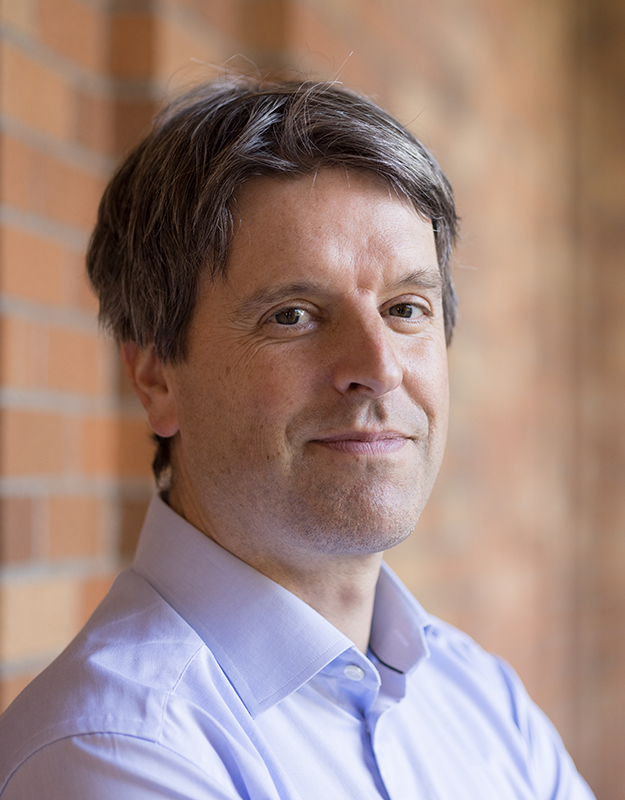
Georg Seelig, wearing a white shirt, stands in front of a brick background for a portrait.
Photo credit: Ryan Hoover

A little more than two decades ago, University of Washington professor Georg Seelig began planting the seeds of a career in theoretical physics, seeking elegant solutions to the mysteries of the natural world. Last month, Seelig, a faculty member in the Allen School and Department of Electrical & Computer Engineering, was hailed as the “DNA Computer Scientist of the Year” by the International Society for Nanoscale Science, Computation and Engineering (ISNSCE), who named him the winner of the 2023 Rozenberg Tulip Award in recognition of his leadership and original contributions that have advanced the field of DNA computing. 

“It’s wonderful to get this recognition from my community,” Seelig said. “The field has grown quite a bit since the beginning but remains very collaborative and collegial.”

Seelig’s work with DNA strand displacement, scalable DNA data storage and retrieval, and technologies for single-cell sequencing and analysis of gene regulation has helped push the frontiers of molecular programming. For instance, he pioneered adapting strand displacement technology to living cells. Prior to his work, inputs to the circuits were synthesized chemically and not produced inside a cellular environment. 

“This brings up a whole range of different challenges because the interior of cells is an infinitely more complex environment than a test tube with a bit of salt water,” Seelig said. “Cells are full of proteins that destroy foreign DNA and other molecules that sequester it in different subcellular compartments.”

Now a leader in the field, Seelig said a turning point for him came early on in his academic journey. Before his internship at Bell Laboratories, he had trained as a theoretical physicist. He didn’t think of himself as a practitioner. 

But his perspective changed after meeting Bernard Yurke, a physicist at Bell who was building a synthetic molecular motor that could revolutionize the field. Dubbed “molecular tweezers” for its pincer-like mimicry, the motor could be switched between an open and a closed configuration by adding two more synthetic DNA strands. 

The work struck Seelig with its simplicity — with just a few tweaks, scientists could, quite literally, bend the building blocks of life to their liking. 

“The idea seemed both almost trivial,” he said, “and incredibly brilliant.”

That brilliance has followed him throughout his career. Since joining the UW faculty of the Allen School and the UW Department of Electrical & Computer Engineering in 2008, Seelig has continued to make the magical actual and sleight of hand scientific.

Seelig remembers how he grew after his experience at Bell Labs. After completing his doctorate at the University of Geneva, the Swiss scientist dove further into experimental work as a postdoc at the California Institute of Technology. There, he and Yurke joined MacArthur Fellow Erik Winfree’s lab, collaborating with some of the brightest minds in molecular engineering. Like Yurke before him, Winfree, a leading researcher in the field, mentored Seelig and fostered his potential. 

“It wasn’t long after he joined my lab that I began to think of him as a rock star of science,” Winfree said. “Sometimes more Serge Gainsberg, sometimes more Richard Ashcroft, sometimes more John Prine, but always undeniably Georg Seelig.”

Together with David Soloveichik, a graduate student in the lab at the time, and David Yu Zhang, then an undergraduate, Seelig invented DNA strand displacement circuits, which allowed scientists to control the forces behind synthetic DNA devices. Being able to program the foundations of existence, to maneuver its scaffolding to one’s will, brought with it new questions besides tantalizing possibilities. 

What if these reactions could target cancer cells via smart therapeutics? Could the reactions be sped up or slowed down? In DNA’s twists and turns, can the plot of a human life change for the better? 

“It was a remarkably creative interaction, blending motivation from biophysics, biotechnology, theoretical computer science, the origin of life, electrical engineering, chemistry and molecular biology, and it resulted in several papers that had an enormous impact on the field,” Winfree said. “Georg’s vision, leadership, perseverance and exquisite experimental skills made the magic real and undeniable.” 

The challenge of making “magic” feeds his curiosity, which Winfree likened to an artist’s muse. As head of the Seelig Lab for Synthetic Biology and a member of the Molecular Information Systems Laboratory, Seelig has now become a mentor himself, teaching the next generation of scientists to keep hunting for answers among the helices. 

“When he picks up the tune of a beautiful idea, he is unstoppable in crafting it into a compelling song,” Winfree said. “It’s been great how, after coming to UW, he has released album after album of hits.” 

Those first “hits” were scrawled across whiteboards at Caltech. Seelig remembers poring over them with his collaborators, searching for that elegant solution, for theory to materialize into practice. 

To the group’s surprise, their effort paid off more quickly than expected. For Seelig, it foreshadowed things to come. 

“Shortly afterwards, we tested the idea experimentally,” Seelig said of inventing DNA strand displacement circuits. “It worked on the first try.” Read more →

Pair of ACEs: Allen School’s Arvind Krishnamurthy and Michael Taylor will help spur innovation in distributed computing as part of new multi-university research center

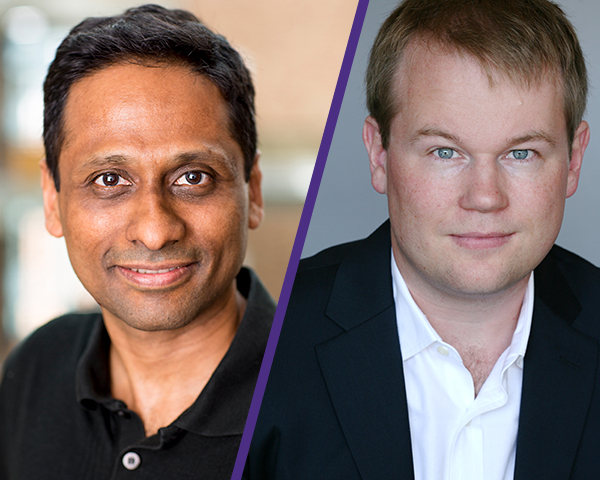
Arvind Krishnamurthy, wearing a black polo, smiles in front of a blurred background of a window and a pink wall. To the right of a purple diagonal line, Michael Taylor, wearing a white shirt and a black jacket, smiles in front of a gray background.
Arvind Krishnamurthy (left) and Michael Taylor will lend their expertise to the ACE Center for Evolvable Computing, a multi-university venture focused on the development of microelectronics and semiconductor computing technologies.

Data centers account for about 2% of total electricity use in the U.S., according to the U.S. Office of Energy Efficiency and Renewable Energy, consuming 10 to 50 times the energy per floor space of a typical commercial office building. Meanwhile, advances in distributed computing have spurred innovation with the use of large, intensive applications — but at a high cost in terms of energy consumption and environmental impact. 

A pair of Allen School professors will contribute to a multi-university effort focused on tackling these challenges in the distributed computing landscape. Arvind Krishnamurthy and Michael Taylor will lend their expertise to the ACE Center for Evolvable Computing, which will foster the development of computing technologies that improve the performance of microelectronics and semiconductors. 

Funded by a $31.5 million grant from the Joint University Microelectronics Program 2.0 (JUMP 2.0), the ACE Center will advance distributed computing technology — from cloud-based datacenters to edge nodes — and further innovation in the semiconductor industry. Led by the University of Illinois Urbana Champaign and with additional funds from partnering institutions, the ACE Center will have a total budget of $39.6 million over five years. 

“Computation is becoming increasingly planet-scale, which means not only that energy efficiency is becoming more and more critical for environmental reasons, but that we need to rethink how computation is done so that we can efficiently orchestrate computations spread across many chips distributed around the planet,” Taylor said. “This center is organizing some of the best and brightest minds across the fields of computer architecture, distributed systems and hardware design so that we may come up with innovative solutions.”

Krishnamurthy, the Short-Dooley Professor in the Allen School, is an investigator on the “Distributed Evolvable Memory and Storage” theme. His research focuses on building effective and robust computer systems, both in terms of data centers and Internet-scale systems. The ACE Center is not the only forward-looking initiative that is benefiting from Krishnamurthy’s expertise; he is also co-director of the Center for the Future of Cloud Infrastructure (FOCI) at the Allen School, which was announced last year.

“We are seeing an explosion of innovations in computer architecture, with a continuous stream of innovations in accelerators, programmable networks and storage,” Krishnamurthy said. “One key goal of this center is how to make effective use of this hardware and how to organize them in large distributed systems necessary to support demanding applications such as machine learning and data processing.”

Taylor, who leads the Bespoke Silicon Group at the Allen School, is an investigator in the “Heterogeneous Computing Platforms” theme. He’ll act as a fulcrum for research directions and guide a talented team of graduate students in designing distributed energy-efficient accelerator chips that can better adapt with ever-changing and more complicated computing environments.

“Today’s accelerator chips are very fixed function, and rapidly become obsolete, for example, if a new video encoding standard is developed,” Taylor said. “With some fresh approaches to the problem, accelerators in older cell phones would still be able to decode the newer video standards.”

Taylor has previously worked with the Defense Advanced Research Projects Agency (DARPA), which oversees JUMP, and the Semiconductor Research Corporation (SRC), helping organize a pair of 5-year research centers, including the Applications Driving Architectures (ADA) center and the Center for Future Architecture Research (C-FAR) center. The NSF Career Award winner joined the Allen School and UW Department of Electrical & Computer Engineering in 2017.

Both Krishnamurthy and Taylor will contribute to the ACE Center’s goal to create an ecosystem that fosters direct engagement and collaborative research projects with industry partners drawn from SRC member companies as well as companies in the broader areas of microelectronics and distributed systems.

In addition to Taylor and Krishnamurthy at the University of Washington, other contributors to the ACE Center include faculty from the University of Illinois, Harvard, Cornell, Georgia Tech, MIT, Ohio State, Purdue, Stanford, the University of California San Diego, the University of Kansas, the University of Michigan and the University of Texas at Austin. Read more →

Leilani Battle awarded 2023 Sloan Research Fellowship

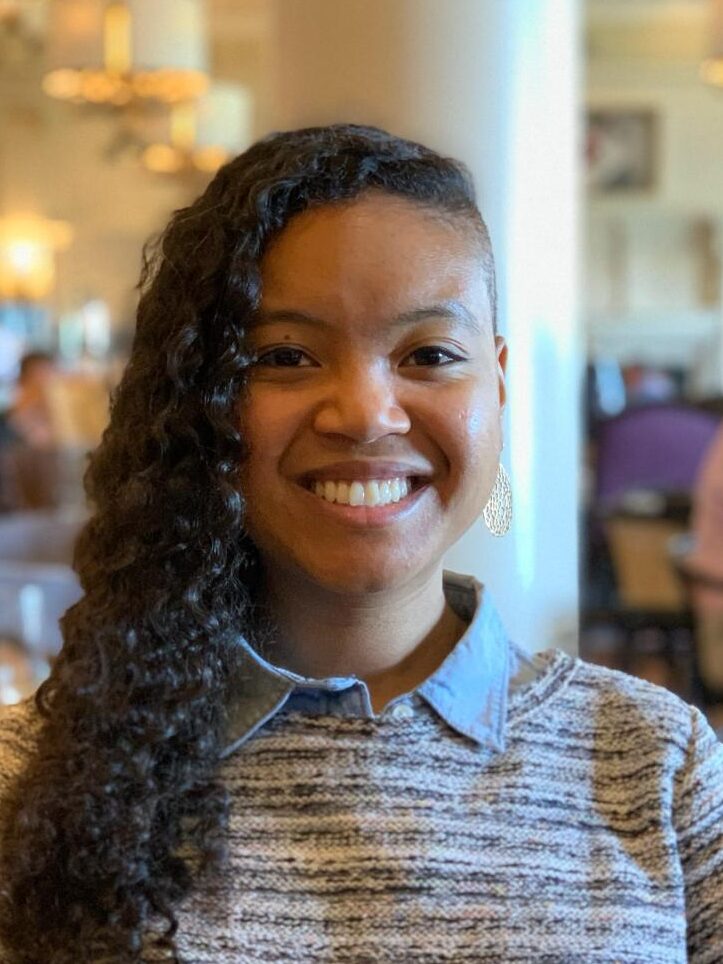
Leilani Battle, wearing a grey and white patterned sweater and a pale blue shirt with long curly hair over her right shoulder, smiles in front of a blurred background set in what appears to be a hotel dining room, with chandeliers and floor-to-ceiling columns

The Alfred P. Sloan Foundation has named the Allen School’s Leilani Battle (B.S., ‘11) a 2023 Sloan Research Fellow, a distinction that recognizes early-career researchers whose achievements place them among the next generation of scientific leaders in the U.S. and Canada. The two-year, $75,000 fellowships support research across the sciences and have been awarded to some of the world’s most preeminent minds in their respective fields. 

“My research is not traditional computer science research so it’s wonderful to be recognized,” Battle said. “I strive to be myself in everything I do, so it’s awesome to see that others appreciate my unique perspective.”

Battle co-leads the Interactive Data Lab with Allen School colleague Jeffrey Heer, the Jerre D. Noe Endowed Professor of Computer Science & Engineering. Her research investigates the interactive visual exploration of massive datasets and stands at the intersection of several academic disciplines, including healthcare, business and climate science. In each, data-driven decisions continue to drive innovation across the globe. 

“What piqued my interest in data science was the juxtaposition of the incredible power of existing tools and their underutilization by the vast majority of data analysts in the world,” Battle said. “Why are we not making better use of these tools? This sparked a multi-year journey to better understand why people use or don’t use various data science tools and how those tools could be made accessible to and effective for a wider range of users.”

While pursuing her doctorate at MIT, Battle developed ForeCache, a big data visualization tool that allows researchers to explore large amounts of data with greater ease and precision. Through machine-learning, ForeCache increased browsing speeds by reducing system latency by 88% when compared with existing prefetching techniques. 

Since then, Battle has built upon her previous work in data visualization. In one study, she led an international team in creating the first benchmark to test how database systems evaluate interactive visualization workloads. In another, she and Heer investigated characterizing analyst behavior when interacting with data exploration systems, providing a clearer picture of how data is inspected and ultimately used through industry tools such as Tableau Desktop. 

“I’m interested in not only streamlining the data science pipeline but also making it more transparent, equitable and accountable,” Battle said. “Some of my latest ideas are headed in this direction, where my collaborators and I are investigating how the concept of interventions in psychology and human computer interaction (HCI) could bring a new perspective to promoting responsible data science work.”

Battle joined the Allen School faculty in 2021 from the University of Maryland, College Park, where she spent three years as a faculty member after completing a postdoc in UW’s Interactive Data Lab and the UW Database Group. She has previously won an Adobe Data Science Research Award, a National Science Foundation (NSF) Research Initiation Initiative Award and an NSF CAREER Award, among others. Last year, she was recognized with a TCDE Rising Star Award by the Institute of Electrical and Electronics Engineers (IEEE) and in 2020 was named an MIT Technology Review Innovator Under 35.

Battle is one of two UW researchers to be recognized in the latest class of Sloan Research Fellows, which also included Jonathan Zhu, a professor in the Department of Mathematics. Other recent honorees in the Allen School include professor Yulia Tsvetkov in 2022 and professors Hannaneh Hajishirzi and Yin Tat Lee in 2020.

Read the UW news release here and the Sloan Foundation news release here.

Congratulations, Leilani! Read more →

Ahead of the pack: Jessica Colleran finds her path as an orienteering champion and a computer science student

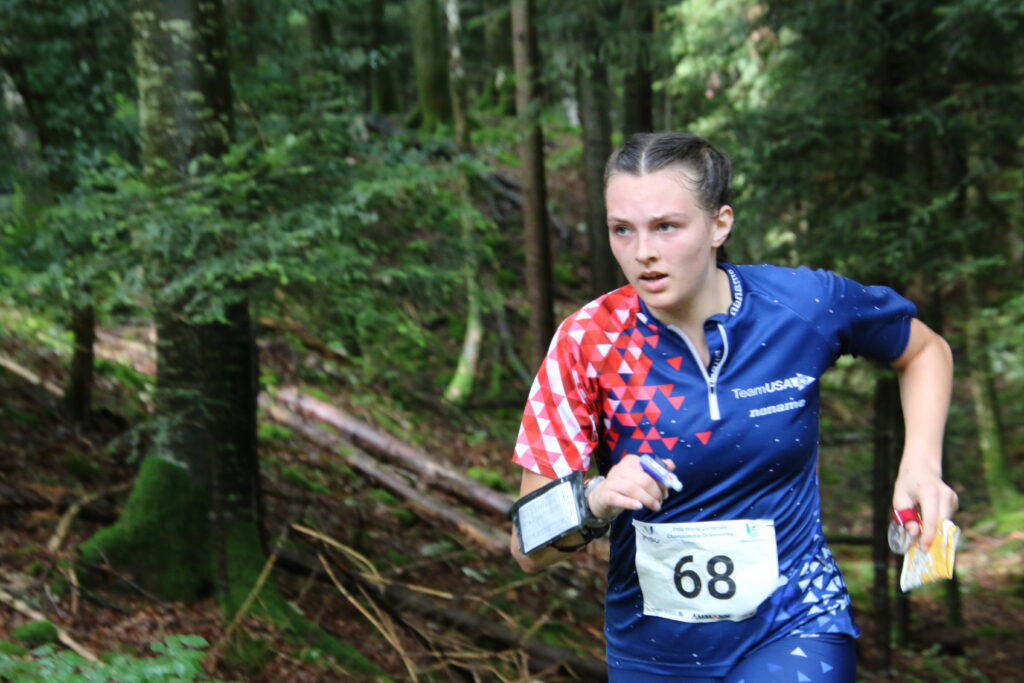
Jessica Colleran, wearing a red and blue Team USA jersey with a triangle pattern on the sleeve and a number 68 on the front, runs through a forest while holding a marker, compass and map and wearing a wristband.

Whether traversing new frontiers or old, Jessica Colleran keeps moving forward. 

The third-year computer science major, along with University of Washington teammates Curtis Anderson and Annika Mihata, recently won the Orienteering USA (OUSA) Junior National Intercollegiate Championships, which were held in Georgia earlier this year. Their victory marks the first time in more than two decades that a team other than West Point has taken home the trophy. 

“When I came to UW, I found a group of people who were excited to compete nationally and being able to be surrounded by a team was very exciting,” Colleran said. “It’s hard to describe the sheer elation we felt when Annika, our last runner of the day, came across the finish line and we realized her time was fast enough to clinch our two-day victory.”

Navigating challenging terrain has become second nature for Colleran, who juggles life as a member of the OUSA national team with her studies in computer science, as well as minors in climate science and physics. She won her first competition in elementary school, kindling what would turn out to be a continued passion for exploration into the unknown. 

Orienteering, a sport in which athletes race toward checkpoints using map-reading and directional skills, combines the physical with the mental. For Colleran, who developed an early affinity for puzzles and the outdoors, it was a perfect fit. 

“Being active, having a technical component and being in nature sparked all three of my interests,” she said. “It wasn’t just running, but a very technical sport that I could exercise my brain with.” 

Colleran’s accomplishments have taken her to landscapes far afield. In 2021, she was named to the OUSA Junior World Orienteering Team that competed in Kocaeli, Turkey. Last year, as part of the World University Championships Orienteering Team, she raced through alpine glades near the city of Biel in Switzerland. 

But back at UW, her horizons are no less grand. She plans to combine her varied academic interests to combat climate change, seeing computer science as a pathway for exploring technologies geared toward clean and renewable energy. Orienteering, she said, gave her an innate appreciation for nature — a chance to connect with sights and sounds only found when getting lost. A swishing streambed, the snap of a twig, wind rustling the leaves before they crunch underfoot. 

“I have been lucky to explore so many places through orienteering,” she said. “Especially in forests or nature that one wouldn’t usually find themselves in.”

Academics, higher education and UW hold places of high esteem in the Colleran family. Colleran’s parents, Allen School alum John Colleran (B.S., ‘87) and UW Psychology alum Michelle Kastner (B.S., ‘88) established the John Colleran and Michelle Kastner Colleran Endowed Scholarship in 2011. The scholarship supports outstanding undergraduate students in computer science or computer engineering for whom the cost of a UW education would be a significant personal or family financial hardship, but who do not qualify for traditional need-based grants or scholarships. John has been at Microsoft in the Operating Systems Group for more than three decades. Michelle is the Allen School’s representative to the UW Foundation Board.

As for the recent competition at nationals, Colleran recognizes success as a culmination of collective grit, crediting her teammates and family for their support. 

“They’re my true compass,” she said. 

Annika Mihata, wearing a black University of Washington hooded sweatshirt and a medal around her neck, smiles with Jessica Colleran, wearing a purple University of Washington hooded sweatshirt and a medal, and Curtis Anderson, wearing a purple University of Washington hooded sweatshirt and a medal. They are making W signs with their hands and are standing in front of a wooded background.
The UW team celebrates winning the Orienteering USA (OUSA) Junior National Intercollegiate Championships in January (from left): Annika Mihata, Jessica Colleran, Curtis Anderson

Anderson, for instance, overcame a sprained ankle late in the competition. Adrenaline kicked in, Colleran recalled, and powered him through the rest of the race. Anderson is a fourth-year student majoring in environmental engineering. Mihata, Colleran’s teammate on the U.S. National Team, is a first-year student intending to major in psychology. 

The trio previously competed against each other in the Washington Interscholastic Orienteering League (WIOL) and at other meets organized by the Cascade Orienteering Club, before coming together this year to compete for the title. 

“We have gotten to know each other as both competitors and friends,” Colleran said. “I was really glad I could organize a new group of three from UW.”

Colleran relishes the thrill of competition, the thrum and vim of pounding feet, a quickening pulse tempered by a cool head. For this student-athlete, there is crossover among her callings. Finding a path, she said, requires “collecting features” — prominent landmarks or observable characteristics that act as anchors. With enough features collected, a mental map begins to form. 

Or, in other words, divide and conquer. 

“Being a computer science student takes a lot of time management skills and learning how to prioritize and set schedules,” Colleran said. “Often when I feel stressed about being assigned a lot of work in a week, I like to think about breaking it down like I would an orienteering leg as it makes a large workload seem manageable.”

For now, she’ll continue to explore new frontiers, whether they’re technological or terrestrial in nature. Another example of her shared passions: This summer, she has an internship in the San Francisco Bay Area, home to the North American Orienteering Championships taking place in July. 

“Keeping your cool under pressure, finding a path, navigating the unknown — I think there are a lot of lessons that the sport teaches you and that translate to being a student, especially one nearing graduation,” Colleran said. “Whatever the challenge, you have to keep going.”  Read more →

Allen School alumni Dhruv Jain and Kuikui Liu receive William Chan Memorial Dissertation Awards

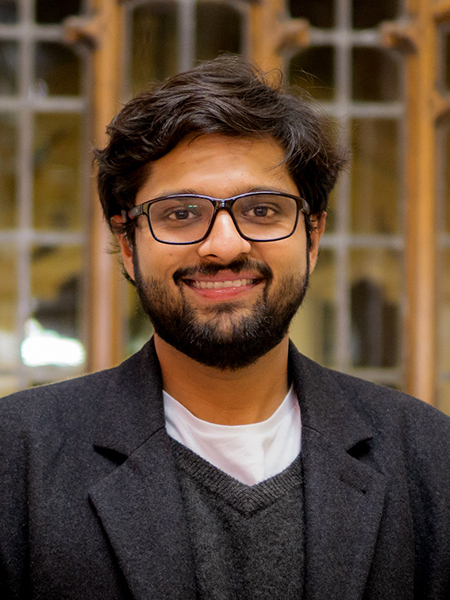
Dhruv Jain, wearing black glasses, a black sweater and a black blazer, smiles in front of a blurred background of windows.
Dhruv Jain

The Allen School has recognized Dhruv Jain (Ph.D., ‘22) and Kuikui Liu (Ph.D., ‘22) with the William Chan Memorial Dissertation Award, which honors graduate dissertations of exceptional merit and is named in memory of the late graduate student William Chan. Jain was chosen for his work in advancing new sound awareness systems for accessibility, while Liu was selected for his work on a new framework for analyzing the Markov Chain Monte Carlo method.

Jain’s dissertation, titled “Sound Sensing and Feedback Techniques for Deaf and Hard of Hearing People,” investigated the creation and use of several sound awareness systems in addition to exploring how d/Deaf and hard-of-hearing (DHH) individuals feel about emerging sound awareness technology. One of the systems included HoloSound, an augmented reality system that provides real-time captioning, sound identity and sound location information to DHH users via a wearable device, as well as HomeSound, an Internet-of-Things system that integrates smart displays throughout the home to sense common sounds and produce a single visualization of sound activity within the household. Jain also led the team that developed SoundWatch, a smartwatch app that provides DHH individuals with better awareness of incoming sounds. 

“Beyond accessibility, the technical innovations in the field of sound sensing and feedback proposed in the thesis have wide applications for other high-impact domains,” Jain said. “Some of which include ecological surveys, home-automation, game audio debugging and appliance repairs.”

Allen School professor Jon E. Froehlich and Human Centered Design & Engineering professor and Allen School adjunct professor Leah Findlater co-advised Jain, whose work in the Makeability Lab helped facilitate sound accessibility through systems employing human computer interaction (HCI) and artificial intelligence (AI).

“Dhruv’s dissertation research makes fundamental advances in the design of sound sensing and feedback systems for people who are deaf or hard of hearing,” Froehlich said. “Throughout his dissertation work, Dhruv has worked closely with the DHH community to understand diverse needs and evaluate his systems, including through large online surveys, interviews and field deployments.”

Jain’s own experiences as a DHH individual informed his research and helped shape his focus on the user experience. 

“Dhruv’s dissertation not only exemplifies the human-centered design process in the creation of accessible technologies but also makes transformative technical innovations in integrating AI and HCI to improve information access,” Froehlich added. “As a testament to its impact, his work has received multiple paper awards and a Microsoft Research Dissertation Grant, and SoundWatch has been released and downloaded by over 2,000 Android watch users worldwide.”

Jain graduated in July and joined the University of Michigan’s Computer Science and Engineering department as a professor in September. He is also affiliated with the University of Michigan’s School of Information and Department of Family Medicine.

“I am immensely grateful to the Allen School staff and faculty in supporting me throughout my research journey,” Jain said. “Especially my advisors Jon Froehlich and Leah Findlater, committee members Jennifer Mankoff, Jacob Wobbrock and Richard Ladner, and staff members Elise Dorough, Elle Brown, Emma Gebben, Sandy Kaplan, Aaron Timss, Hector Rodriguez and Chiemi Yamaoka.”

Liu’s dissertation, titled “Spectral Independence: A New Tool to Analyze Markov,” revolutionized the classical analysis of the Markov Chain Monte Carlo (MCMC) method. Probability distributions, seen in several fields such as physics, epidemiology and data privacy, today display immense complexity and are often high-dimensional, resulting in exponentially or infinitely large domains. As a result, manipulating the data becomes impractical insofar as the amount of time needed to calculate the possible outcomes would exceed the age of the universe. 

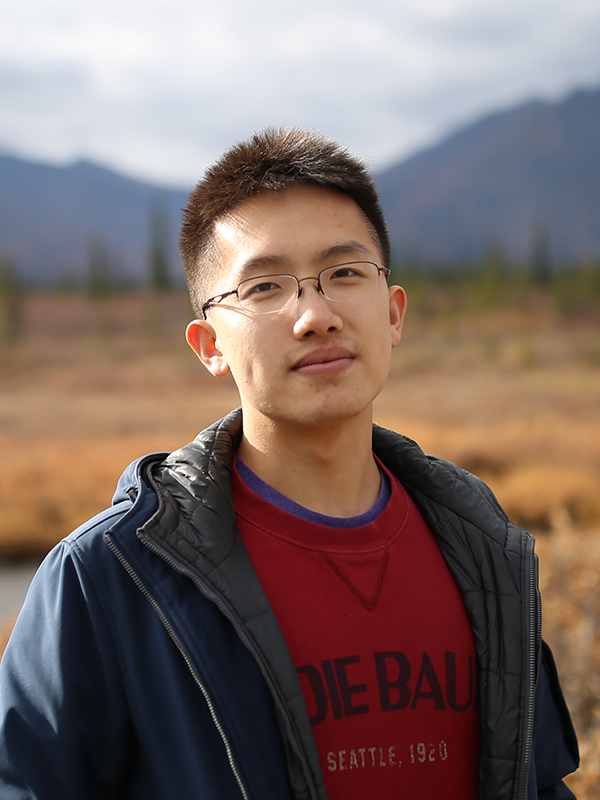
Kuikui Liu, wearing glasses, a navy jacket and red sweater, smiles in front of a blurred outdoors background with mountains and trees.
Kuikui Liu

The MCMC method, which uses sampling to efficiently estimate otherwise unruly statistics, attempts to tackle this problem. Markov chains act as random agents in a probability distribution that help explain a sequence of possible outcomes. They are used in a variety of fields due to their ease-of-implementation in high-dimensional sampling problems. 

But they remain difficult to analyze. Liu’s dissertation introduced spectral independence, a framework for better understanding the MCMC method besides finding elegant solutions from complex, and sometimes chaotic, crossroads.

“Beyond practical motivations, the framework we developed also has intimate connections with beautiful and deep mathematics,” Liu said. “In particular, we also aimed to settle some of the longstanding conjectures at the intersection of pure mathematics, physics, and theoretical computer science — for example, counting certain fundamental combinatorial structures called ‘bases of matroids,’ and sampling from the hardcore gas and Ising models in statistical physics.”

Liu credited professors Shayan Oveis Gharan and Anna Karlin, his advisors in the Allen School’s Theory of Computation group, for providing mentorship and encouragement throughout his research. 

“Right now, many experts are trying to absorb and employ Kuikui’s machinery to solve their own research problems,” Oveis Gharan said. “I expect to see these techniques used in areas further away from computer science, such as physics, chemistry or applied mathematics and perhaps even in the social sciences soon.”

Together, Liu and Oveis Gharan and their co-authors earned a Best Paper Award in 2019 from the Association for Computing Machinery’s Symposium on the Theory of Computing (STOC) by presenting a novel approach for counting the bases of matroids. Liu was a first-year Ph.D. student at the time. 

Since then, the pair have collaborated on several other projects involving spectral independence, mathematics and statistical physics. 

“In my opinion, Kuikui’s thesis is one of the deepest and strongest dissertations to have been produced in all of computer science in the last year, combining beautiful and insightful mathematical proofs with high-impact applications,” Oveis Gharan added. “The interdisciplinary aspect of his thesis makes the results applicable and important to many fields beyond computer science and I am sure that as more scientists learn about it, they will find ways to exploit Kuikui’s techniques in their own research.”

Liu will join the MIT computer science department as a professor in the fall of 2023. 

“Thank you so much to the Allen School!” Liu said. “I am immensely grateful for this recognition, and even more so to my mentors Shayan Oveis Gharan and Anna Karlin, my collaborators, our theory group and family and friends for the nurturing environment. It is a reminder of how fortunate I am to be able to work with such incredible researchers. I am honored to be a part of the Allen School community and will miss it dearly.”

Congratulations to DJ and Kuikui! Read more →

Allen School’s Alisa Liu pushes the boundaries of natural language processing with human and machine collaboration

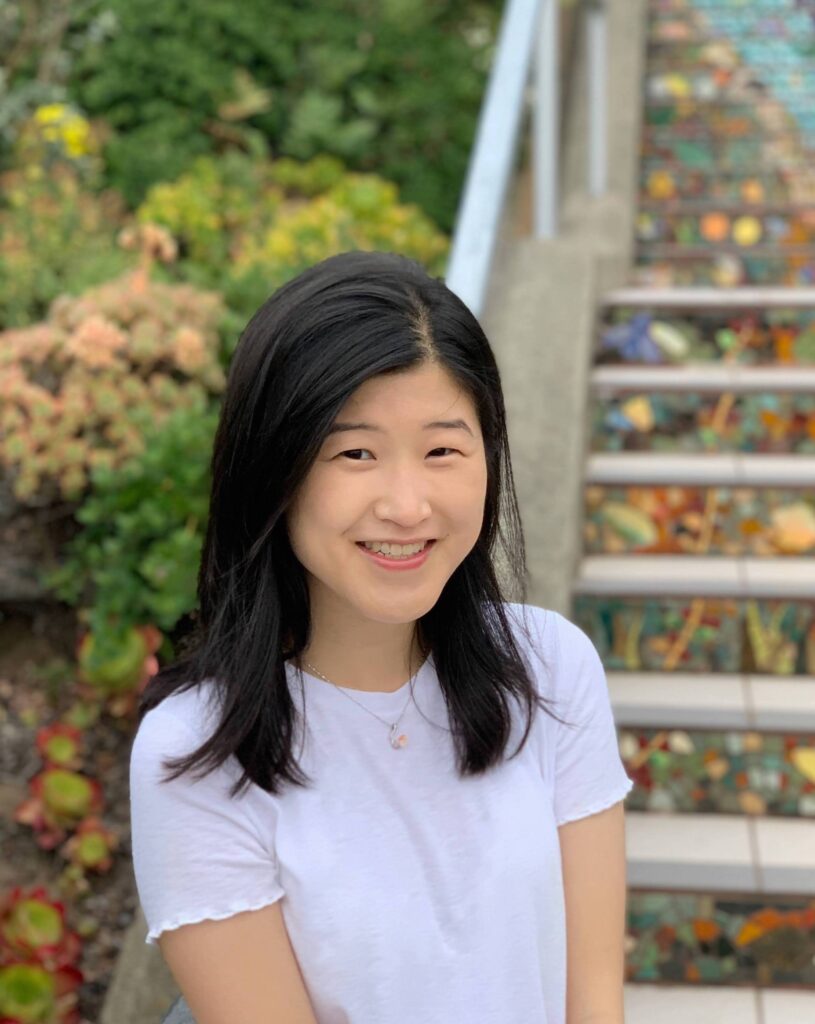
Portrait of Alisa Liu wearing a white short-sleeved shirt with gathered short sleeves and a pendant necklace standing in front of a mosaic tiled staircase and foliage of succulents, ferns, and bushes.

As people engage artificial intelligence to solve problems at a human level, reliance on such technologies has unearthed difficulties in the way that language models learn from data. Often, the models will memorize the peculiarities of a dataset rather than solving the underlying task for which they were developed. The problem has more to do with data quality than size, meaning the problem cannot be corrected by simply making the dataset larger. 

Enter Alisa Liu, a Ph.D. student who works with Yejin Choi and Noah Smith in the Allen School’s Natural Language Processing group. Liu seeks to overcome shortcomings in how datasets are constructed by developing new methods of human-machine collaboration to improve the reliability of resulting models. In developing this new framework, Liu also aims to root out social biases that are present within the datasets and therefore reproduced by these models.

“I hypothesize that there is great potential in leveraging language models in a controlled way to aid humans in the dataset creation process,” Liu said.

Liu’s interest in the importance of data was sparked during her time as an undergraduate at Northwestern University. There, Liu felt drawn to the possibilities that machine learning offered to harness the potential of data and develop productive tools. She soon discovered that applying AI to language, music and audio research agendas often does not get the expected results because the external and social knowledge needed to solve certain tasks cannot easily be encoded into a dataset. And even high-performing models were not always useful for end user applications. This experience led Liu to ask questions about how researchers know whether their systems have learned that which they were asked to learn, what types of prior knowledge must be encoded in datasets by researchers, and how researchers can create meaningful tools for real people. 

“I saw the importance and potential of AI that can reason about, be informed by, and serve the society in which it exists,” Liu explained.

In 2020, Liu began her graduate studies at the Allen School, where she is challenging previous modes of thinking in her field and incorporating human-centered design approaches to explore how AI can serve society. She earned a 2022 NSF Graduate Research Fellowship from the National Science Foundation to advance this work.

“Alisa’s recent work has really changed my thinking and that of many others in our group about the most impactful ways to use today’s language models,” said Smith, Amazon Professor of Machine Learning at the Allen School and senior director of NLP research at the Allen Institute for AI. “She brings so much creativity and independent thinking to our collaboration. It’s inspiring!”

In collaboration with AI2, Liu developed one of her projects, WANLI, which stands for “Worker and AI Collaboration for Natural Language Inference.” Liu was lead author of the paper published in last year’s Conference on Empirical Methods in Natural Language Processing (EMNLP 2022) Findings that introduced a novel approach to how datasets are formed using a combination of machine generation and human editing. To demonstrate, the researchers developed methods to automatically identify challenging reasoning patterns in existing data, and have GPT-3 generate new related examples that were then edited by human crowdworkers. The results indicate a potential for rethinking natural language generation techniques in addition to reenvisioning the role of humans in the process of dataset creation.

“Humans are very good at coming up with examples that are correct, but it is challenging to achieve sufficient diversity across examples by hand at scale,” said Liu. “WANLI offers the best of both worlds. It couples the generative strength of AI models with the evaluative strength of humans to build a large and diverse set of high-quality examples, and do it efficiently. The next step will be to apply our approach to problems bottlenecked by a lack of annotated datasets, especially for non-English languages.”

“Alisa’s research has been extremely well received by the research community, drawn a lot of interest and inspired thought-provoking discussions,” reflected Choi, Brett Helsel Career Development Professor at the Allen School and senior research director of Mosaic at AI2. “Her innovative work is already making an impact on the field.” 

In addition to her ambitious research agenda, Liu places mentorship and service at the center of her endeavors at the Allen School. Notably, Liu mentors UW undergraduates who are interested in doing research in NLP. And having begun her Ph.D. remotely as the COVID pandemic surged, Liu found other ways to support her fellow students as co-chair of the Allen School’s CARE committee, which offers a peer support network to graduate students. She also helped coordinate the Allen School’s visit days program for prospective graduate students and helped organize the Allen School’s orientation for new graduate students once they arrive on campus.

“I chose to pursue a Ph.D. not just because I enjoy thinking about research problems,” said Liu, “but because I knew I would be in a good position to direct my work toward positive applications and to bring more diverse voices into the community.” Read more →

With HAILEY, researchers demonstrate how AI can lend a helping hand for mental health support

Sometimes it can be hard to find just the right words to help someone who is struggling with mental health challenges. But recent advances in artificial intelligence could soon mean that assistance is just a click away — and delivered in a way that enhances, not replaces, the human touch. 

In a new paper published in Nature Machine Intelligence, a team of computer scientists and psychologists at the University of Washington and Stanford University led by Allen School professor Tim Althoff present HAILEY, a collaborative AI agent that facilitates increased empathy in online mental health support conversations. HAILEY — short for Human-AI coLlaboration approach for EmpathY — is designed to assist peer supporters who are not trained therapists by providing just-in-time feedback on how to increase the empathic quality of their responses to support seekers in text-based chat. The goal is to achieve better outcomes for people who look to a community of peers for support in addition to, or in the absence of, access to licensed mental health providers.

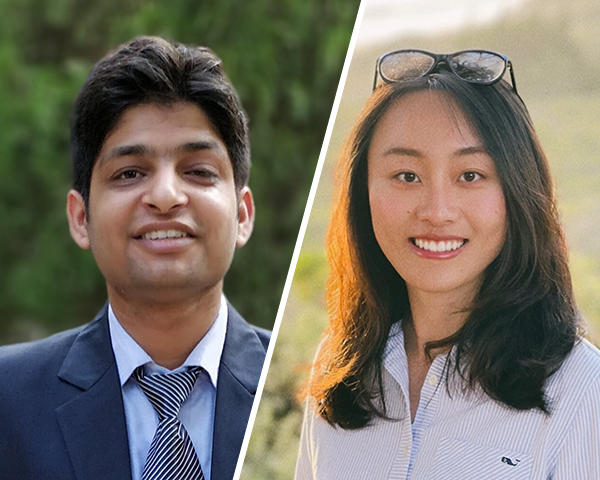
Side-by-side portraits of Ashish Sharma and Inna Lin. Sharma is wearing a dark blue suit with light blue shirt and striped tie, pictured in front of a green leafy background. Lin is wearing a lavender striped button-down shirt with dark-rimmed eyeglasses perched atop her head, standing in front of a sun-dappled shoreline.
Ashish Sharma (left) and Inna Lin

“Peer-to-peer support platforms like Reddit and TalkLife enable people to connect with others and receive support when they are unable to find a therapist, or they can’t afford it, or they’re wary of the unfortunate stigma around seeking treatment for mental health,” explained lead author Ashish Sharma, a Ph.D. student in the Allen School’s Behavioral Data Science Lab. “We know that greater empathy in mental health conversations increases the likelihood of relationship-forming and leads to more positive outcomes. But when we analyzed the empathy in conversations taking place on these platforms on a scale of zero for low empathy to six for high empathy, we found that they averaged an expressed empathy level of just one. So we worked with mental health professionals to transform this very complex construct of empathy into computational methods for helping people to have more empathic conversations.” 

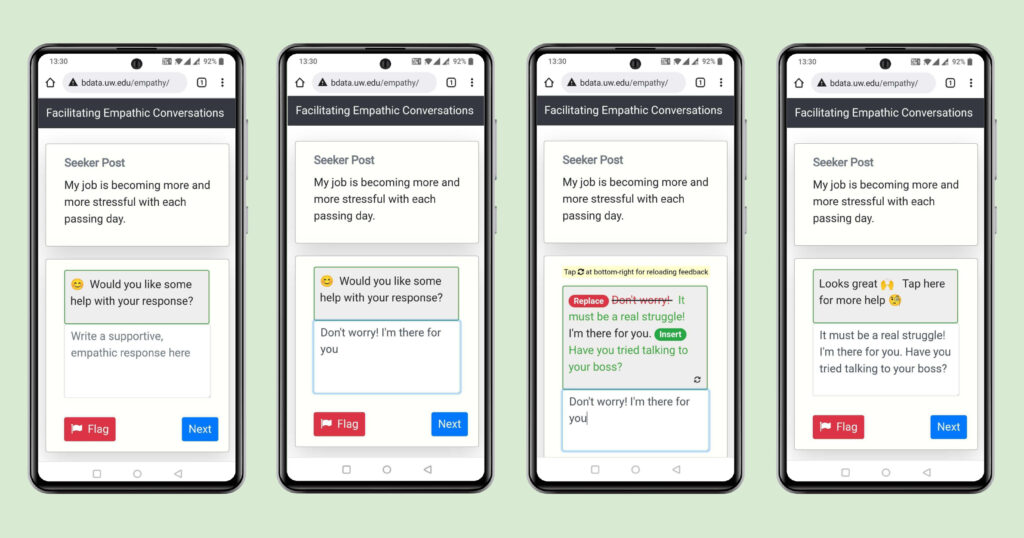
HAILEY is different from a general-purpose chatbot like ChatGPT. As a human-AI collaboration agent, HAILEY harnesses the power of large language models specifically to assist users in crafting more empathic responses to people seeking support. The system offers users just-in-time, actionable feedback in the form of onscreen prompts suggesting the insertion of new empathic sentences to supplement existing text or the replacement of low-empathy sentences with more empathic options. In one example cited in the paper, HAILEY suggests replacing the statement “Don’t worry!” with the more empathic acknowledgment, “It must be a real struggle!” In the course of conversation, the human user can choose to incorporate HAILEY’s suggestions with the touch of a button, modify the suggested text to put it in their own words and obtain additional feedback. 

Unlike a chatbot that actively learns from its online interactions and incorporates those lessons in their subsequent exchanges, HAILEY is a closed system, meaning all training occurs offline. According to co-author David Atkins, CEO of Lyssn.io, Inc. and an affiliate professor in the UW Department of Psychiatry and Behavioral Sciences, HAILEY avoids the potential pitfalls associated with other AI systems that have recently made headlines.

“When it comes to delivering mental health support, we are dealing with open-ended questions and complex human emotions. It’s critically important to be thoughtful in how we deploy technology for mental health,” explained Atkins. “In the present work, that’s why we focused first on developing a model for empathy, rigorously evaluated it, and only then did we deploy it in a controlled environment. As a result, HAILEY represents a very different approach from just asking a generic, generative AI model to provide responses.”

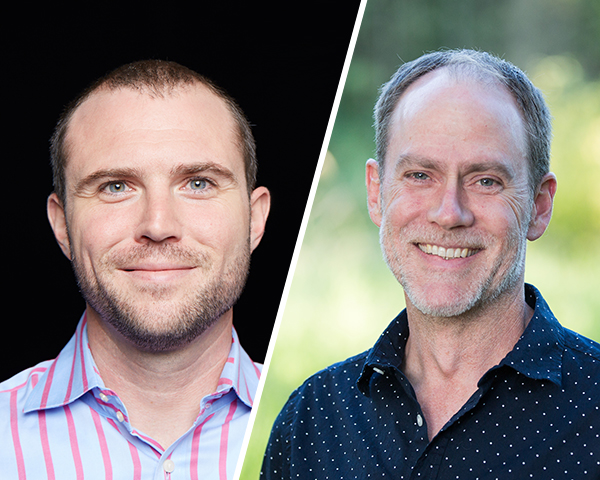
Side-by-side portraits of Adam Miner and David Atkins. Miner is wearing a periwinkle and fuschia striped button-down shirt against a solid black background. Atkins is wearing a deep blue button-down shirt with tiny white polka dots, standing in front of a leafy green background
Adam Miner (left) and David Atkins

HAILEY builds upon the team’s earlier work on PARTNER, a model trained on a new task of empathic rewriting using deep reinforcement learning. The project, which represented the team’s first foray into the application of AI to increase empathy in online mental health conversations while maintaining conversational fluency, contextual specificity, and diversity of responses, earned a Best Paper Award at The Web Conference (WWW 2021).

The team evaluated HAILEY in a controlled, non-clinical study involving 300 peer supporters who participate in TalkLife, an online peer-to-peer mental health support platform with a global reach. The study was conducted off-platform to preserve users’ safety via an interface similar to TalkLife’s, and participants were given basic training in crafting empathic responses to enable the researchers to better gauge the effect of HAILEY’s just-in-time feedback versus more traditional feedback or training. 

The peer supporters were split into two groups: a human-only control group that crafted responses without feedback, and a “treatment” group in which the human writers received feedback from HAILEY. Each participant was asked to craft responses to a unique set of 10 posts by people seeking support. The researchers evaluated the levels of empathy expressed in the results using both human and automated methods. The human evaluators — all TalkLife users — rated the responses generated by human-AI collaboration more empathic than human-only responses nearly 47% of the time and equivalent in empathy roughly 16% of the time; that is, the responses enhanced by human-AI collaboration were preferred more often than those authored solely by humans. Using their 0-6 empathy classification model, the researchers also found that the human-AI approach yielded responses containing 20% higher levels of empathy compared to their human-only generated counterparts. 

In addition to analyzing the conversations, the team asked the members of the human-AI group about their impressions of the tool. More than 60% reported that they found HAILEY’s suggestions helpful and/or actionable, and 77% would like to have such a feedback tool available on the real-world platform. According to co-author and Allen School Ph.D. student Inna Lin, although the team had hypothesized that human-AI collaboration would increase empathy, she and her colleagues were “pleasantly surprised” by the results. 

“The majority of participants who interacted with HAILEY reported feeling more confident in their ability to offer support after using the tool,” Lin noted. “Perhaps most encouraging, the people who reported to us that they have the hardest time incorporating more empathy into their responses improved the most when using HAILEY. We found that for these users, the gains in empathy from employing human-AI collaboration were 27% higher than for people who did not find it as challenging.”

A row of four illustrations of a smartphone interface displaying the header "Facilitating Empathic Conversations" followed by a seeker post "My job is becoming more and more stressful with each passing day" and with two buttons, "Flag" and "Next," at the bottom. The first image shows an AI agent offering "Would you like some help with your response? The second shows a draft response entered: "Don't worry! I'm there for you." The third image shows suggested edits: replace "Don't worry!" with "It must be a real struggle!" and insert "Have you tried talking to your boss?" The fourth image shows the response incorporating the previous suggestions, with a message from the AI agent: "Looks great. Tap here for more help."
An example of how HAILEY assists peer supporters to incorporate more empathic language in their responses to people seeking mental health support.

According to co-author Adam Miner, a licensed clinical psychologist and clinical assistant professor in Stanford University’s Department of Psychiatry and Behavioral Sciences, HAILEY is an example of how to leverage AI for mental health support in a safe and human-centered way.

“Our approach keeps humans in the driver’s seat, while providing real-time feedback about empathy when it matters the most,” said Miner. “AI has great potential to improve mental health support, but user consent, respect and autonomy must be central from the start.”

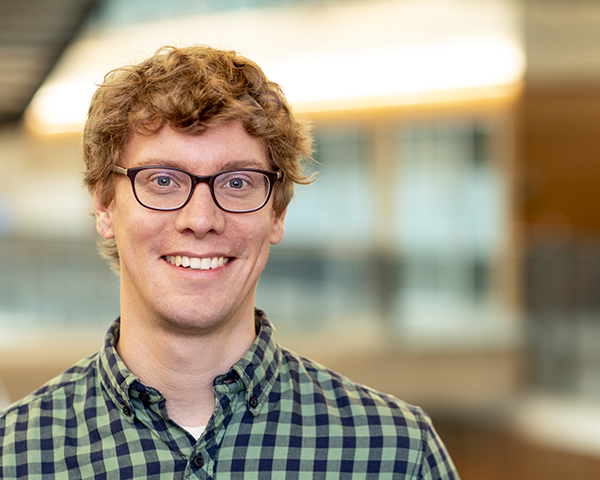
Portrait of Tim Althoff wearing a navy blue and sage green checked button-down shirt and dark-framed eyeglasses in a building atrium with blurred green-tinged glass, metal and wood accents in the background.
Tim Althoff

To that end, the team notes that more work needs to be done before a tool like HAILEY will be ready for real-world deployment. Those considerations range from the practical, such as how to effectively filter out inappropriate content and scale up the system’s ability to provide feedback on thousands of conversations simultaneously and in real-time, to the ethical, such as what disclosures should be made about the role of AI in response to people seeking support.

“People might wonder ‘why use AI’ for this aspect of human connection,” Althoff said in an interview with UW News. “In fact, we designed the system from the ground up not to take away from this meaningful person-person interaction.

“Our study shows that AI can even help enhance this interpersonal connection,” he added.

Read the UW News Q&A with Althoff here and the Nature Machine Intelligence paper here. Read more →

Luis Ceze named Fellow of the Association for Computing Machinery for advancing new paradigms in computer architecture and programming systems

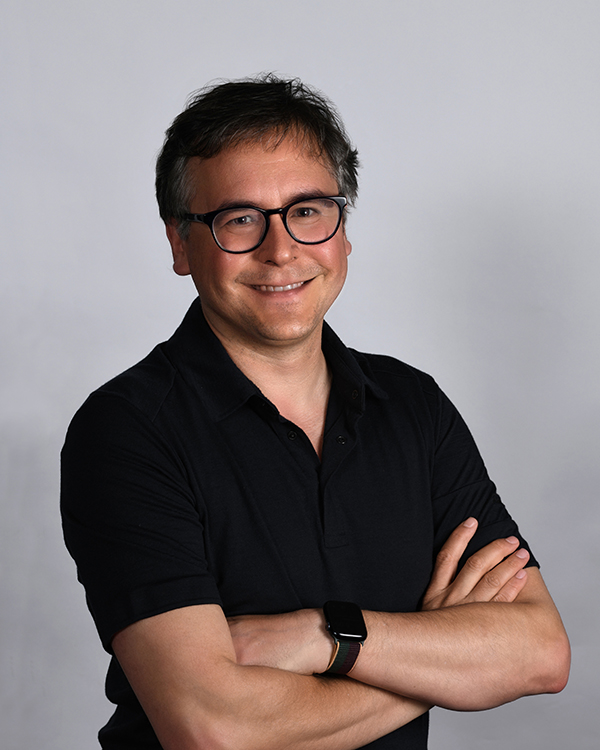
Portrait of Luis Ceze standing with arms crossed, smiling at the camera, against a grey background. Luis is wearing glasses with dark acrylic frames and clear lenses, black short-sleeved, open-necked shirt, and a black smartwatch on his left wrist.

Since he first arrived at the University of Washington in 2007, Allen School professor Luis Ceze has worn many hats: teacher, mentor, researcher, entrepreneur, venture investor. As of this week, he can add Fellow of the Association for Computing Machinery to that list after the organization bestowed upon him its most prestigious level of membership for “contributions to developing new architectures and programming systems for emerging applications and computing technologies.”

A computer architect by training, Ceze has been at the forefront of an expanding vision of the future of computation — and challenging the computer architecture community to rethink what a computer even is, thanks in part to some nifty research at the intersection of information technology and biology. His work also has extended to reimagining the hardware/software stack and embracing the emerging capabilities of machine learning. 

“I’m motivated by the question of how we can build new programming models with and for future technologies and applications,” said Ceze, the inaugural holder of the Edward D. Lazowska Endowed Professorship at the Allen School. “There is so much untapped potential in drastically improving efficiency, enabling new types of applications, and making use of new hardware and device technology. From machine learning to automated hardware/software to molecular programming, we are in the midst of a new computing revolution.”

Ceze has played a significant role in enabling that revolution, having broken new ground with his work on DNA-based data storage and computing. As co-director of the Molecular Information Systems Lab, Ceze has teamed up with Allen School colleagues, Microsoft researchers and synthetic DNA supplier Twist Bioscience on an ambitious series of projects that demonstrate synthetic DNA’s potential as a data storage medium, developing a process for converting those digital 0s and 1s into the As, Ts, Cs and Gs of DNA — and then, crucially, back again — that combined advances in biotechnology with computational techniques such as error encoding schemes.

“Life has produced this fantastic molecule called DNA that efficiently stores all kinds of information about your genes and how a living system works — it’s very, very compact and very durable,” Ceze explained in a UW News release in 2016. “This is an example where we’re borrowing something from nature — DNA — to store information. But we’re using something we know from computers — how to correct memory errors — and applying that back to nature’s ‘device technology.’ “

Since their initial paper appeared at the International Conference on Architectural Support for Programming Languages and Operating Systems (ASPLOS), Ceze and his MISL collaborators have set a new record for the amount of data stored in DNA, demonstrated the ability to perform random access to selectively retrieve stored files and convert them back to digital format, and developed a method for performing content-based similarity search of digital image files stored in DNA — moving past an initial focus on DNA’s prospects as an archival storage medium to, as Ceze observed at the time, “pave the way for hybrid molecular-electronic computer systems.” The team also built a prototype of an automated, end-to-end system for encoding data in DNA. 

Ceze subsequently initiated a collaboration with Seattle-based artist Kate Thompson to produce a portrait of pioneering British scientist Rosalind Franklin — the first person to have captured an image of the DNA double-helix — using paint infused with synthetic DNA in which the lab had encoded photos of memories collected from people around the world. Since then, Ceze and his fellow MISL researchers have branched out to develop a new platform for digital microfluidics automation — also known as “lab on a chip” — as well as a portable molecular tagging system and the capability for living cells to interface with computers.

“Our initial work on DNA data storage helped motivate and inform U.S. government research investment in this space, and then it expanded to other directions,” Ceze said. “And it was brought about by a collaborative team involving computer system architects, molecular biologists, machine learning engineers, and others. What we have in common is a curiosity and an excitement about what computing can learn from biology, and vice versa. Not many computer science schools have their own wet lab!”

Ceze didn’t need a wet lab for his other innovation: TVM, short for Tensor Virtual Machine, a flexible, efficient, end-to-end optimization framework for deploying machine learning applications across a variety of hardware platforms. Developed by a team that combined expertise in computer architecture, systems and machine learning, TVM bridged the gap between deep learning systems optimized for productivity and various hardware platforms, each of which are accompanied by their own programming, performance and efficiency constraints. TVM would allow researchers and practitioners to rapidly deploy deep learning applications on a range of systems — from mobile phones, to embedded devices, to and specialized chips — without having to sacrifice battery power or speed.

“Efficient deep learning needs specialized hardware,” Ceze noted at the time. “Being able to quickly prototype systems using FPGAs and new experimental ASICs is of extreme value.”

Ceze and his collaborators later teamed up with Amazon Web Services to build upon the TVM stack with the NNVM — short for Network Virtual Machine — compiler for deploying deep learning frameworks across a variety of platforms and devices. A year after TVM’s initial release, the team introduced the Versatile Tensor Accelerator, or VTA, an open-source customizable deep-learning accelerator for exploring hardware-software co-design that enables researchers to rapidly explore novel network architectures and data representations that would otherwise require specialized hardware support. 

The team eventually handed off TVM to the non-profit Apache Software Foundation as an incubator project. Ceze subsequently co-founded a company, OctoML, that builds upon and uses the Apache TVM framework to help companies deploy machine learning applications on any hardware, reducing effort and operational costs. To date, the UW spinout — for which Ceze serves as CEO — has raised $132 million from investors and currently employs more than 130 people, with the majority in Seattle and the rest spread across the U.S. and abroad. 

Before delving into deep learning accelerators and DNA synthesizers, Ceze made his mark in approximate computing. Combining aspects of programming languages, compilers, processor and accelerator architectures, machine learning, storage technologies, and wireless communication, Ceze and his colleagues developed a principled approach for identifying permissible tradeoffs between the correctness and efficiency of certain applications, such as those for search and video, to achieve significant energy savings in exchange for minimal sacrifices in output quality. 

Their initial contributions revolved around EnerJ — referred to as “the language of good-enough computing” — is a Java extension that enables developers to designate which program components should yield precise or approximate results to achieve performance savings and then check the quality of output and recompute or reduce the approximation as warranted. The team also developed a pair of hardware innovations in the form of an instruction set architecture (ISA) extension that provided for approximation operations and storage along with a dual-voltage microarchitecture, called Truffle, that enabled both approximate and precise computation to be controlled at a fine grain by the compiler. Ceze and his colleagues subsequently proposed a new technique for accelerating approximate programs using low-power neural processing units and dual mechanisms for approximate data storage that improves the performance and density while extending the usable life of solid-state storage technologies such as Flash.

In addition to his roles at the Allen School and OctoML, in his “free time” Ceze is also a venture partner at Madrona Venture Group and chairs their technical advisory board. Madrona funded OctoML and his first startup, Corensic, that was spun out of the UW in 2008. Before his ascension to ACM Fellow, Ceze shared the ACM SIGARCH Maurice Wilkes Award from the ACM Special Interest Group on Computer Architecture with MISL co-director and Allen School affiliate professor Karin Strauss, senior principal research manager at Microsoft. He is the co-author of multiple Best Papers and IEEE Micro Top Picks and holds a total of 29 patents based on his research. To date, he has guided 23 Ph.D. students as they earned their degrees on their way to launching careers in academia or industry.

“Computing is an extremely rich field of intellectual pursuit, and it is especially exciting now with the convergence of abundant computing resources, new AI techniques, and the ability to interact with natural systems from the molecular level all the way to the cognitive level,” said Ceze. “I’m honored by this recognition and am extremely grateful to all my Ph.D. advisees and collaborators for contributing so much to the work and to my career!”

Read the ACM announcement here.

Congratulations, Luis! Read more →

Allen School’s Michael Duan and Anas Awadalla recognized by CRA Outstanding Undergraduate Researcher Awards program

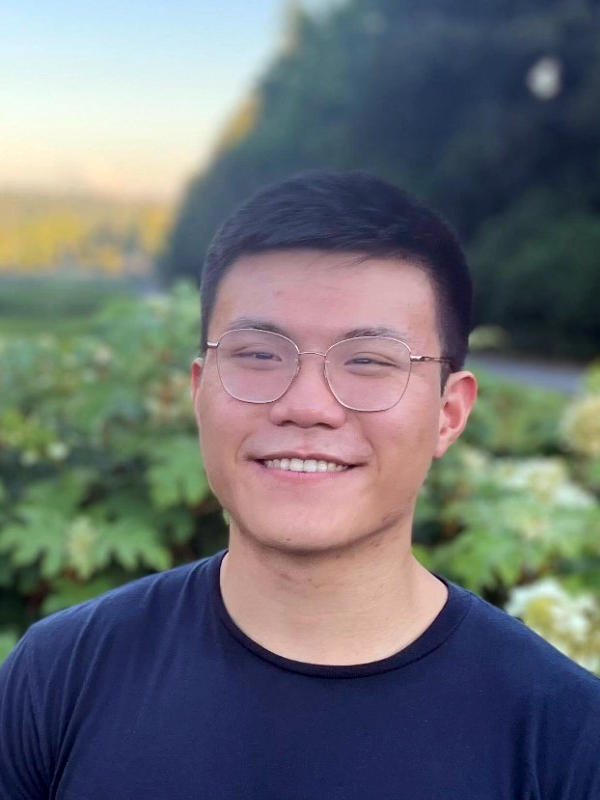
Michael Duan, wearing square glasses and a navy t-shirt, smiles in front of a blurred background of green plants and pine trees.
Michael Duan

The Computing Research Association recently honored Allen School undergraduates Michael Duan and Anas Awadalla as part of its Outstanding Undergraduate Researcher Awards program for 2023. The annual program highlights exceptional undergraduate students from across North America for their contributions to the computing field. 

Duan, who works with professor and advisor Jon Froehlich in the Makeability Lab, was selected as a finalist for his work on Scaling Crowd+AI Sidewalk Accessibility Assessments and Sidewalk Gallery: An Interactive, Filterable Image Gallery of Over 500,000 Sidewalk Accessibility Problems. The senior computer science major is the first undergraduate student in the lab’s history to receive such an honor.  

“It’s really cool that I got a chance to be considered among other innovative and hardworking undergraduates,” Duan said. “Their work is extremely inspiring to me, so I’m glad I got an opportunity to share my work alongside them.”

Duan was first author on both projects. The first focused on automated sidewalk accessibility assessment with crowdsourced data. Together, Duan and his co-authors investigated using computer vision methods to determine and label the presence of accessibility features such as curb ramps in urban scenery — findings, he said, that can assist urban planners, disability advocates and city governments in designing smarter, more inclusive infrastructure. 

The second project explored data visualization related to disability advocacy and urban planning. With the sheer amount of ever-increasing datasets, better ways of visualizing that data are needed. To tackle this problem, Duan and his collaborators introduced Sidewalk Gallery, an interactive, filterable gallery of more than 500,000 crowdsourced sidewalk accessibility images across seven cities in two countries. The innovative interface allows users to browse and cull these images for different accessibility problem types, severity levels and more, providing a visualization aid and a teaching tool for urban design. 

“Most datasets are geared primarily towards computer vision,” Duan said. “For both researchers and the general public, visualization tools are critical to exposing and understanding data, broadening reach and lowering barriers to use.” 

Anas Awadalla, wearing black glasses and a navy t-shirt and a backpack, stands in front of the Paul G. Allen Center for Computer Science & Engineering. The building is made of brick and the sign is black.
Anas Awadalla

Awadalla, who is advised by professor Ludwig Schmidt, was selected as an honorable mention for his work in natural language processing and in building reliable machine learning systems. In the former, he and his collaborators studied the distributional robustness of question-answering (QA) models. With the latter, Awadalla was part of the team from the Ubiquitous Computing Lab, led by professor Shwetak Patel, that built a framework for improving the trustworthiness of mobile health neural networks

“I am happy to get this distinction and to have my research recognized,” said Awadalla, a senior computer science major. “Research has been the most fulfilling experience during my time at UW.”

In his most recent research project, Awadalla and his co-authors investigated how NLP practitioners can use specific training methods to improve the robustness of their QA systems. Though research in the domain has increased, the community lacks a shared framework from which to evaluate robustness. Citing this challenge, Awadalla and his collaborators conducted a large empirical study to better understand and assess methods that generalize with more reliability. 

Awadalla also collaborated on a project improving the reliability of AI-powered diagnostic and health screening tools. With unseen data, machine learning models can behave unpredictably, raising safety concerns in a field where errors can prove fatal. The research team demonstrated this flaw by using publicly available deep learning models and datasets. Then they created an interpretable confidence score for users, Awadalla said, to assess the compatibility of their dataset with a trained model. Their findings were integral in building consumer-friendly and trustworthy AI applications that can help patients and healthcare providers make more-informed decisions. 

Raul Villanueva, an undergraduate in the UW Department of Electrical & Computer Engineering, was also recognized by CRA as a finalist. 

Congratulations to Michael, Anas and Raul! Read more →

« Newer PostsOlder Posts »