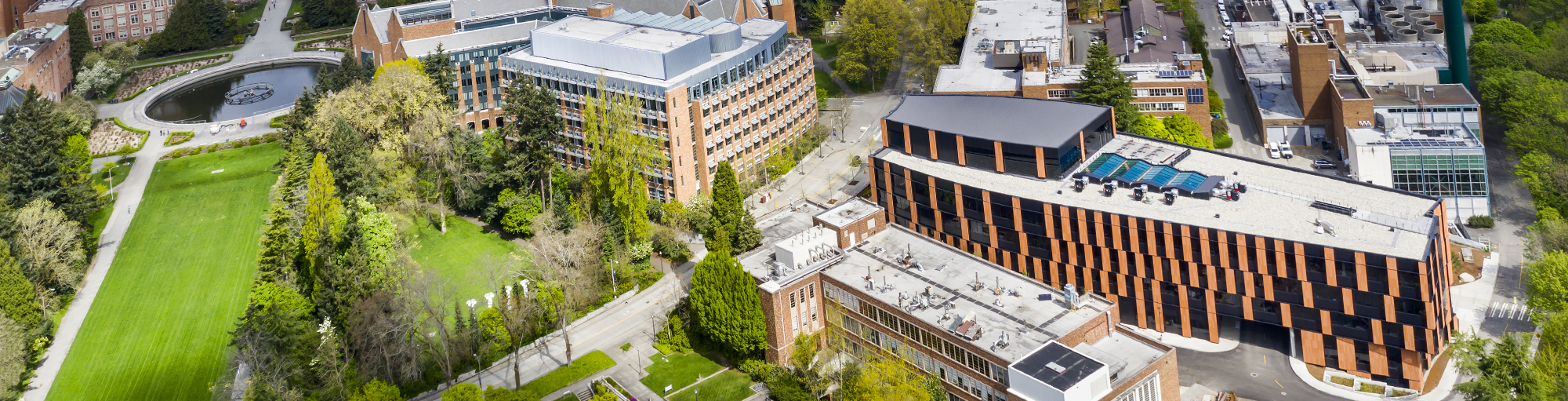
Paul G. Allen receives 2015 Carnegie Medal of Philanthropy

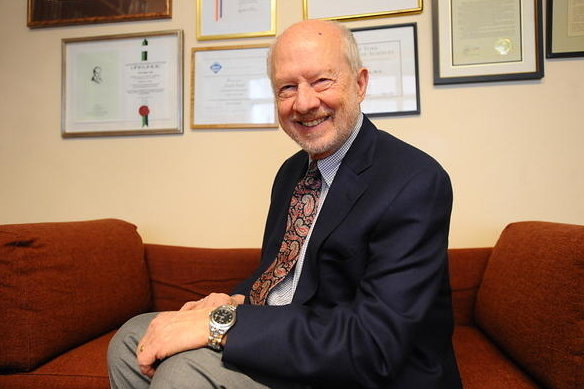
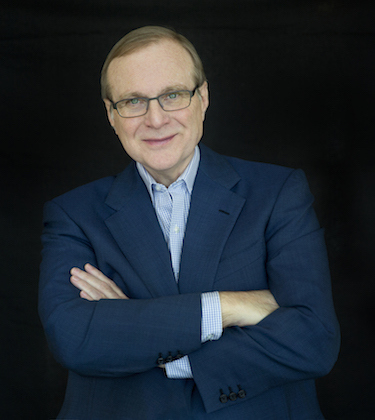
Allen-PaulUW CSE friend and benefactor Paul G. Allen will receive a 2015 Carnegie Medal of Philanthropy.

The Carnegie Medal goes to those who use their private wealth to improve the greater public good. Paul was selected for his work to protect the oceans, fight Ebola, save endangered species, help expand educational opportunities for girls, research the human brain and support the arts, according to the Carnegie statement.

Plus, of course, there’s our building …

Congratulations Paul!

GeekWire post here. Read more →

UW eScience Institute’s data science do-gooders featured in Xconomy

eScience Institute logo“What did you do on your summer vacation?” is a common refrain as students and faculty return to campus. For the students who took part in the UW eScience Institute’s Data Science for Social Good program, they can honestly say they spent their summer trying to make the world a better place – and they did it with data.

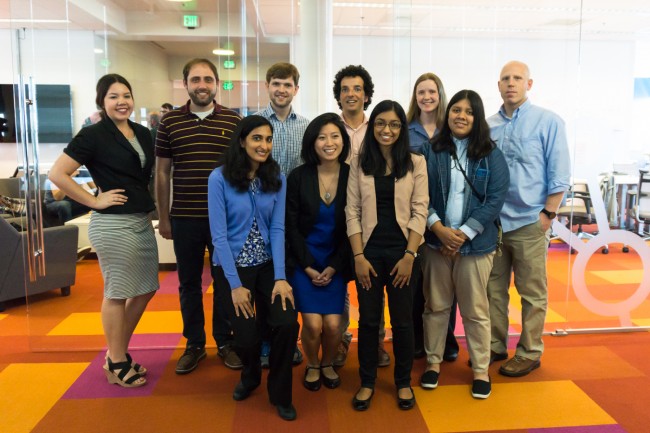
DSSG gave students from a range of disciplines the opportunity to work with data scientists and public stakeholders to apply the latest data analysis and visualization techniques to address challenges faced by urban communities. Ben Romano of Xconomy was on hand last week as the teams presented the results of their work. From his excellent article posted today:

“Earn a degree in the field of data science these days and your ticket is punched: Google, Amazon, Facebook, leading-edge academic research, a well-funded startup—they’re all clamoring for people proficient in the tools and techniques needed to sift through today’s endless streams of digital data in search of something valuable.

DSSG-Predictors-Permanent-Housing-1-e1440390961495

Family homelessness team (project sponsored by the Bill & Melinda Gates Foundation and Building Changes)

“Social service organizations and local governments are confronting the data deluge, too, often without the capacity to pay the salaries that profit-driven companies can offer these sought-after experts.

“Enter the University of Washington’s just-concluded Data Science for Social Good summer internship. The program set interdisciplinary student teams, guided by professional data scientists and subject-matter experts, to work on thorny, real-world urban problems including family homelessness, paratransit bus service, community well-being, and sidewalk mapping for accessible route planning.

“During their final presentations last week, four student teams showed off tools they built over the summer that should provide lasting value to the organizations whose data they worked with, and the community at large. In sharing their process, the teams also highlighted the challenges inherent in drawing insight from big data.”

The article highlights the enthusiastic response to DSSG when it was announced: more than 140 students applied to the summer program, of which 16 students drawn from 10 disciplines were selected to participate. One team developed tools to help identify the programs that are most helpful to families facing homelessness. Another, advised by Anat Caspi of UW CSE’s Taskar Center for Accessible Technology, sought to improve the reliability and cost-effectiveness of local paratransit services for people with disabilities.

Read the complete article here and learn more about the DSSG student projects here.

Congratulations and thanks to all of the DSSG participants – students, faculty and community representatives – who demonstrated the power of data science to serve the social good! Read more →

Justine Sherry wins Best Student Paper Award at SIGCOMM 2015

beststudentpaperwinners2010 UW CSE bachelors alum Justine Sherry – now completing her Ph.D. at UC Berkeley – is first author on this year’s Best Student Paper at SIGCOMM 2015, the premier conference in computer networking.

The paper – “Rollback-Recovery for Middleboxes” – is part of Justine’s Berkeley thesis work. Network middleboxes must offer high availability, with automatic failover when a device fails. Unlike routers, when middleboxes fail they most recover lost state about active network connections to perform properly; without this lost state clients face connection resets, downtime, or insecure behaviors. No existing middlebox design provides failover that is correct, fast to recover, and imposes little increased latency on failure-free operations. The FTMB system described in the paper adds only 30us of latency to median per packet latencies – a 100-1000x improvement over existing fault-tolerance mechanisms. FTMB  introduces moderate throughput overheads (5-30%) and can reconstruct lost state in 40-275ms for practical system configurations.

UW CSE professor Arvind Krishnamurthy is one of the paper’s co-authors, along with Peter Xiang Gao, Soumya Basu, Aurojit Panda, Sylvia Ratnasamy, and Scott Shenker from UC Berkeley, Christian Maciocco and Maziar Manesh from Intel Research, Joao Martins from NEC Labs, and Luigi Rizzo from the University of Pisa.

“And remember – she’ll be on the job market this coming year.” Read more →

A super summer of UW CSE computer science day camps for K-12 students!

hsgirlscampThis week marked 2015’s 9th and final UW CSE summer computer science day camp for K-12 students.

During the week of June 29 we hosted a co-ed camp for students entering grades 3-5 for “Scratch Adventures,” and a co-ed camp for students entering grades 10-12 for “Physical Computing.”

During the week of July 6 we again hosted “Physical Computing.”

During the weeks of July 20 and August 10 we hosted students entering grades 7-9 for “Building Android Apps.”

During the weeks of July 27 and August 3 we hosted girls camps using Processing for students entering grades 10-12.

And during the weeks of August 10 and August 17 we hosted girls camps using Processing for students entering grades 7-9.

Learn more about our summer day camps here.

Learn more about Dawgbytes (“A Taste of CSE”), UW CSE’s broad-based K-12 outreach program, here.

For lots of photos of this year’s camps, check out the DawgBytes Facebook page here. Read more →

Summer 2015 Google Faculty Research Awards

rgicontransparentAnother great performance by UW CSE faculty and alums in the most recent Google Faculty Research Awards:

Human-Computer Interaction

  • UW CSE Ph.D. alum (and former Creative Director of the UW Center for Game Science) Seth Cooper (Northeastern University)
  • UW CSE affiliate professor Sean Munson (UW Human Centered Design & Engineering)
  • UW CSE affiliate professor and Ph.D. grandchild Jessica Hullman (UW Information School, and the University of Michigan Ph.D. alum of UW CSE Ph.D. alum Eytan Adar)

Networking

Natural Language Processing

Physical Interactions and Immersive Experiences

Privacy

Software Engineering and Programming Languages

Congratulations, one and all! And thanks, Google, for your support! (See the full list of awardees here.)

  Read more →

UW CSE Ph.D. alum Karl Koscher in Wired: “Think twice about what you’re plugging into your car”

Karl Koscher and Ian Foster of UCSD in a car

Karl Koscher and Ian Foster of UCSD demonstrating the latest car security flaw (Photo: Ryan Young for Wired)

UW CSE Ph.D. alum Karl Koscher, of 60 Minutes car hacking fame, is in the news once again for exposing the vulnerabilities of motor vehicle systems with a team at University of California, San Diego, where he is doing a postdoc with UCSD CSE professors and UW CSE Ph.D. alums Stefan Savage and Geoff Voelker.

This time, Karl and his fellow researchers demonstrate for Wired magazine and the USENIX security conference a new threat for motorists: common plug-in devices such as those provided by insurance firms to monitor a vehicle’s location, mileage and speed.

From the Wired article:

“Car hacking demos like last month’s over-the-internet hijacking of a Jeep have shown it’s possible for digital attackers to cross the gap between a car’s cellular-connected infotainment system and its steering and brakes. But a new piece of research suggests there may be an even easier way for hackers to wirelessly access those critical driving functions: Through an entire industry of potentially insecure, internet-enabled gadgets plugged directly into cars’ most sensitive guts….

“By sending carefully crafted SMS messages to one of those cheap dongles connected to the dashboard of a Corvette, the researchers were able to transmit commands to the car’s CAN bus—the internal network that controls its physical driving components—turning on the Corvette’s windshield wipers and even enabling or disabling its brakes.”

As Karl says, “Think twice about what you’re plugging into your car.”

Read the full article and watch a video demonstration here. Read a recent blog post on this same topic featuring Karl’s Ph.D. adviser, UW CSE professor Yoshi Kohno (who was one of the first to sound the alarm over car security), here. Read more →

UW CSE postdoc alum Alexandra Meliou wins NSF CAREER Award

Alexandra MeliouAlexandra Meliou, an assistant professor at University of Massachusetts, Amherst who completed a postdoc under the guidance of UW CSE professor Dan Suciu in 2012, has earned the National Science Foundation’s prestigious CAREER award.

Alexandra’s research focuses on reverse-engineering data transformations to understand, diagnose and manipulate data. She is interested in enhancing data management systems to compute and use data provenance information to identify errors, diagnose the causes of errors, and improve data quality. Learn more about her NSF-supported project here.

(Thanks to Alexandra’s fellow UW CSE postdoc alum – and previous NSF CAREER award winner – Yuriy Brun for the tip.)

Congratulations, Alexandra! Read more →

The Wall Street Journal “hearts” UW CSE alum Brandon Ballinger’s new app

Brandon BallingerThe Wall Street Journal has a great article on UW CSE bachelor’s alum Brandon Ballinger (’06) and his new heart rate tracking app, Cardiogram. Brandon, who is currently working as a data scientist at the University of California, San Francisco, built the app to assist researchers with gathering data for UCSF’s Health eHeart study. But first, he decided to test the app on two things that are near and dear to many people’s hearts: Mexican food and Game of Thrones.

From the article:

“Anyone who follows Game of Thrones knows that few things can set your heart racing quite like Valyrian Steel. Now there’s data to prove it.

“….Mr. Ballinger built an Apple Watch app, called Cardiogram, that can track a user’s heart rate through the day. With the app, Mr. Ballinger has learned that his own heart jumps to more than 120 beats per minute when he eats a burrito.Chart showing change in heart rate during Game of Thrones episode

“In the long term, he’d like people to use Cardiogram to give medical researchers new insights into how the heart works.

“Short term, he’s been playing around with Cardiogram to learn how his heart rate changes throughout the day. A few months ago, he invited 10 of Cardiogram’s early users to watch Game of Thrones. ‘It’s almost like a Nielsen ratings on a second-by-second basis,’ Ballinger said.”

Read the complete article (spoiler alert!) here. Read our previous coverage of Brandon’s exploits since graduating from CSE – like helping to solve the headache that was the original Healthcare.gov – here. You can download the Cardiogram app for Apple Watch or Android Wear here. Read more →

UW CSE’s Pedro Domingos and Abe Friesen capture top prize at IJCAI with “magical” new algorithm

Pedro Domingos

Pedro Domingos

UW CSE professor Pedro Domingos and Ph.D. student Abe Friesen brought home the Distinguished Paper Award from the 2015 International Joint Conference on Artificial Intelligence (IJCAI) last month in Buenos Aires.

Pedro and Abe developed a new algorithm, Recursive Decomposition into locally Independent Subspaces (RDIS), capable of solving a broad class of nonconvex optimization problems. The duo demonstrated that RDIS significantly outperforms standard optimization techniques when applied to complex problems such as protein folding and mapping three-dimensional space from two-dimensional images. By applying problem-decomposition techniques to continuous optimization problems, RDIS has the potential to advance several areas of AI research, including computer vision, machine learning and robotics.

From the UW news release:

“‘In some ways optimization is the most important problem you’ve never heard of because it turns up in all areas of science, engineering and business. But a lot of optimization problems are extremely difficult to solve because they have a huge number of variables that interact in intricate ways,’ said senior author Pedro Domingos….

Abe Friesen

Abe Friesen

“The UW optimization algorithm, known by its acronym RDIS, progressively breaks an enormously complicated problem down into smaller, more manageable chunks — a simple idea commonly used when a problem consists of yes-or-no choices, but which had not previously been applied to numeric variables. RDIS can identify variables that, once set to specific values, break a larger problem into independent subproblems.  Often, the problems are only nearly independent, but RDIS limits the error caused by treating them as fully independent.

“‘This approach is something that is very different than what people were doing before and it also does something magical, which is solve some problems exponentially faster. And anytime you can do that, that’s when you get a big win,’ said Domingos.”

Read the news release here. Read the award-winning paper, “Recursive Decomposition for Nonconvex Optimization,” here.

Congratulations to Abe and Pedro on the big win! (Pedro has been on a roll lately – this latest achievement was preceded by winning the KDD 2015 Test of Time Award, publishing a new book, The Master Algorithm, and winning the KDD 2014 Innovation Award.) Read more →

“UW Tech Grads Among the Most Talented in the Nation”

UntitledWe admit it … this is pretty close to us talking about ourselves … but not quite.

UW !MPACT, “Informed Advocates of the University of Washington,” blogs:

“Recent UW alums don’t have to get too far off-campus to find a use for their newly-minted technology degrees. Washington’s booming tech industry is responsible for employing 238,900 people, and bringing in over $37 billion in revenue, according to a recent Washington Technology Industry Association study.

“Not only are our grads located in the heart of the state’s tech hotbed, they also turn out to be among the best-equipped to make an impact in the tech world, according to a new tech.co ranking. The UW ranked #2 on a list of the public universities that produce the best startup talent.”

The post contains additional information on the need to increase CSE’s enrollment, and provide expanded facilities.

Thanks, UW !mpact. Read more here.

  Read more →

« Newer PostsOlder Posts »