Luis Ceze and Karin Strauss share ACM SIGARCH Maurice Wilkes Award for their work on DNA-based digital data storage

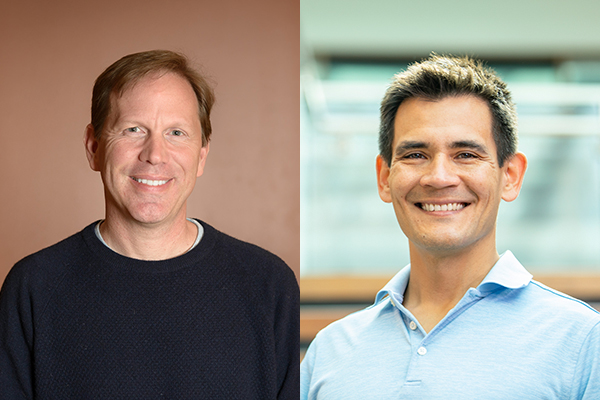
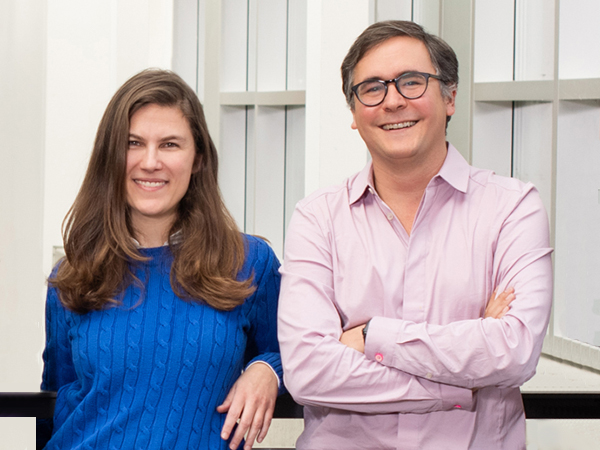
Karin Strauss and Luis Ceze

Allen School professor Luis Ceze and affiliate professor Karin Strauss, a principal research manager at Microsoft, have earned the 2020 Maurice Wilkes Award from the Association for Computing Machinery’s Special Interest Group on Computer Architecture (ACM SIGARCH) for “contributions to storage and retrieval of digital data in DNA.” The award, which is named in honor of the pioneering British computer scientist who built the first operational stored-program computer, recognizes an outstanding contribution by a member of the computer architecture field within the first two decades of their professional career. Ceze and Strauss are the first recipients to share the award in its 22 year history.

“The Maurice WIlkes Award has always been an individual honor, but I think the award committee made the right choice in recognizing Karin and Luis together,” said Allen School professor Hank Levy, who recruited Ceze and Strauss to the University of Washington. “We are witnessing the emergence of an entirely new area of our field — molecular information systems — and Karin and Luis are at the forefront of this exciting innovation.”

Since 2015, Ceze and Strauss have co-directed the Molecular Information Systems Laboratory (MISL), a joint effort by the University of Washington and Microsoft to explore synthetic DNA as a scalable solution for digital data storage and computation. They achieved their first breakthrough the following spring, when they described an archival storage system for converting the binary 0s and 1s of digital data into the As, Ts, Cs, and Gs of DNA molecules. The team followed up that achievement by storing a record-setting 200 megabytes of data in DNA, from the Declaration of Human Rights in more than 100 languages to the music video for “This Too Shall Pass” by popular band OK Go.

The team would later publish the science behind this feat in the peer-reviewed journal Nature Biotechnology, along with a description of their technique for achieving random access using a library of primers that they designed and validated for use in conjunction with polymerase chain reaction (PCR). The latter was a crucial step in demonstrating the feasibility of a large-scale DNA-based digital storage architecture, since such a system would be cost- and time-prohibitive without building in the ability to quickly and easily find and retrieve specific data files without sequencing and decoding the entire dataset.

Last year, Ceze, Strauss, and their colleagues introduced the world to the first automated, end-to-end system for DNA data storage, encoding the word “hello” as five bytes of data in strands of DNA and recovering it. Their fully functioning prototype incorporated the equipment required to encode, synthesize, pool, sequence, and read back the data — all without human intervention. After demonstrating it was feasible to automate DNA data storage, they moved on to showing how it could be practical, too, unveiling a full-stack automated digital microfluidics platform to enable DNA data storage at scale. As part of this work, the lab designed a low-cost, general-purpose digital microfluidics device for holding and manipulating droplets of DNA, dubbed PurpleDrop, which functions as a “lab on a chip.” PurpleDrop can be used in conjunction with the team’s Puddle software, an application programming interface (API) for automating microfluidics that is more dynamic, expansive, and easier to use than previous techniques. Since then, the team has begun exploring new techniques for search and retrieval of data stored in DNA, such as content-based similarity search for images.
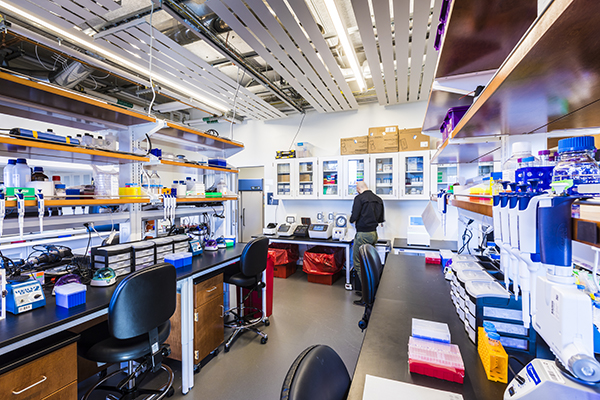
Molecular Information Systems Laboratory

”Many people don’t envision a wet lab full of pipettes and DNA quantification, synthesis, and sequencing machines when they think of computer architecture,” Strauss admitted. “But that’s what makes this work so interesting, and frankly, thrilling. We, computer architects, get to work with an incredibly diverse group of brilliant researchers, all the way from coding theorists and programming languages, to mechanical and electrical engineering, to molecular biology and biochemistry. 

“Having done this research has only energized us further to continue working with our colleagues to push the boundaries of computing by demonstrating how DNA, with its density and its durability, offers new possibilities for processing and storing the world’s information,” she concluded.

In addition to pushing the boundaries of computer architecture, Strauss, Ceze, and the other MISL members have made an effort to push the limits of the public’s imagination and engage them in their research. For example, they collaborated with Twist Bioscience — the company that supplies the synthetic DNA used in their experiments — and organizers of the Montreux Jazz Festival to preserve iconic musical performances from the festival’s history for future generations to enjoy. In 2018, the lab enabled the public to take a more active role in its research through the #MemoriesInDNA campaign, which invited people around the world to submit their photos for preservation in DNA under the tagline “What do you want to remember forever?”

More recently, the MISL team entered into a collaboration with Seattle-based artist Kate Thompson to pay tribute to another pioneering British scientist, Rosalind Franklin, who captured the first image revealing the shape of DNA. That tribute took the form of a portrait comprising hundreds of photos crowdsourced from people around the world as part of the #MemoriesInDNA campaign. The researchers encoded a selection of those photos in DNA, with redundancy, and turned the material over to Thompson. The artist then mixed it with the paint to infuse Franklin’s portrait with the very substance that she had helped reveal to the world. 

“We believe there are a lot of opportunities in getting the best out of traditional electronics and combining them with the best of what molecular systems can offer, leading to hybrid molecular-electronic systems,” said Ceze. “In exploring that, we’ve combined DNA storage with the arts, with history, and with culture.”

In addition to combining science and art, Ceze has also been keen to explore the combination of DNA computing and security. In a side project to his core MISL work, he teamed up with colleagues in the MISL and in the Allen School’s Security and Privacy Research Lab to explore potential security vulnerabilities in DNA sequencing software. In a highly controlled experiment, the researchers encoded an exploit in strands of synthetic DNA. They then processed the sample with software compromised by a known vulnerability to demonstrate that it is possible to infect a computer by malicious code delivered through DNA. Ceze also worked with a subset of that same team to understand how people’s privacy and security could be compromised via online genetic genealogy services — including, potentially, the spoofing of relatives who do not exist. 
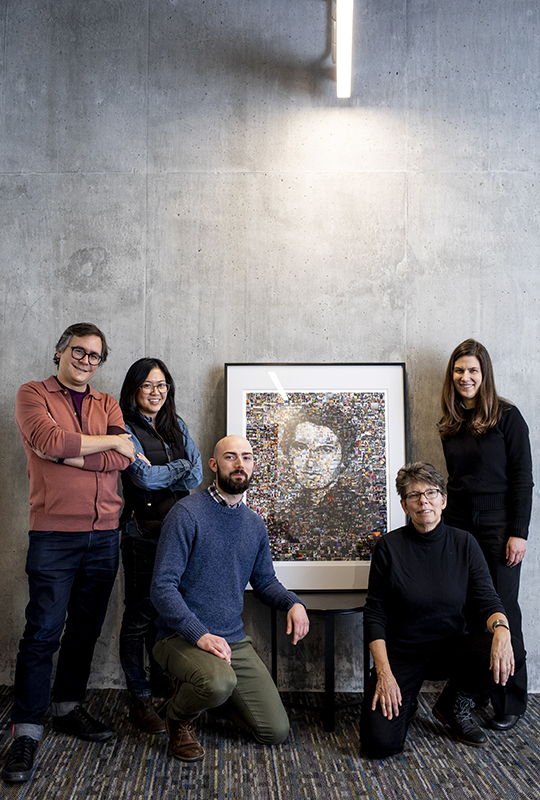
Four MISL lab members pose with artist Kate Thompson and her portrait of Rosalind Franklin
Ceze (left) and Strauss (right) pose with artist Kate Thompson and MISL members Bichlien Nguyen and David Ward by the portrait of Rosalind Franklin

“As the intersection of DNA and computing becomes more mainstream, it’s important to highlight these vulnerabilities,” Ceze explained. “We want to address any security issues before they can cause harm.”

Ceze joined the University of Washington faculty in 2007 after earning his Ph.D. from the University of Illinois at Urbana-Champaign. Early in his career, Ceze emerged as a leading proponent of approximate computing, which aims to dramatically increase efficiency without sacrificing performance. His work has blended operating systems, programming languages, and computer architecture to develop solutions that span the entire stack, from algorithms to circuits. While approximate computing most often focuses on computation itself, Ceze was keen to apply the principle to data storage. He teamed up with Strauss and other colleagues at UW and Microsoft to focus on what he calls “nature’s own perfected storage medium,” and the rest will go down in computer architecture history.

“Luis established himself as a leader in the architecture community when he took approximate computing from a niche idea to a mainstream research area,” said Josep Torrellas, Ceze’s Ph.D. advisor and director of the Center for Programmable Extreme-Scale Computing at the University of Illinois at Urbana-Champaign. “Since then, his contributions working alongside Karin on synthetic DNA for digital data storage have been nothing short of groundbreaking — encompassing an overall system architecture, decoding pipeline, fluidics automation, wet lab techniques and analysis, search capabilities, and more.

“Luis and Karin have advanced a completely new paradigm for computer architecture, and they did it in an impressively short period of time,” he continued. “I can’t think of anyone working in the field today who is more deserving of this recognition.”

Strauss, who also earned her Ph.D. from the University of Illinois at Urbana-Champaign working with Torrellas, joined Microsoft Research in 2009 after spending nearly two years at AMD. A major focus of her work over the past decade has been on making emerging memory technologies viable for use in mainstream computing. In 2013, Strauss contributed to a paper, along with Ceze and their Allen School and MISL colleague Georg Seelig, exploring new approaches for designing DNA circuits. That work challenged the computer architecture community to begin contributing in earnest to the development of this emerging technology. She led the charge within Microsoft Research, along with Douglas Carmean, to devote a team to DNA-based storage, leading to the creation of the MISL.

“Karin is a pioneering researcher in diverse areas of research spanning hardware support for software debugging and machine learning, main memory technologies that wear out, and emerging memory and storage technologies,” said Kathryn McKinley, a researcher at Google. “Her latest research is making DNA data storage a reality, which will revolutionize storage and computing. It is heartwarming to see the amazing research partnership of Karin and Luis recognized with this extremely prestigious award.”

The Maurice Wilkes Award is among the highest honors bestowed within the computer architecture community. Recipients are formally honored at the ACM and IEEE’s Joint International Conference on Computer Architecture (ISCA). This year, the community celebrated Ceze and Strauss’ contributions in a virtual award ceremony as part of ISCA 2020 online.

“We are tremendously proud of Luis and Karin! They are true visionaries and trail-blazers and their creativity never ceases to amaze me,” said professor Magdalena Balazinska, director of the Allen School. “I look forward to seeing the next exciting research results that will come out of their lab. Their work so far has definitely been very impactful, and I’m very happy they have been recognized with this prestigious award.”

Congratulations, Karin and Luis!
Read more →

Putting in the work for positive change: A message from the Allen School leadership team

To our extended Allen School community,

Traditionally, June marks a time of great joy and celebration at the Allen School, as we send off our graduates into the world to push the limits of innovation and apply computing for the benefit of humanity. If this were a normal year, we would be gathering with friends and families tomorrow in Hec Edmundson Pavilion on the University of Washington campus in Seattle to cheer on our bachelor’s and master’s recipients as they walked across the stage in their caps and gowns, and to honor our newly-minted Ph.D.s with a traditional hooding ceremony and hugs.

But at this particular moment, we are grappling not only with the scourge of COVID-19, but with another scourge that has taken its toll on members of our community and torn the very fabric of our society. We will find a way to celebrate with our graduates and families when it is safe to do so. But we also must recognize that, for Black families, COVID-19 is not the only public health threat that they need to worry about. And this fills us with sadness and with anger.

We are scientists, engineers, educators, administrators, managers, and counselors. We devote our professional lives to seeking answers and solving problems. It’s what we are trained to do, and what we are training the next generation to do. Usually, when we see a problem, we work out a solution and then we move on. But we can’t do that here. The problems we are aligned against — racism, police brutality, injustice — cannot be solved by an algorithm or an app. We can’t just fix it and move on.

In the face of these challenges, monumental in both scope and urgency, the most immediate thing in our power to do is to look within ourselves and within our own community. 

We acknowledge the pain and the trauma that people of color, individually and collectively, endure — and have endured for generations — at the UW and across the nation. As educational leaders and as human beings, we are outraged at the latest in a long list of examples of injustice and craven indifference toward members of the Black community. We will channel that outrage into our work to make our school, our discipline, and our society more compassionate and inclusive. We will seek out and amplify the voices of those in our community who need to be heard but are too often silenced or ignored. And as we make conditions immediately around our own community better, we believe those changes will spread more globally as persistent work and positive actions build upon each other.

We will take actionable steps to support our students of color and become better allies so that we can share in the burden and emotional labor of confronting racism while seeking to live up to our values around inclusiveness. The first of these will be a virtual community conversation event for Black students and/or students whose loved ones are part of the Black community this week, followed by a community-wide event on allyship over the summer. We wish to acknowledge the efforts of our undergraduate student leaders in moving these conversations forward and for supporting their peers and us as school leaders during this difficult time. They give us hope.

Over the medium and longer terms, we must turn our conviction — that computer science is a gateway to opportunity — into action that ensures that underrepresented minority students are fully exposed to its potential and given the resources and mentorship they need to excel in this field. As concrete steps in this direction, we will strengthen our efforts around recruiting and retaining a diverse faculty and staff and increasing representation of undergraduate and graduate students of color. We will launch a new high school mentorship and pipeline program for underrepresented high school students in Washington to cultivate their academic potential and interest in computer science. We will build on our participation in the FLIP Alliance, a partnership of our nation’s top computer science doctoral programs to increase the number of underrepresented minority students who become future professors and leaders in our field. We will continue to pursue computer-science research agendas and educational content that are ethical and inclusive of everyone, not just those who look like us. 

Last but not least, we will say their names. George Floyd. Breonna Taylor. Ahmaud Arbery. Manuel Ellis. There are more names — far too many more. To honor their memory, and because it is the right thing to do, we will call out racism and injustice when we see it. We will put in the work to help solve this problem and to bring about positive change. And we will start with ourselves.

–The Allen School Leadership Team

Magdalena Balazinska, Director

Dan Grossman, Vice Director

Paul Beame

Anna Karlin

Ed Lazowska

Jennifer Mankoff

Shwetak Patel

Read more →

Allen School professor Dieter Fox receives RAS Pioneer Award from IEEE Robotics & Automation Society

The IEEE Robotics & Automation Society has announced Allen School professor Dieter Fox as the recipient of a 2020 RAS Pioneer Award in recognition of his “pioneering contributions to probabilistic state estimation, RGB-D perception, machine learning in robotics, and bridging academic and industrial robotics research.” The society will formally honor Fox, director of the University of Washington’s Robotics and State Estimation Laboratory and senior director of robotics research at NVIDIA, during the International Conference on Robotics and Automation (ICRA 2020) next week.

The RAS Pioneer Award honors individuals who have had a significant impact on the fields of robotics and automation by initiating new areas of research, development, or engineering. Fox’s contributions have focused on enabling robots to interact with people and their environment in an intelligent way, with an emphasis on state estimation and perception problems such as 3D mapping, object detection and tracking, manipulation, and human activity recognition.

“We are extremely proud that Dieter has been recognized with this prestigious award. It is truly deserved,” said professor Magdalena Balazinska, director of the Allen School. “And it is wonderful to see that both his groundbreaking academic research and his leadership of industrial research labs are being recognized.” 

During his career, Fox has earned multiple best paper and test of time awards from major robotics, artificial intelligence, and computer vision conferences that showcase the broad impact he has had on the field. Among his many honors are back-to-back Classic Paper Awards from the Association for the Advancement of Artificial Intelligence (AAAI), which recognizes papers deemed to have been the most influential within the field of artificial intelligence from a given year. 

Fox received the first of these honors in 2016 for work he did as a Ph.D. student on “The Interactive Museum Tour-Guide Robot.” Originally published in 1996, that paper introduced RHINO, an autonomous, interactive robot designed to entertain and assist the public in populated environments. RHINO incorporated a number of innovations related to localization, mapping, collision avoidance, and planning to enable it to navigate under uncertainty in challenging conditions — in this case, providing interactive tours to members of the public at the Deutsches Museum in Bonn, Germany. A key aspect of RHINO that set it apart from most other robotics projects at the time was its robust navigation and user interface, which Fox and his colleagues took great pains to make intuitive and user-friendly to non-experts.

The following year, Fox was once again recognized by AAAI, this time for the 1999 paper “Monte Carlo Localization: Efficient Position Estimation for Mobile Robots” published during his time as a postdoctoral researcher at Carnegie Mellon University. Monte Carlo Localization, or MCL, was a new, sample-based algorithm that  introduced the use of randomized samples to represent a robot’s belief about its location in a given environment. Fox and his colleagues were the first to apply sample-based estimation in robotics, which they demonstrated to be more accurate, efficient, and easy to use compared to previous approaches such as Kalman filtering based techniques. Among the real-world settings Fox and his colleagues chose to demonstrate MCL was the Smithsonian Museum of Natural History in Washington, D.C., with the help of a robot named Minerva. The team’s sample-based approach has since become the norm for a wide range of applications in the field. A related paper describing MCL that Fox and his colleagues originally presented at ICRA 1999 earned the 2020 IEEE ICRA Milestone Award, which recognizes the most influential ICRA paper published between 1998 and 2002, at this year’s conference.

Robotic vision is an area in which Fox has repeatedly advanced the state of the art during his time at UW. In 2015, he teamed up with postdoc Richard Newcombe and professor Steve Seitz of the Allen School’s Graphics & Imaging Laboratory (GRAIL) to develop DynamicFusion, the first dense simultaneous localization and mapping (SLAM) system for reconstructing dynamic scenes in real time. The project earned Fox and his colleagues a Best Paper Award at the Conference on Computer Vision and Pattern Recognition (CVPR 2015).  Two years later, Fox, Newcombe and Ph.D. student Tanner Schmidt earned a Best Robotic Vision Paper Award at ICRA 2017 for presenting “Self-supervised Visual Descriptor Learning for Dense Correspondence.” Leveraging dense mapping techniques such as the aforementioned DynamicFusion, Fox and his collaborators devised an approach for automating the generation of training data and enabling robots to learn the visual features of a scene in a self-supervised way. The project represented a significant leap forward in robot learning by providing a framework for robots to understand their environment without human intervention.

Demonstrating the cross-cutting nature of his work, Fox has earned recognition beyond core robotics and AI conferences. For example, he earned a 10-Year Impact Award from the Association for Computing Machinery’s International Joint Conference on Pervasive and Ubiquitous Computing (UbiComp 2013) for “Inferring High-level Behavior from Low-level Sensors,” which he, along with Ph.D. students Donald Patterson and Lin Liao and then-UW professor Henry Kautz, originally presented in 2003. In their winning paper, the team described a new predictive model of human behavior — in this case, a traveler moving through an urban environment using multiple modes of transportation — using a probabilistic framework that fuses historic low-level sensor data with common-sense knowledge of real-world constraints. Fox and those same colleagues previously earned the inaugural Prominent Paper Award from AI Journal in 2012 for “Learning and inferring transportation routines.” That paper, which was originally published in 2007, built upon the team’s earlier work at Ubicomp by introducing a hierarchical Markov model capable of learning and inferring a user’s daily movements.

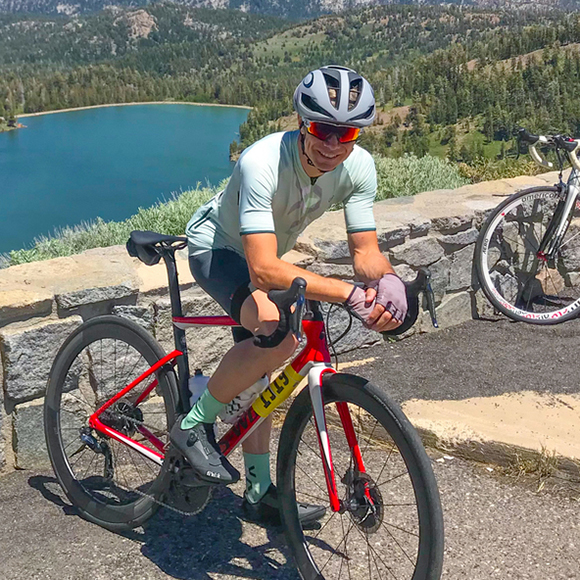
Dieter Fox in cycling gear poses on his bicycle in front of a rock wall with a lake and trees in the background
When he isn’t working with robots, Fox enjoys racing as a member of the Seattle-based Fount Cycling Team

A Fellow of both the IEEE and the AAAI, Fox has published more than 240 technical papers on a range of topics and co-authored the textbook “Probabilistic Robotics.”

“For eight years, Dieter was our only robotics faculty member,” said Allen School professor Ed Lazowska, who recruited Fox to Seattle as chair of what was then the UW Department of Computer Science & Engineering. “Today, UW is a powerhouse in robotics research, but it was Dieter who initially put us on the map.

“He is also a monster on a bicycle — none of us can keep up with him,” Lazowska continued, an avid bicyclist himself. “You could say the same for his research. Dieter’s h-index, a measure of the influence of his research publications, is the highest of any of our faculty. It really is impossible to overstate his impact.”

Fox joined the UW faculty in 2000 after obtaining his Ph.D. from the University of Bonn in Germany and completing a postdoc at Carnegie Mellon University with robotics pioneer Sebastian Thrun. He later combined academic research and teaching when he became director of Intel Labs in Seattle and helped establish and co-led the Intel Science and Technology Center on the UW campus. Fox once again bridged academia and industry in 2017, when he took on a position at NVIDIA to start a robotics research effort. In January 2019, he joined NVIDIA CEO Jensen Huang in celebrating the grand opening of the company’s Seattle research lab near the UW campus.

Fox is one of two researchers selected to receive the RAS Pioneer Award this year. Lydia Kavraki, a professor at Rice University and director of the Ken Kennedy Institute, is being honored for “pioneering contributions to the invention of randomized motion planning algorithms and probabilistic roadmaps.” Kavraki and Fox will be recognized during the virtual RAS Society award ceremony on June 5th.

“Being recognized with this award by my research colleagues and the IEEE society is an incredible honor,” Fox said in a related NVIDIA announcement. “I’m very grateful for the amazing collaborators and students I had the chance to work with during my career. I also appreciate that IEEE sees the importance of connecting academic and industrial research — I believe that bridging these areas allows us to make faster progress on the problems we really care about.”

Congratulations, Dieter!

Read more →

“A hero without a cape”: Elise Dorough recognized by the UW College of Engineering for her commitment to diversity and graduate student success

Elise Dorough, Director of Graduate Student Services for the Allen School, was recently honored by the University of Washington’s College of Engineering with a 2020 Professional Staff Award. In announcing the award, the College cited Dorough’s success in managing the growth of the full-time Ph.D. program and her leadership in transforming the graduate advising process to be more efficient, effective and responsive to the needs of both the students and their faculty advisors. It also highlighted her role in supporting a diverse community within the Allen School and in computer science graduate education generally. 

The school will honor Dorough during an online event, “TGIE” (Thank Goodness It’s Elise), taking place later today. The virtual celebration — a special edition of the school’s weekly “TGIF” gathering — was organized by the graduate students who have benefited from her guidance and compassion.

Dorough first joined the Allen School in 2010 as a member of the undergraduate advising team. When the previous, long-time Ph.D. program adviser decided to retire, professor Hank Levy, former director of the Allen School, appointed Dorough to take on the role in 2014. Since then, Dorough has overseen the expansion of the Ph.D. program from fewer than 200 students to more than 300 today. During most of that time, she was the sole staff member, which meant responding to the needs of current students, prospective students, school leadership, faculty advisors, and campus partners. 

According to professor Anna Karlin, the Allen School’s associate director of graduate studies, the transition when Dorough stepped into the job was seamless.

“It was as if Elise had been doing this job her whole life,” Karlin recalled. “In fact, she has taken the quality of the work to a whole new level. Elise runs virtually every aspect of the Ph.D. program — from recruiting and orientation, to annual evaluations and the day-to-day counseling that the grad students appreciate so much. 

“She acts as a mother, counselor, caretaker, problem-solver, friend and confidante to a group of about 300 Ph.D. students,” Karlin continued. “It is simply impossible to imagine how our graduate program would function without her.”

Dorough, who was elevated to her current title of Director of Graduate Student Services in 2018, serves as a bridge between the students and the faculty and manages an annual admissions process that attracts roughly 2,000 applications annually — double what it was when she took over the position. She is also the go-to resource for Allen School Ph.D. students seeking assistance with a broad range of academic and personal issues. Along the way, she has spearheaded the introduction of a number of process improvements, from automating otherwise time-consuming administrative and reporting tasks, to streamlining faculty review and qualifying exam procedures.

“Elise is a key pillar of our graduate program. She can answer any question and she can handle any problem with calm, empathy, and resolve,” said professor Magdalena Balazinska, director of the Allen School. “She also turns any challenge into an opportunity, and has transformed, scaled, and smoothed all our processes.

“Most recently, Elise demonstrated inspiring leadership when we had to move our prospective graduate visit days online,” Balazinska recalled. “This is a major event, with over 100 students flying from all over the world to Seattle to visit the Allen School. We had to move the event online in less than two weeks and it was before we all became experts in Zoom and doing everything online. Elise did an amazing job in re-organizing the event, leading student volunteers and faculty, and putting together the visit. I received many compliments from prospective students about the quality of our event. We also ended-up with a very high acceptance rate.”

Dorough (front left) and Allen School attendees at the Grace Hopper Celebration

Dorough also has devoted her time and talents to crafting programs, events, and training opportunities that have helped the Allen School build and sustain a welcoming and inclusive culture. Her contributions have included guidance for faculty on implementing a holistic admissions process, “Diversi-teas” for current and prospective students from under-represented minorities, and workshops for faculty, staff, and students. As a founding member of the Allen School’s Diversity Committee, Dorough also has actively sought out training for herself on best practices from national organizations focused on increasing diversity in computing and increased the school’s presence at recruiting events specifically focused on students from diverse backgrounds.

Her emphasis on diversity and inclusion extends beyond the UW campus. Since 2017, Dorough has served as the Allen School’s point-person for participation in the FLIP Alliance for Diversifying Future Leadership in the Professoriate. The FLIP Alliance is a group of 11 leading computer science schools that have committed to increasing the number of under-represented minorities in their respective Ph.D. programs. The ultimate goal of the alliance, which is funded by the National Science Foundation (NSF), is to grow the number of under-represented minorities who earn doctoral degrees in computer science and go on to become faculty members mentoring the next generation of innovators and leaders in the field.

Perhaps the greatest testament to Dorough’s impact comes from the students she works with day in, day out to ensure that they have access to the courses, advising, and services they need to not just survive in graduate school, but to thrive. More than 80 Ph.D. students — including students who aren’t directly enrolled in the Allen School but collaborate with members of the faculty — paid tribute to her compassion, support, and knowledge. Among the comments praising her to the college’s selection committee:

“Elise makes everything in CSE better. Whenever I have a question or a problem, she’s the first person I ask. She always either knows exactly what to do, or does everything she can to help you figure it out. The Ph.D. process would be orders of magnitude more stressful and difficult to navigate without Elise always being there to help us through it.”

“Elise is amazing! She always goes above and beyond what her job requires! I’ve never dealt with an administrative person who cared about the students as much as Elise does.”

“Knowing you have a support system that will try to work with you is essential to feeling secure in a community; Elise is the backbone of that support system for Ph.D. students in the Allen School.”

“Elise may have only one job, but she does something like 20. I can’t imagine the Allen School running the way it does without her. She is also a fantastic advocate for the well-being of students in the Allen School, and so contributes significantly to its positive and welcoming culture.”

Ph.D. alumna Kira Goldner (left) with Dorough on graduation day

“It’s very hard to get grad students to unanimously agree on anything, but I have never heard anything but love and admiration towards Elise from the grad student community.”

“Elise is a legend in CSE, a hero without a cape.”

“I wish our whole academic culture modeled Elise.”

Levy believes that Dorough’s hands-on, personal touch and her pursuit of excellence in all that she does have been integral to the success of the Ph.D. program.

“Elise is a truly outstanding professional whose work has had an enormous impact,” Levy said. “Maintaining a supportive culture and a high level of satisfaction and service in the face of such rapid growth is a remarkable achievement, and one that Elise deserves complete credit for. Simply put, Elise is a superstar.”

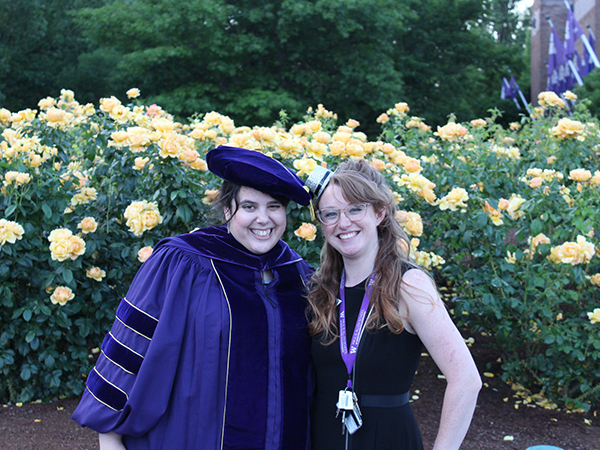
Shine on, Elise! And congratulations on this well-deserved recognition of all that you do for our school and our students!

Read more →

UW and UCSD researchers earn Test of Time Award for driving automobile security in new directions

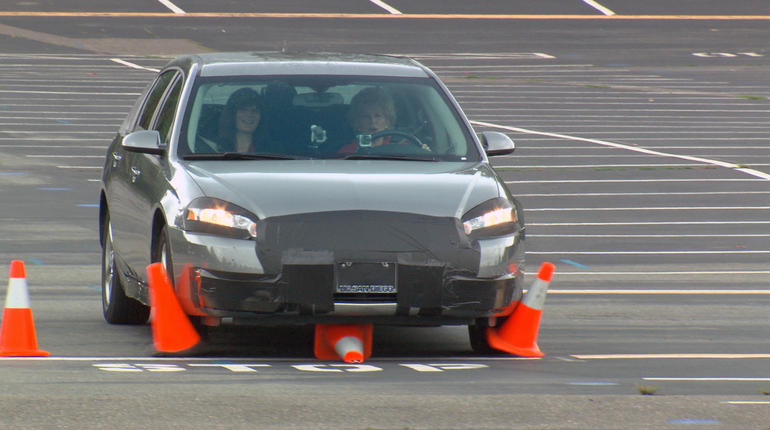
Car hitting traffic cones
Correspondent Lesley Stahl experiences car hacking during a segment on the CBS News program “60 Minutes” Courtesy of CBS News

Ten years ago, a team of security and privacy researchers at the University of Washington and University of California, San Diego published a paper, “Experimental Security Analysis of a Modern Automobile,” describing how they were able to override critical safety systems and take control of a range of vehicle functions of what was later revealed to be a pair of 2009 Chevy Impalas. That work, which was first presented at the IEEE’s 2010 Symposium on Security and Privacy in Oakland, California, opened up an entirely new avenue of cybersecurity research while serving as a wakeup call to an industry that was more accustomed to guarding against break-ins of the physical, rather than the over-the-air, kind. This week, the IEEE Computer Society Technical Committee on Security and Privacy recalled the significance of the team’s contributions and their enduring impact with its 2020 Test of Time Award.

The project was originally the brainchild of professor Tadayoshi Kohno of the Allen School’s Security and Privacy Research Lab and one of his mentors, UCSD professor and Allen School alumnus Stefan Savage (Ph.D., ‘02). Fresh off the success of Kohno’s 2008 IEEE Symposium on S&P paper examining the security of wireless implantable medical devices — which also later earned a Test of Time Award — he and Savage turned their attention to another technology gaining in popularity: the computerized automobile. 

Backed by funding from the National Science Foundation and flexible funds from an Alfred P. Sloan Fellowship, the duo pulled together what they refer to as an “all-star team” of students. The lineup included then Allen School Ph.D. students Karl Koscher, Alexei Czeskis, and Franziska Roesner; and UCSD Ph.D. student Stephen Checkoway, postdoc Damon McCoy, and master’s student Danny Anderson. Checkoway and Anderson were no strangers to UW; the former had earned his bachelor’s from the Allen School and the Department of Mathematics in 2005, while the latter had just graduated with his bachelor’s from the Allen School in 2009. Allen School and UW Department of Electrical & Computer Engineering professor Shwetak Patel and UCSD professor Hovav Shacham joined the leadership team during the formative stages of the project, and UCSD research staff member Brian Kantor rounded out the group. 

The team would become the first to drive home to automobile manufacturers, regulators, security experts, and the public the extent to which modern-day vehicles were vulnerable to cyberattacks. According to Savage, one of the main reasons they succeeded in doing so was that the students — all new, or at least, new to this area of research — “didn’t know any better” and were therefore undaunted by the task set for them by their mentors.

“Essentially, we bought two cars and said to the students, here are the keys, go figure it out,” recalled Savage. “To Yoshi’s and my delight, they did. And in the process, they established this entirely new subfield of automotive security research.”

Stefan Savage (left) Tadayoshi Kohno (right)

The group called itself the Center for Automotive Embedded Systems Security, or CAESS. It was fairly large, as far as research collaborations go. According to Checkoway, its size was a feature, not a bug.

“This was an extremely collaborative effort; no task was performed by an individual researcher alone. I believe our close collaboration was the key to our success,” explained Checkoway, the lead Ph.D. student on the UCSD side who later joined the faculty of Oberlin College. “On a personal level, the large group collaboration was so much fun, that collaborative research has been my preferred method of research ever since.”

It is a theme that is echoed by Checkoway’s colleagues, even 10 years on.

“It was really exciting to join this great team and contribute to such an impactful project at the very beginning of graduate school,” said Roesner (Ph.D., ‘14), now a professor in the Allen School and co-director of the Security and Privacy Research Lab with Kohno. “I had recently decided to switch my focus from computer architecture to security, after discovering that I really liked the ‘security mindset’ of challenging assumptions in designs. This experience and this paper essentially launched my security research career.”

Koscher (Ph.D., ‘14), who has since returned to his old Seattle stomping ground as a research scientist after completing a postdoc at UCSD, was the lead Ph.D. researcher on the UW side.

“We really were one team, and there was definitely enough work to keep everyone on both sides busy.” Koscher recalled. “We at UW would attack a problem from one direction, while the folks at UCSD attacked it from another. Each side brought the puzzle pieces to complete the other.”

Among the puzzles the team needed to piece together was how to access one or more of a vehicle’s electronic control units (ECUs) — the collection of independent computers that communicate across multiple internal networks. At the time, it was estimated that the average luxury sedan contained as many as 70 ECUs running over 150 megabytes of code. This did not comprise the totality of the potential attack surface of a vehicle, however; additional entry points came in the form of the federally-mandated onboard diagnostic system, optional short-range wireless capabilities such as Bluetooth, and telematics such as OnStar with its long-range cellular radio link.

Beginning with 2008 models, all cars sold in the United States were required to implement the Controller Area Network (CAN) bus for diagnostics — making it the dominant in-car communication network not only for GM, but also other major manufacturers such as Ford, BMW, Honda, and Volkswagen. To facilitate the full range of exploits they wanted to explore, Koscher and the team developed CarShark, a custom CAN bus analyzer and packet injection tool. 

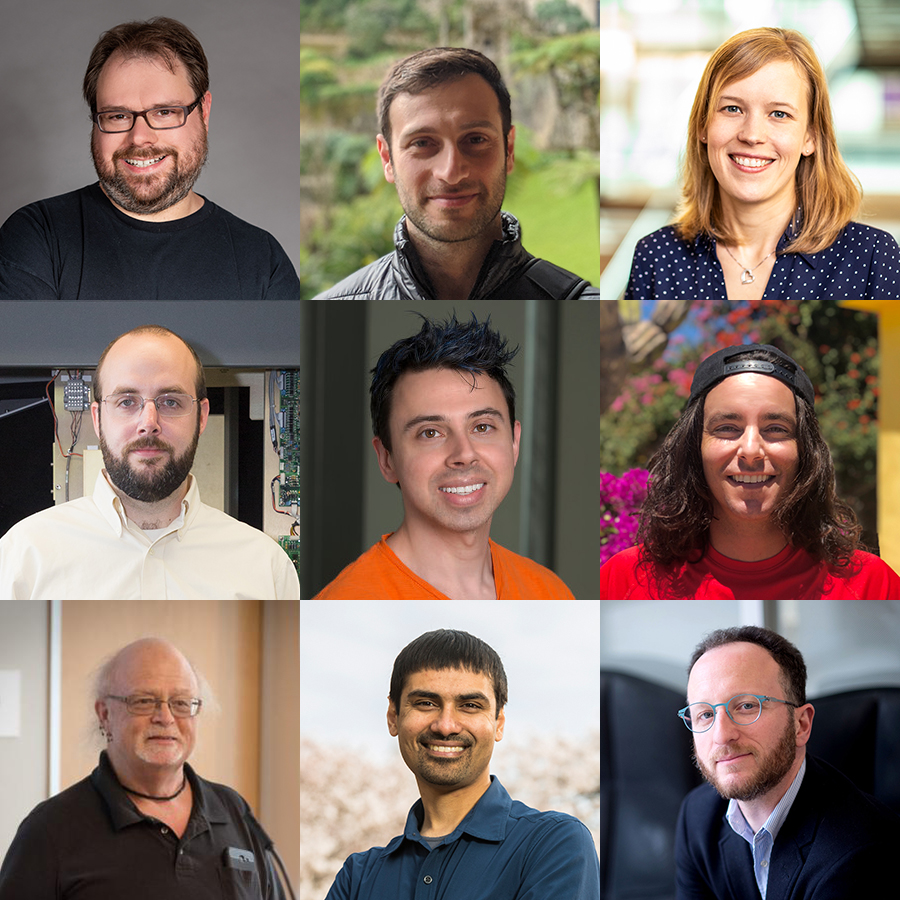
The “all-star team,” top row, from left: Karl Koscher, Alexei Czeskis, Franziska Roesner; middle, from left: Stephen Checkoway, Damon McCoy, Danny Anderson; bottom, from left: Brian Kantor, Shwetak Patel, Hovav Shacham

Using this approach, the team determined that weaknesses in the underlying CAN protocol meant that, by infiltrating almost any one of the vehicle’s ECUs, an attacker would be able to leverage that access to circumvent a broad array of safety-critical systems. In a series of experiments, both in the lab and on the road, the researchers demonstrated the ability to control a variety of vehicle functions while overriding or disabling driver input. They also examined scenarios in which malicious actors could exploit multiple components in a composite attack, including using the telematics unit to bridge multiple ECUs and to inject or wipe malicious code.

Czeskis (Ph.D., ‘13), who is currently a Staff Software Engineer at Google focused on authentication, identity, and protection of high-risk users, recalled both the audacity and novelty of what he and his fellow students were doing — particularly when it came to testing.

“We had to verify that our hypotheses and techniques would hold outside of the lab setting,” he explained. “That meant we often had to drive the car up to the computer science building, lift it on jack stands, and then repeatedly rev the engine and honk the horn for extended periods of time while puzzled students walked by.

“We also needed to test our techniques in a safe, real-world setting, so we took our car to a decommissioned airstrip,” he continued. “That involved signing a waiver acknowledging the ‘possibility of death’ as a graduate student while working on this project! Of course, we had appropriate safety precautions in place. As a motorcycle rider with protective equipment and perhaps a higher tolerance for risk than other members of the team, I ended up being the test driver at the airstrip and other test environments.”

The results of those tests ranged from annoying to downright alarming. For example, the team found through its stationary testing that it could gain control of the radio to deliver audible clicks and chimes at arbitrary intervals. The researchers also gained full control of the Instrument Panel Cluster (IPC), including the speedometer, fuel gauge and other displays, to deliver a message to a hypothetical driver that they had been “Pwned by CarShark.” The team found additional ways to interfere with functions that could compromise driver and passenger safety through an ECU called the Body Control Module. These included locking and unlocking the doors, adjusting or disabling the interior and exterior lighting, operating the windshield wipers, and engaging in the aforementioned horn honking. 

While all this sounds frightening enough while stationary, the team demonstrated that they could do these things while the car was moving at 40 miles per hour. They also broke into the Engine Control Module which, as the name suggests, gave them control over the vehicle’s engine. Once they gained access to the ECM, the researchers were able to temporarily boost engine RPM, and even disable the engine completely. But the researchers didn’t stop there; they also infiltrated the Electronic Brake Control Module. That enabled them to lock individual brakes or sets of brakes — a capability they later demonstrated to great effect in a CBS “60 Minutes” segment featuring correspondent Lesley Stahl behind the wheel. They could also release the brakes and then prevent them from subsequently being enabled.

The team knew they were onto something big, but it took a while to figure out who they could go to with their findings. “When we started, we didn’t even know how to get in touch with the right people — if they even existed — at the manufacturer,” Koscher recalled. “It took the industry by complete surprise.”

They eventually did find the right people at GM, opting to initially share their findings directly with the company while declining to “name and shame” them in the paper released to IEEE Symposium on S&P and the public.

“It was clear to us that these vulnerabilities stemmed primarily from the architecture of the modern automobile, not from design decisions made by any single manufacturer,” Kohno explained. “It later came out that our model was from GM, but it was never just about GM. Like so much that we encounter in the security field, this was an industry-wide issue that would require industry-wide solutions.”

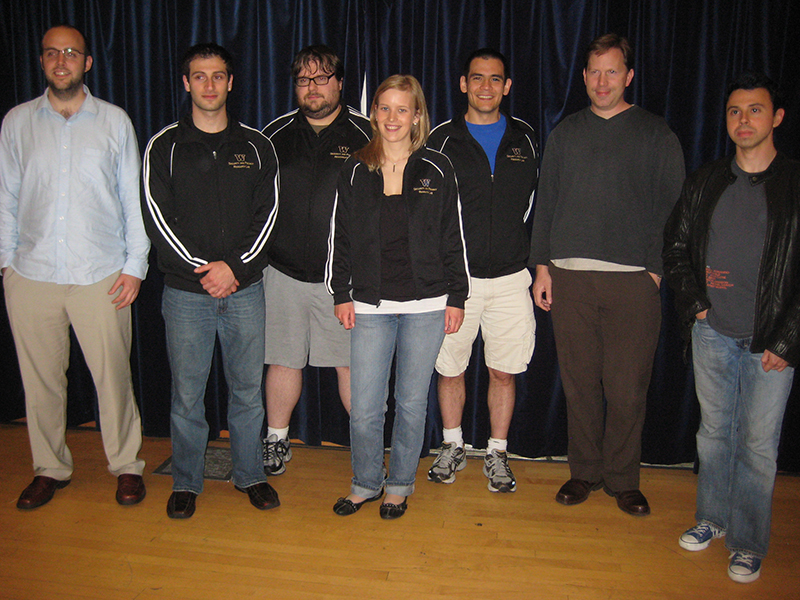
The way they were…members of the automobile security research team in 2010, left to right: Stephen Checkoway, Alexei Czeskis, Karl Koscher, Franziska Roesner, Tadayoshi Kohno, Stefan Savage, and Damon McCoy. (Not pictured: Danny Anderson, Shwetak Patel, and Brian Kantor)

Those solutions, which can be directly traced to the UW and UCSD collaboration, include new standards for motor vehicle security, guidelines for original equipment manufacturers (OEMs), and the creation of the Electronic Systems Safety Research Division at the National Highway Traffic Safety Administration. And the impact of the team’s work continues to be felt to this day.

“I think it was a bit unexpected how impactful this work would be,” Koscher said. “Yoshi’s previous work included exploring vulnerabilities in pacemakers and voting machines, but progress had been slow in those industries. It wasn’t clear that automobiles would be any different.

“But it turned out this time was different. Shortly after disclosing the vulnerabilities we found, GM appointed a VP of product security to lead a new division of over 100 employees solely focused on improving the security of their vehicles,” he continued. “In 2012, DARPA announced their $60M+ High-Assurance Cyber Military Systems (HACMS) project, partially inspired by our work. The following year, industry security researchers began to replicate our work. But I think it finally hit me when DEF CON, the world’s largest hacker conference, introduced their Car Hacking Village in 2014.”

In addition to transforming an existing industry, the team’s work has also generated an entirely new one. “Our project spawned dozens of startup companies — and hundreds of jobs — focused on automobile security,” Savage noted.

Following the conclusion of the project, McCoy went on to join the faculty of New York University, while Shacham later left UCSD to join the faculty of the University of Texas at Austin. Anderson launched his own firm, Daniel Anderson Software Consulting, focused on creating independent iOS apps. Kantor later retired from UCSD after more than 30 years of service. He passed away last year.

“This work was really visionary at the time, and it proved to be a game-changer for industry, government, and academia,” Kohno concluded. “I like to think that was due to the high quality of the work, and how thoughtful we were in its execution.”

The team was formally honored today for that quality and execution in a virtual award ceremony during the IEEE Symposium on S&P 2020 online. Read the research paper here, view the team’s award acceptance here, check out the UCSD announcement here, and learn more about this and related work on the CAESS website here.

Congratulations to the entire team!

Read more →

The cell whisperer: Yuliang Wang earns Young Scientist Award for advancing computational approaches to restore intercellular communication

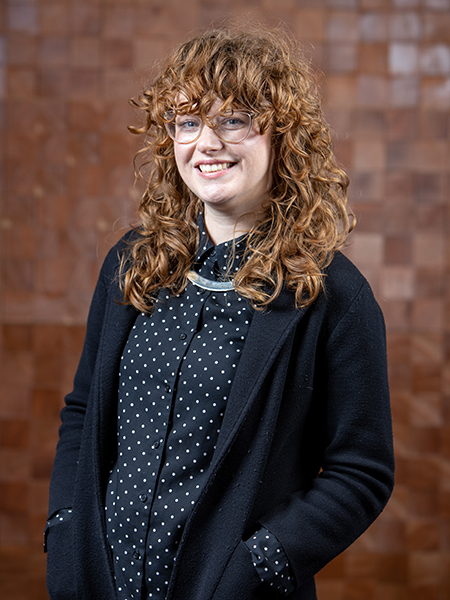
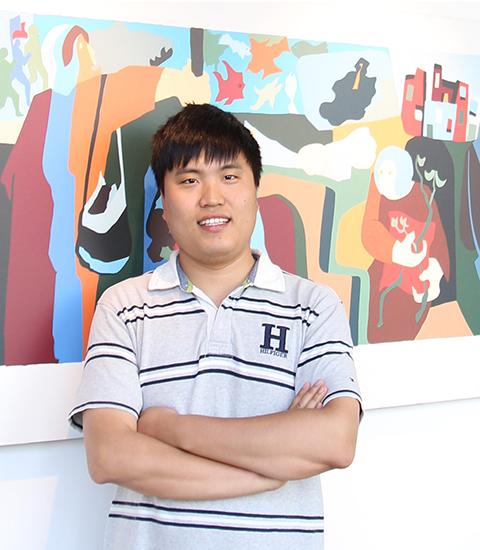
Yuliang Wang

Allen School research professor Yuliang Wang received the Jaconnette L. Tietze Young Scientist Award from the John H. Tietze Foundation Trust for his work on novel approaches for identifying and restoring intercellular communication in diseases affecting complex tissues such as the heart, kidney, and brain. The award is administered by the University of Washington’s Institute for Stem Cell & Regenerative Medicine (ISCRM), where Wang is a core faculty member, to recognize and support junior faculty conducting stand-out research related to stem or progenitor cell biology or therapies.

Wang’s research focuses at the intersection of computation and biology, integrating multi-omic data (transcriptomics, epigenomics, metabolomics) and network modeling to understand how the metabolic and signaling network states influence stem cell differentiation and tissue development. For his latest project, Wang is exploring new and efficient techniques for capturing intercellular “whispers” — the complex communication between diverse cell types that enable the proper function of organs such as the heart and kidneys — to understand how they are affected by diseases. The project combines concepts from information theory, such as KL divergence, and single cell transcriptomics, which measures gene expression for thousands of genes found in individual cells across 10,000 or more cells simultaneously. 

Single cell transcriptomics enables researchers to identify novel cell types and marker genes as well as uncover the developmental trajectories of individual cell types. Wang is interested in going beyond the analysis of individual cell types to uncover the ligand-receptor interactions that connect different cell types. To that end, he and his team introduced talklr, short for “intercellular crossTALK mediated by Ligand-Receptors.” Talklr identifies and prioritizes ligand-receptor pairings that display distinct expression patterns across interacting cell types, and then infers whether their transcriptional targets are activated. By applying KL divergence, talklr simultaneously considers the expression distributions of both the ligand and receptor genes across all interacting cell types and conditions. This approach enables talklr to capture one-to-many and many-to-many cell type interactions that previous computational methods may miss. It also allows talklr to factor in the context-dependence of gene expression changes in one cell type associated with expression levels in another cell type when determining whether such changes are biologically significant.

Wang aims to make talklr widely accessible to researchers without programming experience and to enable easy integration into existing lab workflows. He hopes one outcome of this work will be new targeted pharmacological interventions for restoring essential intercellular communication where normal cell function has been disrupted through disease.

”By applying advanced computational methods like talklr to single cell gene expression analysis, we will gain new insights into how interactions between different cell types affect disease and developmental processes,” explained Wang. “If we can better understand the impact of these intercellular communications on complex tissue structures, that knowledge could potentially lead to new therapeutics for helping to restore proper organ function in patients.”

Wang joined the UW faculty in 2016 after spending two years as a senior research associate in the Computational Biology program at Oregon Health & Science University. Before that, he completed a postdoc at Sage Bionetworks in Seattle. Wang earned his Ph.D. in Chemical and Biomolecular Engineering and a master’s in Applied Statistics from the University of Illinois at Urbana-Champaign in 2013.

Read the ISCRM announcement here.

Congratulations, Yuliang!

Read more →

Industry and academic researchers present framework for “conscious” design of mixed reality technologies to safeguard user privacy, security, and safety

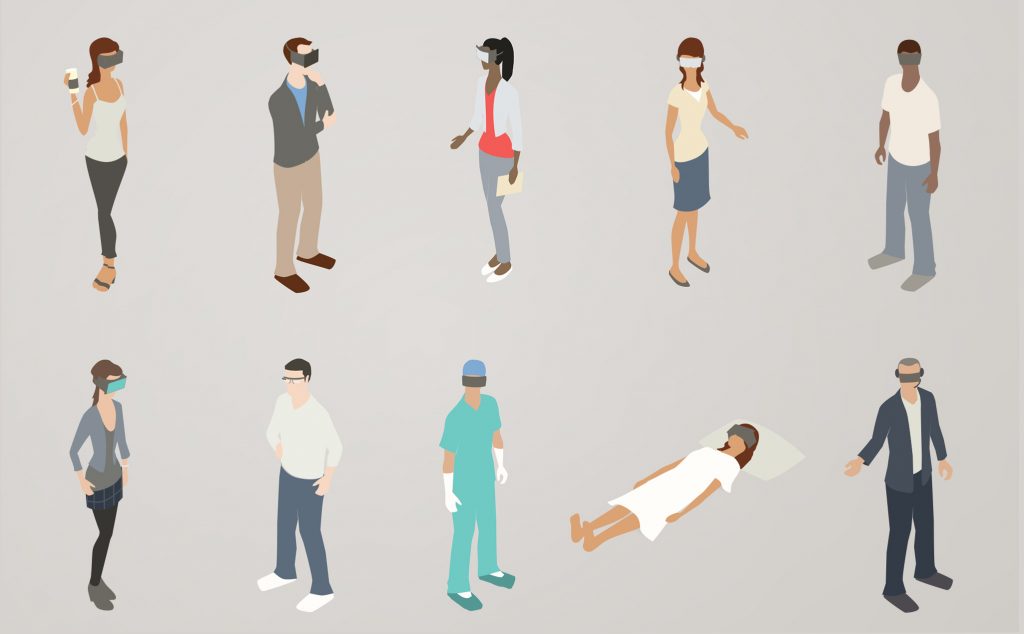
Illustration of people wearing augmented reality headsets

Emerging technologies like augmented and mixed reality have the potential to transform the way we experience the world and interact with each other. But like most technologies that, in their infancy, opened up exciting new avenues of engagement — the web, mobile phones, social networks, and so on — mixed reality also has a potential dark side. And it’s one that is made even more fraught by the interplay between the physical and virtual world. 

To encourage developers of these emerging technologies to employ a privacy and safeguard mindset early on, Allen School professors Tadayoshi Kohno and Franziska Roesner organized a summit last November that brought together representatives of academia and industry. The goal was two-fold: identify potential threats to user privacy, security and safety posed by augmented and mixed reality (AR/MR), and come up with a framework to guide designers and developers in addressing those threats.

With the birth of previous technologies, the world mostly charged full steam ahead, with security and privacy relegated to playing catch-up. This time, according to Roesner, there is widespread interest in addressing potential issues proactively rather than reactively.

“Augmented and mixed reality technologies are unique in their ability to impact a user’s perceptions of and interactions with the physical world compared to other technologies, so the associated risks are fundamentally different from those technologies, too,” explained Roesner, who co-directs the Security and Privacy Research Laboratory at the University of Washington with Kohno. “Last fall, we got together with other security researchers and industry representatives to explore a set of questions that creators of AR/MR technologies should be asking to address user privacy, security, and safety from the start.”

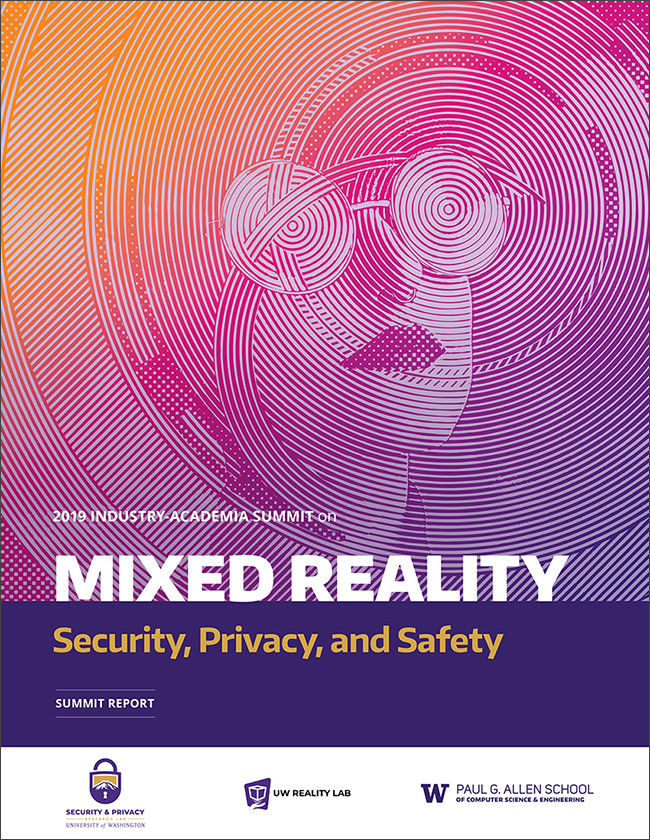
Mixed Reality report cover

Last week, summit contributors released a report laying out a comprehensive set of issues that should be considered when developing mixed reality hardware, platforms and applications. The report starts by acknowledging what could go right with mixed reality technologies — primarily, the variety of desirable features and functionality that will benefit users and society by enabling people to overcome human limitations of time and space, and in ways that are accessible to everyone regardless of physical, financial, or other capacities. 

But to realize this vision, the authors note, researchers and the industry have to work together to address what could go wrong. Examples range from exposure to undesirable content, to excessive or overly invasive advertising, to actual physical or psychological harm. Unlike other technologies that only capture snippets of a person’s life here and there — a credit card company knows your shopping habits, a health insurance company sees what tests your doctor runs — mixed reality platforms have the potential to build a much more complete picture of a user.

“The potential of MR devices to collect and infer incredibly sensitive information about users compels us to develop platforms that give users the ability to get the benefits of MR without having to hand over a deeply personal picture of themselves and their environment,” said co-author Blair MacIntyre, a principal research scientist at Mozilla and professor at Georgia Institute of Technology’s School of Interactive Computing. “Once this data is out there, it can’t be pulled back, and MR should be available to everyone, not just those willing to ignore the potential downsides of sharing such information.”

Industry has a strong motivation to get these issues right, even at this early stage. As the report points out, just one negative incident that results in actual harm to a user or users could represent an “existential threat” to the industry by discouraging adoption and prompting well-intentioned but overly prescriptive regulation that could stifle future innovation and growth. There are past examples to draw upon, such as the outcry against autonomous vehicles — and the companies developing them — following the death of a pedestrian. In that case, the software in one vehicle failed to correctly register the person’s presence in the road. The incident prompted a federal investigation and compelled several companies to temporarily put the brakes on testing their vehicles on public roadways.

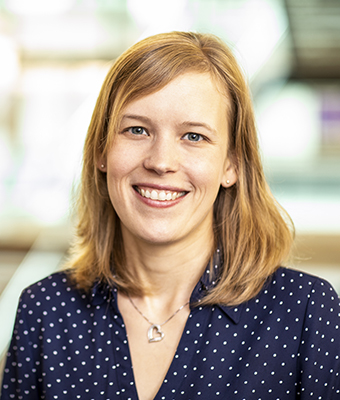
Franziska Roesner portrait
Franziska Roesner

The authors of the report propose that designers apply a threat-modeling approach often used in security and privacy research. This enables stakeholders to systematically consider which assets require protection in the system, along with how and to which adversaries that system might be vulnerable. The report offers a “fill in the blanks” framework to aid discussion of the potential risks and harms — along with the potential benefits — of mixed reality platforms and applications. The goal is to support designers, engineers, researchers, and policymakers as they work through these issues together, to strike the right balance between user security, functionality, and the industry’s ability to innovate.

One of the big issues that the group considered using the threat-modeling approach is how to manage the interaction of virtual content overlaid on the physical world. The group considered questions surrounding the appearance of undesirable content, whether in the form of advertising plastered everywhere, content that is age-inappropriate for children, or content that is disturbing or harassing to an individual. Other questions arose regarding whether virtual content would be allowed to block real-world content in ways that the user would find disruptive, or if content from multiple sources would be permitted to interfere with each other.

There is also the matter of who has access and can alter content that someone else has created in virtual space. In one high-profile example, an augmented reality artwork titled “AR Balloon Dog” was “vandalized” — or rather, a copy was vandalized and superimposed over the original’s geolocation — by a group of artists protesting the notion of corporations monetizing digital art. The original was created by artist Jeff Koons as part of a 2017 collaboration with Snapchat. The incident raised a variety of questions regarding the ownership of virtual objects, whether they should be treated the same as their real-world analogs in physical space, and whether the act even constituted vandalism, given that the virtual object in question was a copy of another virtual object. 

Members of the UW lab have explored this issue before, inspired in part by the saga of AR Balloon Dog. Last year, Roesner and Kohno worked with undergraduate researcher Kimberly Ruth to release ShareAR, a toolkit that enables developers to build fully functional, multi-user AR applications that permit secure content sharing. That was the start of a more robust conversation around how to design platforms and apps that provide users a measure of control, but the researchers acknowledge that there are issues that need to be resolved that go beyond technology.

“In the physical world, if someone vandalized a painting or structure of historical significance, that person would get arrested. A person who posts offensive or trademarked content online would have that content moderated,” noted Roesner. “But those frameworks don’t exist — not yet, anyway — in the virtual world. Many questions around jurisdiction and enforcement, along with issues regarding ownership, attribution or trademark, are yet to be answered.”

There is also the matter of translating societal norms and the types of behavior we deem acceptable in our day-to-day interactions from the physical world to the virtual one. According to Kohno, it is a significant challenge — one made all the more complicated by the fact that the virtual world transcends the physical world’s cultural and geopolitical boundaries.

“This discussion raises a host of issues around how to apply rules that are ingrained in our social fabric into virtual space,” noted Kohno. “In the physical world, it would not be acceptable for someone to put a ‘kick me’ sign on someone’s back. That would violate our notion of personal space and autonomy. But how do we deal with that in a virtual world?”

In this and similar scenarios, Kohno explained, designers might consider what limitations or tools they can provide to prevent offensive content altogether and/or enable users to remove content they find offensive when it appears.

Tadayoshi Kohno portrait
Tadayoshi Kohno

“Perhaps I am not allowed to alter another person’s avatar, because we have decided that is a core tenet of virtual space. Or perhaps we are friends and so you give me permission to alter your avatar, but the platform’s built-in controls allow you to remove alterations that you don’t like,” Kohno mused. “At the summit we discussed a  ‘Bill of Rights’ governing digital spaces, to articulate what people can expect to be able to do and expect to have done to them. What we’ve done with this report is try to provide the scaffolding for the industry to consider the privacy and security issues raised by these platforms and to make conscious decisions about what rules and safeguards they need to incorporate into their design.”

A Bill of Rights, usable controls, and the aforementioned threat modeling are just a few of the potential solutions participants considered during the summit. Other avenues for exploration include early identification of trustworthy and responsible entities, the development of industry standards, support for application developers along the lines of ShareAR that make it easy for them to build security into their products, and — when the time is right — thoughtful regulatory and policy frameworks that will underpin user trust while reflecting the richness and complexity of augmented and mixed reality.

“The summit provided an opportunity for stakeholders to come together and have a collaborative conversation and forge a common language in which we can discuss these issues,” Roesner said. “With this report, we are taking a first step toward enabling a more holistic approach to important questions about security and privacy within this brave, new world that is being created.”

The Security and Privacy Research Laboratory was an early proponent of mixed reality security and privacy. In 2012, Kohno and Roesner co-authored a paper with security researcher David Molnar, then at Microsoft Research, laying out the privacy and security research challenges and new opportunities associated with emerging AR technologies. Two years later, Kohno and Roesner contributed to a primer on AR released by the UW’s Tech Policy Lab that was shared widely with policy makers to inform them about the still-nascent industry, its potential benefits, and associated pitfalls in relation to privacy, distraction and discrimination. That was followed by a series of papers in which the researchers applied what they had learned to supporting AR privacy and security more directly.

“A principled approach to user privacy and security will be a catalyst for innovation and widespread adoption, not an obstacle,” concluded Roesner. “We may still be playing catch-up when it comes to more mature technologies, but with AR/MR, we have an opportunity to build a virtual world that is safe and enjoyable for everyone almost from the ground up.”

The 2019 Industry-Academia Summit on Mixed Reality Security, Privacy, and Safety was co-funded by the UW Security and Privacy Research Lab and the UW Reality Lab. Read the full report here.

Read more →

Privacy and the pandemic: UW and Microsoft researchers present a “PACT” for using technology to fight the spread of COVID-19

If you build it, they will come. 

That statement might hold true for a baseball field in rural Iowa — in the days before social distancing, that is — but what about when it comes to building mobile technologies to fight a global pandemic? 

In the balance between individual civil liberties and the common good, there is an obvious tension between the urge to deploy the latest, greatest tools for tracking the spread of COVID-19 and the preservation of personal privacy. But according to a team of researchers and technologists affiliated with the Paul G. Allen School of Computer Science & Engineering, UW Medicine and Microsoft, there is a way to build technology that respects the individual and their civil liberties while supporting public health objectives and saving people’s lives. 

In a white paper released yesterday, the team proposes a comprehensive set of principles to guide the development of mobile tools for contact tracing and population-level disease tracking while mitigating security and privacy risks. The researchers refer to these principles as PACT, short for “Privacy Sensitive Protocols and Mechanisms for Mobile Contact Tracing.”

“Contact tracing is one of the most effective tools that public health officials have to halt a pandemic and prevent future breakouts,” explained professor Sham Kakade, who holds a joint appointment in the Allen School and the UW Department of Statistics. “The protocols in PACT are specified in a transparent manner so the tradeoffs can be scrutinized by academia, industry, and civil liberties organizations. PACT permits a more frank evaluation of the underlying privacy, security, and re-identification issues, rather than sweeping these issues under the rug.”

If people were not familiar with the concept of contact tracing before, they surely are now with the outbreak of COVID-19. Public health officials have been relying heavily on the process to identify individuals who may have been exposed through proximity to an infected person to try and halt further spread of the disease. Several governments and organizations have deployed technology to assist with their response; depending on the situation, participation may be voluntary or involuntary. Whether optional or not, the increased use of technology to monitor citizens’ movements and identify other people with whom they meet has rightly sparked concerns around mass surveillance and a loss of personal privacy.

The cornerstone of the PACT framework put forward by the UW researchers is a third-party free approach, which Kakade and his colleagues argue is preferable to a “trusted third party” (TTP) model such as that used for apps administered by government agencies. Under PACT, strict user privacy and anonymity standards stem from a decentralized approach to data storage and collection. The typical TTP model, on the other hand, involves a centralized registration process wherein users subscribe to a service. While this can be a straightforward approach and is one that will be very familiar to users, it also centrally aggregates personally sensitive information that could potentially be accessed by malicious actors. This aggregation also grants the party in question — in this case, a government agency — the ability to identify individual users and to engage in mass surveillance.

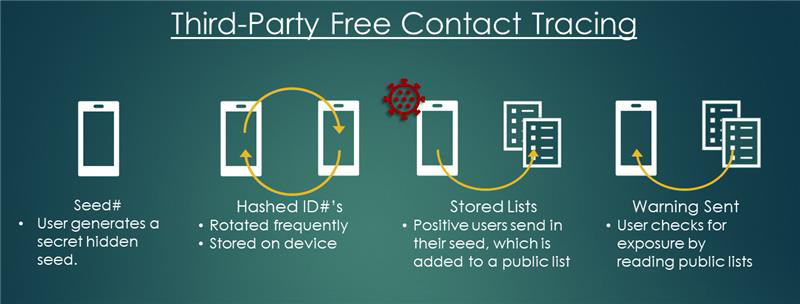
The team’s white paper lays out in detail how mobile technologies combined with a third-party free approach can be used to improve the speed, accuracy, and outcomes of contact tracing while mitigating privacy concerns and preserving civil liberties. These include the outline of an app for conducting “privacy-sensitive” mobile contact tracing that relies on Bluetooth-based proximity detection to identify instances of co-location — that is, instances of two phones in proximity, via their pseudonyms — to determine who may be at risk. The team prefers co-location to absolute location information because it is more accurate than current GPS localization technologies, such as those in popular mapping and navigation apps, while affording more robust privacy protections to the user. Depending on the nature of the specific app, such a system could be useful in allowing people who test positive for the disease to securely broadcast information under a pseudonym to other app users who were in close proximity to them, without having to reveal their identity or that of the recipients.

Another example of how PACT can aid in the pandemic response include mobile-assisted contact tracing interviews. In this scenario, a person who tests positive completes a form on their smartphone listing their contacts in advance of the interview; the data remains on the person’s device until they choose to share it with public health officials. The team also describes a system for enabling narrowcast messages, which are public service messages pushed out from a government agency to a subset of the citizenry. Such communications might be used to inform people living in a specific area of local facility closures due to an outbreak, or to notify them in the event that they were at a location during the same time frame as a person who subsequently tested positive for the disease.

Illustration of the PACT tracing protocol. M Eifler

In all cases, the researchers advocate for retaining data locally on the person’s device until they initiate a transfer.

“Only with appropriate disclosures and voluntary action on the part of the user should their data be uploaded to external servers or shared with others — and even then, only in an anonymized fashion,” explained Allen School professor Shyam Gollakota. “We consider it a best practice to have complete transparency around how and where such data is used, as well as full disclosure of the risks of re-identification from previously anonymized information once it is shared.”

Gollakota and his colleagues emphasize that technology-enabled contact tracing can only augment — not entirely replace — conventional contact tracing. In fact, two out of the three applications they describe are designed to support the latter and were developed with input from public health organizations and from co-author Dr. Jacob Sunshine of UW Medicine. There is also the simple fact that, despite their seeming ubiquity, not everyone has a smartphone; of those who do, not everyone would opt to install and use a contact-tracing app. 

As Allen School professor and cryptography expert Stefano Tessaro notes, all contact tracing — whether conventional or augmented with technology — involves tradeoffs between privacy and the public good.

“Contact tracing already requires a person to give up some measure of personal privacy, as well as the privacy of those they came into contact with,” Tessaro pointed out. “However, we can make acceptable tradeoffs to enable us to use the best tools available to speed up and improve that process, while ensuring at the same time meaningful privacy guarantees, as long as the people creating and implementing those tools adhere to the PACT.”

The team, which also includes Allen School Ph.D. students Justin Chan and Sudheesh Singanamalla, postdoctoral researcher Joseph Jaeger, and professor Tadayoshi Kohno — along with the technologists John Langford, Eric Horvitz, and Jonathan Larson at Microsoft — posted its white paper on the preprint site arXiv.org to encourage broad dissemination and conversation around this topic. Read the full paper here.

Read more →

“Hey, check out this 450-pound dog!” Allen School researchers explore how users interact with bogus social media posts

Dark, swirling clouds over an aerial shot of Sydney harbor and downtown
Is that a superstorm over Sydney, or fake news?

We’ve all seen the images scrolling through our social media feeds — the improbably large pet that dwarfs the human sitting beside it; the monstrous stormcloud ominously bearing down on a city full of people; the elected official who says or does something outrageous (and outrageously out of character). We might stop mid-scroll and do a double-take, occasionally hit “like” or “share,” or dismiss the content as fake news. But how do we as consumers of information determine what is real and what is fake?

Freakishly large Fido may be fake news — sorry! — but this isn’t: A team of researchers led by professor Franziska Roesner, co-director of the Allen School’s Security and Privacy Research Laboratory, conducted a study examining how and why users investigate and act on fake content shared on their social media feeds. The project, which involved semi-structured interviews with more than two dozen users ranging in age from 18 to 74, aimed to better understand what tools would be most useful to people trying to determine which posts are trustworthy and which are bogus.

In a “think aloud” study in the lab, the researchers asked users to provide a running commentary on their reaction to various posts as they scrolled through their social feeds. Their observations provided the team with insights into the thought process that goes into a user’s decision to dismiss, share, or otherwise engage with fake content they encounter online. Unbeknownst to the participants, the researchers deployed a browser extension that they had built which randomly layered misinformation posts previously debunked by Snopes.com over legitimate posts shared by participants’ Facebook friends and accounts they follow on Twitter.

The artificial posts that populated users’ feeds ranged from the sublime (the aforementioned giant dog), to the ridiculous (“A photograph shows Bernie Sanders being arrested for throwing eggs at civil rights protesters”), to the downright hilarious (“A church sign reads ‘Adultery is a sin. You can’t have your Kate and Edith too’”). As the participants scrolled through the mixture of legitimate and fake posts, Allen School Ph.D. student Christine Geeng and her colleagues would ask them why they chose to engage with or ignore various content. At the end of the experiment, the researchers pointed out the fake posts and informed participants that their friends and contacts had not really shared them. Geeng and her colleagues also noted that participants could not actually like or share the fake content on their real feeds.

“Our goal was not to trick participants or to make them feel exposed,” explained Geeng, lead author of the paper describing the study. “We wanted to normalize the difficulty of determining what’s fake and what’s not.”

Participants employed a variety of strategies in dealing with the misinformation posts as they scrolled through. Many posts were simply ignored at first sight, whether because they were political in nature, required too much time and effort to investigate, or the viewer was simply disinterested in the topic presented. If a post caught their attention, some users investigated further by looking at the name on the account that appeared to have posted it, or read through comments from others before making up their own minds. For others, they might click through to the full article to check if the claim was bogus — such as in the case of the Bernie Sanders photo, which was intentionally miscaptioned in the fake post. Participants also self-reported that, outside of a laboratory setting, they might consult a fact-checking website like Snopes.com, see if trusted news sources were reporting on the same topic, or seek out the opinions of family members or others in their social circle.

The researchers found that users were more likely to employ such ad hoc strategies over purpose-built tools provided by the platforms themselves. For example, none of the study participants used Facebook’s “i” button to investigate fake content; in fact, most said they were unaware of the button’s existence. Whether a matter of functionality or design (or both), the team’s findings suggest there is room for improvement when it comes to offering truly useful tools for people who are trying to separate fact from fiction.

“There are a lot of people who are trying to be good consumers of information and they’re struggling,” said Roesner. “If we can understand what these people are doing, we might be able to design tools that can help them.”

In addition to Roesner and Geeng, Savanna Yee, a fifth-year master’s student in the Allen School, contributed to the project. The team will present its findings at the Association for Computing Machinery’s Conference on Human Factors in Computing Systems (CHI 2020) next month.

Learn more in the UW News release here, and read the research paper here.

Read more →

Remembering Paul Young (1936 – 2019)

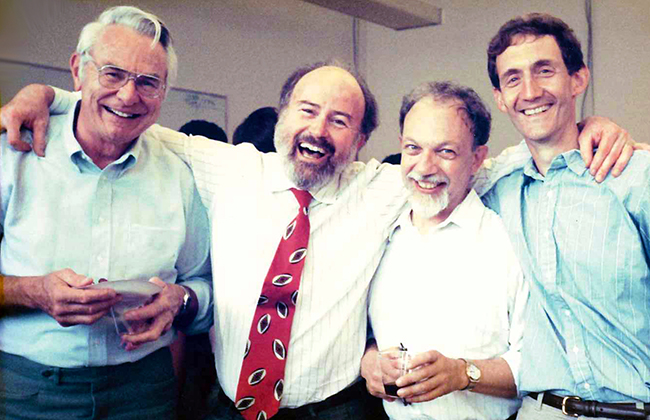
Former chairs (left to right) Jerre Noe, Paul Young, Jean-Loup Baer, Ed Lazowska

The Allen School community was sad to learn recently that former chair and professor emeritus Paul Young passed away in December. Young was a gifted computer scientist who spent five years as chair of what was then known as the University of Washington Department of Computer Science. During his tenure, Young advanced UW’s reputation as a national leader in computer science education and research, advocated for more resources to bring the best and brightest faculty to Seattle, and initiated conversations around the creation of a permanent, purpose-built home for the program. 

Young, who earned his Ph.D. from MIT following undergraduate studies at Antioch College, joined the UW faculty in 1983 from Purdue University along with his colleague Larry Snyder. The dual recruitment was a major coup for UW, with Young assuming leadership of the CS department at a time of rapidly increasing demand for the major, and Snyder taking the reins of the UW/Northwest VLSI Consortium focused on advancing our leadership in very large-scale integrated circuit design.

Young was a talented educator and researcher with interests that spanned theoretical computer science, including computational complexity, algorithmic theory, formal language theory, and connections with mathematical logic. His leadership and professional activities on and off campus helped to raise the profile of UW Computer Science. After his five years as chair came to a close, Young remained on the UW faculty for another decade, serving for three of those years as Associate Dean of Research, Facilities & External Affairs in the College of Engineering. 

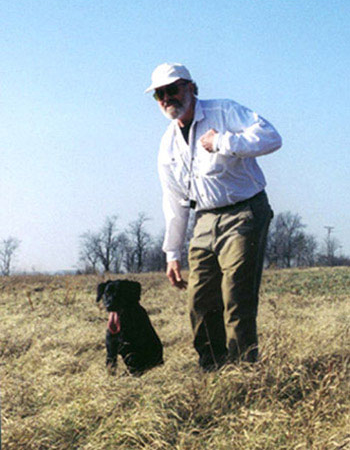
Paul Young (right) with Punkin the “pocket rocket”

In 1994, Young took a leave of absence from the university to serve as Assistant Director of the National Science Foundation for its Directorate for Computing and Information Science and Engineering (NSF CISE). He also was active in the Computing Research Association (CRA) and served on the organization’s board from 1983 to 1991 — the last three years as board chair. Under his leadership, the computing research community ramped up its involvement in science and technology policy. CRA recognized his contributions with its Distinguished Service Award in 1996.

Following his retirement from the UW in 1998, Young joined his wife, Deborah Joseph, in Wisconsin, where she was a member of the computer science faculty at the University of Wisconsin, Madison. They settled into Lime Creek Farm in the southwest corner of the state, where they restored more than 40 acres of prairie habitat and renovated a 100-year-old farm house. Lime Creek also served as a breeding and training ground for the couple’s performance Labrador Retrievers. These included Punkin — the runt of the farm’s first litter of puppies — who earned the nickname “Paul’s Pocket Rocket” due to her combination of intense speed and drive coupled with her diminutive size. Under Young’s tutelage, Punkin earned titles in retrieving, pointing, tracking, obedience, and agility, and she held the distinction of being Wisconsin’s first Grand Master Pointing Retriever.

We will remember Paul for his many contributions to our program and to our field, and we send our condolences to his family, friends, and colleagues.

Read more →

« Newer PostsOlder Posts »