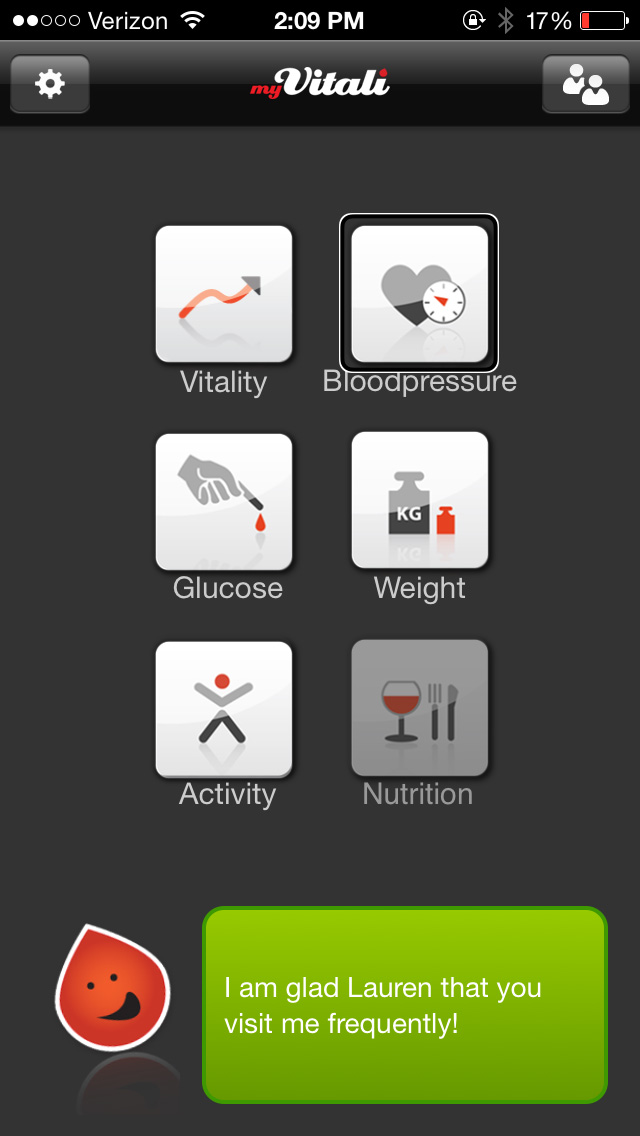
 A team of researchers that includes UW CSE professor Richard Ladner, CSE Ph.D. student Lauren Milne and HCDE Ph.D. student Cynthia Bennett, conducted a review last year of nine mobile health apps developed for the iPhone to monitor blood pressure and blood glucose levels. Using a set of seven criteria, they gauged how accessible each app was to blind and low-vision users, who are more likely to suffer from health problems such as obesity or diabetes and for whom such apps could be important tools for managing their health. What the team discovered was that none of the apps met all of the criteria for being accessible to these users – but with a little more work, they could.
From the news release:
“‘We wanted to see if these health applications would be out-of-the-box accessible, and most really weren’t,’ said lead author Lauren Milne….’They made a lot of amateur mistakes that people make when they build apps.’
“The researchers also concluded it would take little effort for developers to make mainstream health sensors fully accessible to blind smartphone users – largely by following accessibility guidelines already established by Apple and the federal government….
“‘If people just used the basic widgets and things that Apple provides, they’d have better results,’ said Ladner. ‘But the number of app developers has increased, and most of them are thinking about trying to make things pretty. They’re not thinking about all the users.'”
The team’s findings were published in the 2015 issue Journal on Technology & Persons with Disabilities.
Read the entire UW news release here and the research paper here. Kudos to Richard and the team for calling attention to this important issue and working to extend the benefits of technology to everyone. Read more →
 The latest issue of The Economist asks, “Electronics has already cut the data cord. Can it now cut the power cord as well?” Based in part on the work of CSE and EE professor Joshua Smith, the answer may soon be “yes.” Josh, who heads the UW Sensor Systems Lab, has developed a system for dynamic wireless charging of robots – and started a company, Wibotic, to commercialize the new technology. From the article:
“Drones may one day transform the way parcels are delivered, crops monitored and suspects apprehended. Those who talk up these possibilities, though, often neglect to mention the drawbacks of such robot aircraft – one of which is that most cannot fly for more than a quarter of an hour before they need to find a human being to swap their batteries for them or plug them into an electrical socket.
“Joshua Smith, a computer scientist at the University of Washington, in Seattle, hopes to change that. In May he started a company called Wibotic that plans to recharge drones (and also earthbound robots) without them having to establish an awkward physical connection with a plug.”
The article goes on to explain how the system Josh developed, which employs circuits that are tuned to the same resonant frequency, is a more efficient and flexible alternative to traditional induction systems that rely on simple transmitting and receiving coils. While the basic idea behind resonant induction is not new, Josh’s approach – which works over greater distances and can be tuned to different conditions – represents a significant step forward for wireless power transmission.
Read the full article here. Read more →
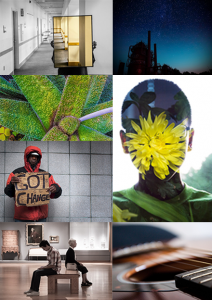 UW CSE faculty member (and unofficial department photographer) Bruce Hemingway has released his picks among the final projects submitted by students in his Spring 2015 CSE131 course, The Science and Art of Digital Photography.
Interestingly, the major with the greatest number of students enrolled in the course was math, followed by a mix of the sciences, various engineering fields and economics. As Bruce says, it’s “art for geeks!” In total, more than 180 students from 38 different majors or pre-majors explored the fundamentals of digital photography in his class, including computational imaging, photographic composition and design, and the future of internet-enabled photography.
Bruce’s teaching combines art and history with science and technology, with some truly stunning results. Check out his top picks from among the students’ final projects here. Read more →
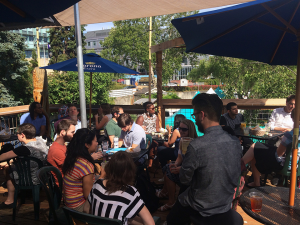
The 16 Data Science for Social Good student researchers (selected from among 140 applicants) join eScience Institute staff to kick off the “Social” part at Agua Verde on afternoon one of the summer-long program.
UW’s eScience Institute, led by CSE faculty members Bill Howe and Ed Lazowska, kicked off its new summer program, Data Science for Social Good, this week. Focusing on the theme of urban science, the program enables teams of students, faculty and community stakeholders to tap into eScience members’ expertise and powerful data analysis and visualization tools to address issues affecting urban environments, including public health and safety, sustainability, transportation, education and social justice.
Two participating projects have connections to UW CSE’s Taskar Center for Accessible Technology: Open Sidewalk Graph for Accessible Trip Planning, or Access Map, an award-winning online tool developed by UW students under the guidance of CSE’s Alan Borning and Anat Caspi that enables people with limited mobility to plan an accessible route through the city; and ParaTransit To Go, a project led by Caspi to improve the quality of King County Metro Paratransit services for passengers with disabilities in King County while making those services more cost-effective to operate.
 In addition to the accessibility projects, the DSSG accepted two other proposals aimed at improving urban communities: Assessing Community Well-Being Through Open Data and Social Media, a project by Third Place Technologies which leverages social media and open data sources to identify emerging issues in neighborhoods, with a focus on underserved communities; and Predictors of Permanent Housing for Homeless Families in King, Snohomish & Pierce County, a project of the Bill & Melinda Gates Foundation which aims to identify the factors that contribute to homelessness and the barriers to families finding permanent housing in order to better prioritize resources and reduce local families’ need for temporary shelter.
Read more about Data Science for Social Good here, and find more information about the participating projects here.
Read past blog coverage of the participating Taskar Center projects here. Read more →
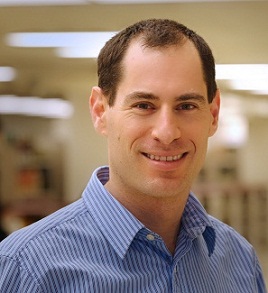 UW CSE faculty member Dan Grossman was recognized with the ACM SIGPLAN Distinguished Service Award at yesterday’s ACM SIGPLAN Awards Banquet, which is held each year during the PLDI conference. Dan received the award in recognition of his leadership in developing undergraduate curriculum for programming languages while serving on the steering committee for the ACM IEEE-CS Computer Science Curricula 2013. As part of that effort, Dan led a group responsible for rewriting the sections on programming languages from scratch.
From the award citation:
“Dan Grossman has made significant contributions to programming languages education. Roughly once a decade, the ACM and IEEE Computer Society publish revised curriculum recommendations for undergraduate-level computer science education. The 2001 Curriculum Recommendations included very little PL content, mostly material suitable for a CS1 course. As a member of the 2013 ACM/IEEE-CS Computing Curriculum Steering Committee, Dan was largely responsible for the revisions to the PL curriculum that reintroduced substantial up-to-date PL topics into the curriculum. This effort included convincing the steering committee and soliciting input from many members of the PL community. As part of these efforts, Dan also served as the chair of the SIGPLAN Education Board during his term as Member-at-Large on the SIGPLAN Executive Committee. Serving currently on the ACM Education Board, he continues to be an effective advocate for excellence in programming languages education.”
During brief remarks, Dan pointed to the impact that service aligned with one’s passions can have. He also thanked his collaborators on the curriculum effort and acknowledged the great mentors he has had in UW CSE, remembering by name departed faculty members Gaetano Borriello and David Notkin.
Earlier in the banquet, PLDI 2015 recognized three distinguished papers, including the UW CSE paper Automatically Improving Accuracy for Floating Point Expressions as previously reported here.
Congratulations to Dan on this well-deserved recognition – and way to go, team! Read more →
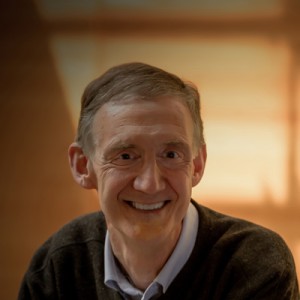 Ed Lazowska, Bill & Melinda Gates Chair in Computer Science & Engineering, received UW’s David B. Thorud Leadership Award at today’s ceremony recognizing the 2015 recipients of the annual UW Awards of Excellence. In the words of the nomination:
“Ed has been a truly extraordinary leader for many years and in many settings – national, regional, institutional, and departmental. I will touch on all four in this letter, but the recent leadership accomplishment that stimulates this nomination is Ed’s role in creating and leading the University of Washington eScience Institute, a cross-campus collaboration that has established UW as a recognized leader in data-intensive discovery.
“National leadership: Ed is widely viewed as the computer science research community’s highest impact national leader and spokesperson …
“Regional leadership: Ed is one of UW’s most visible and effective advocates with the region’s civic leadership …
“Departmental leadership: UW CSE’s rise from a ‘top-ten also-ran’ to the first rank of the nation’s computer science programs began during Ed’s 8 years as department chair.
“Institutional leadership: Ed’s role in creating and leading the University of Washington eScience Institute – a cross-campus collaboration that has established UW as a recognized leader in data-intensive discovery – illustrates his extraordinary performance in all of the areas identified as nomination criteria for the Thorud Award.”
Congratulations, Ed! Read more →
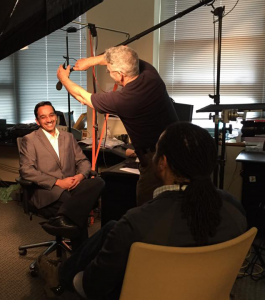
Raj Rao is ready for his closeup with NBC Learn
On Wednesday, June 10th, CSE professor Raj Rao, director of the National Science Foundation’s Center for Sensorimotor Neural Engineering, will participate in a Twitter chat hosted by NBC Learn as part of its “Mysteries of the Brain” series.
Raj spoke to NBC Learn about brain-computer interfaces as part of a collection of eight videos, produced in partnership with the NSF, that explore the latest research into how the brain works with the help of leading scientists in the field. NBC Learn plans to make lesson plans for middle and high school students, developed by the National Science Teachers Association, available for use in connection with the series later this summer.
Watch the video series, including the interview with Raj and a demonstration of his brain-computer interface research, here.
Join the Twitter chat with Raj and his fellow brain researchers Wednesday afternoon from 3:00 to 4:00 pm Pacific (6:00 to 7:00 pm Eastern) using the hashtag #ExplainTheBrain and by following @NeuralE_Ctr on Twitter.
Read past blog coverage of Raj and his research here, here and here. Read more →
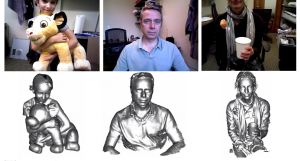 Another team of UW CSE researchers has captured Best Paper honors. This time, postdoc Richard Newcombe, professor Dieter Fox of the UW Robotics and State Estimation Lab and professor Steve Seitz of CSE’s Graphics and Imaging Laboratory (GRAIL) are bringing home the glory with their paper “DynamicFusion: Reconstruction and Tracking of Non-rigid Scenes in Real-Time” at IEEE’s International Conference on Computer Vision and Pattern Recognition (CVPR) currently taking place in Boston, MA.
DynamicFusion is the first dense SLAM (simultaneous localization and mapping) system capable of reconstructing dynamic scenes in real-time. It moves beyond systems such as KinectFusion, an approach to real-time 3-D reconstruction that, while a major advance, assumes that the observed scene is static. DynamicFusion generalizes KinectFusion’s dense, real-time tracking and mapping to yield detailed and complete reconstructions of subjects in motion. The research team demonstrated the system using a variety of subjects in different scenes, including snuggling with a stuffed animal, making funny faces, drinking tea, and performing “jazz hands.”
View the YouTube video demonstrating how DynamicFusion works here. Read the winning paper, selected out of more than 2,000 conference submissions, here.
Congratulations to Richard, Dieter and Steve! Read more →
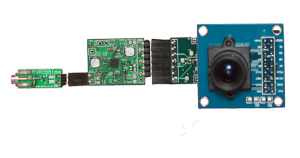 Last week, the CSE blog reported on an exciting new research project led by Shyam Gollakota, who heads UW CSE’s Networks & Mobile Systems Lab, and CSE & EE professor Josh Smith of the Sensor Systems Lab, plus a team of CSE and EE graduate students and postdocs. The project, affectionately dubbed “PoWiFi,” harnessed energy from Wi-Fi signals to wirelessly power battery-free devices – in this case, temperature and camera sensors – and to wirelessly recharge batteries.
In addition to MIT Technology Review, a host of other media outlets have picked up the story. Read more about the international buzz generated by PoWiFi courtesy of Wired, BBC News, Christian Science Monitor, Popular Science and PC Magazine (to name a few).
Read the research paper here. Congratulations to Shyam, Josh and the entire team – Vamsi Talla, Bryce Kellogg, Ben Ransford and Saman Naderiparizi! Read more →
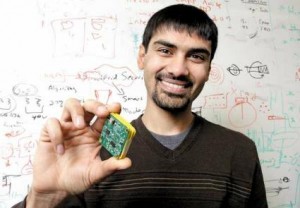
Shwetak Patel
UW Daily reporter Arunabh Satpathy writes:
“A house that knows when you’re inside. A cellphone that doubles as a spirometer. A sensor that gauges how much energy is being consumed and by what device. These are some of the applications of a developing field of computing called ‘ubiquitous computing,’ or ‘ubicomp.’
“Shwetak Patel, professor in the Computer Science & Engineering and Electrical Engineering, defines ubicomp as ‘the next paradigm of computing.’
“‘Computing is going to be pushed into everywhere into the environment,’ Patel said.”
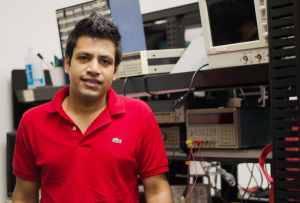
Mayank Goel
Shwetak goes on to explain how continuous interaction between humans and sensors has transformed the automobile. He also talks about the potential benefits of extending these interactions into the home where, for example, sensors could be used to monitor the health of a person inside.
The article also quotes UW CSE Ph.D. student Mayank Goel, whose research focuses on novel uses of mobile phone sensors. One of his projects is focused on using a smart phone’s accelerometer to stabilize the keyboard and reduce texting errors. Another project, SpiroSmart, turns a smart phone’s microphone into a spirometer for measuring lung function.
Read the entire article here.
Learn more about the UbiComp Lab here. Read more →