Allen School undergraduates earn national recognition for research excellence

Computing Research Association logoIn keeping with the Allen School’s commitment to provide an unparalleled educational experience to students, many undergraduates participate in leading-edge research in our labs. Undergraduate researchers work alongside faculty, postdocs, and graduate students and often submit their work to major academic research conferences and scientific journals. This year, three of these talented student researchers — Kimberly Ruth, Preston Jiang, and Deric Pang — were recognized as part of the Computing Research Association’s 2018 Outstanding Undergraduate Researcher Awards, which highlight exceptional potential among young computer scientists.

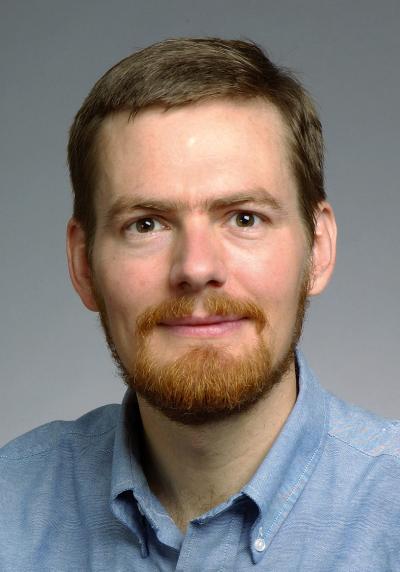
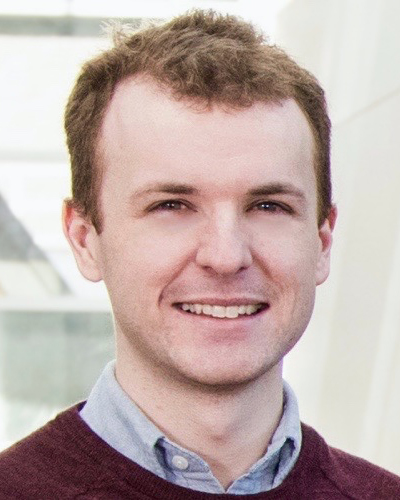
Kimberly RuthKimberly Ruth, a junior who is double-majoring in computer engineering and mathematics, was named a finalist in this year’s CRA awards competition. For the past two years, she has worked with professors Tadayoshi Kohno and Franziska Roesner in the Allen School’s Security and Privacy Research Lab as part of a team focused on security for emerging augmented reality platforms.

Ruth collaborated with Ph.D. student Kiron Lebeck on the development of Arya, an AR system that protects against buggy or malicious output by applications. As part of that work, Ruth contributed to the prototype built on the Unity game engine, including a selection of applications in C# to run on the system. The team’s results were published last year at the 38th IEEE Symposium on Security & Privacy, with Ruth as the second author, and subsequently invited for publication in an upcoming issue of IEEE Security & Privacy Magazine. She also worked with Lebeck to design and execute a user study to evaluate people’s reactions and concerns related to AR technology, with an emphasis on multi-user scenarios, using the Microsoft HoloLens. Inspired by the results of that user study, Ruth has taken the lead on a new project examining a set of open questions related to the design of multi-user AR platforms that span computer privacy and security, operating system design, and human-computer interaction.

Outside of the lab, Ruth volunteers as a peer tutor for the Allen School’s Foundations of Computing course. She previously earned a 2017 Mary Gates Research Scholarship, a competitive award that recognizes University of Washington students engaged in undergraduate research, and a 2017-18 Washington Research Foundation Fellowship, which supports students engaged in sophisticated science and engineering research projects.
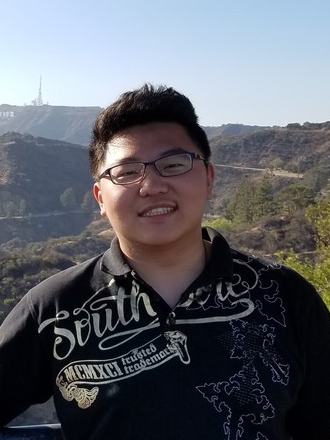
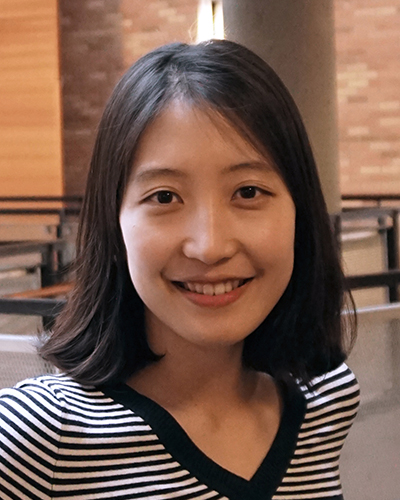
Preston JiangPreston Jiang is a transfer student from Seattle Central College who works with Rajesh Rao, the Hwang Professor of Computer Science & Engineering and Electrical Engineering and director of both the Allen School’s Neural Systems Lab and the National Science Foundation’s Center for Sensorimotor Neural Engineering. He also works with professor Andrea Stocco, co-director of the Cognition & Cortical Dynamics Laboratory. Jiang was recognized with an Honorable Mention from CRA for his research on brain-computer interfaces (BCIs) and brain-to-brain interfaces (BBIs).

Jiang started out applying his knowledge of signal processing, machine learning and systems integration to create a new BCI for controlling a cursor based on electroencephalography (EEG) signals from the scalp. Rao subsequently tapped him to serve as the lead student researcher on the third generation of their BBI project, which seeks to enable individuals to communicate directly using EEG and signals transmitted to the visual cortex via a transcranial magnetic stimulator (TMS). Jiang’s contributions focused on BrainNet, a system for linking three or more brains to collaboratively solve a task through visual brain signals. As part of this work, he helped to assess the viability and performance of the BrainNet, managed integration of the EEG, BCI, and TMS systems, and ran experiments with human subjects. Jiang also contributed to another ambitious project, this time exploring the potential for brain-based virtual reality, by cataloguing the variety of artificial visual sensations known as “phosphenes” that humans experience to enable the future development of VR systems based on direct brain stimulation.

The team plans to publish journal papers on both BrainNet and the brain-based VR project with Jiang as co-author. Jiang previously was recognized for research excellence with a 2017 WRF Innovation Undergraduate Fellowship in Neuroengineering and a 2017-18 Levinson Emerging Scholars Award, which supports juniors and seniors pursuing advanced research in bioscience and related areas.
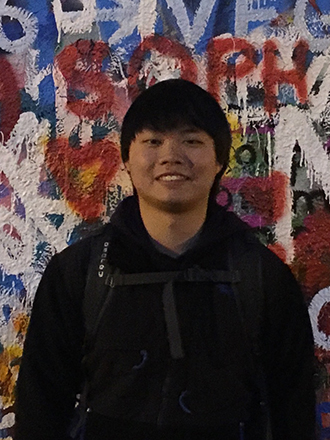
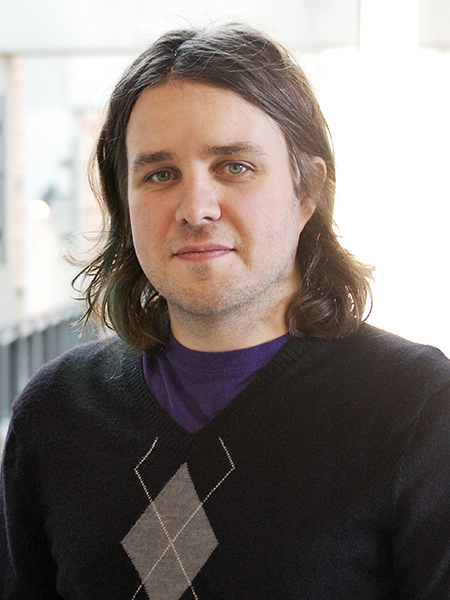
Deric PangDeric Pang is a student enrolled in the Allen School’s combined bachelor’s/master’s program who earned an Honorable Mention in the CRA awards competition. He has contributed to research projects on fault localization, programming by natural language, and software testing under the guidance of professor Michael Ernst in the Programming Languages & Software Engineering (PLSE) group.

Pang was part of a team that changed our understanding of fault localization, an approach for identifying defective lines of code to save substantial effort in the debugging process. Previous research into fault localization techniques has tended to use artificial faults for ease of evaluation. However, Pang and his colleagues discovered that a technique’s performance on artificial faults is not a good predictor of how well it will handle real faults. After replicating previous work, the team found that only 30 percent of the evaluated techniques were statistically and practically significant for artificial faults — and none met this threshold for real faults. Pang and his fellow researchers used their findings to develop new, more effective techniques and presented their work at the 39th International Conference of Software Engineering (ICSE 2017). Pang also contributed to Tellina, a code translation tool that is the result of a collaboration between PLSE and a group of researchers led by professor Luke Zettlemoyer of the Allen School’s Natural Language Processing group. Tellina translates the natural language description of a desired operation into programming language using recurrent neural networks. The system enables programmers to be more productive by allowing them to describe an intended operation using their own words rather than having to memorize the details of increasingly complex systems. In a controlled user study, Pang and his colleagues found that, even in cases where Tellina’s predictions were not completely correct, programmers who used the tool significantly outperformed those who did not.

Pang previously completed internships at Marchex and Amazon, where he worked on automatic speech recognition and the Alexa Machine Learning team, and studied abroad as a computer science exchange student at ETH Zürich. He plans to spend this spring as an intern at NVIDIA working on autonomous drone research.

Since 2000, a total of 58 Allen School students have been honored by CRA for excellence in undergraduate research. Congratulations to Kimberly, Preston, and Deric — and thanks to the faculty and graduate students who serve as mentors and enthusiastically support undergraduate research!

  Read more →

Yin Tat Lee wins NSF CAREER Award to develop new, efficient algorithms for convex optimization

Yin Tat Lee head shotProfessor Yin Tat Lee of the Allen School’s Theory of Computation research group has received a CAREER Award from the National Science Foundation to develop faster, more efficient algorithms for solving convex and other optimization problems. The outcome of Lee’s research, which seeks to increase the scientific community’s understanding of the relationship between convex geometry and optimization algorithms and improve upon current techniques drawn from continuous and discrete optimization, will have broad impact across the sciences and beyond.

Convex optimization techniques have applications in a range of fields, including machine learning, statistics, mathematics, economics, and operations research. However, many of these techniques historically tended to be inefficient and expensive to implement. Recent advances yielding faster algorithms have enabled Lee to break the long-standing running time barriers for specific problems, such as linear programming and maximum flow problems, and to apply optimization techniques to a broader class of problems than was previously feasible. Lee aims to build upon that past work by tackling a set of significant problems in convex geometry and optimization in order to push the state of the art even further. His approach will draw from techniques used in a variety of domains, including combinatorial and convex optimization, convex and Riemannian geometry, spectral graph theory, stochastic processes, and more.

One major goal of Lee’s CAREER proposal is to make progress towards resolving the Kannan-Lovasz-Simononoviz (KLS) conjecture — a central problem not only to the field of optimization but to theoretical computer science and mathematics, and one that implies several other well-known conjectures. Such progress would represent a significant breakthrough in researchers’ understanding of convex optimization and yield immediate running-time improvements for several problems in convex geometry. Lee also aims to resolve a number of algorithmic barriers to optimization, most notably the square-root iterations barrier for solving linear programs. This work would overcome a major obstacle to achieving nearly linear-time algorithms for the maximum flow problem, which is a key subroutine in many other algorithms and promises to have broad theoretical and practical implications.

Finally, Lee will apply a geometry perspective to the study of complex optimization algorithms, such as first-order methods and cutting-plane methods, in order to better understand their complexity and aid in the discovery of new applications. He also intends to explore the use of sampling algorithms for non-convex optimization, which is a rapidly developing area in machine learning.

The CAREER Award is administered through NSF’s Faculty Early Career Development Program and is designed to recognize and support promising junior faculty who successfully blend teaching and research and demonstrate the potential to be leaders in their respective fields. Including Lee, 59 Allen School faculty members have received one of these prestigious awards or their predecessor, the Presidential/NSF Young Investigator Award.

Read Lee’s award abstract here.

Congratulations, Yin Tat!

  Read more →

All work and no play …

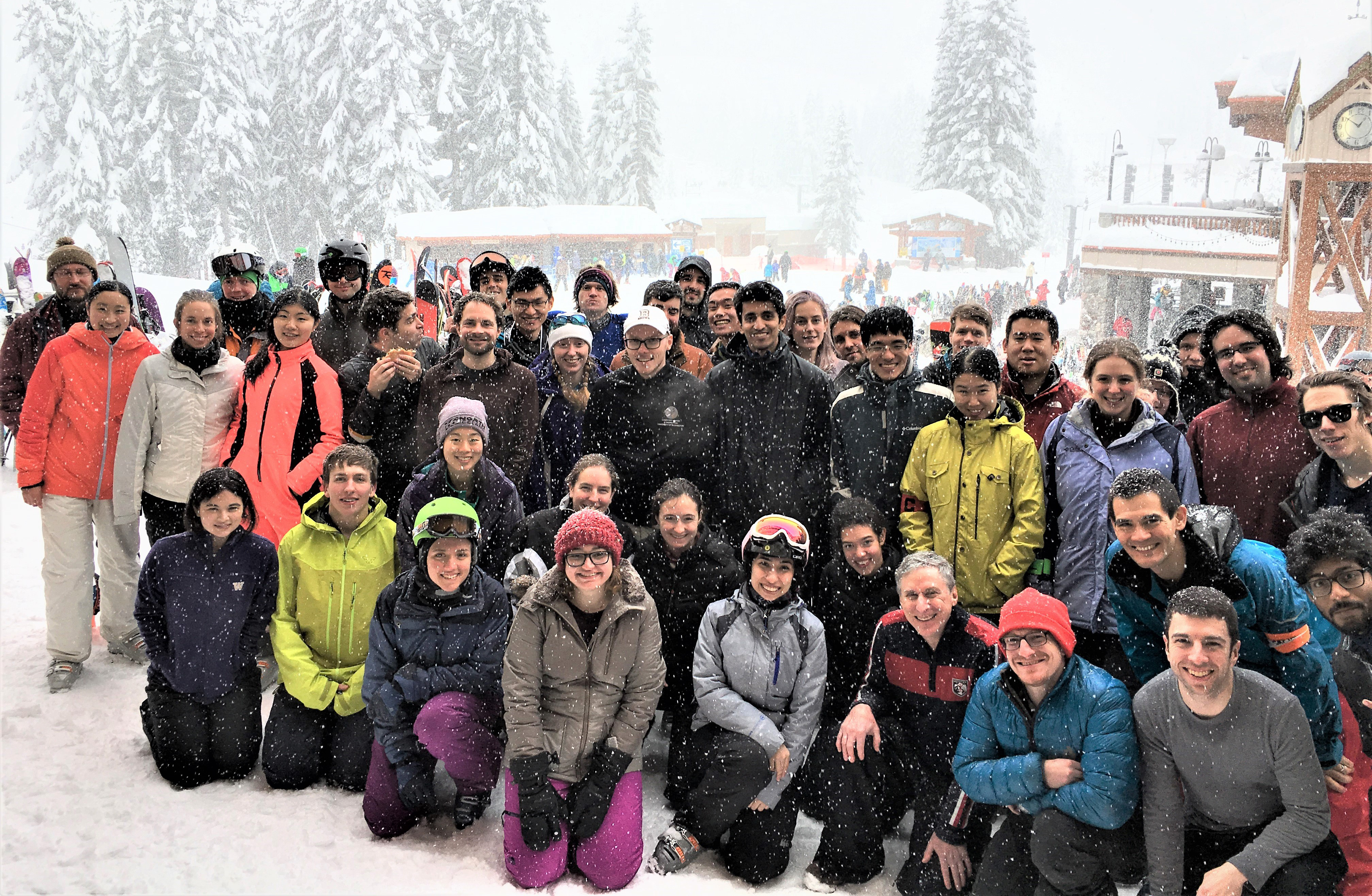
The antidote to becoming a dull computer scientist: the Allen School’s annual ski day at Stevens Pass! Read more →

Deepali Aneja and Eric Whitmire named Adobe Research Fellows

Deepali Aneja

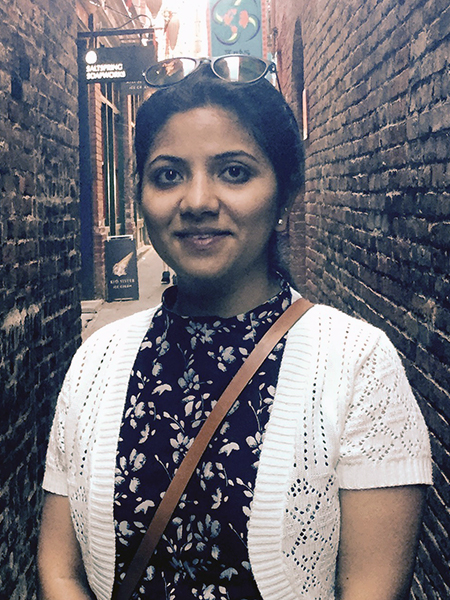
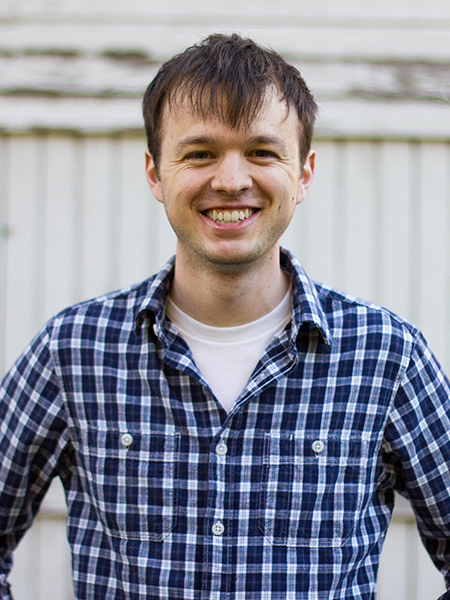
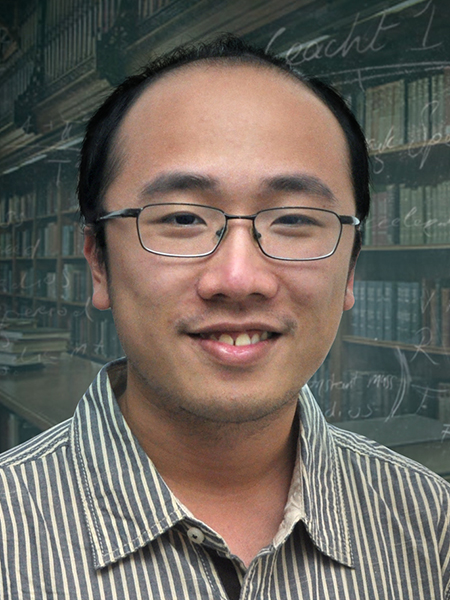
Allen School Ph.D. students Deepali Aneja and Eric Whitmire have been named 2018 Adobe Research Fellows. The Adobe Research Fellowship program recognizes outstanding graduate students with exceptional technical and personal leadership skills who are engaged in creative, high-impact research. Aneja and Whitmire are among a total of 10 graduate students around the world to be recognized in this year’s fellowship competition.

Aneja works with Allen School professor Linda Shapiro in the Graphics and Imaging Laboratory (GRAIL) and Creative Director Barbara Mones in the Animation Research Labs. Her research focuses on computer vision, the intersection of vision and machine learning, and computer graphics and animation.

Aneja previously spent two summers as an intern in Adobe Seattle’s Creative Intelligence Lab, where she contributed to the team’s efforts to enhance lip sync accuracy for 2D animation in Adobe Character Animator 2018, part of the company’s Creative Cloud lineup. Previously, she completed a computer vision research internship at Lawrence Livermore National Laboratory as part of its Data Heroes intern program. At last year’s Allen School open house and poster session, Aneja and her collaborators captured the People’s Choice Award for “Learning Stylized Character Expressions from Humans.” The winning poster presented the team’s work on DeepExpr, a data-driven framework that uses deep learning to map human facial expressions to animated characters in a way that is both perceptually valid and geometrically correct.

Eric Whitmire

Whitmire works with Allen School and Electrical Engineering professor Shwetak Patel in the UbiComp Lab, where his research focuses on the intersection of hardware and software to enable new capabilities in wearable sensors, interaction, and mixed-reality systems.

Whitmire has completed multiple internships at Oculus Research, where he worked on alternative input techniques for augmented reality applications and a wearable scleral coil eye-tracking system for virtual reality displays. He earned the Best Paper Award for his work on the latter, called EyeContact, at the Association for Computing Machinery’s International Symposium on Wearable Computers (ISWC) in 2016. Whitmire spent last summer working with a team at Microsoft Research on a new handheld controller with haptic feedback for virtual reality applications. Other recent projects include DigiTouch, a reconfigurable glove that enables thumb-to-figure touch interaction for general input and text entry on head-mounted AR and VR displays, and PupilScreen, a smartphone app currently under development that will enable accurate, on-the-spot assessment of traumatic brain injury.

The Adobe Research Fellowship comes with a financial award, an Adobe Research mentor, and the opportunity to spend a summer as an intern at Adobe. Past Allen School recipients include Ph.D. students Julian Michael, who works with professor Luke Zettlemoyer in the Natural Language Processing group, and Pavel Panchekha, who works with professors Michael Ernst and Zachary Tatlock in the Programming Languages & Software Engineering (PLSE) group.
Congratulations, Deepali and Eric!

  Read more →

#MemoriesInDNA Project aims to crowdsource 10,000 images to advance DNA-based data storage

What do you want to remember forever?

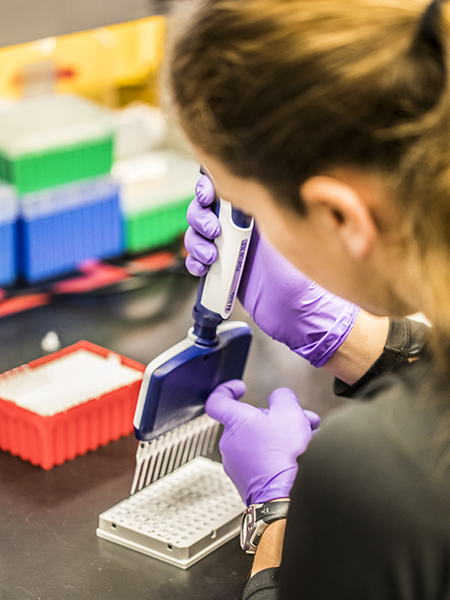
MISL researcher piping synthetic DNA

MISL researchers aim to collect 10,000 images to encode in synthetic DNA to develop new techniques for data storage, search, and retrieval.

That’s a question that researchers in the University of Washington’s Molecular Information Systems Laboratory (MISL) hope will inspire people around the world to submit original photos to the #MemoriesInDNA Project. The project — the result of a partnership between Allen School, UW Department of Electrical Engineering, Microsoft, and Twist Bioscience — aims to build a robust dataset of 10,000 images to develop exciting new capabilities for DNA-based data storage and processing.

The MISL launched in 2015 to develop synthetic DNA as an archival storage medium for digital data that is denser and more durable than existing technologies. Now, backed by a $6.3 million grant from the U.S. Defense Advanced Research Projects Agency (DARPA) as part of its Molecular Informatics program, MISL researchers plan to build upon their prior work. Using the trove of visual data that will be assembled as part of the #MemoriesInDNA Project, the team will explore new ways to process and search for data still encoded in DNA — without having to retrieve and convert the images back into their electronic form. It’s the next frontier in the evolution of DNA as a viable — and truly useful — solution for the world’s growing data storage needs.

“Let’s suppose you have a trillion images encoded in DNA and want to find all the photographs that have a red car in them,” Allen School professor Luis Ceze explained in a UW News release. “We want to be able to do that information processing in DNA directly — to search in a smart way and make the molecules themselves carry out that computer vision work.”

People around the world are invited to submit photos of people, places, and moments that they want to remember forever. Here is a sampling of images submitted via the upload site.

To achieve this “smart” search capability, Ceze and his colleagues will leverage the tendency of certain nucleotides that make up DNA molecules to bind themselves to others — adenine (A) to thymine (T), and cytosine (C) to guanine (G). As part of the encoding process, MISL researchers convert the digital data of an image — 0s and 1s — to the A, T, C, and G molecules that make up strands of DNA. To retrieve only those images they are interested in out of the thousands that make up the dataset, without having to convert them back to binary, the researchers plan to introduce a query containing complementary DNA that will cause only those that meet their search criteria to bind to it. The inclusion of magnetic nanoparticles in the query will enable them to pull out the images bound to it with the help of a magnet. The team will also employ machine learning techniques to enable the detailed mapping and encoding of all visual features that may be contained in an image to enable scientists to perform meaningful data processing.

The MISL team has already set a world record for the amount of digital data stored in and successfully retrieved from DNA, from the hip (a video by the band OK Go) to the historic (the Universal Declaration of Human Rights in 100 languages). To develop a robust capability to search digital data within the DNA itself, however, the team needs a significantly larger volume and variety of images to work with. That’s where the #MemoriesInDNA social media campaign, also launched today, comes in.

“It’s your turn to show us what should be preserved in DNA forever,” Ceze said. “We want people to go out and take a picture of something that they want the world to remember — it’s a fun opportunity to send a message to future generations and help our research in the process.”

The team plans to eventually make this digital time capsule — stripped of any personally identifying information — available to researchers around the world.

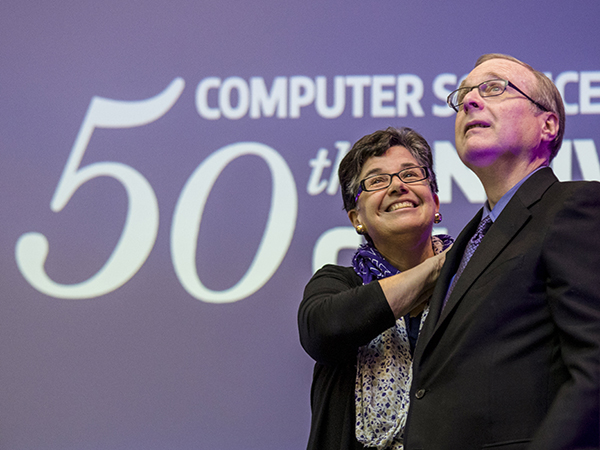
Ana Mari Cauce and Paul Allen onstage

The Allen School’s contribution to the #MemoriesInDNA digital time capsule: UW President Ana Mari Cauce and Paul G. Allen celebrating the naming of the Paul G. Allen School of Computer Science & Engineering on March 9, 2017.

“It is thrilling to bring computer science and molecular biology together in this project,” said Microsoft senior researcher Karin Strauss, an affiliate associate professor at the Allen School. “There has been amazing progress recently in both areas and, when combined, they can be very powerful in tackling problems created by the massive amounts of data we’ve been generating.”

Other lead contributors to the project include Allen School and Electrical Engineering professor Georg Seelig and Microsoft partner architect Douglas Carmean. Twist Bioscience will supply the synthetic DNA for the project.

Snap a photo for science!

Anyone can contribute to the data set by uploading an original photo via the website memoriesindna.com. Afterward, help the campaign go global and inspire others to participate by sharing your image on social media with the hashtag #MemoriesInDNA.

Read the UW News release here , a related post on the Twist Bioscience blog here, and the Wired article here.

  Read more →

Alumna Gail Murphy receives Harlan D. Mills Award for contributions to software engineering

Gail MurphyAllen School alumna Gail Murphy (Ph.D., ’96), professor of computer science and Vice President Research & Innovation at the University of British Columbia, has been recognized by the IEEE Computer Society with its Harlan D. Mills Award, which honors individuals for significant contributions to software engineering research and practice through the development and application of sound theory. Murphy earned the 2018 award for “outstanding research on understanding software-development practices and tools that improve the productivity of developers.”

Murphy’s research focuses on the development and evaluation of tools for to enable software developers to better identify, manage, and coordinate the information that matters most to their work. She also conducts empirical studies to better understand the software development process. Her focus was partly inspired by experience: Murphy started out as a senior software engineer at MPR Teltech before arriving at UW to earn her Ph.D. with the late David Notkin. She later co-founded Tasktop Technologies to commercialize this work and streamline software development at the enterprise level.

The Harlan D. Mills Award is the latest in a string of professional honors Murphy has collected over the years, including the AITO Dahl-Nygaard Junior Prize, which highlights promising contributions to the field of object-oriented programming, and the CRA-W Anita Borg Early Career Award in recognition of her professional contributions and her commitment to increasing the participation of women in computing. Murphy is a Fellow of the Royal Society of Canada and of the Association for Computing Machinery, and she has earned a number of Distinguished Paper and Most Influential Paper awards — a testament to the enduring impact of her work in the software engineering community and the field of computer science, generally. In addition to professional accolades, Murphy has also earned multiple honors from her alma mater, including the Allen School’s 2014 Alumni Achievement Award and a 2008 Diamond Award from the UW College of Engineering for early-career achievement.

Read the full Harlan D. Mills Award announcement here.

Congratulations, Gail!

  Read more →

Zachary Tatlock wins NSF CAREER Award to improve reliability of critical software systems

Zachary Tatlock

Professor Zachary Tatlock, a member of the Allen School’s Programming Languages & Software Engineering (PLSE) group, has earned a CAREER Award from the National Science Foundation to advance the development of a practical verification framework and other methods for improving the reliability of distributed software systems that form the backbone of modern computing applications.

Billions of people around the world rely on distributed systems every day for critical services, including banking, healthcare, transportation, and more. Such systems are designed for optimum scalability and availability, so that when load spikes, machines crash, or networks misbehave, the system is able to compensate for those failures and continue servicing user requests. But these systems are not infallible in practice, and failures can have devastating impacts in human and economic terms — halting essential services and causing significant data loss. On a single day in the summer of 2015, a series of software failures halted trading on the New York Stock Exchange, grounded the entire mainland fleet of United Airlines, and knocked out the website of the The Wall Street Journal. Four years previously, a widespread failure in Amazon’s Elastic Compute Cloud (EC2), part of Amazon Web Services, brought down sites such as Foursquare and Reddit and affected the functionality of others, such as The New York Times. In all, more than 70 sites were affected by that outage.

Tatlock aims to reduce the likelihood and severity of such failures by applying a practical verification-based approach that makes it easier for programmers to implement reliable, high-performance distributed systems. Currently, the set of potential failures is so complex, and the rate of change in software so high, that it is infeasible to effectively test such systems against all scenarios. An alternative approach is to mathematically prove the system works correctly in all cases. But researchers typically only prove the correctness of high-level algorithms for simplified models of these systems, compelled by their complexity to ignore low-level implementation details. This can lead to mismatches between the simplified model and actual implementation which yield subtle errors that may result in large-scale failure. Furthermore, even the most painstakingly constructed proofs eventually become obsolete as the systems they are written for evolve to meet the increasing demand for scale and performance. Tatlock will address these shortcomings by designing compositional verification techniques for independently proving implementation correctness for applications and reliability for fault-tolerance components. This approach would enable programmers to verify the safety and reliability of distributed systems implementations when faced with a variety of network or machine failures — making them less likely in future to ground flights or grind financial markets to a halt.

The NSF’s Faculty Early Career Development Program recognizes and supports junior faculty who exemplify the role of teacher-scholar and demonstrate the potential to be lifelong leaders at the intersection of education and research. Tatlock is the 11th Allen School professor to earn a CAREER Award through the program in the past two years — an incredible success rate that is a testament to the high caliber of our young faculty. A total of 58 current or former Allen School faculty members have earned a CAREER Award or its predecessor, the Presidential/NSF Young Investigator Award.

Read Tatlock’s award abstract here.

Congratulations, Zach!

  Read more →

James Bornholt and Eunsol Choi named 2018 Facebook Fellows

Facebook Fellowship program logoAllen School Ph.D. students James Bornholt and Eunsol Choi have won 2018 Facebook Fellowships, which are designed to support and recognize promising doctoral students who are pursing innovative research in computer science and engineering. Only 17 students from around the globe were chosen out of more than 800 applicants to receive one of these competitive awards, which provide each fellow with up to two years of tuition, grant support, conference travel support, and multiple opportunities to engage with Facebook researchers.

Bornholt works with professors Emina Torlak, Dan Grossman, and Luis Ceze in the Allen School’s Programming Languages & Software Engineering (PLSE) research group. His research focuses primarily on programming languages and formal methods, with an emphasis on the development of automated program synthesis and verification tools.

James BornholtBornholt was the lead researcher on MemSynth, the first of a new class of synthesis-aided memory model tools for formalizing subtle details of computer processors. Bornholt also co-authored “Push-Button Verification of File Systems via Crash Refinement,” which earned the Best Paper Award at the 12th USENIX Symposium on Operating Systems Design and Implementation (OSDI 2016). In that paper, Bornholt and his colleagues presented Yggdrasil, a new file system automatically proven to be crash-safe. Bornholt branched out from his core research interests to contribute to “A DNA-Based Archival Storage System,” in which a team of researchers in the Molecular Information Systems Lab — a collaboration between UW and Microsoft Research — designed a next-generation storage system for digital data using synthetic DNA.

Other recent projects to which Bornholt has contributed include Hyperkernel, an automatically verified OS kernel, and Ferrite, a toolkit for constructing crash-consistency models to improve file system performance and correctness.

Choi is a member of the Allen School’s Natural Language Processing group, where she works with professors Luke Zettlemoyer and Yejin Choi. Her research interests broadly span natural language processing, computational social science, and machine learning. She is particularly interested in developing methods for extracting structured representations of human information such as scientific findings, historical facts, and opinions, and retrieving them using natural language questions.

Eunsol ChoiIn “Truth of Varying Shades: Analyzing Language in Fake News and Political Fact-Checking,” which was presented at the Conference on Empirical Methods in Natural Language Processing (EMNLP 2017), Choi and a group of colleagues at the Allen School and Pacific Northwest National Laboratory analyzed the linguistic patterns of articles and political statements to identify cues that indicate whether a news story is trustworthy, unreliable, or satire. As an intern at Google, Choi was lead author on “Coarse-to-Fine Question Answering for Long Documents,” which presented a new framework for question answering that efficiently scales to longer documents while matching or exceeding the performance of current models.

Choi’s research contributions also include TriviaQA, a robust, large-scale reading comprehension data set, and “Zero-Shot Relation Extraction via Reading Comprehension,” which demonstrated how reducing relation extraction to a reading comprehension problem allows generalization to unseen relations that are defined on-the-fly in natural language.

Past Allen School winners of the Facebook Fellowship include Aditya Vashistha (2016), for his work on social media tools for people in developing communities; Lydia Chilton and Nicki Dell (2013), for their work on crowdsourcing algorithms and applications for improving quality of life in low-resource communities, respectively; and Adrian Sampson (2012), for his work in energy-efficient computing.

Read more about the 2018 Facebook Fellowship recipients here and learn more about the fellowship program here.

Congratulations, James and Eunsol!

  Read more →

Kurtis Heimerl recognized with College of Engineering Diamond Award for Early Career Achievement

Kurtis HeimerlAllen School professor and undergraduate alumnus Kurtis Heimerl (B.S., ’07) has been recognized with a 2018 Diamond Award from the University of Washington’s College of Engineering. Each year, the Diamond Awards recognizes alumni and friends of the college who have made significant contributions to the field of engineering. The college is honoring Heimerl with its Early Career Achievement Award, which is given each year to an outstanding graduate of the college who has made exceptional professional contributions through research, teaching or service within the first 10 years of their career.

Heimerl is a member of the Allen School’s Information & Communication Technology for Development ICTD) Lab, which focuses on improving the lives of underserved populations in low-income communities through technology. He is particularly interested in harnessing the potential for technology to alleviate poverty by bringing mobile internet access to people in some of the most remote regions on earth.

“Growing up in Alaska, I developed a deep understanding and appreciation of rural life and the difficulties of connectivity in these environments. This background, in areas where people are forced to improvise and resolve their local issues, has always informed my research,” Heimerl explained. “I’m happy and grateful that UW was there to foster my technical skills as a student and now continues to support my work to empower people and communities to own their infrastructure.”

That work began in earnest during his time as a Ph.D. student at the University of California, Berkeley working with professors Eric Brewer and Tapan Parikh (Ph.D., ’07). There, Heimerl became known for his efforts to develop community-based cellular networks. These small-scale networks, which he designed to be locally owned and operated, brought the benefits of cellular connectivity to people in resource-constrained areas that previously lacked coverage. Heimerl founded the startup Endaga, Inc. to commercialize his “cell network in a box,” deploying the technology in rural Pakistan, Indonesia, the Philippines, and other areas without existing wireless infrastructure.

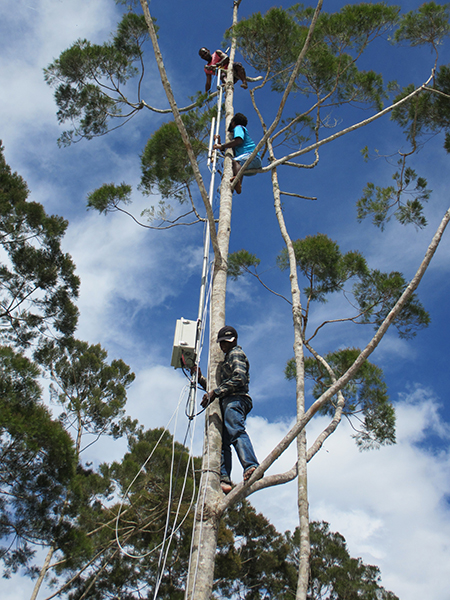
Men attaching a community cellular box to a tree“Cellular communication has revolutionized the way people communicate and connect to essential services, and the benefits are particularly important for people in developing countries,” noted Allen School professor Richard Anderson. “But cell towers are expensive, and if the ‘economic density’ is too low, telecommunication companies won’t invest in connecting those communities. So what can be done to connect the billion people who are still outside of cellular coverage? That’s where Kurtis comes in, developing a ‘local cellular’ technology to address this inequality and bring the benefits of connectivity to more people around the globe.”

In 2014, Heimerl’s efforts earned him the notice of MIT Technology Review, which recognized his contributions with a TR35 Humanitarian Award. Endaga raised $1.2 million in seed funding before eventually joining forces with Facebook in 2015, which gave Heimerl the opportunity to continue his work as a visiting scientist focused on the company’s rural access initiatives. The following year, he joined the UW faculty, where he continues his focus on increasing connectivity and improving economic opportunity for people living in underserved areas.

Most recently, Heimerl and his colleagues began investigating the increasing adoption of smartphones in rural areas that currently lack the bandwidth to support many of the features that are built into those devices. By developing a better understanding of subscribers’ behavior and motivation, the team aims to provide useful guidance for the deployment of new or upgraded cellular infrastructure to support the preferences of people living in these communities.

“Kurtis combines a thorough knowledge of computer systems and infrastructure with creativity and a strong commitment to a set of social values. This allows him to identify and work on research problems that can have a deep and lasting impact on society,” observed Parikh, now a faculty member at Cornell Tech. “Kurtis has frequently challenged my ideas and perspective, and often he has been right. He is also willing to listen and adapt, which is a testament to his maturity as a researcher and the personal ideals for which he works.”

Heimerl and his fellow Diamond Awards honorees will be formally recognized at a gala hosted by the college on May 10th. He joins a distinguished list of past Allen School recipients, including recent Early Career Achievement winners Ben Hindman, founder of Mesosphere (2016), big data pioneer Christophe Bisciglia (2015), LiveJournal creator Brad Fitzpatrick (2014), and consumer technology leader Greg Badros (2012); Distinguished Service winners Yaw Anokwa, one of the creators of Open Data Kit (2015), and Washington FIRST Robotics volunteer Kevin Ross (2013); and Anne Condon, professor at University of British Columbia, who was recognized for Distinguished Achievement in Academia (2012).

Read more about the 2018 Diamond Award recipients here.

Congratulations, Kurtis!

  Read more →

Balancing a research career and chronic illness: Jennifer Mankoff’s personal journey to professional success

Jennifer Mankoff in the Allen Center atriumAllen School professor Jennifer Mankoff is an award-winning researcher in human-computer interaction and accessibility. But her road to a successful academic research career was bumpier than most promising young faculty. In addition to navigating the demands of teaching and research while raising a young family — she and spouse Anind Dey, the new Dean of the University of Washington’s Information School, have two children — she had another obstacle to overcome: her health.

According to the U.S. Centers for Disease Control and Prevention, roughly half of all adults in the United States have one or more chronic illnesses — some of which may be “invisible” to others yet are no less debilitating. A little over a decade ago, Mankoff was diagnosed with Lyme disease, a tick-borne illness that is tricky to diagnose and just as tricky to manage, with symptoms that over time ranged from extreme fatigue, to loss of hearing, memory, and fine motor control. She recently spoke with Nature as part of the journal’s in-depth look at how scientists balance the demands of research with long-term illness. It’s a topic that has received very little attention — a situation Mankoff and the other featured researchers hope to rectify by speaking out about their experiences.

As the article makes clear, chronic illness takes a heavy emotional as well as physical toll. Although Mankoff continued doing those things that define success in academic research circles — writing grants, publishing research, and earning tenure — her battle with Lyme cause her to question who she is and what she is capable of.

“My image of who I could or should be didn’t match up with reality in terms of my productivity,” she explained.

For Mankoff and the others who went on the record for the story, finding their way often means finding a way around the limitations brought on by their condition. Mankoff says she “long ago learned that one aspect of managing a chronic illness is accepting the ‘disability’ label and working within that structure to make things easier.”

For example, she requests a classroom near her office so she does not have to contend with a long trek across campus on days when her Lyme-induced fatigue is particularly acute. She also has become adept at prioritizing tasks and at breaking down large tasks into smaller ones, both of which help her to take full advantage of times when her illness takes a back seat.

Jennifer Mankoff works with students in her 3D printing classMankoff, who arrived at the Allen School last fall after 12 years on the faculty of Carnegie Mellon University, in part credits her colleagues’ support for enabling her to carve out a career that works for her.

“I’ve been lucky to receive a tremendous amount of positive support from the faculty at CMU and again at UW during my interview and since I arrived,” Mankoff told the Allen School News. “Equally important was the support I received at home from my family. That said, negotiating something like this is a personal process, and one for which there are no easy answers.”

Mankoff points out that the lines between work and personal life can get blurred. From her perspective, that is not a bad thing — in fact, she says, it has made her a better researcher. It also opened up new avenues of inquiry that she may not have considered otherwise, including the impact of chronic disease on quality of life, the development of tools for managing chronic illness and physical therapy, and predictors of trust in health care content based on whether it was produced by practitioners or peers.

“Life outside work sometimes – often – impacts work, and for me it has never made sense to keep them separate,” she explained. “My research is often inspired and driven by my personal experiences, and that in turn helped my motivation to get through this.”

Speaking of motivation, Mankoff believes it is important to talk about her journey to give hope and support to others who find themselves in a similar position. While in Pittsburgh, she blogged about Lyme disease and helped to organize local support group efforts. She also has taken on a prominent role in the academic community leading an accessibility group that advocates for access to conferences and online materials.

Although going public can be scary, Mankoff says she does it because, “If my story, or any of the other information in this well researched article, can help someone, then I hope it reaches them.”

Read the full Nature article here and learn more at Chronically Academic, a support network for people with chronic illnesses working in academia.

  Read more →

« Newer PostsOlder Posts »