It’s winter recruiting season at UW CSE!

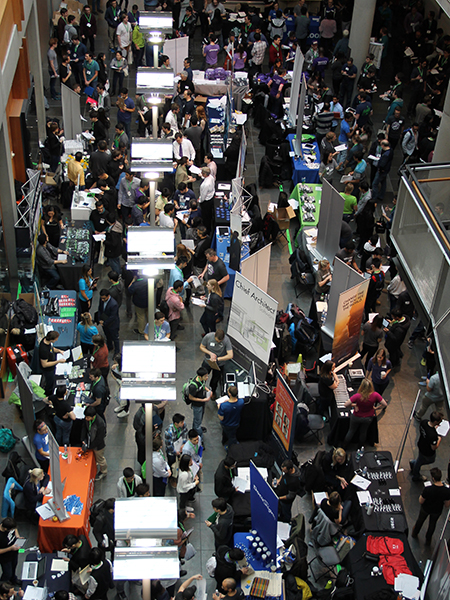
Crowd at the UW CSE recruiting fairAnd as usual, our established company fair has been packed all afternoon with eager recruiters and students! We saw a similar scene yesterday for our startup recruiting fair.

It was great to catch up with the UW CSE alumni who were back on campus, talking with current students about internship and employment opportunities with their companies (and handing out some pretty awesome schwag).

Many thanks to the nearly 80 companies from our Industry Affiliates who participated over the past two days. See you again in the fall! Read more →

UW CSE postdoc Vamsi Talla wins WAGS/UMI Outstanding Innovation in Technology Award for his UW EE Ph.D. dissertation

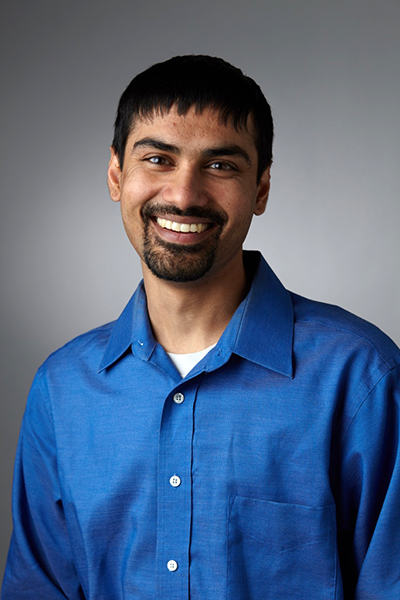
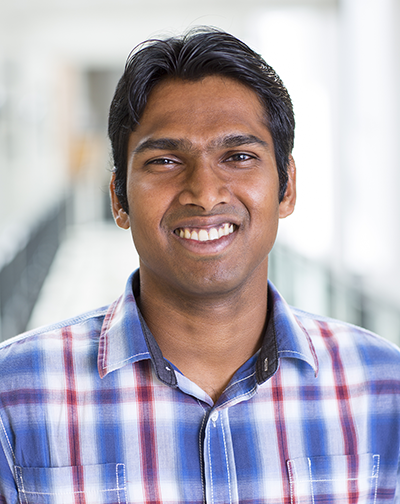
Vamsi TallaUW CSE postdoc and Electrical Engineering Ph.D. alum Vamsi Talla has been recognized with the 2016 WAGS/UMI Outstanding Innovation in Technology Award. The award, which is sponsored by the Western Association of Graduate Schools (WAGS) and University Microfilms International (UMI), recognizes a graduate thesis or dissertation that presents an innovative technology which offers a creative solution to a significant problem. Talla earned the award for his 2016 doctoral dissertation, “Power, Communication and Sensing Solutions for Energy Constrained Platforms,” in which he describes a variety of new energy harvesting, communication, and sensing techniques that will enable a true Internet of Things.

Talla completed his dissertation under the guidance of his Ph.D. adviser, CSE and EE professor Josh Smith of the Sensor Systems Lab, and CSE professor Shyam Gollakota of the Networks & Mobile Systems Lab. He continues to work with Smith and Gollakota on projects such as interscatter, which enables medical implants and other devices to communicate using Wi-Fi and earned Best Paper at SIGCOMM 2016, and Passive Wi-Fi, a system capable of generating Wi-Fi transmissions using 10,000 times less power than conventional methods. Passive Wi-Fi was named one of the 10 Breakthrough Technologies of 2016 by MIT Technology Review and also captured Best Paper at NSDI 2016. Talla and his colleagues co-founded a startup company, Jeeva Wireless, to commercialize their research.

Talla will be honored at an awards lunch on March 21st in Seattle.

Congratulations, Vamsi! Read more →

UW CSE alum Brandon Lucia profiled in “People of ACM”

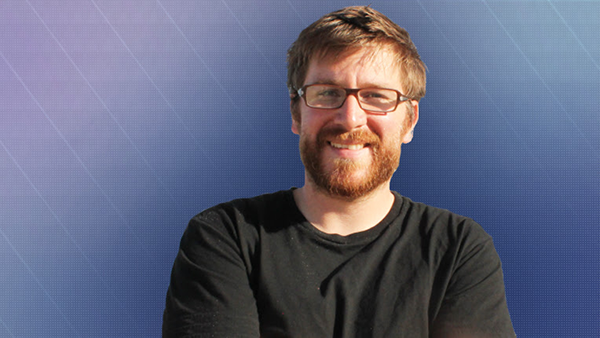
Brandon LuciaThe latest edition of the Association for Computing Machinery’s “People of ACM” features a great conversation with UW CSE alum Brandon Lucia (Ph.D., ’13), now a member of the faculty at Carnegie Mellon University. “People of ACM” is a regular feature that highlights members whose personal and professional stories serve as an inspiration to the broader computing community and whose work is helping to advance computing as a science and as a profession.

As a Ph.D. student, Lucia worked with UW CSE professor Luis Ceze on research that spanned computer architecture, systems, and programming languages. For his dissertation, he developed new concurrency debugging techniques for concurrent and parallel software. The ACM profile focused on Lucia’s work on intermittent energy-harvesting computer systems and a related programming language, Chain, that his group will field-test on a tiny satellite circling in low Earth orbit sometime this year — and Lucia can hardly wait.

“Beyond the fact that sending things to space is cool, we are excited to see the scientific results of our deployment,” Lucia told the ACM. “Our satellite will send back invaluable reliability and energy profiles that uniquely characterize our Chain application in its actual orbital environment.”

When asked to predict what other areas would see major advances, Lucia predicted we would see new, dense, non-volatile memory technologies integrated with heterogeneous computing components using 3-D stacked fabrication, which he characterized as a disruption that could yield order of magnitude improvement in power and performance. Longer term, Lucia anticipates major advances in alternative computing technology.

“Biological computing and data storage are coming into their own, but with only the most basic programming interfaces and execution models with which to reason about a system’s behavior,” Lucia noted. “The behavior of a biological embedding — in DNA or protein networks — of today’s most sophisticated deep neural learning models yields a level of complexity that is beyond our current ability to reason.”

“One compelling future research problem is to define the programming and behavioral abstractions, system architectures, and behavioral specification techniques that enable future biological programmers to direct such stochastic, biological systems to carry out such complex computations,” he said.

Read the full article here.

Nice work, Brandon! Read more →

Join UW CSE for a celebration of women at the frontiers of science and engineering

Symposium speakersThis afternoon, UW will celebrate the Frontiers of Science & Engineering at a symposium presented by UW CSE, ACM-W and the Society of Women Engineers. The symposium will feature members of the UW faculty who have made significant contributions through research and mentorship of other women in the fields of computing, biology, aeronautics and astronautics, electrical engineering, physics, and more.

Professor Magda Balazinska, a member of UW CSE’s Database group and one of the event’s organizers, will kick off a series of talks that includes professor Anna Karlin of UW CSE’s Theory group, who will introduce the audience to algorithmic game theory, and CSE and Genome Sciences professor Su-In Lee, who will talk about her work on machine learning algorithms for precision treatment of cancer. The event was organized by Balazinska, CSE professor Ed Lazowska, CSE and Electrical Engineering professor Josh Smith, and Human Centered Design & Engineering professor and CSE adjunct Julie Kientz.

All are welcome to attend the symposium, which will begin with a reception at 2:30 pm followed by the program at 3:00 pm, in Room 260 of Savery Hall on UW’s Seattle campus.

View the complete list of speakers here. Read CSE’s inclusiveness statement and learn about our efforts to promote diversity in computing here.

Please join us! Read more →

UW CSE’s Dieter Fox wins AAAI Classic Paper Award, again

Dieter FoxProfessor Dieter Fox of UW CSE’s Robotics and State Estimation Lab has been recognized by the Association for the Advancement of Artificial Intelligence with the 2017 AAAI Classic Paper Award. Fox shares the award for the 1999 paper “Monte Carlo Localization: Efficient Position Estimation for Mobile Robots” with co-authors Wolfram Burgard, Frank Dellaert and Sebastian Thrun.

The AAAI Classic Paper Award honors authors of the conference paper deemed to have been the most influential within the field of artificial intelligence from a chosen year. This is the second year in a row that Fox has earned the award, having been recognized in 2016 for “The Interactive Museum Tour-Guide Robot” originally presented at AAAI-98.

The latest winning paper, co-authored by Fox when he was a postdoc at Carnegie Mellon University, introduced a new, sample-based algorithm for mobile robot localization called Monte Carlo Localization (MCL). MCL uses randomized samples to represent a robot’s belief about its location in an environment and is notable for its accuracy, efficiency, and ease of use compared to previous approaches. MCL was the first application of sample-based estimation in robotics, where it is now used across a wide range of applications.

In their paper, Fox and his colleagues thoroughly tested MCL with multiple robots equipped with different kinds of sensors, including Minerva, a robot operating as a tour guide in the Smithsonian Museum of Natural History. These experiments revealed MCL to have several advantages over what were then considered the best localization techniques. For example, MCL’s adaptive sampling yielded far more efficient and accurate results than grid-based Markov localization — at the time presumed to be the state of the art localization technique — and in some cases succeeded in reliably localizing a robot where grid-based localization failed. It was also easier to implement than past techniques: instead of having to reason about entire probability distributions, MCL randomly guesses possible positions in a way that favors likely positions over unlikely ones, and adjusts the number of samples in proportion to the amount of surprise in the sensor data.

Fox and his co-authors will be formally recognized at the AAAI-17 conference in San Francisco, California next month.

Congratulations, Dieter! Read more →

Technical Interview Coaching @ UW CSE

Thanks to our friends from Amazon, GE Digital, Indeed, Karat, Microsoft, PayScale, RealSelf, and Whitepages who provided technical interview coaching to nearly 100 CSE students on Wednesday afternoon! Read more →

Senior faculty hires Sidd Srinivasa and Michael Taylor set to advance UW’s leadership in robotics and computer engineering research

Siddhartha Srinivasa

Sidd Srinivasa

UW CSE is preparing to welcome two game-changing senior hires, robotic manipulation expert Siddhartha “Sidd” Srinivasa and influential computer engineering researcher Michael Taylor, this fall. Srinivasa, who is widely regarded as one of the leading minds in robotic manipulation and human-robot interaction, will advance UW CSE as one of a few truly world-class centers of robotics research. Taylor, who has accepted a joint appointment in CSE and Electrical Engineering, brings expertise in leading-edge hardware design — further building UW’s reputation as one the most dynamic and desirable places in which to pursue computer engineering research.

Sidd Srinivasa will join UW as the Boeing Endowed Professor in Computer Science & Engineering from his alma mater, The Robotics Institute at Carnegie Mellon University, where he is currently the Finmeccanica Associate Professor in Computer Science, founder and director of the Personal Robotics Lab, and co-director of the Manipulation Lab.

Srinivasa’s research focuses on advancing the ability of robots to perform complex tasks with and around people and under conditions of uncertainty and clutter. He aims to move robots beyond simple pick-and-place to more robust models of interaction and collaboration, concentrating on two overlapping lines of research: physics-based manipulation, focusing on the design of actions, algorithms and hands for dexterous manipulation; and the mathematics of human-computer interaction, formalizing interaction principles using a combination of machine learning, motion planning, and function gradient algorithms.

A common thread running throughout Srinivasa’s work is his approach to building mathematical models of physical behavior: he seeks to understand and then formalize the “how” and the “why” of our interactions with the physical world. He then uses those models to transfer behavior from human to robot, and from robot to robot. Over the course of his career, Srinivasa has made a number of fundamental contributions to the field of robotics, including advances in motion planning, state estimation, information gathering, shared autonomy, and more.

In addition to his primary research, Srinivasa also has a keen interest in building end-to-end systems — including the Home Exploring Robot Butler (HERB), the Assistive Dexterous Arm (ADA), the humanoid HRP3, CHIMP, Andy, and others — that integrate perception, planning, and control in the real world. By understanding the interplay between system components, he has contributed state-of-the-art algorithms for manipulation, including the MOPED system for object recognition and pose estimation, and CHISEL, a system for real-time, house-scale, dense 3D modeling that has been incorporated into Google’s Project Tango. A strong believer in robots’ potential to help people, Srinivasa also established the Center for Assistive Robots for Everyday living (CARE), an interdisciplinary center in CMU’s School of Computer Science focused on building a software framework for assistive robotic devices.

With Srinivasa’s arrival, UW CSE adds creativity and expertise in one of the most exciting areas of the field of robotics today — and cements our place among the top robotics research groups in the country. But Srinivasa is keen to aim even higher.

“My goal,” Srinivasa said, “is to make UW the best in the world in robotics.”

Michael Taylor

Michael Taylor

UW will make a similar leap forward in computer engineering with the arrival of Michael Taylor, who is currently Associate Professor at the University of California, San Diego and Director of the UCSD Center for Dark Silicon. Taylor brings deep expertise in the design of specialized custom chips — for example, for crypto-currency mining — and the development of novel approaches to hardware design and prototyping. His work has been particularly influential within the computer architecture community and has also generated a significant amount of press coverage and publications.

Performance and efficiency are consistent themes in Taylor’s research. He is a leading expert on extreme hardware specialization to deal with dark silicon — the portion of a chip that is switched off at any given time due to power constraints. One of his ongoing projects is GreenDroid, an energy-efficient chip for Android phones that is 10 times more efficient than industrial mobile application processors in use today. Taylor is known for actively pushing new ideas, methods, and open source designs that reduce the effort required to build silicon and hardware prototypes. For example, he created the open-source framework Basejump to support more efficient ASIC prototyping, from base designs, to packaging, to boards.

Taylor produced the first academic paper on bitcoin mining chips, which attracted nationwide attention and established Taylor as an authority on mining hardware innovation. His team recently published the first paper on ASIC Clouds, which are purpose-built datacenters comprised of large arrays of ASIC accelerators. Their purpose is to optimize the total cost of ownership (TCO) of large, high-volume chronic computations that are emerging in datacenters today. Taylor also has turned his attention to developing architectures and benchmarks for machine learning applications, with a focus on computer vision. He contributed to the creation of the first comprehensive computer vision benchmark suite, SD-VBS, used by over 1,000 institutions and companies. He later developed CortexSuite, an extension of SD-VBS to include machine learning and artificial intelligence — the largest, most comprehensive such benchmark suite to have been created.

Early in his career, Taylor developed a working implementation of one of the first multicore chips: the Raw tiled multicore processor architecture. The project, which was the basis of Taylor’s Ph.D. thesis at MIT, was an experiment in exposing unusually low levels of the hardware — such as pins, wires, and gates — to software, enabling the latter to take advantage of the physical properties of the chip.

As a true applications-to-circuits researcher capable of prototyping both hardware and software, Taylor will bring an exciting new dimension to UW’s existing strength in computer engineering research.

“UW and the broader Seattle area (e.g. Microsoft and Amazon) has become the world’s foremost playground for creative computer architects,” said Taylor. “I am excited to be a part of it.”

Srinivasa and Taylor will arrive at UW in September. They are the latest in an impressive line of senior hires who have chosen UW CSE in recent years, including Ras Bodik (programming languages); Carlos Guestrin and Sham Kakade (machine learning); Noah Smith (natural language processing); Jeff Heer (data visualization); and Matt Reynolds (computer engineering, joint with EE).

Welcome, Sidd and Michael!

Stay tuned for more updates as faculty recruiting season continues. Read more →

Frontiers of Science and Engineering at UW

Join us for this symposium highlighting the accomplishments of some of the University of Washington’s outstanding women scientists and engineers.

Friday January 20

3:00-5:00 (reception starting at 2:30)

Savery 260

Full agenda here. Read more →

UW CSE Winter Quarter résumé review workshop

winter-resume2Many thanks to the alums and friends from Amazon, CDK Global, Facebook, GE Digital, Google, Impinj, Microsoft, PayScale, Qumulo, RealSelf, and Whitepages who reviewed the résumés of 129 CSE students on Wednesday evening!

Next up: technical interview coaching next Wednesday! Read more →

UW Regents launch construction of CSE2

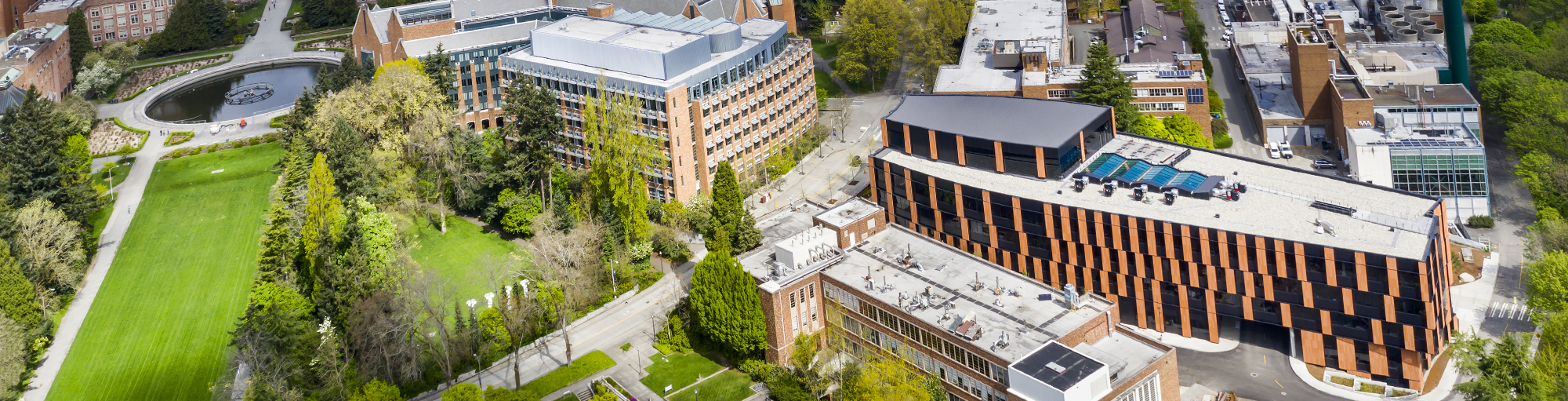
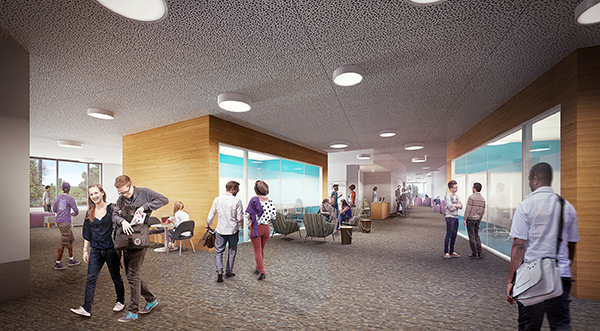
Image of CSE2The UW Board of Regents today approved the immediate start of construction on a second building that will accommodate a significant expansion of CSE. The building – slated to open in two years – will occupy a site across Stevens Way from the existing Paul G. Allen Center for Computer Science & Engineering on UW’s Seattle campus.

Today’s action by the Regents is the culmination of a multi-year effort on the part of leaders from the University, state government, the local technology community, and a multitude of friends and alumni to support CSE’s expansion in response to skyrocketing student and employer demand. The State of Washington provided $32.5 million to launch the project. Microsoft kicked off the private fundraising campaign in June 2015 with a $10 million donation (since increased to $20 million). Amazon, Zillow, Google, and more than 100 individuals have joined since then. At present more than $90 million has been committed toward a total project cost of $110 million.

Design of the 135,000-square foot facility – by Seattle’s LMN Architects, designers of the Allen Center – is complete. Mortensen Construction is the general contractor. (Mortenson also oversaw construction of the Allen Center.) In addressing the Board of Regents this morning, CSE’s Ed Lazowska emphasized this continuity, saying “This is the same project team that 15 years ago brought the Paul G. Allen Center in on-time and under-budget: the same architect, the same general contractor, the same Computer Science & Engineering project team, the same UW construction manager, and the same fundraising team. We have done this before. You can have confidence that we will be able to do it again.” Lazowska was effusive in his thanks to UW’s leadership and the Seattle tech community for their support of the project, saying “Being in this community is heartwarming – the way people pull together to make things like this happen.”

Learn more about the project here, and view our image gallery here.

Thank you to all who have believed in and supported CSE2 up to this point – we could not have reached this milestone without you! Onward and upward! Read more →

« Newer PostsOlder Posts »