UW CSE’s Richard Ladner recognized by SIGACCESS for outstanding contributions in accessible computing

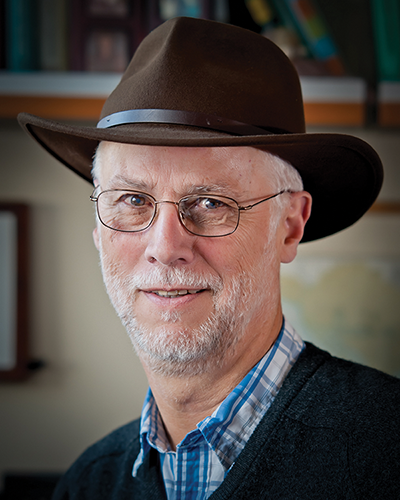
Richard LadnerUW CSE professor Richard Ladner has been selected the 2016 winner of the Award for Outstanding Contributions to Computing and Accessibility by the Special Interest Group in Accessible Computing (SIGACCESS). In announcing the honor, SIGACCESS cited Ladner’s 30+ years of research, advocacy and leadership in the field of accessible computing.

From the award citation:

“Richard’s steadfast support and advocacy for people with disabilities have tangibly increased their participation in STEM fields….Richard was one of the first people to address the concept of accessibility in the HCI field in his 1987 CHI paper ‘A User Interface for Deaf-Blind People.’ Since then, his research has substantially advanced the state-of-the-art in access technology, resulting in products and services that are not merely academic curiosities, but have actually been adopted and used by people with and without disabilities. Examples include ASL-STEM Forum, MobileASL, ClassInFocus, Tactile Graphics and V-Braille.

“Richard has supervised nine PhD students who focused their dissertation research on accessibility related topics. Some of those students have disabilities themselves. All have been so inspired by Richard that they have gone on to pursue their own careers in accessibility research in academia or industry.”

Read the full citation here. SIGACCESS will present the award at its ASSETS 2016 conference in October.

This is the latest in a long list of honors Richard has earned for his efforts to make technology accessible to all, including the 2014 ACM CHI Social Impact Award, the CMD-IT 2015 Richard A. Tapia Achievement Award, and the 2015 Broadening Participation in Computing Community Award.

Congratulations, Richard! Read more →

UW’s interscatter enables implanted devices to communicate using Wi-Fi

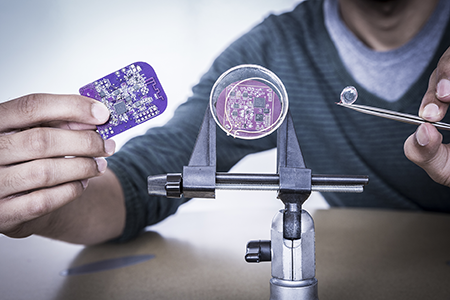
Interscatter prototypesA team of UW CSE and Electrical Engineering researchers have developed a novel communication system called interscatter that enables smart contact lenses, medical implants and credit cards to “talk” to smartphones and smartwatches using Wi-Fi. This groundbreaking technology, which was developed by students and faculty in the UW’s Networks & Mobile Systems Lab led by CSE professor Shyam Gollakota and the Sensor Systems Lab led by CSE and EE professor Josh Smith, has the potential to transform health care and usher in a new era of truly ubiquitous connectivity for a variety of devices.

From the UW News release:

“The team of UW electrical engineers and computer scientists has demonstrated for the first time that these types of power-limited devices can ‘talk’ to others using standard Wi-Fi communication. Their system requires no specialized equipment, relying solely on mobile devices commonly found with users to generate Wi-Fi signals using 10,000 times less energy than conventional methods.

“‘Instead of generating Wi-Fi signals on your own, our technology creates Wi-Fi by using Bluetooth transmissions from nearby mobile devices such as smartwatches,’ said co-author Vamsi Talla, a recent UW doctoral graduate in Electrical Engineering who is now a research associate in Computer Science & Engineering.

“The team’s process relies on a communication technique called backscatter, which allows devices to exchange information simply by reflecting existing signals. Because the new technique enables inter-technology communication by using Bluetooth signals to create Wi-Fi transmissions, the team calls it ‘interscattering.'”

The team, which also includes EE Ph.D. students Vikram Iyer and Bryce Kellogg, built prototypes of three technologies that are made possible by the development of interscatter: a smart contact lens that can monitor and send medical information to a smartphone, an implantable neural recording device, and credit cards that can communicate directly with one another.

“‘Providing the ability for these everyday objects like credit cards – in addition to implanted devices – to communicate with mobile devices can unleash the power of ubiquitous connectivity,’ Gollakota said.

The researchers will present interscatter at the Association for Computing Machinery’s SIGCOMM 2016 conference next week in Florianópolis, Brazil.

Read the full news release here and the research paper here. Learn more by visiting the project web page here. Watch the interscatter team’s video demo here, and check out coverage by MIT Technology ReviewGeekWire, TechCrunch, ComputerWorld, Seattle Times, Puget Sound Business JournalInverse, Digital Trends, Live Science, Daily Mail, The Sun, Fusion, New Atlas, Forbes, and Engineering & Technology magazine.

Photo credit: Mark Stone/University of Washington Read more →

UW CSE @ DARPA ISAT

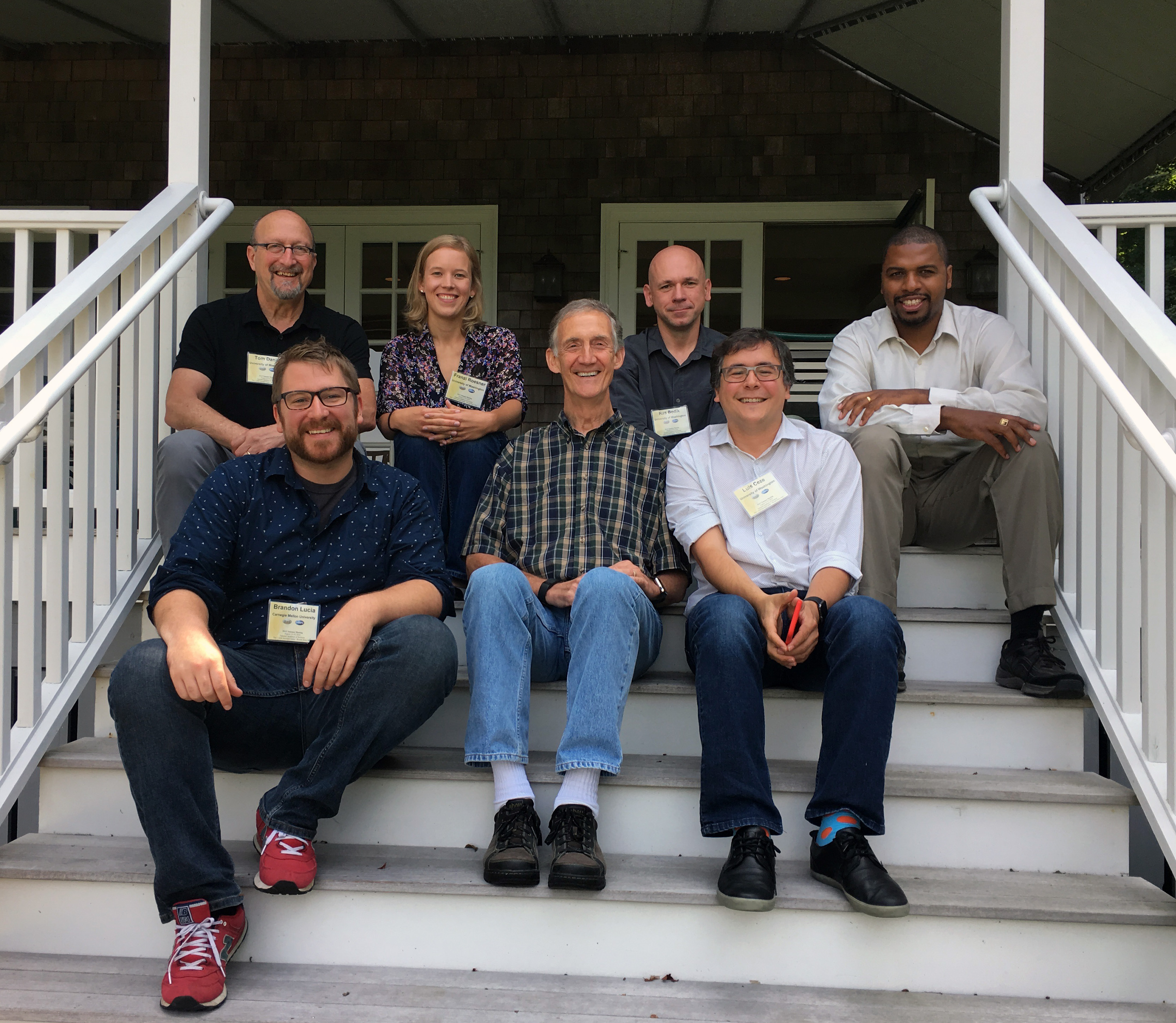
UW @ ISAT33 members of the DARPA ISAT (Information Science And Technology) study group are working at Woods Hole this week – 7 with strong UW CSE connections: Tom Daniel (adjunct faculty), Franzi Roesner (faculty), Ras Bodik (faculty), Hakim Weatherspoon (Bachelors alum, Cornell faculty), Brandon Lucia (Ph.D. alum, CMU faculty), Ed Lazowska (faculty), Luis Ceze (faculty). Missing: Roxana Geambasu (Ph.D. alum, Columbia faculty). Read more →

UW CSE’s Ed Lazowska named 2016 Tech Impact Champion by Seattle Business magazine

Ed LazowskaSeattle Business magazine announced that it has named UW CSE professor Ed Lazowska its Tech Impact Champion for 2016. In selecting Lazowska for the award, the magazine’s editors and judges cited his lifetime of work building UW CSE into one of the top 10 programs in the nation, his leadership in establishing the eScience Institute and advancing our region’s position at the forefront of data analytics, and his tireless promotion of the local tech industry.

From the announcement:

“When Lazowska arrived in Seattle 39 years ago as an assistant professor, both the University of Washington and the region were very different places. In computer science, he was the newest of only 13 faculty members. The region’s tech industry largely consisted of Boeing, Fluke and Physio-Control. Microsoft at the time was still a dozen people in Albuquerque.

“Today, the UW’s Computer Science & Engineering Department rivals Stanford’s and Carnegie Mellon’s for attracting tech talent and major research — accomplishments that Lazowska helped bring about….A decade after leading fundraising to build the Paul G. Allen Center for Computer Science & Engineering, he is doing so again to build a new CSE facility that will help double the center’s capacity.”

The magazine goes on to note that, in his role as “educator, researcher, adviser and booster,” Lazowska has helped lead the greater Seattle region’s transformation into a global center of innovation. It also celebrates his commitment to promoting gender diversity in computing and for providing greater opportunities to the region’s K-12 students.

Lazowska joins an impressive list of local tech titans previously honored for their lifetime contributions to the industry and region, including serial entrepreneur and UW CSE alum Jeremy Jaech (2013), former Microsoft CEO Steve Ballmer (2014), and Madrona Venture Group co-founder Tom Alberg (2015). He will receive the award at Seattle Business’ annual Tech Impact Awards bash on September 21st.

Read the full announcement here.

Congratulations, Ed! Read more →

UW CSE researchers tap their inner Indiana Jones to unearth the history of web tracking

UW CSE web tracking study diagrams

Researchers in UW CSE’s Security & Privacy Research Lab turned archaeologists to deliver the first comprehensive study of third-party web tracking based on a new tool, TrackingExcavator, that detects and analyzes third-party tracking behavior. UW CSE Ph.D. student Adam Lerner presented the results of the study, which examines tracking on the most popular online destinations dating back to 1996, at the USENIX Security Conference in Austin, Texas last week.

“Third-party tracking started quite early in the history of the web,” Lerner noted in a UW News release. “People are becoming more concerned about the potential impact of third-party web tracking, but we lacked a comprehensive history of how trackers — and the types of information they collect — have evolved over time.”

The team, which in addition to Lerner includes CSE Ph.D. student Anna Kornfeld Simpson and CSE professors Franzi Roesner and Yoshi Kohno, set out to build that history by reconstructing tracking data for the top 500 websites using web pages archived in the Wayback Machine. The task was made more complicated by the fact that no one anticipated, when putting together those early websites, that we would want or need to trace the evolution of third-party tracking decades later.

“Reconstructing tracking behavior from the Wayback Machine is difficult because it was designed to archive web content, not tracking techniques,” Kornfeld Simpson told UW News. “We had to develop techniques to extract tracking information from the archive. For example, we collected tracking cookies from archived HTTP headers and Javascript and then simulated the browser’s cookie storage behaviors to detect tracking behavior.”

They found that activity on popular websites by third-party trackers—such as advertisers, analytics engines and social media widgets—has increased four-fold over the past two decades. Tracking has also become more complex, evolving from simple cookies and pop-up windows to more sophisticated methods.

According to the news release,

“Today, the average top website has an average of at least four third-party trackers looking at user activity. The team stresses that these numbers are likely underestimates, since not all websites are fully archived.

“They also found that today individual trackers cover a much larger fraction of the web.…These findings are important to understanding the effects of tracking on privacy, since tracking users on more sites allows trackers to develop a more detailed and intimate picture of their behavior.

“This 20-year historical perspective paints a clear picture of how third-party tracking has evolved with the rise and fall of different techniques, advances in technology, and our increasing reliance on the web in our lives. In general, third parties are watching and collecting information. How we may feel about that remains to be seen.”

Read the complete UW News release here, and the research paper here. Learn more and gain access to the team’s data on the TrackingExcavator website here. Read coverage of the study in TechCrunchUSA TodayFortune and IEEE Spectrum, and watch video from NBC Today and KOMO News.

The project is the latest example of UW CSE’s leadership in web privacy research, including previous work by Roesner, Kohno, and then-CSE professor David Weatherall to analyze and classify web-tracker behavior and to empower users with tools such as ShareMeNot, which was subsequently incorporated into the Electronic Frontier Foundation’s Privacy Badger. Read more →

eScience Institute’s Sarah Stone and Micaela Parker featured in Oceanography magazine

Sarah Stone

Sarah Stone

Micaela-Parker

Micaela Parker

The careers of Micaela Parker and Sarah Stone, program managers at the UW eScience Institute, are the subject of an article in the latest issue of Oceanography, the quarterly magazine of The Oceanography Society. In it, Micaela and Sara talk about what inspired them to jointly apply to the program manager position, in which they share responsibility for day-to-day operations of the institute and serve as the primary point of contact for campus and external partners and the public.

“The eScience Institute’s mission is to engage researchers across disciplines in developing and applying advanced computational methods and tools to real world problems in data-driven science and research,” they explain. “This interdisciplinary mission attracted us to the program manager position.”

Micaela and Sarah proposed a job-sharing arrangement—backed up by data, of course!—that would allow them to balance a career in academia with their roles as caregivers. The arrangement has worked out well for all parties, as it has enabled the faculty, staff and students that work with the institute to benefit from both women’s skills and experience.

“We enjoy helping scientists create and utilize tools that enable novel research questions and empower others,” Micaela and Sarah tell Oceanography. “The eScience Institute is an exciting, cross-disciplinary environment that allows us to work with scientists doing cutting-edge research.”

They credit the institute’s leadership, including UW CSE professor Ed Lazowska and iSchool professor and CSE adjunct professor Bill Howe, plus Chris Cunnington and the rest of the UW CSE staff, for supporting their job-share. They offer advice to other women in academia similarly striving for work-life balance, urging them to not be afraid seek flexibility but also to embrace “opportunities to explore outside of your comfort zone.”

Read a PDF of the article here. Read more →

Icelandic delicacy day at UW CSE

IMG_7242Inspired by the global nature of the Olympic games, the UW CSE Systems Group’s Icelandic Ph.D. students treated us to a lunch of treats from their homeland: fermented shark, smoked and salted foal meat, sheep’s head cheese, liver sausage, blood pudding, flat bread with smoked lamb and butter, sheep pate on rye bread, …

Michael Phelps may have won twenty two gold medals, but we bet he wouldn’t have been able to work his way through this stuff … Read more →

UW Interactive Data Lab’s Vega-Lite earns Best Paper at InfoVis 2016

Vega-Lite-VisualizationsResearchers in the UW Interactive Data Lab led by UW CSE professor Jeffrey Heer have captured the Best Paper Award at InfoVis 2016 for their paper presenting Vega-Lite, a new high-level grammar for rapid and concise specification of interactive data visualizations.

Although interaction is at the heart of effective data visualization, existing systems for designing interactive visualizations are either complex or overly limiting—particularly when it comes to customization. Enter Vega-Lite, which combines a traditional grammar of graphics—including visual encoding rules and a composition algebra for layered and multi-view displays—with a novel interaction grammar to bring the advantages of high-level specification to interactive visualization.

The research team, which includes Stanford Ph.D. student Arvind Satyanarayan and UW CSE Ph.D. students Dominik Moritz and Kanit Wongsuphasawat, demonstrated the software’s effectiveness in conjunction with common visualization techniques, such as panning, zooming and linked selection, as well as customized interaction methods. Using Vega-Lite, analysts will be able to produce and modify interactive graphics with the same ease as they now construct static plots.

From the award citation:

“Vega-Lite is a high-level visualization grammar that integrates an algebra for interaction techniques with operations on views. An important goal of this work is to define a high-level language in which to specify sophisticated interactive visualizations that can be generated automatically. High-level languages like these may help non-programmers to create interactive visualizations and ease them into specifying visualizations in a programmatic way.”

The team will present Vega-Lite at InfoVis, which is part of the big IEEE VIS 2016 conference, in Baltimore, Maryland in October.

Learn more about Vega-Lite here, and read the research paper here.

Way to go, team! Read more →

MIT Technology Review has the dirt on UW CSE’s Maya Cakmak and her housecleaning robots

Maya CakmakUW CSE professor Maya Cakmak and her efforts to train robots to perform everyday tasks are the subject of a recent MIT Technology Review article that posed the question, “What will it take to get a robot to clean your home so you don’t have to do it?”

As it turns out, we have a ways to go before you will be able to trade your Roomba for a Rosie.

Cakmak specializes in programming by demonstration, in which a robot is trained to perform a task by watching and imitating a human’s performance of the same task. The goal is to enable the robot to generalize what it learns through the demonstration—such as a particular cleaning technique—so that it can apply that technique using different tools for different situations. But as Cakmak notes, “Cleaning is different from other tasks we’ve thought about in robotics, which [have] typically involved manipulating objects, or moving them place to place.” For example, a robot would have to learn to identify which tool is the right one for a job, and the correct speed and pressure to apply while using it.

These and other challenges Cakmak identified—such as a lack of machine-friendly design when it comes to many current dwellings—will have to be addressed before autonomous household robots move out of the realm of science fiction and into our homes.

Plus, we need robots with waterproof appendages because vacuuming is a pleasure compared to cleaning the toilet.

Check out the full article here. Watch a video demonstration here. Read more →

GeekWire reports UW CSE machine learning spinoff Turi acquired by Apple

Carlos GuestrinGeekWire is reporting that Turi, the spin-off founded by Carlos Guestrin, Amazon Professor of Machine Learning in UW CSE, has been acquired by Apple.

According to GeekWire’s breaking news post:

“Machine learning and artificial intelligence startup Turi has been acquired by Apple in a deal characterized as a blockbuster exit for the Seattle-based company, formerly known as Dato and GraphLab, GeekWire has learned.

“The acquisition reflects a larger push by Apple into artificial intelligence and machine learning. It also promises to further increase the Cupertino, Calif.-based company’s presence in the Seattle region, where Apple has been building an engineering outpost for the past two years …

“Sources close to the deal pegged the purchase price at around $200 million …”

On July 21 we reported on the IPO of UW CSE spin-off Impinj, whose current market cap is roughly $350 million. While representatives of Apple and Turi are keeping mum, if we take today’s GeekWire report at face value, this marks two great exits of UW CSE companies – both backed by our friends at Madrona Venture Group – in two weeks!

Read the full article here.

More from GeekWire: “Why Apple bought Turi.” Read more →

« Newer PostsOlder Posts »