Allen School student Colin Summers is ready to reach new heights

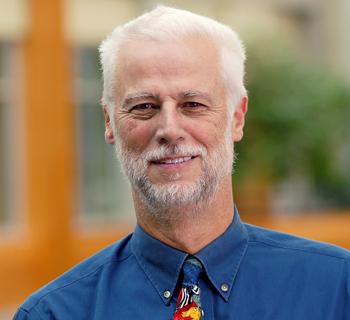
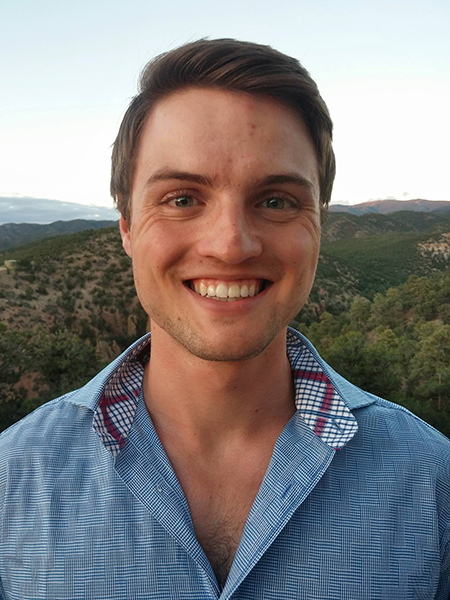
Colin SummersOur latest installment of the Allen School’s Undergrad Spotlight features Colin Summers, a senior majoring in computer engineering with significant experience in chemical and mechanical engineering. The Seattle native, who is pursuing a minor in aeronautics and astronautics, will spend the summer as an intern at the National Aeronautics and Space Administration’s Jet Propulsion Laboratory (NASA JPL) in California.

Before taking off on his new adventure, Summers took time out from his busy schedule to share with us what inspires him as a student, what he learned while working on the award-winning UW Hyperloop project, and what’s next.

Allen School: What is your favorite thing about being an Allen School student?

Colin Summers: The excitement of the students. Of every academic program that I have been a part of — and there have been quite a few — I have not seen students more self-motivated and passionate than CSE students. Everywhere you look, students are chasing their interests whether it be robotics, video games, travel, theory, or any one of the wild things people pursue in this school.

Allen School: Who has inspired you the most as a student?

CS: There’s almost too many to list! Some recent inspirations might include fellow students Johan Michalove for sharing a giddy excitement over robotics, Meredith Lampe for helping to convince me to give CSE 142 a shot, and John Kaltenbach for continually stoking my love of travel; professor Dieter Fox, for sharing a glimpse of the future of robotics; Adam Blank, for demonstrating how to be yourself in the pursuit of what you love; Jonathan Lee, for getting me excited about computational theory and mathematics all over again…As I said, too many to list!

Allen School: What hobbies and interests do you have outside of school?

CS: I’m an avid skier and climber and have recently started to merge the two in the pursuit of mountaineering. I love travel and have spent a bit over a year living in South America, plus a bit of time in Indonesia.

Allen School: What is one of your favorite student memories so far?

CS: Flying to Texas last year with the UW Hyperloop team for the Design and Build competition was one of the most incredible experiences that I’ve had in college. There was about 15-20 of us that went down to pitch our design to a panel of over 100 judges from industry and academia, in the hopes of securing a spot in the final round of the competition. Of over 1,200 teams that applied, only 120 were selected to present — and fewer than 30 teams made it out with approval to build out their designs and race.

The competition is now over, and UW Hyperloop placed 4th in the US and 6th in the world. Hyperloop presented the opportunity to work on a radical new concept that had never been done before, alongside some of the most excellent engineers I’ve ever worked with. It challenged me to think outside the box and to recognize the importance of team dynamics and vision in leading an engineering project.

Allen School: How do you follow up an amazing experience like that — what’s next for you?

CS: Recently, Johan Michalove and I began a robotics project, Dub Car, as part of a new undergraduate program titled Cyber-Physical Systems Group (CPSG). What first started as a side project has since matured into a full-blown honors research project under professor Dieter Fox. Our task is to design, build, and program a 1/10th scale autonomous race car from commercial parts that can be used as a future platform for research in control theory, computer vision, systems development, and autonomy.

Through sponsorship, donations, and our own pockets we’ve managed to scrape together all of the parts needed for our platform and are in the final stages of assembly. A lot of work remains (especially if I keep blowing up the motor controller!), but we’re in it for the long haul and have loved every minute of it thus far. Luckily, we somehow both managed to land internships at NASA JPL for this summer, and we are excited to keep the progress going year-round!


We’re happy to have a star like Colin as part of the Allen School community. Good luck in your internship, Colin! Read more →

Allen School privacy researchers shed light on secret surveillance with SeaGlass

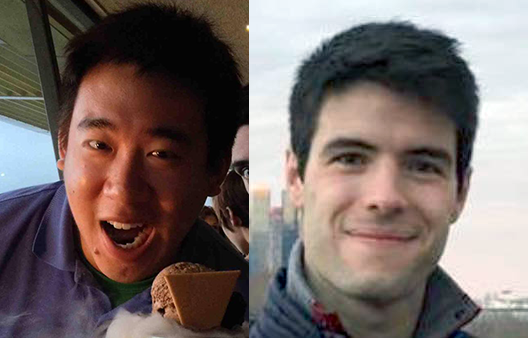
Peter Ney and Ian Smith

Researchers Peter Ney (left) and Ian Smith

A team of researchers in the Allen School’s Security and Privacy Research Lab have developed a new system, SeaGlass, which could bring more transparency and accountability to cell-phone surveillance. SeaGlass is capable of detecting anomalies in the cellular network that may indicate the presence of surveillance devices called IMSI-catchers (also known as cell-site simulators or Stingrays), which track individuals through their International Mobile Subscriber Identity by posing as a legitimate cell tower.

WIRED magazine recently talked to the researchers about SeaGlass and their hope that the findings contribute to the public discourse. From the article:

“Law enforcement’s use of the surveillance devices known as stingrays, fake cell towers that can intercept communications and track phones, remains as murky as it is controversial, hidden in non-disclosure agreements and cloak-and-dagger secrecy. But a group of Seattle researchers has found a new method to track those trackers: by recruiting ridesharing vehicles as surveillance devices of their own.

“For two months last year, researchers at the University of Washington paid drivers of an unidentified ridesharing service to keep custom-made sensors in the trunks of their cars, converting those vehicles into mobile cellular data collectors.”

GIF of SeaGlass

Data collected from a single cell tower in Seattle over two months

The article explains how the information gathered by those mobile data collectors was analyzed to identify irregularities in the network compared to normal cell tower behavior, which could indicate that a surveillance device is active in the area. By using off-the-shelf parts and deploying the system on fleet vehicles that cover a lot of ground during their normal course of business, the researchers demonstrated SeaGlass to be an inexpensive and unobtrusive way to map the cellular landscape.

During the pilot, the system detected three anomalies in the greater Seattle area that piqued the team’s interest. Although the results do not offer conclusive proof of an IMSI-catcher, they do provide a good starting point for further exploration — and for an overdue conversation about surveillance practices.

“Up until now the use of IMSI-catchers around the world has been shrouded in mystery, and this lack of concrete information is a barrier to informed public discussion,” Ph.D. student Peter Ney said in a UW News release. “Having additional, independent and credible sources of information on cell-site simulators is critical to understanding how — and how responsibly — they are being used.”

The team, which also includes Allen School research scientist Ian Smith, Ph.D. student Gabriel Cadamuro, and professor Tadayoshi Kohno, hopes that its work will contribute to a more robust public debate over cell-phone surveillance. They describe in detail the SeaGlass technology and results of the pilot in a paper that will be published this month in the Proceedings on Privacy Enhancing Technologies.

“SeaGlass is a promising technology that — with wider deployment — can be used to help empower citizens and communities to monitor this type of surveillance,” said Smith.  “This issue is bigger than one team of researchers. We’re eager to push this out into the community and find partners who can crowdsource more data collection and begin to connect the dots in meaningful ways.”

Read the WIRED story here, the UW News release here, and additional coverage by TechCrunch, Gizmodo, and Engadget. Learn more at the SeaGlass website here. Read more →

Allen School’s Aditya Vashistha wins Graduate Student Research Award

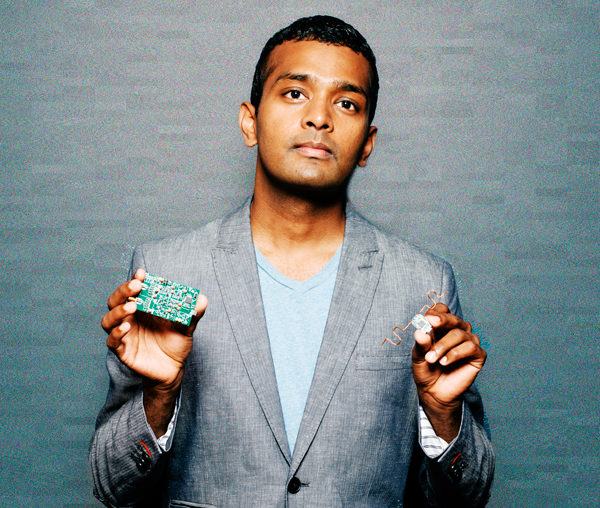
Aditya VashisthaAllen School Ph.D. student Aditya Vashistha has earned the 2017 Graduate Student Research Award from the UW College of Engineering. Vashistha, who is advised by professor Richard Anderson in the Information & Communication Technology for Development (ICTD) Lab, earned the award for his work on social media technologies for the developing world.

Vashistha’s research aims to extend the benefits of social computing to the roughly four billion people around the globe who have constrained internet access. One of his early projects was IVR Junction, a system that used interactive voice response technology to enable people with basic phones to participate in voice-based social networks. IVR Junction, which Vashistha developed while working with Bill Thies of Microsoft Research India, has been deployed in remote regions of Somalia, Mali, and India to share news, call attention to rights violations, and report lack of services. Vashistha built on this research with Sangeet Swara, a voice forum that enables low-income people in rural areas to curate and share content on voice-based social networks which earned a Best Paper Award at CHI 2015. One of his more recent projects, Respeak, is a voice-based speech transcription crowd-sourcing app to provide additional earning opportunities for low-income people that earned an Honorable Mention at the CHI 2017 conference.

Previously, Vashistha earned a Best Student Paper Award at ASSETS 2015 for his analysis of social media use by low-income blind people in India — an outgrowth of the Sangeet Swara project — and was awarded the prestigious Facebook Graduate Fellowship in 2016. In his letter of nomination for the College of Engineering award, Anderson cited Vashistha’s commitment to service and to producing research with important social impact as being particularly worthy of recognition.

“Aditya is a remarkable researcher who is already having tremendous impact in developing technology to reach under-served and marginalized communities,” Anderson wrote. “I am proud to have the opportunity to work with exceptional students like Aditya in the College of Engineering, and look forward to his future accomplishments.”

“My research experience so far has been exhilarating,” Vashistha said. “It’s all thanks to the amazing faculty, staff and students at the Allen School for creating a conducive environment for research.”

Each year, the College of Engineering Awards recognizes the extraordinary efforts of student researchers, teaching assistants, faculty, and staff members. Allen School nominees for this year’s awards included professors Carlos Guestrin and Josh Smith in Faculty Teaching and Research, respectively; Raven Alexander, Assistant Director for Diversity & Outreach, and software engineer Jason Howe of the Computer Science Lab, in the Professional Staff category; and Fiscal Specialist Chiemi Yamaoka in the Classified Staff category.

Vashistha and his fellow recipients from across the college will be honored at a campus reception for students, faculty and staff later today.

Congratulations to Aditya, and to all of this year’s winners and nominees for your commitment to excellence! Read more →

Allen School undergraduate Hannah Werbel marches into the spotlight

Hannah Werbel with trees and mountains in the backgroundFor this edition of the Allen School’s Undergrad Spotlight, we check in with sophomore Hannah Werbel, a computer science major from Sammamish, Washington. Werbel was named the Freshman Medalist in the UW President’s Medalist awards in recognition of her academic performance and extra-curricular involvement on campus. In addition to serving as a teaching assistant for our introductory programming courses, Werbel is a student assistant at the UW’s DO-IT Center, a member of the Husky Marching Band, and president of the Washington Association of Blind Students.

Allen School: First off, congratulations on being selected as a UW President’s Medalist!

Hannah Werbel: I was extremely surprised when I found out that I won this award. I was in class when I got the call to inform me that I had won. Checking the voicemail afterwards, I honestly thought that it was a prank call. It wasn’t until I got an e-mail and a letter that I realized that this was not a joke. I am incredibly honored and humbled to have received the Freshman Medal. It is extremely rewarding to have all the time and hard work I’ve put into my classes and extra-curricular activities recognized. My family and friends have all supported me throughout my time in college, and I cannot thank them enough for all that they’ve done to help me succeed.

Allen School: Why did you choose to major in computer science?

HW: I chose computer science because of all the creative problem-solving involved. In high school, I would tell people that I wanted to study something that “allowed me to be both creative and logical at the same time.” Computer science was actually the last thing I had on my mind when I would say this.

My dad works in technology, and believed that no matter what major I chose, I should know at least a little bit of computer programming. So, in the spring quarter of my freshman year, I enrolled in CSE 142 to satisfy my father’s requirement. I haven’t looked back since. I was surprised by the amount of creativity involved in computer science. I thought that programming was monotonously typing commands into the computer. In reality though, logical problem solving skills and creative thinking are both integral parts of this subject. Computer science encompasses exactly what I said I wanted to do in high school, and I am very happy that I have found something to study that I am passionate about.

Allen School: What do you find most enjoyable about being an Allen School student?

HW: My favorite thing is the amazing community. The professors, students, and advisers are all extremely supportive and genuinely care about our success as people, not just students. Knowing that I can go to the labs at any time and most likely find at least one person from my classes is really nice. I appreciate the collaborative nature of the major, and that we are encouraged to work together to solve problems. I’ve met so many new people this year from being in study groups and going to office hours. Everyone is motivated and passionate about what they do, and I love that I am constantly learning new things from both my professors and my peers.

Allen School: What activities and interests do you have outside of your studies?

HW: I play the piccolo in the Husky Marching Band. I perform at all of the home football games and occasionally travel for away games. I also played in the basketball pep band this year. Technically, since the band is in the athletic department, I can say that I’m a Division 1 college athlete! I find this amusing, although I believe wholeheartedly that marching band should be considered a sport. I am also a TA for CSE 142/143 and the president of the Washington Association of Blind Students. In my free time, I enjoy cooking, baking, reading, yoga, and hiking.

Allen School: Is there a unique perspective you’d like to share with the Allen School community?

HW: Well, I am blind, so the term “unique perspective” definitely applies here. I literally see the world differently from everyone else — that cliché actually works for me. In all seriousness though, I do believe that my vision has allowed me to “see” and understand things that my fully-sighted peers often miss.

Allen School: How so?

HW: I cannot see anything that is written or projected onto the board, but I can still take notes by listening. So I have come to view lecture as a giant puzzle game. I cannot simply look up to see the equation I didn’t quite catch, or the definition that the professor didn’t say out loud, but I can still fill in the information by finding “the missing piece” that fits with everything else. If I miss an equation, but know that A and B are related as such, and that now we are talking about C which relies on A and B, then I can usually make a pretty good guess at my missing equation and keep up with the rest of the class.

I cannot zone out during lecture and have to be completely engaged in the material in order for me to make the most of my time there. This is how my vision helps me. I have to work harder during class, and often have to put in more time and effort outside of class to make up for the information I missed during lecture, but overall I learn everything at a deeper level than I would otherwise. I also believe that often being viewed as “disabled” has exposed me to many misguided assumptions. This has helped me to personally maintain a more holistic perspective of people and their abilities, and allows me to interact with all types of people and situations more adeptly.

Allen School: Who or what in your Allen School experience so far have you found most inspiring?

HW: Thus far, the most inspiring thing for me is the challenge and rigor of the courses. I find the subject of computer science fascinating, and am constantly amazed at how much of it I don’t know. The subject expands far past basic Java programming, and it is inspiring to me to see all of the potential and possibilities that lie ahead. There is so much about computer science that is still to be discovered and implemented. Tackling challenging problems and attempting to comprehend abstract ideas inspires me to engage with the topics even more. I’ve always enjoyed puzzles, and I view computer science as a giant mystery that I am coming closer and closer to understanding.


Hannah embodies the UW’s commitment to excellence and engagement, and we’re proud to have her as a member of the Allen School community! Read more →

Microsoft’s Brad Smith receives 2017 UW College of Engineering “Dean’s Award”

Brad Smith, Microsoft President and Chief Legal Officer, received the UW College of Engineering “Dean’s Award” at the 2017 Diamond Awards celebration on Friday.

Brad was nominated by the Allen School as “a national and international leader in the establishment of visionary technology policies … a tireless and hugely effective advocate for STEM education (and particularly engineering education) in our state and across the nation … [and] an extraordinary friend of the University of Washington.”

Congratulations Brad, and thank you for all you have done!

Read more about Brad and the other 2017 Diamond Award recipients here. Read more →

Perfect weather for Allen School ACM Student Chapter spring picnic!

Allen School faculty Adam Blank and Justin Hsia debate who is worse at dodging cream pies

Memo to self: Next year, avoid sticking head in cotton candy machine

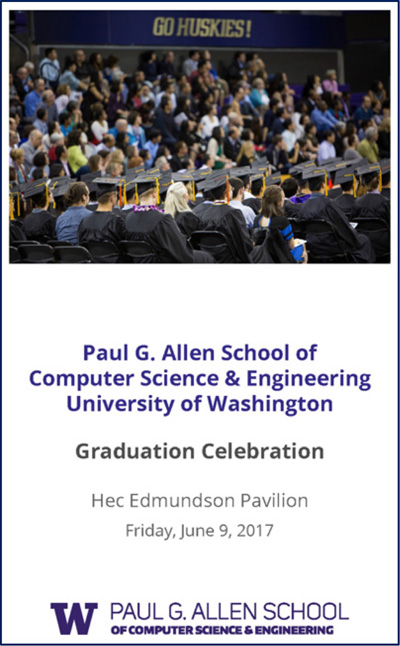
The weather gods once again cooperated, giving us a spectacular Friday afternoon for the 2017 Allen School ACM Student Chapter spring picnic. Classes end on June 2; the Allen School graduation celebration is June 9. Read more →

Allen School capstone film “Short Changed” to appear at the Seattle International Film Festival

Stills from "Short Changed" and SIFF Official Selection laurelShort Changed,” a film created by a team of students as part of the Allen School’s Animation Capstone, has been designated an Official Selection of the 43rd Seattle International Film Festival (SIFF). The festival, which runs from May 18 to June 11, is the largest of its kind in the United States and will feature more than 400 works from filmmakers in over 70 countries. “Short Changed” was produced in the UW’s Animation Research Labs and directed by Allen School faculty member Barbara Mones.

“Short Changed” will be screened during The Family Picture Show, a collection of animated and live action shorts curated by festival organizers for “the young and the young at heart” as part of SIFF’s ShortsFest Weekend. The film tells the story of a greedy thief who comes up with a devious plan to profit from people’s hopes and dreams. The thief dons a disguise that enables him to gather the coins that people cast into a fountain as they make their wishes. However, one of the fountain’s regular inhabitants decides that there is something fishy about the newcomer — and our thief quickly discovers that when it comes to stealing a little girl’s wish, crime doesn’t pay.

SIFF is a qualifying festival for “Best Short Film” at the Academy Awards in the animation, narrative, and documentary categories. Earning designation as an Official Selection at SIFF is a terrific achievement for Mones and her students in the 2014 Animation Capstone course: the Allen School’s Chelsea Dallas, Anton Holmberg, Ashley Nguyen, Brian Park, Tina Pi, Simon Schaffer, and Benjamin Schiffler; Informatics majors Theodore Chin, Alex Constant, and Mikey Wong; Interaction Design majors Nicholas Stoermer, Randy Huynh, Noble Woods, and Hsuan-Ting Wu; Interdisciplinary Visual Arts majors Erin Caswell (who has since joined the staff of the Animation Research Labs), Amanda Cook, and Amanda Nelson; and Painting and Drawing majors Zixing Guo, Si Tao Li, and Rebecca Van-Den-Ende.

Short Changed” will be screened on Saturday, May 27 at the SIFF Cinema Uptown. This is the third Allen School capstone film to appear at SIFF, following the selection of “Catch and Release” in 2012 and “Kings” in 2010.

Check out the “Short Changed” SIFF page here and view the trailer here. Learn more about the Animation Capstone here.

Congratulations to Barbara, Erin, and the entire crew! Read more →

May 15 – a good day for Allen School graduate program alums!

Mike Cafarella, Raphael Hoffmann, Chris Re

Machine learning startup Lattice Data, co-founded by Allen School Ph.D. alums Mike Cafarella (2009, advised by Oren Etzioni and Dan Suciu), Raphael Hoffmann (2012, advised by Dan Weld and Luke Zettlemoyer), and Chris Re (2009, advised by Dan Suciu), was acquired by Apple.

Frits Habermann

And Allen School Masters alum Frits Habermann (1990, advised by David Notkin, who had been advised by Frits’ father Nico on his 1983 CMU Ph.D.) was promoted to CEO of PicMonkey, where he was formerly CTO and CPO.

Congratulations one and all! Read more →

Allen School student Fereshteh Sadeghi wins NVIDIA Graduate Fellowship

Fereshteh SadeghiFereshteh Sadeghi, a Ph.D. student in the Allen School’s Graphics & Imaging Laboratory (GRAIL), has been named a 2017 NVIDIA Graduate Fellow. Sadeghi, whose research combines robotics, deep reinforcement learning, and computer vision, is one of only 10 student researchers across the United States selected to receive the fellowship.

The NVIDIA Graduate Fellowship program supports research that spans all areas of computing innovation, with particular interest in projects that will drive advances in artificial intelligence, deep neural networks, autonomous vehicles, and related areas. Sadeghi earned a fellowship for her work on autonomous robot controllers with Larry Zitnick, Allen School affiliate professor and research manager at Facebook AI Research (FAIR), and professor Sergey Levine of the EECS department at University of California, Berkeley, where Sadeghi is currently a visiting student. Her research combines recent developments in 3D graphics simulation and deep reinforcement learning to produce robot controllers capable of performing a variety of tasks in real-world settings.

Previously, Sadeghi worked with Zitnick and Allen School professor Ali Farhadi on advancing the state of the art in computer vision, including common-sense visual understanding, visual analogy, knowledge extraction, and scene recognition.

Congratulations, Fereshteh! Read more →

Paul G. Allen School hosts PoCSci 2017

Max Willsey presents 2.pl (“tuple”), a new computing substrate destined to bury Amazon, Microsoft, and Google. Camille Cobb looks on in disbelief – “I have to follow this guy?!?!” The bare foot of a potential VC intrudes from the left.

On Friday May 12, the Paul G. Allen School of Computer Science & Engineering once again hosted the annual Symposium of Potentially Computer Science (PoCSci). Quoting from General/Program Chair John Toman:

We invite you, your friends, loved ones, and pets to submit your best potential computer science research for presentation at this prestigious venue.

Potential areas of potential computer science include:

  • Pun Based Research
  • Barnyard Data Science
  • Cross-disciplinary research combining CS and French Existentialism
  • Bad Docker Jokes
  • Political-Figure Inspired Languages
  • … and more!

I am also very happy to announce a brand new Tech Transfer Track. This is your chance to pitch your potential computer science to potential Venture Capitalists looking to invest in potential startups. Come prepared to answer questions and use the word “disrupt” a lot.

This year we will be using a new 0-round review process. No abstract submission, or any submission at all is required to present.

James Mickens was unable to make it this year; he has a real job now, working for a hedge fund guy. Read more →

« Newer PostsOlder Posts »