UW CSE Ph.D. alum Brandon Lucia wins 2015 Bell Labs Prize

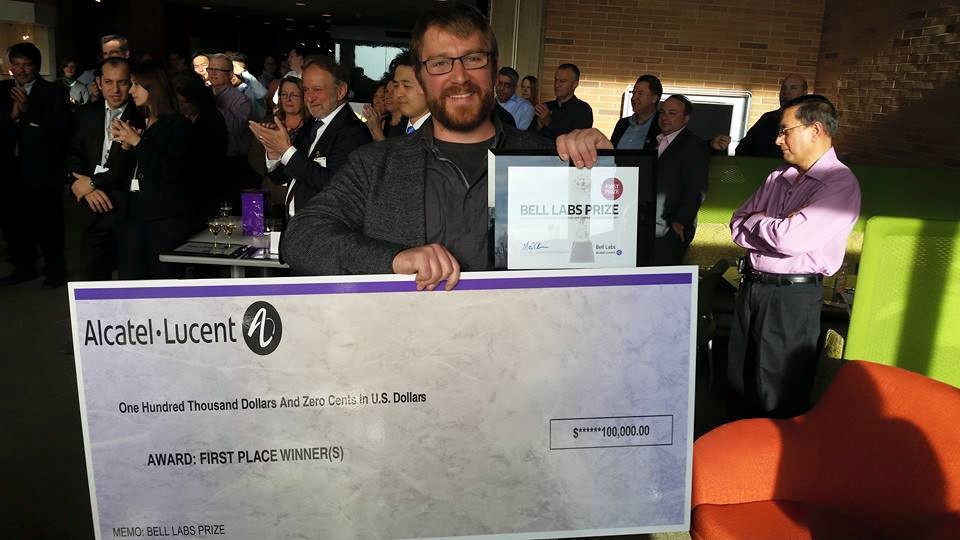
12360275_10100743598095268_5082318562899768385_nThe Bell Labs Prize is a competition for innovators from around the globe that seeks to recognize proposals that “change the game” in the field of information and communications technologies by a factor of 10.

In the 2015 Bell Labs Prize competition, more than 250 applicants from 33 different contries submitted proposals for consideration. Of those applicants, 17 were selected to move on to the next stage of the competition and were given the chance to collaborate with Bell Labs research partners to strengthen their proposals. Following this, 7 were selected as finalists, and presented their ideas to a panel of judges, including Emmanuel Abbe, 2014 Bell Labs Prize winner and Assistant Professor at Princeton University; Al Aho, Lawrence Gussman professor at Columbia University; David Freeman, managing editor of The Huffington Post; Philippe Keryer, Chief Strategy and Innovation Office of Alcatel-Lucent; Marcus Weldon, president of Bell Labs and CTO of Alcatel-Lucent; and Robert Wilson, senior scientist at the Smithsonian Astrophysical Observatory of the Harvard Smithsonian Center for Astrophysics.

And the winner (first prize and $100,000): 2013 UW CSE Ph.D. alum – now CMU ECE assistant professor – Brandon Lucia!

Read more here.

Congratulations Brandon! Read more →

Scuba diving in the stratosphere: Record-setting space jumper Alan Eustace at UW CSE

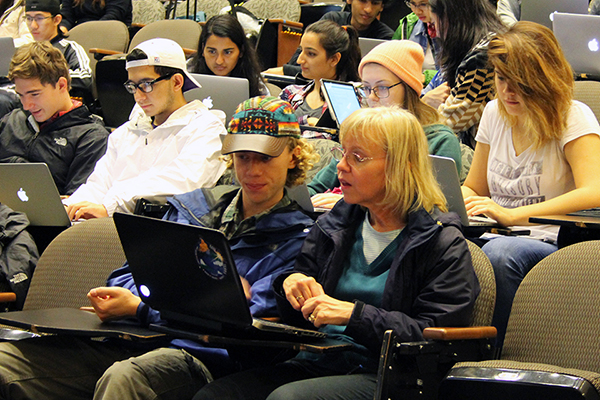
Alan Eustace at UW CSEStudents, faculty and guests packed the Allen Center atrium today to hear former Google executive Alan Eustace tell the exciting story of his world record-setting space jump and the technical challenges he had to overcome to, in his words, “scuba dive in the stratosphere,” as part of UW CSE’s Distinguished Lecturer Series.

Eustace broke the altitude record and traveled faster than the speed of sound, reaching 822 miles per hour at one stage of his jump from a balloon launched from Roswell, New Mexico. During his presentation at UW CSE, Eustace described how he and his team emphasized “technology over ability,” developing a nearly indestructible, 400+ pound space suit with novel life support and parachute systems built mostly with off-the-shelf components. He also discussed the challenges associated with safely launching a helium balloon roughly the size of a football stadium into space and bringing it back down to earth without incident.

If you missed the lecture, checked out GeekWire’s excellent write-up here, and read more about Eustace’s incredible feat in the New York Times here.

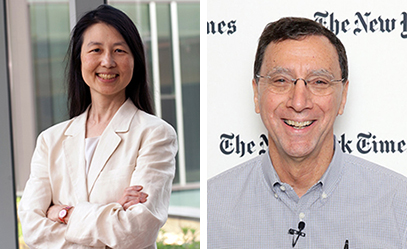
Next up in the Distinguished Lecturer Series: join us this Thursday for a presentation by Jeannette Wing, Corporate Vice President at Microsoft, for “Research at Microsoft: Looking Beyond the Horizon.” Find more details here.

And next Thursday, December 17th, don’t miss New York Times science reporter John Markoff exploring artificial intelligence in “Machines of Loving Grace: Terminator Anxiety, or Will the Robots Arrive Just in Time?” More details available here.

Many thanks to Alan for sharing his amazing story with us! Read more →

Join UW CSE, UW President Ana Mari Cauce and 400+ novice programmers in doing the Hour of Code!

Code.org logoUW CSE has organized a series of events on campus this week to engage UW students and their friends and family members in the Hour of Code, an annual event organized by Code.org to engage people in computer programming. More than 190,000 Hour of Code events are being held around the world to celebrate Computer Science Education Week.

As UW CSE professor Ed Lazowska noted in a column published today in Xconomy:

“CS Ed Week was kind of a snoozer until Hadi Partovi founded Code.org, hatched the idea of Hour of Code, and built tools to support it. In the two years since then, nearly 150,000,000 ‘Hours of Code’ have been completed.

“Kids of all ages—from elementary school to grandparents—can participate in the hour of code.”

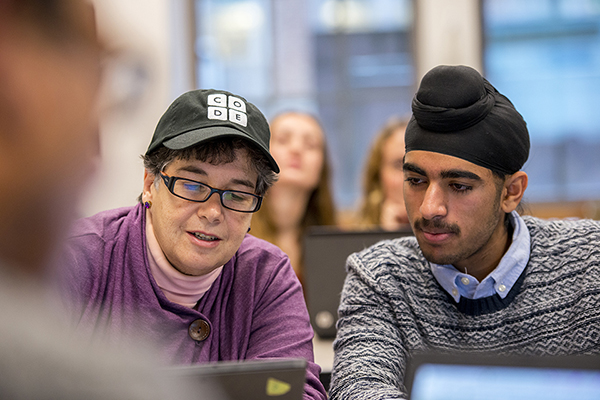
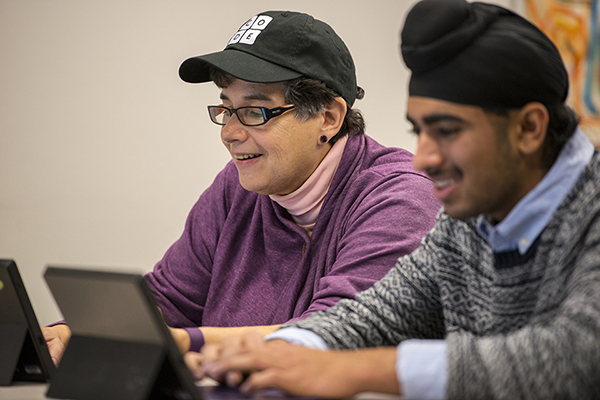
Yesterday, UW President Ana Mari Cauce joined in the fun, teaming up with freshman Sukhdeep Singh and a group of students to do the Hour of Code:

Ana Mari Cauce and Sukhdeep Singh

This was not the first time President Cauce had tried her hand at programming, as she took a COBOL class back in the day.

Ana Mari Cauce and Sukhdeep Singh

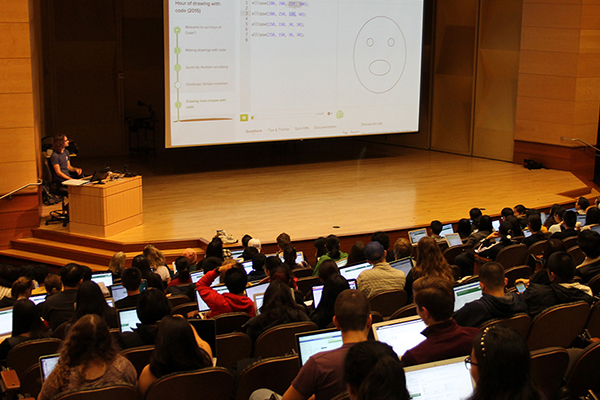
Later the same morning, 100 students in CSE Principal Lecturer Stuart Reges’ introductory Java programming course invited friends and family members to Kane Hall to try their hands at the Hour of Code:

UW CSE Hour of Code

Eric Keenan, a junior who is majoring in atmospheric sciences, brought along his mother, Gayle:

Eric and Gayle Keenan

Altogether, we expect more than 400 people from the extended UW family to take part in CSE’s Hour of Code activities throughout the week. It’s not too late to join in! If you can’t make it to an event, try the Hour of Code from wherever you are with one of Code.org’s online tutorials.

Read more about the UW Hour of Code and other local events in GeekWire here, and Lazowska’s Xconomy column here. Watch a KING 5 News video about the Hour of Code, including an interview with Stuart Reges, here. More photos from President Cauce’s Hour of Code can be viewed here.

Go Huskies! Read more →

What makes Tom Hanks look like Tom Hanks? UW CSE researchers can show you!

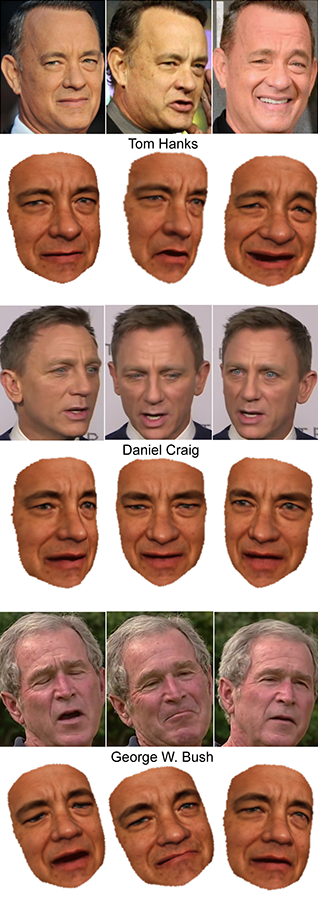
This week, UW CSTom Hanks digital puppetry with Daniel Craig and George W BushE’s GRAIL Group demonstrated the ability to construct digital models of celebrities such as Tom Hanks by applying a novel combination of 3-D face reconstruction, tracking, alignment and multi-texture modeling to photos and videos mined from the Internet. The research team, which includes graduate student Supasorn Suwajanakorn and professors Ira Kemelmacher-Shlizerman and Steve Seitz, also engaged in some high-tech puppeteering, using footage of one person to control another’s expressions while preserving the latter’s own character.

From the UW media release:

“University of Washington researchers have demonstrated that it’s possible for machine learning algorithms to capture the ‘persona’ and create a digital model of a well-photographed person like Tom Hanks from the vast number of images of them available on the Internet.

“With enough visual data to mine, the algorithms can also animate the digital model of Tom Hanks to deliver speeches that the real actor never performed.

“‘One answer to what makes Tom Hanks look like Tom Hanks can be demonstrated with a computer system that imitates what Tom Hanks will do,’ said lead author Supasorn Suwajanakorn….

“It’s one step toward a grand goal shared by the UW computer vision researchers: creating fully interactive, three-dimensional digital personas from family photo albums and videos, historic collections or other existing visuals.”

The technology could be a game-changer for animation and virtual reality applications. The team will present its findings next week at the International Conference on Computer Vision (ICCV) in Chile.

Read the full media release and watch a video demonstration of the technology here, and check out coverage of the project by The Atlantic, Mashable, Gizmodo and GeekWire. Read the team’s research paper here. Read more →

UW CSE Ph.D. alums Geoff Voelker and Stefan Savage immortalized

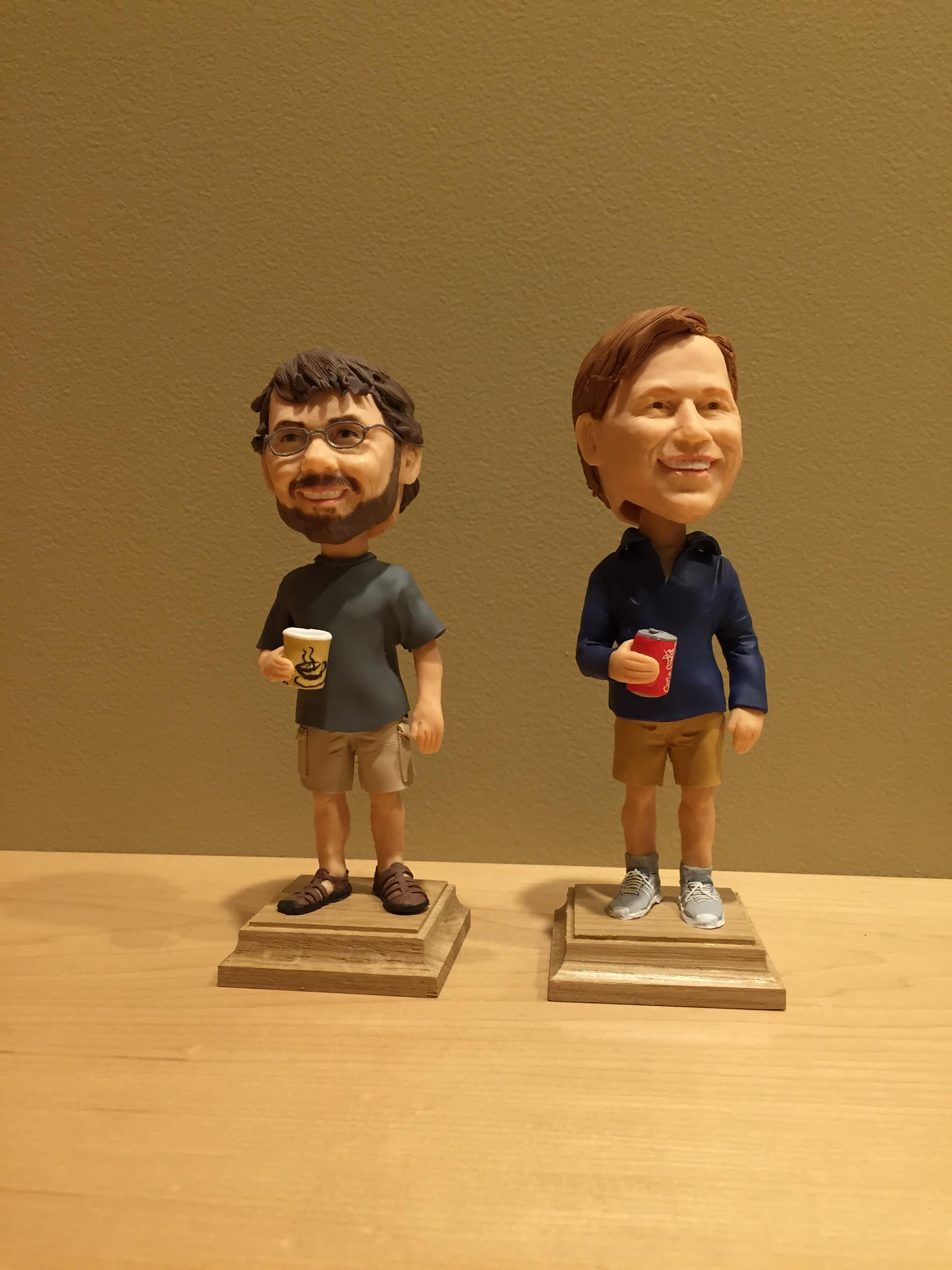
GeoffStefanUC San Diego Computer Science & Engineering Ph.D. student Neha Chachra defended her thesis today. In an effort to divert the attention of her thesis advisors – UW CSE star Ph.D. alums and long-time UCSD CSE star faculty members Geoff Voelker and Stefan Savage – she presented each with a hand-crafted bobblehead as a parting gift.

Stunning likenesses! (And Geoff and Stefan are probably easier to take in plastic form … at the very least, they can be made to nod “yes” …)

(Congratulations to Neha for sailing through her defense – based on terrific research, not bobbleheads. And thanks to Alex Snoeren for the photo.) Read more →

Don’t miss space jumper Alan Eustace at UW CSE’s Distinguished Lecturer series!

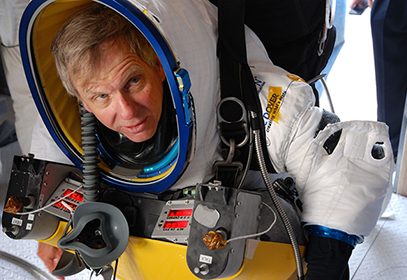
Alan EustaceJoin UW CSE on Tuesday, December 8th for a presentation by former Google engineering executive Alan Eustace on stratospheric exploration – “the ultimate science project.” Eustace will share what it took to achieve the highest free-fall skydive, plummeting at faster than the speed of sound.

Before Eustace and the Paragon StratEx team could break three world records, they had to figure out how to successfully launch him into the atmosphere and return him safely to earth without power. On Tuesday, Eustace will describe how the team overcame these challenges and what they learned from his historic jump.

UW CSE’s Distinguished Lecturer Series is open to the public. The program begins at 3:30 pm, followed by a networking reception at 4:30 pm. More details are available here.

Also coming up in the series:

Jeannette Wing, John MarkoffOn Thursday, December 10th, Jeannette Wing, corporate vice president at Microsoft Research, will talk about the unique mission and culture of MSR and how that translates into high-impact research that benefits society. Learn more here.

The following week, on December 17th, we will be joined by New York Times science reporter John Markoff, who will talk about his new book, Machines of Loving Grace: The Quest for Common Ground Between Humans and Robots. More details here. Read more →

UW CSE and Microsoft Research efforts to use DNA for data storage featured in The New York Times

04DNA-web-master675

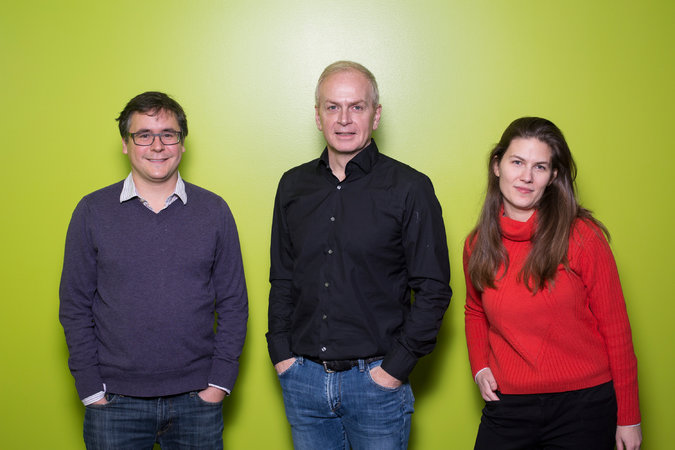
From left: Luis Ceze, Doug Carmean and Karin Strauss (David Ryder/The New York Times)

UW CSE professor Luis Ceze and affiliate faculty members Doug Carmean and Karin Strauss of Microsoft Research are featured in a New York Times article by John Markoff today showcasing their efforts to build a new kind of data storage system inspired by the natural world.

By using DNA molecules, Ceze and his colleagues in the Molecular Information Systems Lab are working to enable archival storage of all of the world’s digital information in roughly the same amount of physical space required to store a case of wine. What’s more, the new system could potentially store data for a millennium or even longer, compared to mere decades with existing magnetic or electronic storage systems.

From the article:

“In nature, DNA molecules carry the genetic instructions that govern the development and function of living organisms. The cost of sequencing or ‘reading’ the genetic code is falling faster than the cost of computer memory, and technologists are beginning to make progress in their ability to more rapidly synthesize strands composed of arbitrary sequences of the small organic molecules known as oligonucleotides, the basic DNA building blocks.

“Computer scientists say they believe that as costs of sequencing and creating synthetic DNA continue to fall, it will soon be possible to create a new class of hybrid storage systems….

“Early signs of a possible convergence of computing and biology can be found in a visit to a cramped laboratory in the basement of the Paul G. Allen Center for Computer Science & Engineering on the University of Washington campus.

“It is crammed with equipment more readily found in a biology laboratory — a desktop DNA sequencing system and a separate machine that is used to amplify fragments of DNA by making billions of precise copies.

“Together, the two machines form a prototype of a data-archiving approach that could spread more widely as soon as five years from now.”

As Ceze notes in the article, “Information technology has helped biotech in the past. Now biotech has to pay back.”

Indeed. Read the full article here.

Collaborators on the project include CSE graduate student James Bornholt, bioengineering graduate student Randolph Lopez, and CSE and EE professor Georg Seelig. The team will present aspects of its research at ASPLOS 2016.

Way cool! Read more →

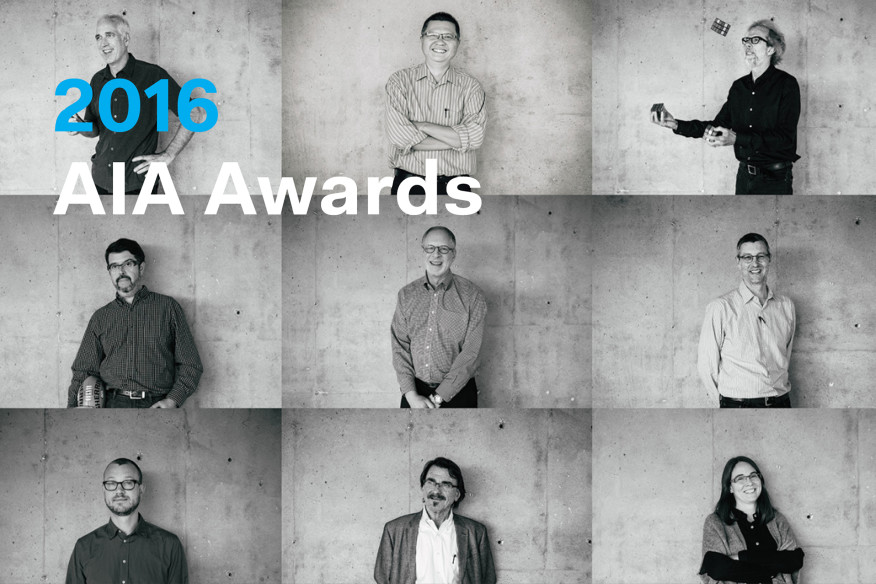
LMN Architects – designers of UW CSE’s Allen Center – wins 2016 AIA Architecture Firm Award

cdnassets.hw.netSeattle’s LMN Architects – the designers of UW CSE’s Paul G. Allen Center for Computer Science & Engineering, and of our second building (now halfway through design), as well as of UW’s PACCAR Hall, Seattle’s Benaroya Hall and McCaw Hall, and major projects across the nation – has been selected by the American Institute of Architects to receive its 2016 Architecture Firm Award.

AIA writes: “The 120-person firm blends ​ the multidisciplinary backgrounds of its principals into an approach that serves people first, building communities around its civic projects … ‘LMN provides an altogether different vision of a fully sustainable and civic-minded future that embraces urban life,’ Stephen Kieran, FAIA, of 2008 AIA Architecture Firm Award recipient KieranTimberlake, wrote in a recommendation letter supporting LMN Architects’ nomination for the award.”

Congratulations LMN! Read more here. Read more →

Picture this: Google team led by UW CSE’s Steve Seitz creates app that enables anyone to create 360-degree 3-D VR photos

Cardboard Camera imageUW CSE Professor Steve Seitz’s team of virtual reality researchers at Google released a new app today called Cardboard Camera, the next step in the company’s effort to bring virtual reality to the masses. The app, which is free, allows anyone with an Android smartphone to create 360-degree three-dimensional photos that can be viewed using the Google Cardboard virtual reality viewer.

From the Wired article:

“Anyone who’s taken a panoramic shot using their smartphone already knows how to use this app: You hold your phone in a vertical position, tap the camera button, and move in a circle. The only difference is that, unlike regular panoramic pictures, you make a full 360-degree turn. A snippet of sound also gets recorded as you’re capturing the photo.

“The result is pretty striking: a three-dimensional panorama where near things look near, far things look far, and you can look in front of you, to your sides, or crane your neck all the way behind you to see the entire captured scene….”

The app uses computational photography and computer vision to calculate 3-D, negating the need for a special camera.

Read the full article here, and additional coverage by TechCrunch here and Engadget here. Check out our previous blog post about Seitz’s team’s work on Google’s Jump here. Read more →

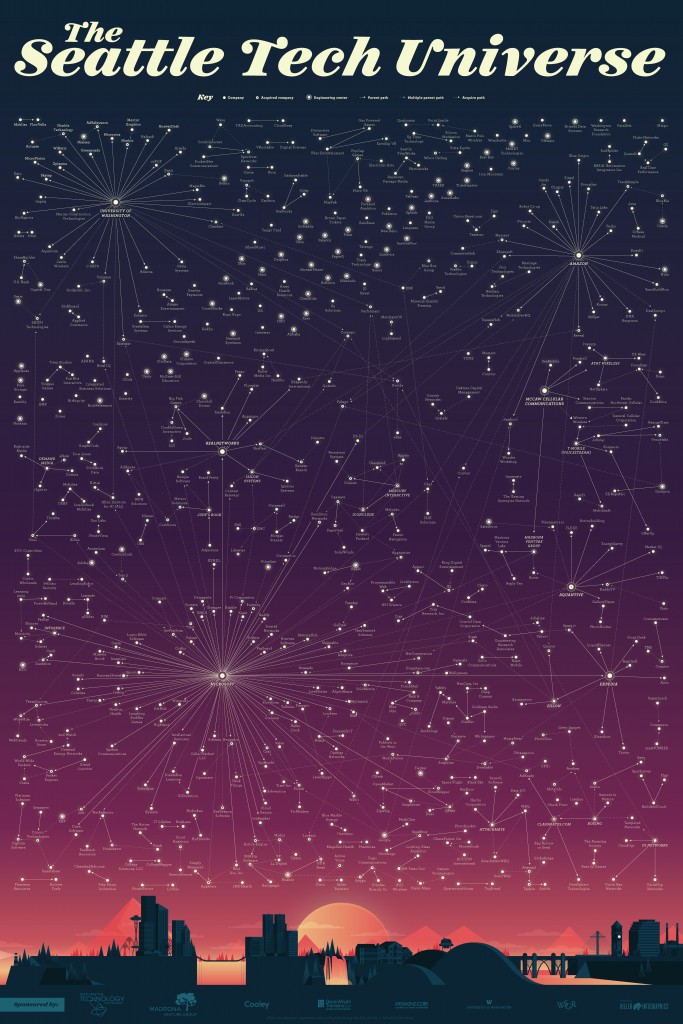
UW’s star shines brightly in the new Seattle Tech Universe Map

Seattle Tech Universe MapYou don’t need a telescope to see the entrepreneurial impact of the University of Washington thanks to the new Seattle Tech Universe Map. The map, which was developed by our friends at the Washington Technology Industry Association and Madrona Venture Group, illustrates the evolution of our local tech ecosystem and the extent to which companies and organizations large and small have contributed to its growth.

UW shines brightly as an engine of innovation and local company creation in large part due to the entrepreneurial faculty and students of UW CSE. Our stellar contributions include machine learning startup Dato; adaptive education provider Enlearn; and Impinj, a leader in RFID technology – to name only a few. Also lighting up our economy: the entrepreneurial spirit of employees from companies such as Microsoft and Amazon – including countless alumni of UW CSE! All told, more than 600 information technology companies, and the connections between them, are represented on the map.

View the Seattle Tech Universe Map on the WTIA website here. Learn more about the project from the WTIA blog post here and the Madrona Venture Group post here. Also, check out some nice coverage of the map’s release by the Seattle Times, Re/code, GeekWire and Xconomy. Read more →

« Newer PostsOlder Posts »