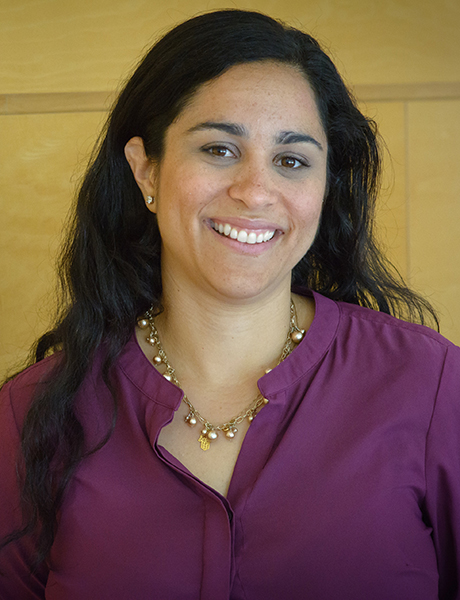
Allen School’s Joseph Redmon wins Google Ph.D. Fellowship

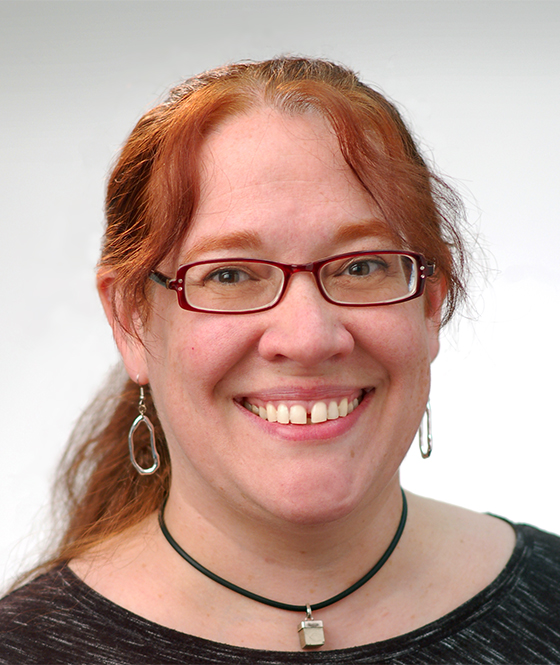
Joseph RedmonJoseph Redmon, a Ph.D. student working with Allen School professor Ali Farhadi on computer vision research, has been named a 2018 Google Ph.D. Fellow. Redmon, who is one of only 39 students across North America, Europe, and the Middle East to be selected for a fellowship, was recognized in the “Machine Perception, Speech Technology and Computer Vision” category for his efforts to develop faster, better, and more useful computer vision tools for real-world applications.

The latest and most powerful computer vision tools typically require significant investments in hardware and training time. In addition to being expensive to implement, new techniques also tend to be fine-tuned for particular tasks; this makes it difficult for users to adapt them to new domains and data sets. Even with sufficient resources, existing tools can take seconds or even minutes to process a single image — rendering them unsatisfactory for many emerging applications, from autonomous vehicles to augmented and virtual reality. Redmon aims to eliminate such barriers to make it more practical for researchers in a variety of domains to employ state-of-the-art computer vision techniques.

One of his most visible projects is YOLO (You Only Look Once), a unified model for fast, accurate object detection in real time. YOLO treats object detection as a single regression problem, applying a single convolutional network to simultaneously predict multiple spatially-separated bounding boxes and associated class probabilities. Using the system, you need only look once at an image before being able to predict what objects are present and where they are located within that image — hence the name. The paper describing YOLO — which Redmon and Farhadi co-authored with former Allen School postdoc Santosh Divvala, now a research scientist at the Allen School for Artificial Intelligence, and Facebook researcher Ross Girshick — earned the OpenCV People’s Choice Award at the Conference on Computer Vision and Pattern Recognition (CVPR 2016). Redmon and Farhadi followed that up with an Honorable Mention at CVPR 2017 for YOLO9000, a new version capable of identifying more than 9,000 different object categories in real time. YOLO9000 also introduced a novel multi-scale training method to offer users an easy tradeoff between speed and accuracy.

While an intern at AI2 — and later, spinout company XNOR.ai — Redmon worked with Farhadi and research scientists Mohammad Rastegari and Vicente Ordóñez on XNOR-Net, which introduced binary approximations for standard convolutional neural networks to enable fast and efficient object recognition and detection on mobile devices. While CNNs are reliable in their accuracy, their power-hungry, memory-hogging nature means they are only really practical on expensive, GPU-based machines. With XNOR-Net, Redmon and his colleagues were able to reduce the amount of computational resources required for running accurate natural image classification on mobile CPUs and other low-power devices. Prior to his collaboration with AI2, Redmon completed an internship at Google Brain, where he contributed to a state-of-the-art system for real-time robotic grasp detection.

Since 2009, the Google Ph.D. Fellowship program has recognized and supported exceptional graduate students working in core and emerging areas of computer science. Previous Allen School recipients include Tianqi Chen and Arvind Satyanarayan (2016), Aaron Parks and Kyle Rector (2015), and Robert Gens and Vincent Liu (2014).

Read more about the 2018 fellows on the Google Research Blog here.

Congratulations, Joseph — and thanks to Google for generously supporting student research!

  Read more →

Allen School students Nelson Liu, Kimberly Ruth, and Andrew Luo recognized in 2018 Goldwater Scholarship competition

Allen School juniors Nelson Liu, Kimberly Ruth, and Andrew Luo have been recognized as part of the 2018 Goldwater Scholarship competition sponsored by the Barry Goldwater Scholarship & Excellence in Education Foundation. The Goldwater Scholarship program is one of the oldest and most prestigious scholarship programs in the nation focused on supporting exceptional undergraduates who aim to pursue research careers in the natural sciences, mathematics, and engineering fields.

Nelson Liu

Scholarship winner Nelson Liu is majoring in computer science, statistics, and linguistics. Since fall 2015, he has worked with professor Noah Smith of the Allen School’s Natural Language Processing group on various research problems in NLP and machine learning. He earned a 2017-2018 Washington Research Foundation Fellowship for his research into the limitations of recurrent neural networks and a 2016-2017 Mary Gates Research Scholarship for his work on building models of sound symbolism in language.

Liu has completed multiple research internships off campus, including stints at the Allen Institute for Artificial Intelligence (AI2) and the Information Sciences Institute (ISI) at the University of Southern California. While at AI2, Liu earned an “AI3 award” for his outstanding contributions as part of the team working on Project Aristo. Those contributions included his work on deep learning methods for domain adaptation in reading comprehension and the development of the AllenNLP platform. At ISI, Liu worked on low-resource neural machine translation as part of their Natural Language Group. Liu plans to obtain a Ph.D. in computer science and pursue an academic research and teaching career focused on natural language processing and machine learning.

Kimberly RuthKimberly Ruth, who also won a scholarship, is pursuing a double major in computer engineering and mathematics. She works with professors Tadayoshi Kohno and Franziska Roesner in the Allen School’s Security and Privacy Research Lab, where her research focuses on privacy and security of emerging augmented reality platforms. In collaboration with Ph.D. student Kiron Lebeck, she contributed to the prototype for Arya — a system that protects users from buggy or malicious output by augmented reality applications — and helped design and conduct a user study focused on multi-user scenarios with the Microsoft HoloLens. Ruth is now spearheading further work on security and privacy for multi-user augmented reality. She also completed an internship with Google’s security and privacy engineering team.

Ruth previously was named a finalist in the Computing Research Association’s Outstanding Undergraduate Researcher Awards competition and earned both a Mary Gates Research Scholarship and a Washington Research Foundation Fellowship for her work in AR security. Outside of the lab, Ruth works as a teaching assistant for middle and high school students taking online classes in math and Python programming. Ruth plans to pursue a Ph.D. in computer science on her way to a research career in computer security and privacy.

Andrew LuoAndrew Luo, who earned an honorable mention, is a double-major in computer science and bioengineering. For the past two years, he has worked in the UbiComp Lab with Allen School and Electrical Engineering professor Shwetak Patel and Allen School Ph.D. student Eric Whitmire on the development of machine learning techniques for automatic detection of user errors in spirometry. The goal of his research is to improve diagnosis and monitoring of patients with diminished lung function while expanding availability of testing in low-resource and remote settings by reducing the need for professional supervision. Luo previously worked in Department of Bioengineering professor Ying Zheng’s lab to design, program, and build a 3D printer for producing sacrificial carbohydrate glass lattices for use in vascular biology research. He also completed an internship at the Institute for Systems Biology, where he developed data simulations to aid research in gene set analysis and enrichment techniques. While at the institute, Luo served as a teaching assistant for a workshop on the use of machine learning to characterize cancers based on biomarkers.

Luo previously earned an Emerging Leaders in Engineering Scholarship and a Mary Gates Research Scholarship and completed a software engineering internship at Facebook. He hopes to join an industrial research lab after completing his education and devote his research career to accessible health sensing.

The fourth and final nominee from the University of Washington in this year’s competition, Tyler Valentine of the Department of Earth and Space Sciences, earned a scholarship in the Geosciences category. The Goldwater Foundation fielded a total of 1,280 nominations from colleges and universities throughout the United States in 10 fields. In addition to CISE and Geosciences, the foundation supports students in Chemistry, Engineering, Life Sciences, Materials Research, Mathematical Sciences, Medicine, Physics & Astronomy, and Psychology. Since 1989, the program has provided more than 8,100 scholarships totaling $65 million dollars.

Read the Goldwater Foundation’s press release here, full list of 2018 scholarship winners here, and the list of honorable mentions here. Read a related UW News story here.

Congratulations to Nelson, Kimberly, Andrew, and Tyler on their outstanding achievement!

  Read more →

University of Washington students win regional cybersecurity competition

Team Hillarious members holding the PRCCDC trophy

Team Hillarious, left to right: Saagar Saini, Brandon Kim, Stephen Bray, Rowan Phipps, Justin Inouye, Melody Kadenko, Xander Lent, Emma Casper, and Nick Huber (Not pictured: Dan Arens, Kayla Butler, Jin Oh, and Julia Houppermans)

A team of University of Washington students captured first place in the 2018 Pacific Rim Collegiate Cyber Defense Competition (PRCCDC) last weekend to secure a place at the national championships next month. The multi-disciplinary group from Seattle — known as Team Hillarious* — emerged victorious from two action-packed days of competition designed to test their practical skills, teamwork, and time management against 11 other teams from colleges and universities across Washington, Oregon, and Idaho.

Each year, PRCCDC selects a theme that will test students’ ability to identify and fend off cybersecurity attacks from live opponents while maintaining a simulated network modeled on that of a small company with multiple servers and common internet services. The theme of this year’s competition, which was held at Highline College, was supervisory control and data acquisition (SCADA) systems. Teams attempted to keep their SCADA system and all services running — including responding to incoming customer service requests — while a group of industry professionals playing the role of hacker repeatedly attempted to disable their mail and web servers, database, file sharing, and more. The teams were scored on their ability to detect and respond to these outside threats while balancing security needs with business needs.

SCADA system setup

The members of Team Hillarious include Allen School undergraduates Kayla Butler, Emma Casper, Brandon Kim, Xander Lent, Jin Oh, and Rowan Phipps; Dan Arens of Atmospheric Sciences; Justin Inouye of the Information School; Saagar Saini of Mathematics; and pre-major students Stephen Bray, Julia Houppermans, and Nick Huber. The team is advised by Melody Kadenko, a research program director in the Allen School. They have a brief respite before joining their peers from nine other regions at the National Collegiate Cyber Defense Competition (NCCDC) in Orlando, Florida, on April 13th. This will be UW’s seventh appearance at NCCDC since 2009.

Way to go, team — and good luck at nationals!

*This is not a typo: The UW team got its name at a competition several years ago, when a team of hackers frustrated by our students’ ability to defend against their attacks left the team a note that read, “You think you’re so hillarious, don’t you?” And so the legend of Team Hillarious was born.

  Read more →

Allen School faculty and alumni recognized with Google Faculty Research Awards

Research at Google iconEach year, Google invites proposals from faculty at universities around the world as part of its Google Faculty Research Awards program, which supports cutting-edge computer science research in areas of mutual interest. In the company’s most recent competition, five Allen School faculty members — Magdalena Balazinska, Shyam Gollakota, Hannaneh Hajishirzi, Michael Taylor, and Xi Wang — earned awards for their efforts to advance the state of the art in data management, mobile computing, natural language processing, and systems and hardware design. In addition, several members of the Allen School’s extended family received awards, including adjunct faculty member Julie Kientz and collaborator Jason Yip of the UW Information School, and Ph.D. alumni Yoav Artzi and Nicola Dell.


Magdalena Balazinska

Magda BalazinskaMagdalena Balazinska is a member of the Allen School’s Database Group and director of the University of Washington’s eScience Institute. Her research interests include data management for data science, big data systems, and cloud computing. She earned an award in the “Augmented and Virtual Reality” category to support the development of a new system for managing virtual, augmented, and mixed reality data at scale. The goal is to enable powerful new virtual reality video applications by moving beyond existing capabilities in multimedia processing. Specifically, the system provides a declarative query interface coupled with powerful underlying query optimizations. Balazinska’s collaborators on the project include Allen School Ph.D. students Brandon Haynes and Amrita Mazumdar, former postdoc Armin Alaghi, and professors Luis Ceze and Alvin Cheung.


Shyam GollakotaShyam Gollakota

Shyam Gollakota, who leads the Allen School’s Networks & Mobile Systems Lab and received an award in the “Mobile” category, focuses on the development of new capabilities in computer networking, user interfaces, mobile health, and ubiquitous computing. He is particularly interested in the use of backscatter to enable battery-free computation and communication. Gollakota’s research has contributed to the creation of 3D-printed objects that connect to WiFi without electronics, the world’s first battery-free phone, and the development of new “smart” capabilities for a variety of objects and settings, from medical devices and clothing, to agriculture and urban environments.


Hannaneh HajishirziHannaneh Hajishirzi

Hannaneh Hajishirzi, who will be joining the Allen School as an assistant professor this summer, received an award in the “Natural Language Processing” category. Her research aims to address the problem of open-domain question answering using maximum similarity search. Inspired by a combination of log-time document retrieval techniques used by today’s search engines and the emergence of modern end-to-end trainable question-answering systems, Hajishirzi will develop practical, scalable methods for word-level question answering that reduce latency and computational costs compared to existing, more complex pipeline systems. Potential real-world applications for this work include the news media, search engines, and government. Hajishirzi is currently a research assistant professor in the Department of Electrical Engineering at UW and adjunct in the Allen School.

 
Michael Taylor

Michael Taylor

Michael Taylor holds a joint appointment in the Allen School and Department of Electrical Engineering at the UW. He earned an award in the “Systems” category to support his work with the Bespoke Silicon Group. Taylor’s research focuses on rapid hardware design. His team has been researching ASIC Clouds, a new kind of datacenter that uses specialized chips to reduce the energy of the rapidly growing class of planet-scale computations.


Xi WangXi Wang

Xi Wang is a member of the Allen School’s Computer Systems Lab and Programming Languages & Software Engineering (PLSE) group whose research focuses on building secure and reliable systems. He earned an award in the “Other” category to support his work on the development of provably secure operating systems using formal verification techniques.


Julie Kientz and Jason Yip

Julie KientzJason YipJulie Kientz, a professor in Human-Centered Design & Engineering, and iSchool professor Jason Yip earned awards in the “Human-computer Interaction” category for their work with  HCDE Ph.D. student Kiley Sobel on Inclusive JME, a project exploring the design of cooperative technologies that foster productive joint media engagement (JME) among children with and without disabilities. The team plans to develop a prototype version of YouTube Kids that supports inclusive co-viewing and evaluate its potential as a model for future applications that support cooperation and learning among children of differing abilities and needs.


Yoav ArtziYoav Artzi

Yoav Artzi earned his Ph.D. in 2015 working with Luke Zettlemoyer in the Allen School’s Natural Language Processing group. Now a faculty member at Cornell University, Artzi received an award in the “Natural Language Processing” category. His research aims to advance systems for context-dependent natural language understanding, with a specific interest in learning from situated interactions.


Nicola Dell

Nicola Dell

Nicola Dell, who earned an award in the “Privacy” category, also completed her Ph.D. in 2015. She worked with the late professor Gaetano Borriello and professor Linda Shapiro as a member of the Allen School’s Information & Communication Technology for Development (ICTD) Lab before joining the Cornell University faculty. Her research encompasses human-computer interaction and technologies that address the social, technical, and infrastructure challenges faced by people in low-resource settings.


Google funded a total of 152 projects out of 1,033 proposals received from faculty at more than 300 universities worldwide. The awards provide graduate student support and the opportunity for winning faculty and their students to work directly with Google researchers and engineers. Read Google’s announcement here, and view the complete list of award recipients here.


Congratulations to all of the winners — and thanks to Google for supporting UW research!

  Read more →

Richard Ladner honored with Strache Leadership Award for impact on accessibility education and research

Richard LadnerRichard Ladner, professor emeritus at the Allen School and a nationally recognized leader in accessibility research and advocacy, has been recognized with the Strache Leadership Award from the Center on Disabilities at California State University, Northridge. Each year, the center honors an individual who has made a significant and lasting impact through education and research in the area of assistive technology with the Strache Leadership Award, which is named for CSUN’s former Vice President for Student Affairs Fred Strache.

Ladner, who began his career in theory of computation, has been a leading researcher and advocate in the field of accessibility for more than three decades. Examples of his research impact include Tactile Graphics, a project to make figures and diagrams in textbooks accessible to students who are blind and low-vision, and MobileASL, a project to enable deaf people to communicate via sign language over mobile phones that Ladner undertook in collaboration with Electrical Engineering professor Eve Riskin. His latest project is designed to engage blind children in computer programming via an accessible block-based programming language for tablets. Through his work, Ladner has helped establish the University of Washington as a leader in accessible technology — and ignited students’ and colleagues’ interest in accessibility research.

Ladner also has been at the forefront of multiple initiatives to increase access for people with disabilities to computer science education and careers. He serves as the Principal Investigator for two programs funded by the National Science Foundation: the AccessComputing Alliance, which focuses on engaging and supporting students with disabilities to pursue undergraduate and graduate degrees in computing; and AccessCSForAll, an effort that began last year to increase the participation of K-12 students in computer science classes through the provision of accessible curricula and tools. Previously, Ladner directed the Summer Academy for Advancing Deaf and Hard of Hearing in Computing, an intensive educational program aimed at preparing students for majors and careers in computing-related fields.

Ladner’s work previously earned him the Presidential Award for Excellence in Science, Mathematics and Engineering Mentoring (PAESMEM); the Computing Research Association’s A. Nico Habermann Award; the Richard A. Tapia Achievement Award for Scientific Scholarship, Civic Science and Diversifying Computing; the Broadening Participation in Computing Community Award; the ACM CHI Social Impact Award; and the SIGACCESS Award for Outstanding Contributions to Computing and Accessibility. He will be formally honored with the Strache Leadership Award as part of the CSUN Assistive Technology Conference — the largest international conference focused on the field of assistive technology — in San Diego, California this week. Previous recipients of the award include Ladner’s friend and colleague, Sheryl Burgstahler, who was recognized in 2012 for her work as founder and director of the UW’s DO-IT Center and co-principal investigator with Ladner of the AccessComputing Alliance.

Congratulations, Richard!

  Read more →

UW and Allen Institute researchers develop new method for large-scale analysis of gene activity to advance disease research

Illustration of split-pool barcoding process

Credit: Jennifer Sunami

A team of researchers at the University of Washington and the Allen Institute have come up with a highly efficient, scalable approach for measuring gene activity at the cellular level that could aid the fight against potentially devastating diseases. The researchers described their novel technique — called SPLiT-seq, short for Split Pool Ligation-based Transcriptome sequencing — in a paper published this week in the journal Science.

SPLiT-seq enables scientists to identify the cellular origin of ribonucleic acid (RNA) molecules, which are essential to the regulation and expression of genes, without having to rely on expensive instrumentation. It employs an approach called combinatorial barcoding, in which the cells go through multiple rounds of sorting and labeling with a DNA identifier, or barcode, through a process known as in-cell ligation. Each time the cells are sorted, all of the cells in a particular pool — and their corresponding RNA — receive the same barcode. Four rounds of sorting and labeling produced a unique barcode combination for each cell that could be used to identify its RNA during bulk sequencing.

“Using SPLiT-seq, it becomes possible to measure gene activity in individual cells, even if there are hundreds of thousands of different cells in a tissue sample,” explained Allen School and Electrical Engineering professor Georg Seelig in a UW News release. “With these ‘split-pool barcoding steps,’ we solve a big problem in measuring gene expression: reliably identifying which RNA molecules came from which cell in the original tissue sample.”

Seelig and his colleagues used SPLiT-seq to profile more than 156,000 mouse brain and spinal cord cells. They were able to identify more than 100 cell types, for which they analyzed gene expression patterns related to cellular function, region, and stage of differentiation.

The process costs around a penny per cell, according to Seelig, and requires no special equipment. By reducing the expense and effort required to analyze gene expression on the cellular level, the team hopes SPLiT-seq will accelerate research into the onset, progression, and treatment of diseases such as cancer, Parkinson’s, and Alzheimer’s.

Co-authors of the paper include Bioengineering Ph.D. students Charles Roco and David Peeler; Electrical Engineering Ph.D. student Sumit Mukherjee and postdocs Alexander Rosenberg, Anna Kuchina, and Paul Sample; former Electrical Engineering postdoc Richard Muscat, now Research Funding Manager at Cancer UK; Wei Chen, a graduate student at the UW Molecular Engineering & Sciences Institute; Bioengineering professors Suzie Pun and Drew Sellers; Allen Institute scientists Zizhen Yao and Lucas Graybuck; and Bosiljka Tasic, Associate Director of Molecular Genetics at the Allen Institute.

Read the full Science paper here, the UW News release here, and a related Allen Institute article here. To learn more about this and related work, visit the Seelig Lab for Synthetic Biology website and follow @seeliglab on Twitter.

Credit: Anna Kuchina

  Read more →

Celebrating our first year of innovation as the Paul G. Allen School

Seattle Times front page depicting Paul Allen firing t-shirt gunOn March 9th, 2017, the University of Washington Board of Regents approved the establishment of the Paul G. Allen School of Computer Science & Engineering in recognition of our increasing prominence and impact on campus, in our region, and around the world — and to honor Paul Allen’s many contributions to our university, to science and innovation, and to society.

Today, Allen marked the one-year anniversary of our founding by highlighting 10 exciting innovations from the Allen School that are advancing the field of computer science and helping to make the world a better place. From the article:

“One year ago, with the clink of champagne glasses and the pop of a t-shirt gun, the Paul G. Allen School of Computer Science & Engineering at the University of Washington was christened. With a mission to drive technology forward and a motivation to change the world for the better, the Allen School has already shown itself as global hub for technology innovation. From battery-free cellphones to 3D printed smart objects as well as the development of a digital storage system using DNA, here are just 10 of the many innovations that have come out of the school over the past year.”

See the full list here.

Thanks, Paul, for your ongoing friendship and support — and for highlighting the contributions of our faculty and students.

Happy one-year anniversary to us! Read more →

Allen School undergrad Christine Betts is geeking out and giving back

Christine BettsAn avid runner, reader, writer, crafter, and scholar — computer science major Christine Betts exemplifies the creativity and academic excellence that are the hallmarks of Allen School students. She also embodies a commitment to service: she has embraced the role of peer adviser, eager to help her fellow CSE students succeed, and also volunteers her time and talents working with kids through non-profit organizations such as Big Brothers Big Sisters.

Betts’ achievements have not gone unnoticed in the local community. Last month, she received the inaugural Allen AI Outstanding Engineer Scholarship from the Allen Institute for Artificial Intelligence and was featured in GeekWire’s Geek of the Week. Between her studies, her extracurricular activities, and her volunteer work, Betts is keeping busy these days. She recently slowed down long enough to share her thoughts with us for the latest edition of the Allen School’s Undergraduate Spotlight — including how coming from a position of privilege inspires her to be a geek who gives back.

Allen School: What are some of your favorite things about being an Allen School student?

Christine Betts: There are so many awesome things about studying CSE. I’ve already been able to get exposure to teaching, research, advising, and some really interesting parts of computer science. I think what I’m most amazed by is how approachable and kind the people I’ve gotten to work with are. For example, the Ph.D. student I’ve been doing research with in the Molecular Information Systems Lab, Max Willsey, is patient and excellent at explaining things. He’s just one example of the many passionate people I’ve had the chance to learn from in the Allen School.

I’m grateful for not only the material I’ve learned, but the forethought with which it’s been taught, as well. It’s so cool to have dipped my toes in many different realms as an undergrad, and I’ve gained much more than CS knowledge through these experiences! I try to be cautious about deeming anything as “meant to be,” because I think that mentality can be dangerous when bad things happen, but after following a really bizarre path to get here, I couldn’t be more grateful to have discovered my inclination towards algorithmic thinking and absolute love of programming. As weird as it is to be a Missourian who took a gap year in the other Washington — DC, that is — here at UW, I feel so incredibly lucky for the things that felt negative at the time, but which led me into STEM even though I previously never saw myself in this field.

Allen School: You recently received the very first AI2 Oustanding Engineer Scholarship. That must be exciting. What impact will this scholarship have on you and your plans for the future?

CB: Holy cow, am I excited! I still can’t really believe it. The scholarship means a ton for my family and me, and the opportunity to intern with AI2 is incredible. I think this scholarship says so much about AI2 as an institution; increasing the voices being heard in tech is about even more than providing financial support, and I think AI2 really recognizes that. I’m beyond excited for this fall and the chance to receive mentorship, learn a ton, and to get a feel for working with a smaller organization.

I’m particularly looking forward to seeing AI in practice and will hopefully have lots of resources to figure out what I want to do after I graduate. Grad school? Research? Industry? I heard Oren Etzioni’s TEDxSeattle talk last year and was inspired and impressed by his message about the problems in the assumptions we make about an AI-controlled future. It really got me thinking about the things that make us human and are hard to replicate. I’ve always been interested in human behavior and cognition, so I’m sure during my internship at AI2 I’ll get all kinds of intellectual stimulation! I feel so much gratitude for this scholarship, and I hope to be able to share the knowledge and opportunities that come from this with other young women.

Allen School: You’ve also joined the ranks of Allen School peer advisers. What does that mean to you?

CB: I’m absolutely stoked to be a new peer adviser! I feel lucky to have had so many opportunities myself as a student, such as the chance to do research as an undergrad. I can’t wait to help others create game plans for their own success regardless of their major or background!

Allen School: Who or what have you found most inspiring during your time here?

CB: I’ve been sitting in on advising appointments and have been really inspired by the advising team; they all have so much compassion and empathy. I think they really reflect the prevailing vibe of the school, where people are accessible, interesting, and excited about CSE. This quarter, I’ve also been attending the Change seminar, which is a weekly presentation and discussion about a topic that pulls together technology and global development. The seminar has been a great reminder of all the meaningful applications of the skills I’m acquiring in my classes. It’s easy to get caught up in free food, cushy jobs, and the latest stories featured in MIT Tech Review. But at the end of the day, when I graduate I’ll have something to offer that can make the world a better place, and I feel I have an obligation to strive for that given how many opportunities I’ve had.

Finally, my peers never fail to inspire me! I’ve made so many great friends within the Allen School community that I think I’ve become an extrovert. I’m amazed by how hard everyone works, but also by my classmates who have the innate desire to invest in other people.

Allen School: It sounds like you stay pretty busy within CSE, but what do you like to do outside of the classrooms and labs?

CB: I love to build things, so I’m drawn to kinetic and creative endeavors like weaving, sewing, knitting, and physical computing. I especially love the intersection of CS and those other types of creative activities; I’m currently working on a project for an English class that’s a woven data visualization about the portrayal of women in the hero’s journey. It’s rooted in The Odyssey, where Penelope is weaving and unweaving Odysseus’ burial shroud while waiting for him to return. (The statement is that I’ll finish the weaving, thereby pushing against a patriarchal structure while still working within it.) I also love to read — mostly poetry and non-fiction books — and listen to podcasts. I used to do other creative and personal projects, including calligraphy and writing about things I think about a lot, but I’ve learned that sometimes we have to lose little parts of ourselves if we want to really grow in other areas. For now, at least, the tradeoff is worth it.

I also love to run and enjoy long-distance activities. I’ve done a triathlon, ridden my bike across Iowa, completed a century (a 100-mile bike ride), and, most recently, run a marathon with my buddy, Olga. I hope to one day do a half Ironman; the hardest part will definitely be finishing the swim before the cutoff time, because I’m a super-slow swimmer!

Allen School: You are very service-oriented. How have the opportunities you’ve enjoyed influenced how you approach your volunteer work?

CB: I’m really interested in the larger dynamics of American society and the role I play as someone with a lot of privilege. I don’t come from anything close to a private-school, “coastal elite” type of background, but I am aware of the inequities that exist and the biases that positively affect my outcomes as a straight cis white woman.

A few years ago, I saw an interview with Killer Mike from Run the Jewels in which he discussed how well-educated white folks should spend time mentoring children who might not have the same access, but have a lot of potential — not to “feel good about ourselves,” but to recognize the benefits that come with one’s identity and to try to improve outcomes for those who don’t share that identity. While I was living in Washington, DC, I was a Girls on the Run coach, which I absolutely loved. Since moving to Seattle, I’ve been a Big Sister for a young woman in East Bellevue. I’ve gotten a lot out of my time with my “Little,” and her wit and curiosity are a constant reminder of how important it is to encourage and support success in everyone — not only those who come from the most well-educated or wealthy families.


Christine is clearly going the extra mile inside and outside of the classroom. Thanks, Christine, for being an exemplary member of the Allen School community!

  Read more →

New wireless charging system from UW researchers uses a laser to beam power to your cellphone

Demonstration of the laser wireless charging system with a smartphone

UW researchers’ laser-powered charging system can wirelessly charge a smartphone from across a room. Guard beams (illuminated here in red for visibility) prevent human contact with the charging beam by triggering the beam’s automatic shut-off.

Mobile devices and WiFi have given people the freedom to access information and accomplish tasks on the move, but there is still one area in which we remain tethered to the old way of doing things: the power cord. No matter what fancy features or sleek designs are built into the latest devices, they still run on a battery — which means they have to be plugged into the wall to recharge. But that could change thanks to a team of researchers led by Allen School professor Shyam Gollakota and Physics and Electrical Engineering professor Arka Majumdar, who have developed the first laser-powered wireless charging solution to safely and quickly charge mobile devices from across a room — potentially liberating us from those pesky power cords for good.

The team set out to create an end-to-end power delivery system that is practical and efficient as well as safe. To satisfy the first two criteria, the researchers aimed to adhere to the form-factor requirements of a smartphone while minimizing the need for instrumentation of the environment. The resulting system consists of two main components: a laser power source capable of delivering a charge at distance, and a compact receiver that attaches to the back of a smartphone. Power comes from a laser emitter configured produce a focused beam in the near-infrared spectrum. That beam charges the smartphone via a small array of photovoltaic cells mounted on the back of the device to convert the beam’s optical power to electrical power.

To prevent overheating, the cell array is paired with a thermoelectric generator that is mounted on an aluminum heatsink to dissipate excess heat from the beam. The generator harvests some of the heat that would otherwise be wasted. Instead of requiring the laser emitter to scan the room for devices, which is inefficient and time-consuming, the team developed an acoustic localization system that relies on a series of chirps emitted by the device, in this case a smartphone, to be charged. These chirps are inaudible to human ears, but capable of being picked up by the microphones built into the emitter.

The receiver that mounts on the back of a smartphone

The receiver, which consists of a photovoltaic cell array attached to a thermoelectric generator mounted on an aluminum heatsink, is only 8 mm thick and 40 mm wide.

“This acoustic localization system ensures that the emitter can detect when a user has set the smartphone on the charging surface, which can be an ordinary location like a table across the room,” explained Vikram Iyer, a Ph.D. student in electrical engineering who works in the Allen School’s Networks & Mobile Systems Lab. Iyer is co-lead author of the research paper presenting the team’s work, which was published in the Proceedings of the Association for Computing Machinery on Interactive, Mobile, Wearable and Ubiquitous Technologies (IMWUT).

While power delivery and heat dissipation presented interesting technical challenges, the team also had to contend with the significant question of human safety. Due to the level of concentrated power required from the laser to deliver a strong enough charge wirelessly and from distance, the team had to devise a foolproof way to prevent humans and objects from inadvertently coming into contact with the beam.

“Safety was our focus in designing this system,” Gollakota said. “We have designed, constructed and tested this laser-based charging system with a rapid-response safety mechanism, which ensures that the laser emitter will terminate the charging beam before a person comes into the path of the laser.”

The team could not rely on cameras, acoustic tracking, or other motion detection methods, because those approaches would all introduce an unacceptable delay between detection and shut-off. Instead, the team turned to optics, incorporating a set of “guard beams” — harmless, low-power lasers that surround the charging beam. A set of 3D-printed retroflectors arranged around the power cell reflect the guard beams back to photodiodes on the laser emitter. When one of the guard beams detects an object, such as a human arm, moving into its path, it causes the charging beam to automatically shut off. Because the guard beam operates at the speed of light, it can trigger this shut-off within a fraction of a second — faster than the maximum speed of human motion.

Team members, clockwise from top left: Vikram Iyer, Shyam Gollakota holding smartphone, Elyas Bayati, Arka Majumdar, Rajalakshmi Nandakumar

The research team, clockwise from top left: Vikram Iyer, Shyam Gollakota, Elyas Bayati, and Rajalakshmi Nandakumar

The team demonstrated its prototype can charge a smartphone at roughly the same speed as a standard USB cable. The laser charging system is capable of delivering two watts of power in a steady stream from a distance of 4.3 meters, or roughly 14 feet, to an area of roughly 15 square inches in size. The system can be modified to expand the charging area to more than three feet, like a tabletop, from a distance of 12 meters or nearly 40 feet.

The UW team’s laser-based system has several advantages over existing approaches to wireless power. Near-field magnetic induction, for example, is a commercially available technology that is safe and efficient, but also limited in range. Methods for harvesting ambient power from far field microwave sources, on the other hand, can handle a longer range, but are suitable only for ultra-low power applications requiring only a few microwatts of power. The researchers anticipate that their approach can be extended to charging a range of devices, including tablets, cameras, and desktop computers.

In addition to Gollakota, Majumdar, and Iyer, the team includes co-lead author Elyas Bayati, a Ph.D. student in electrical engineering who works in the UW Applied Physics Laboratory, and Allen School Ph.D. student Rajalakshmi Nandakumar.

Read the UW News release here, visit the project website here, and read related coverage in Wired, ForbesNew AtlasDigital TrendsGeekWire, The Engineer, International Business Times, The Daily Mail, R&D Magazine, and SlashGear.

Photo credits: Mark Stone/University of Washington

  Read more →

UW and Microsoft researchers achieve random access in large-scale DNA data storage

Two MISL members performing wet-lab experiments

Allen School Ph.D. student Lee Organick (foreground) and Microsoft researcher Yuan-Jyue Chen in the Molecular Information Systems Lab (Dennis Wise/University of Washington)

University of Washington and Microsoft researchers revealed today that they have taken a significant step forward in their quest to develop a DNA-based storage system for digital data. In a paper published in Nature Biotechnology, the members of the Molecular Information Systems Laboratory (MISL) describe the science behind their world record-setting achievement of 200 megabytes stored in synthetic DNA. They also present their system for random access — that is, the selective retrieval of individual data files encoded in more than 13 million DNA oligonucleotides. While this is not the first time researchers have achieved random access in DNA, the UW and Microsoft team have produced the first demonstration of random access at such a large scale.

One of the big advantages to DNA as a digital storage medium is its ability to store vast quantities of information, with a raw limit of one exabyte — equivalent to one billion gigabytes — per cubic millimeter. The data must be converted from digital 0s and 1s to the molecules of DNA: adenine, thymine, cytosine, and guanine. To restore the data to its digital form, the DNA is sequenced and the files decoded back to 0s and 1s. This process becomes more daunting as the amount of data increases — without the ability to perform random access, the entire dataset would have to be sequenced and decoded in bulk in order to find and retrieve specific files. In addition, the DNA synthesis and sequencing processes are error-prone, which can result in data loss.

MISL researchers addressed these problems by designing and validating an extensive library of primers for use in conjunction with polymerase chain reaction (PCR) to achieve random access. Before synthesizing the DNA containing data from a file, the researchers appended both ends of each DNA sequence with PCR primer targets from the primer library. They then used these primers later to select the desired strands through random access, and used a new algorithm designed to more efficiently decode and restore the data to its original, digital state.

“Our work reduces the effort, both in sequencing capacity and in processing, to completely recover information stored in DNA,” explained Microsoft Senior Researcher Sergey Yekhanin, who was instrumental in creating the codec and algorithms used to achieve the team’s results. “For the latter, we have devised new algorithms that are more tolerant to errors in writing and reading DNA sequences to minimize the effort in recovering this information.”

Snapshot of Ok Go band members splattered with multi-colored paint from music video

A snapshot from Ok Go’s music video for “This Too Shall Pass,” which the MISL team encoded in DNA

Using synthetic DNA supplied by Twist Bioscience, the MISL team encoded and successfully retrieved 35 distinct files ranging in size from 29 kilobytes to over 44 megabytes — amounting to a record-setting 200 megabytes of high-definition video, audio, images, and text. This represents a significant increase over the previous record of 22 megabytes set by researchers from Harvard Medical School and Technicolor Research & Innovation in Germany.

“The intersection of biotech and computer architecture is incredibly promising and we are excited to detail our results to the community,” said Allen School professor Luis Ceze, who co-leads the MISL. “Since this paper was submitted for publication we have reached over 400 megabytes, and we are still growing and learning more about large-scale DNA data storage.”

With this new milestone, MISL researchers have succeeded in demonstrating how DNA-based data storage — known to be significantly denser and more durable than existing digital storage technologies — can be practical, too. The UW and Microsoft team estimates its approach will scale to physically isolated pools of DNA containing several terabytes each. When dehydrated for storage, these pools of data would be several orders of magnitude denser than tape. And as the costs associated with DNA sequencing and synthesis continue to decline, the team foresees substantial activity devoted to the development of DNA-based data storage in future.

“DNA data storage is an incredibly exciting area, and it is great to see our progress recognized by such a reputable publication as Nature Biotechnology,” said Microsoft Senior Researcher Karin Strauss, co-leader of the MISL and an affiliate professor at the Allen School. “We are enthusiastic to continue working at the intersection of biotechnology and IT.”

It was this intersection that initially interested Allen School Ph.D. student Lee Organick, who performed many of the wet-lab experiments the team used to validate its approach. Having made the leap from undergraduate studies in molecular biology to computer science, she is enthusiastic about the potential impact of the MISL’s approach.

Georg Seelig, Luis Ceze, Karin Strauss

Left to right: Allen School and UW Electrical Engineering professor Georg Seelig, Allen School professor Luis Ceze, and Microsoft researcher Karin Strauss (Tara Brown Photography)

“We’re at a time when a lot of groundbreaking research will be done at the intersection of fields,” said Organick. “When I heard about this project it seemed a bit outlandish, but it captured my imagination.”

The makeup of the lab — which unites researchers from multiple disciplines and organizations — is another plus, in Organick’s view.

“Having worked with such a creative and diverse team of people for several years now, they’ve shown me that projects like this one are achievable,” she said. “And it’s just as exciting as it was the first day.”

The MISL draws upon the varied expertise of researchers from the Allen School, UW departments of electrical engineering and bioengineering, and Microsoft. In addition to Ceze, Strauss, Organick, and Yekhanin, contributors to the Nature Biotechnology paper include lab members Siena Dumas Ang, Yuan-Jyue Chen, Randolph Lopez, Konstantin Makarychev, Miklos Racz, Govinda Kamath, Parikshit Gopalan, Bichlien Nguyen, Christopher Takahashi, Sharon Newman, Hsing-Yeh Parker, Cyrus Rashtchian, Kendall Stewart, Gagan Gupta, Robert Carlson, John Mulligan, Douglas Carmean, and Georg Seelig.

Read the Nature Biotechnology paper here and related articles in IEEE Spectrum, ZDNet, and GeekWire.

Support the next phase of the team’s research by submitting an original image to the lab’s digital time capsule, which will be used to develop and refine techniques for processing visual information in DNA molecules, as part of the #MemoriesInDNA Project here.

  Read more →

« Newer PostsOlder Posts »