Allen School and AI2 researchers earn Outstanding Paper Award at AAAI for advancing new techniques for testing natural language understanding

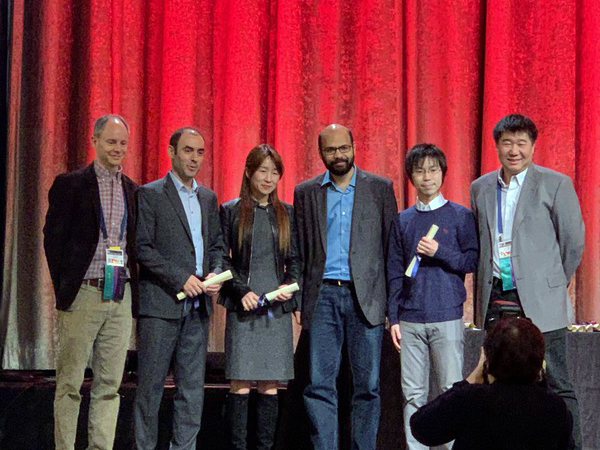
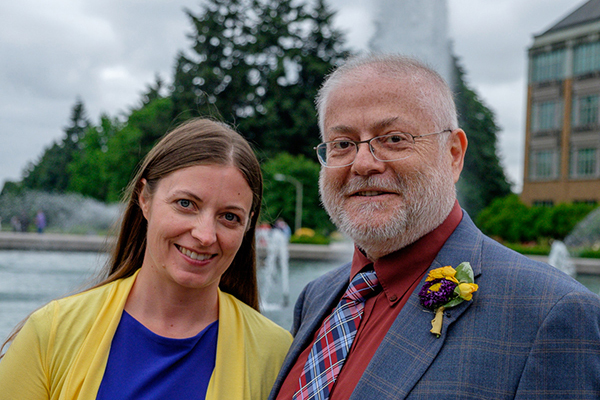
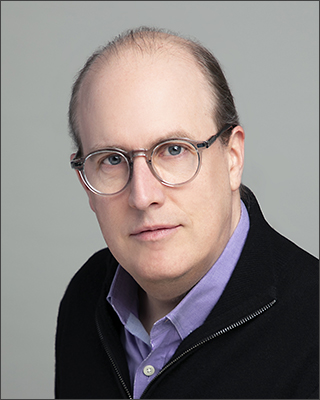
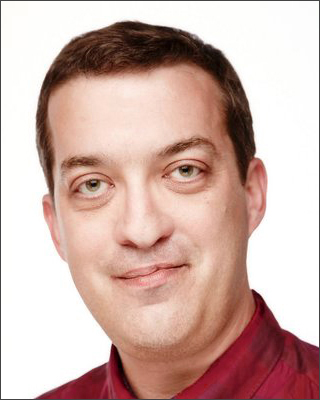
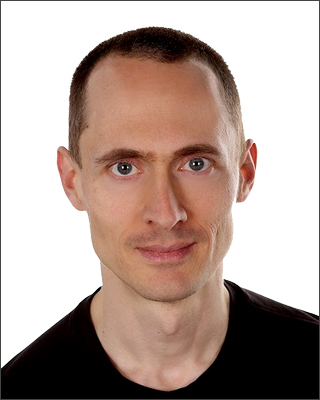
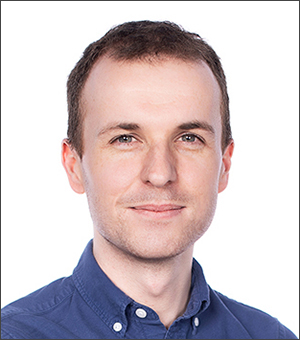
The team onstage at AAAI 2020 (from left): conference program co-chair Vincent Conitzer, Ronan Le Bras, Yejin Choi, Chandra Bhagavatula, Keisuke Sakaguchi, and conference program co-chair Fei Sha

Allen School professor Yejin Choi and her colleagues Keisuke Sakaguchi, Ronan Le Bras and Chandra Bhagavatula at the Allen Institute for Artificial Intelligence (AI2) recently took home the Outstanding Paper Award from the 34th Conference of the Association for the Advancement of Artificial Intelligence (AAAI–20). The winning paper, “WinoGrande: An Adversarial Winograd Schema Challenge at Scale,” introduces new techniques for systematic bias reduction in machine learning datasets to more accurately assess the capabilities of state-of-the-art neural models.

Datasets like the Winograd Schema Challenge (WSC) are used to measure neural models’ ability to exercise common-sense reasoning. They do this by testing whether they can correctly discern the meaning of pronouns used in sentences describing social or physical relationships between entities or objects based on contextual clues. These clues tend to be easy for humans to comprehend but pose a challenge for machines. The models are fed pairs of nearly identical sentences that primarily differ by a “trigger” word, which flips the meaning of the sentence by changing the noun to which the pronoun refers. A high score on the test suggests that a model has achieved a level of natural language understanding that goes beyond mere recognition of statistical patterns to a more human-like grasp of semantics.

But the WCS, which consists of 273 problem sets hand-written by experts, is susceptible to built-in biases that paint an inaccurate picture of a model’s performance. Because individuals have a natural tendency to repeat their problem-crafting strategies, they also have a tendency to introduce annotation artifacts — unintentional patterns in the data — that reveal information about the target label that can skew the results of the test.

For example, if a pair of sentences asks the model to determine whether a pronoun is referring to a lion or a zebra based on the use of the trigger words “predator” or “meaty,” the model will note that the word “predator” is often associated with the word “lion.” In a similar fashion, a reference to a tree falling on a roof will lead the model to correctly associate the trigger word “repair” with “roof,” because while there are very few instances of trees being repaired, it is quite common to repair a roof. By choosing the correct answers to these questions, the model is not indicating an ability to reason about each pair of sentences. Rather, the model is making its selections based on a pattern of word associations it has detected across the dataset that just happens to correspond with the right answers.

“Today’s neural models are adept at exploiting patterns of language and other unintentional biases that can creep into these datasets. This enables them to give the correct answer to a problem, but for incorrect reasons,” explained Choi, who splits her time between the Allen School’s Natural Language Processing group and AI2. “This compromises the usefulness of the test, because the results are not an accurate reflection of the model’s ability. To more accurately assess the state of natural language understanding, we came up with a new solution for systematically reducing these biases.”

That solution enabled the team to produce WinoGrande, a dataset comprising 44,000 sentence pairs that follow a similar format to that of the original WSC. One of the shortcomings of the WSC was its relatively small size owing to the need to hand-write the questions. Choi and her colleagues got around that difficulty by crowdsourcing question material using Amazon Mechanical Turk, following a carefully designed procedure to ensure that problem sets avoided ambiguity or word association and covered a variety of topics. To eliminate any unintentional biases embedded in the dataset at scale, the researchers developed a new algorithm, dubbed AFLite, that employs state-of-the-art contextual representation of words to identify and eliminate annotation artifacts. AFLite is modeled on an existing adversarial filtering (AF) algorithm but is more lightweight, thus requiring fewer computational resources.

The team hoped that their new, improved benchmark would provide a clearer picture of just how far machine understanding has progressed. As it turns out, the answer is “not as far as we thought.”

“Human performance on problem sets like the WSC and WinoGrande surpass 90% correctness,” noted Choi. “State-of-the-art models were found to be approaching human-like levels of accuracy on the WSC. But when we tested those same models using WinoGrande, their performance dropped to between 59% and 79%.

“Our results suggest that common sense is not yet common when it comes to machine understanding,” she continued. “Our hope is that this sparks a conversation about how we approach this core research problem and how we design the benchmarks for assessing future progress in AI.”

Read the research paper here, and a related article in MIT Technology Review here.

Congratulations to Yejin and the team at AI2!

Read more →

#MemoriesInDNA portrait project blends DNA technology and art to memorialize pioneering scientist Rosalind Franklin

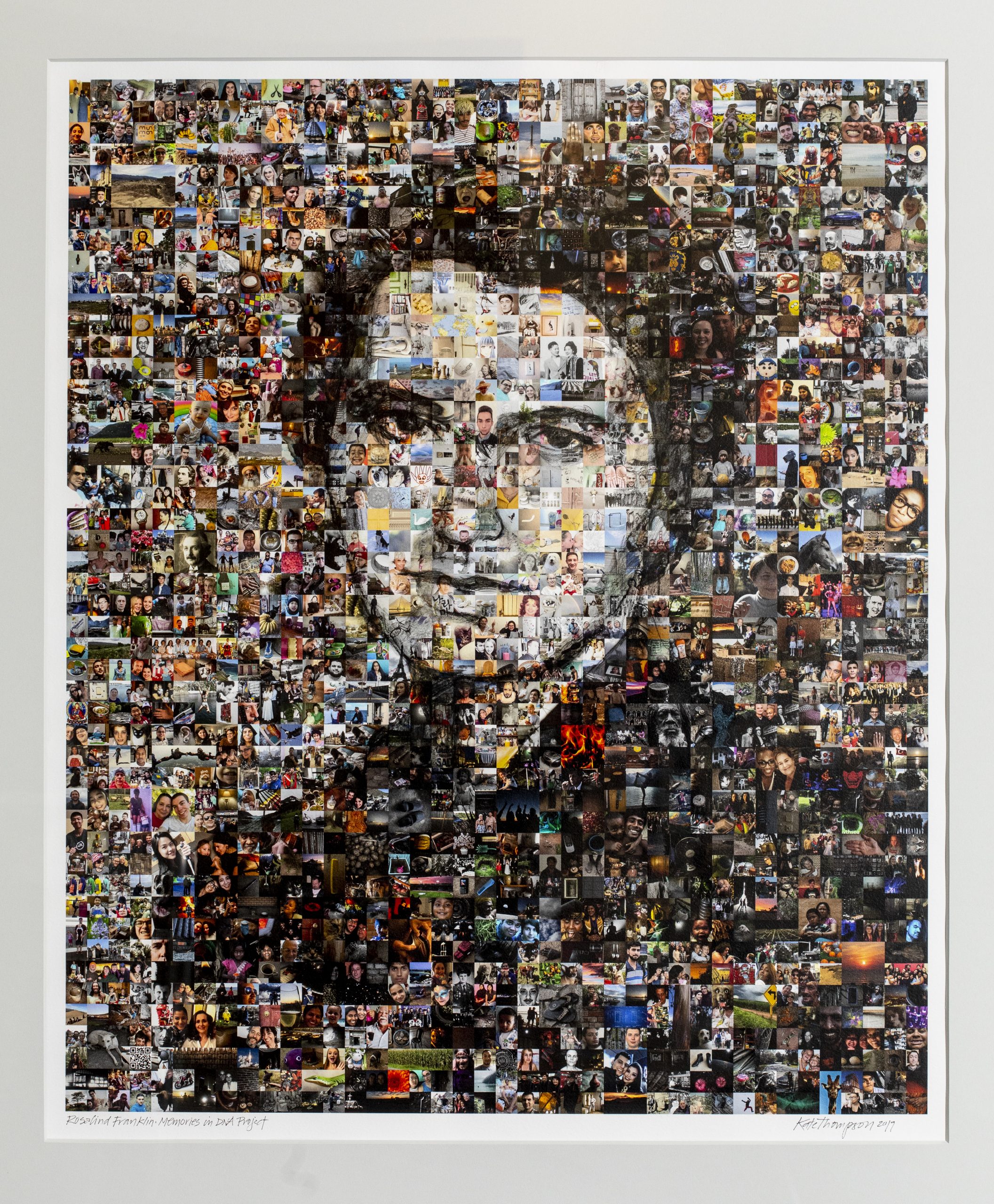
Portrait of Rosalind Franklin against background of tiny images
Portrait of Rosalind Franklin by Seattle artist Kate Thompson. Dennis Wise/University of Washington

British scientist Rosalind Franklin, who spent the early 1950s researching the structure of DNA at King’s College London, should have won the Nobel Prize. She very well may have, except that her untimely death from ovarian cancer at the age of 37 meant that the Nobel Committee, which does not award posthumously, did not even consider her. For it was Franklin, not the famous scientific duo Watson and Crick, who captured the first image proving the shape of deoxyribonucleic acid — better known as DNA, the building block of all life.

At the time, Franklin was applying her expertise in x-ray crystallography to determine the structure of DNA in collaboration with King’s College Ph.D. student Raymond Gosling. The researchers captured an image of moistened DNA fibers using x-ray diffraction techniques and equipment refined by Franklin herself. The so-called Photo 51, which revealed a helical shape consisting of two strands, and other unpublished data from Franklin’s lab would find their way into the hands of fellow scientists James Watson and Francis Crick at Franklin’s alma mater, the University of Cambridge. The material confirmed the three-dimensional structure of DNA as a double helix — a structure the pair would race to describe in a paper published in April 1953 in the journal Nature.

Although Franklin would publish her own paper co-authored with Gosling on the double helix in the same issue, it was Watson and Crick, along with Franklin’s King’s College colleague Maurice Wilkins, who went on to share the 1962 Nobel Prize in Physiology or Medicine and thus ensure their places in the pantheon of scientific achievement. The contributions of Franklin, who had passed away 4 years before the Nobel announcement, would only begin to be more widely appreciated decades later. In any event, the Nobel Prize can only be shared by up to 3 individuals, so we will never know whether Franklin, had she lived long enough, would have received her due. Given the limitation on sharing the prize and the attitudes toward women in science at that time — and her own colleagues’ attitudes toward Franklin, in particular — it seems unlikely.

More than 60 years after Watson and Crick laid eyes on Photo 51, Allen School professor Luis Ceze met Seattle-based multimedia artist Kate Thompson in a bar not far from the University of Washington campus. Ceze co-directs the Molecular Information Systems Laboratory, a partnership between UW and Microsoft that is exploring synthetic DNA’s potential as a long-term storage solution and computational platform for digital data. He had already crossed paths with Thompson on campus, where she was doing an artist’s residency in the Nemhauser Lab focused on evolutionary biology. Ceze was intrigued by what she told him about her work, which is focused on making science visual.

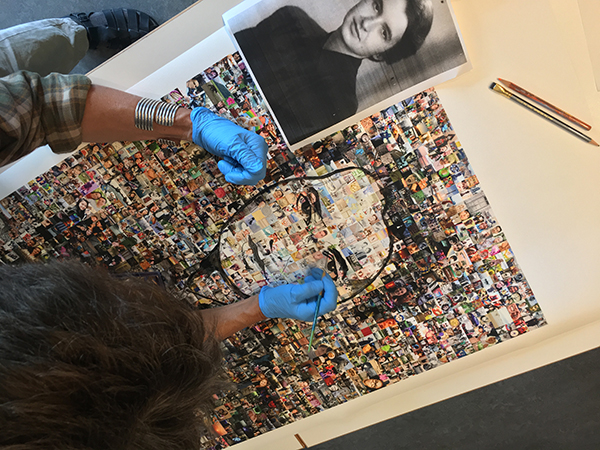
Action shot from above of artist Kate Thompson painting Rosalind Franklin's portrait over backdrop of images
Kate Thompson at work in her studio. Mary Bruno

For more than a year, he and his colleagues had been collecting images submitted by people around the world as part of the #MemoriesInDNA project under the tagline “What do you want to remember forever?” After meeting Thompson, Ceze became interested in exploring a way to ensure that the world would remember Franklin and her contributions forever — and he had a particularly fitting medium in mind.

“Rosalind Franklin was largely responsible for uncovering the structure of DNA, nature’s own perfected storage medium. Her work opened up a whole new avenue of scientific research and discovery for which, to this day, she does not really get the credit that she deserves,” Ceze said. “We had this massive collection of image files signifying what people want to preserve for posterity, and this new storage method. So we thought, why not use them to demonstrate the science we’ve been working on while paying tribute to the scientist who started it all?”

The idea he and Thompson hashed out over glasses of wine was elegantly simple. The lab would work with Thompson to create a piece of art to commemorate Franklin that incorporates the very medium that she revealed to Watson, Crick, and the world: DNA. To be precise, the medium would be synthetic DNA containing thousands of copies of images people had voluntarily contributed to advance a new wave of molecular systems research.

“I was fascinated by the idea of honoring this brilliant but mostly forgotten woman using the same material that should have made her famous in her own lifetime,” said Thompson, who took on the role of artist-in-residence at MISL after meeting with Ceze. “Until recently, her legacy to science and the world went largely unnoticed. I hope this project helps to ensure it will not be ignored.”

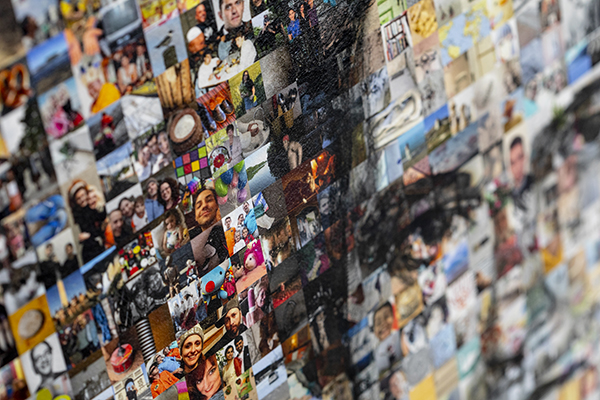
Closeup of a portion of Rosalind Franklin's face painted over tiny images
Dennis Wise/University of Washington

The result of Thompson’s collaboration with the MISL is now on display in the Bill & Melinda Gates Center for Computer Science & Engineering on the UW Seattle campus. The work, which measures 40 inches high by 30 inches wide and was created using acrylic ink on archival paper, took nearly 8 months from conception to completion. It is one of three original copies Thompson produced at the behest of the lab.

Viewed at a distance, the work is clearly a portrait of Franklin. Thompson reproduced her likeness from an old black and white photograph, combining soft, dark brush strokes with a mosaic of nearly 2,000 meticulously arranged images — the majority of which measure just ⅞ inch square — from the #MemoriesInDNA collection. The artist arranged the latter with the help of a macro she wrote for the purpose, which sifted through the images and sorted them by tonal values.

The images that make up Franklin’s face are contained within a larger collection that serves as a colorful backdrop for the subject of the painting. Up close, the images themselves come into sharper relief; if they linger long enough, viewers can make out the contents of the individual photos in detail. Each image depicts a person, place or object someone wants remembered in perpetuity.

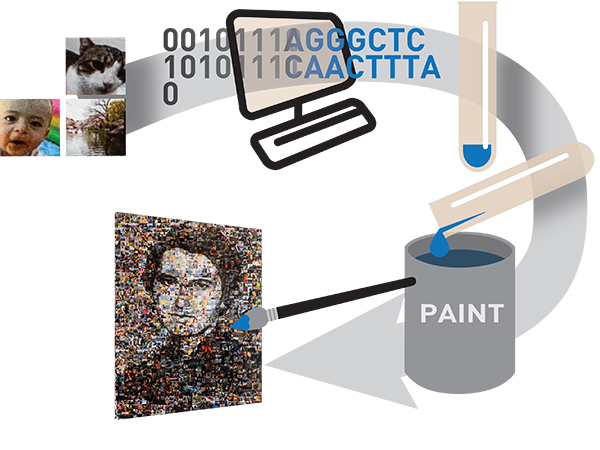
But Thompson didn’t just paint on the images; she painted with them, infusing Franklin’s likeness with the actual data files ensconced in their microscopic storage medium. Using roughly half of the trove of more than 10,000 photos submitted as part of #MemoriesInDNA, MISL researchers first converted the digital image files — around 325 megabytes of data — into the As, Ts, Cs and Gs of DNA and encoded them into synthetic DNA ordered from Twist Bioscience. Thompson then took the vial of DNA furnished by the lab, which consisted of a mere 1.5 milliliters of liquid, and mixed the contents with black acrylic ink along with a binding substance that would help it adhere to the paper. She combined yet more of the image-laden DNA with a clear acrylic hardener, which she used to coat the finished piece.

“I painted several practice portraits using plain ink first,” the artist recalled with a laugh. “I didn’t want to mess up when it came time to use the real thing. Ink is relatively inexpensive but specially encoded DNA from a lab, not so much!” 

The process the lab and artist followed to turn digital photos into a DNA-infused painting. Kate Thompson

Before Thompson could pick up her brush, lab members David Ward, Bichlien Nguyen, Xiaomeng Liu, and Jeff Nivala conducted experiments to ensure that, in the latter’s words, “the science was as rigorous as the art.” First and foremost, they needed to establish that no chemical reaction would occur between the synthetic DNA and acrylic medium when Thompson mixed the two in her studio. The team also wanted to be confident that, once mixed and applied to paper, the DNA could be subsequently retrieved from the material. The outcome is both a work of art and an artifact of science.

“Not that I’m suggesting you do this — in fact, please don’t! — but if you were to scrape a little bit of the portrait off, with the right equipment you could retrieve the data and convert it back from DNA molecules to digital 0s and 1s,” explained MISL co-director Karin Strauss, principal research manager at Microsoft Research and affiliate professor at the Allen School. “This portrait is not only preserving Franklin’s memory but preserving the data as well, in a form that will be accessible to future generations.”

To increase the likelihood that the data contained in the work will, indeed, be accessible for generations to come, the team built in a high degree of redundancy. Nguyen estimates it took 30 minutes to amplify copies of each image file using polymerase chain reaction, or PCR.

“Because DNA as a storage medium is so dense, we were able to provide Kate with around a trillion copies of each image to mix into the paint,” explained Nguyen, a senior researcher at Microsoft Research who oversaw the DNA storage process. “That way, we can be certain that we will be able to retrieve all of the data — even if a portion of one set of images is somehow lost or damaged, we still have many back-ups.”

This is not the first time that the MISL team has applied its science to the arts. The lab previously partnered with Twist Bioscience to preserve significant cultural and historical artifacts in DNA as a way of demonstrating its potential for archival data storage and retrieval, including iconic musical performances at the Montreux Jazz Festival, the top 100 books of Project Gutenberg, the Universal Declaration of Human Rights in 100 languages, and the non-profit Crop Trust’s entire seed database. Along the way, the team set a new record for the amount of digital data stored in and successfully retrieved in DNA that appeared in a peer-reviewed journal, presented new techniques for random access, developed a new platform for microfluidics automation for DNA data storage at scale, and demonstrated the world’s first end-to-end automated system for encoding digital data in DNA.

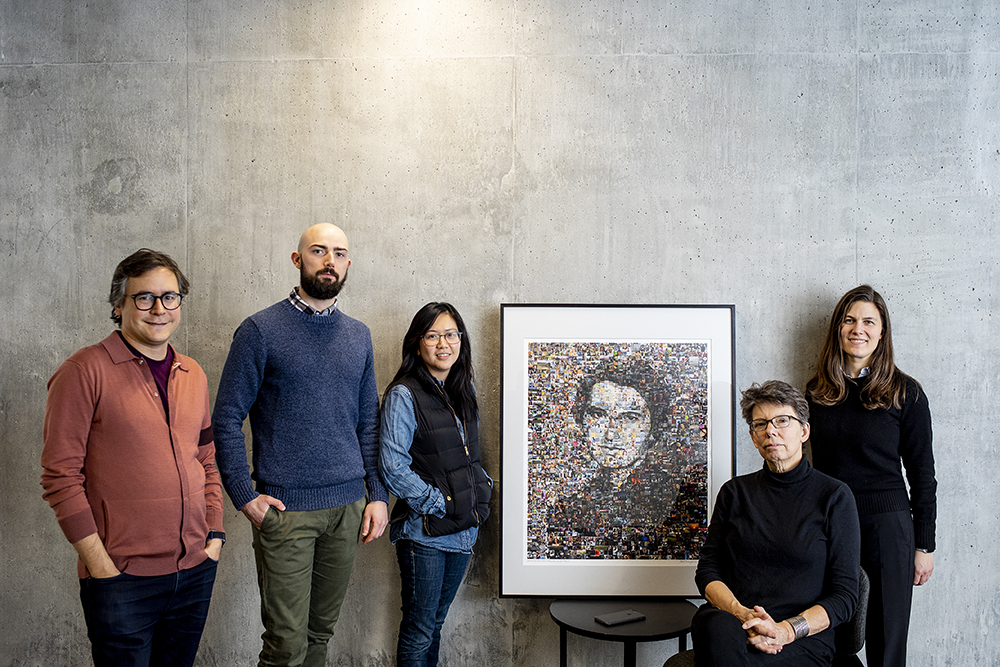
Members of the team with the finished portrait, left to right: Luis Ceze, David Ward, Bichlien Nguyen, Kate Thompson, and Karin Strauss (not pictured: Xiaomeng Liu, Jeff Nivala). Dennis Wise/University of Washington

Members of the public may view the portrait of Franklin on the ground floor of the Bill & Melinda Gates Center, at the base of the Anita Borg Grand Stairway. The lab is also exploring the potential to exhibit the artwork in additional locations in the future to reach an even wider audience. 

“Our team was excited to partner with Kate on this project, which highlights an often forgotten figure who helped usher in the age of molecular storage,” Ceze said. “I hope the artwork itself, the science upon which it’s based, and the story of Rosalind Franklin will inspire people.”

Read more about Thompson’s work here, and learn more about the MISL’s work on DNA data storage here. Read the original #MemoriesInDNA announcement here. The lab members and the artist would like to express their appreciation to the thousands of people, spread out over 80 countries, who shared their personal photos as part of the #MemoriesInDNA project. The lab will continue to use the images as part of its research to advance DNA-based computation and image search.

Read more →

Hannaneh Hajishirzi and Yin Tat Lee named 2020 Sloan Research Fellows

Professor Hanna Hajishirzi, a professor in the Natural Language Processing group and director of the Allen School’s H2Lab, and Yin Tat Lee, a professor in the Theory of Computation group, have been named 2020 Sloan Research Fellows by the Alfred P. Sloan Foundation. The program recognizes early-career scientists in the United States and Canada who are nominated and judged by their peers based on their creativity, leadership, and achievements in research.

“I am thrilled that the Sloan Foundation has honored Hanna and Yin Tat for their outstanding work on fundamental problems that have broad relevance and potential for impact,” said professor Magdalena Balazinska, director of the Allen School. “Hanna is working at the leading edge of artificial intelligence to transform the way we conceive of and build AI systems that touch people’s everyday lives, from education and media, to financial services and scientific documents. And Yin Tat is doing groundbreaking — even audacious — work that pushes past decades-old limits of computing to create faster, better solutions to a range of modern-day problems.”

Hanna Hajishirzi

Hajishirzi, who joined the Allen School faculty in 2018 and is also an AI research fellow at the Allen Institute for Artificial Intelligence (AI2), addresses foundational problems in natural language processing, artificial intelligence, and machine learning. Her goal is to develop general-purpose algorithms that can represent, comprehend, and reason about diverse forms of data efficiently and on a large scale. Hajishirzi’s research spans multiple domains, including representation learning, question answering, knowledge graphs, and applications such as conversational dialogue and knowledge extraction from unstructured text.

“Enormous amounts of information are available online in multiple forms across diverse resources; for example, in news articles, web pages, textbooks and technical documents,” explained Hajishirzi. “An important challenge in AI is how to represent and integrate diverse resources to facilitate further comprehension and reasoning. It is the right time to address this challenge at large scale and in real-world settings, using a unified representation that combines the best features of deep neural models and symbolic formalisms.”

Hajishirzi is among the pioneers in designing novel, end-to-end neural models for question answering and reading comprehension. One of her key contributions is Bi-Directional Attention Flow for Machine Comprehension, or BiDAF, which is a deep neural model for end-to-end question-answering about text and diagrams that has been widely adopted in academia and industry. Hajishirzi and her collaborators designed the system to be both scalable and modular, thus enabling its use with multiple modalities and knowledge bases. Hajishirzi is also among the first to address the problem of understanding scientific articles and data across multiple modalities, such as diagrams, math and geometry word problems.  For example, she led the development of DyGIE, a system for enabling knowledge extraction from computer science and biomedical scientific papers. She also led the GeoS project, the first automated system for solving geometry word problems that can answer SAT geometry test questions on a par with the average American 11th grade student. More recently, Hajishirzi devised a new interpretable neural model for solving math problems, MathQA, that maps word problems to operation programs, and DenSPI and DecompRC, systems for real-time and multi-hop question answering that achieves state-of-the-art results by decomposing compositional questions into simpler sub-questions.

Hajishirzi has garnered numerous accolades for her research. She received an Allen Distinguished Investigator Award in AI for her work on the Spoon Feed Learning (SPEL) framework that combined principles of child education and machine learning to enable computers to interpret diagrams. Hajishirzi later earned a Google Faculty Research Award for her efforts to develop practical, scalable methods for open-domain question answering. She has also received an Amazon Research Award, a Bloomberg Data Science Award, and a Best Paper Award from the Special Interest Group on Discourse and Dialogue (SIGDIAL). Hajishirzi regularly publishes at the top conferences in the field, including the annual meeting of the Association for Computational Linguistics (ACL), the Conference on Empirical Methods in Natural Language Processing (EMNLP), and the Conference on Computer Vision and Pattern Recognition (CVPR).

Yin Tat Lee

Lee, who joined the Allen School faculty in 2017 and is also a visiting researcher at Microsoft Research AI, combines ideas from continuous and discrete mathematics to produce state-of-the-art algorithms for solving optimization problems that underpin the theory and practice of computing. His work encompasses multiple domains, including convex optimization, convex geometry, spectral graph theory, and online algorithms.

“From machine learning and experiment design, to route planning and medical imaging, convex optimization is used everywhere,” Lee said. “My group develops new techniques and algorithms to optimize faster, with the goal to design a universal optimization algorithm without compromising performance.”

Lee has already expanded convex optimization techniques to break long-standing running time barriers for a variety of problems. For example, he and his colleagues presented a new general interior point method that yielded the first significant improvement in linear programming in more than 20 years and a new algorithm for approximately solving maximum flow problems in near-linear time. Lee also has demonstrated the applicability of optimization techniques to an even broader class of problems than previously was considered feasible, devising a faster cutting plane method that improved the running time for solving classic problems in both continuous and combinatorial optimization. More recently, Lee contributed to a pair of new algorithms that achieve optimal convergence rates for optimizing non-smooth convex functions in distributed networks. That same year, Lee contributed to a total of six papers that appeared at the Symposium on Theory of Computing (STOC 2018) — a record high for an individual researcher at the conference.

Lee’s work has earned him multiple Best Paper and Best Student Paper awards at premier conferences in the field, including the IEEE Symposium on Foundations of Computer Science (FOCS), the ACM-SIAM Symposium on Discrete Algorithms (SODA), and the Conference on Neural Information Processing Systems (NeurIPS 2018). Last year, he earned a Microsoft Research Faculty Fellowship in recognition of his efforts to advance the field of theoretical computer science for real-world applications. In 2018, the Mathematical Optimization Society awarded Lee the A.W. Tucker Prize, which recognizes the best doctoral thesis in optimization in the prior three years, for his work on faster algorithms for convex and combinatorial optimization. That same year, he received a CAREER Award from the National Science Foundation to build upon that work and overcome multiple obstacles to optimization.

“To receive a Sloan Research Fellowship is to be told by your fellow scientists that you stand out among your peers,” Adam F. Falk, president of the Alfred P. Sloan Foundation, said in a press release. “A Sloan Research Fellow is someone whose drive, creativity, and insight makes them a researcher to watch.”

Hajishirzi and Lee are among four University of Washington researchers to watch in this latest group of Fellows, which includes Kyle Armour, a professor in the School of Oceanography and Department of Atmospheric Sciences, and Jacqueline Padilla-Gamiño, a professor in the School of Aquatic and Fishery Sciences.

A total of 37 current or former faculty members at the Allen School have been recognized through the Sloan Research Fellowship program. Recent honorees include Shayan Oveis Gharan, who was recognized last year for his work on solutions to fundamental NP-hard counting and optimization problems; Maya Cakmak, for her contributions to robotics; Ali Farhadi and Jon Froehlich, for their research in artificial intelligence and human-computer interaction, respectively; and Emina Torlak, for her work in computer-aided verification and synthesis.

View the complete list of 2020 Sloan Research Fellows here and read the Sloan Foundation press release here. Read a related UW News release here.

Read more →

Five years on, remembering professor Gaetano Borriello

Gaetano Borriello portrait

February 1 marked five years since the passing of professor Gaetano Borriello. Gaetano famously applied to only one program – ours – when he entered the academic job market in 1988 after earning his Ph.D. from the University of California, Berkeley. He spent the next 27 years on the Allen School faculty, six of those valiantly fighting the cancer that would eventually take him from us. Gaetano is one of several leaders, and dare we say, legends, whom the Allen School community lost in the last decade. As a new decade dawns, the memories of those who knew and worked with Gaetano haven’t faded.

“We continue to feel Gaetano’s loss every day. When I moved into the director’s office last month, one of my first thoughts was that now I will be near Gaetano’s bench, which is just across Sylvan Grove from my window,” said Magdalena Balazinska, professor and director of the Allen School. “It makes me feel like Gaetano is still with us — and I do believe his wisdom and compassion continue to influence our decisions and actions in a very positive way.

“It’s not the same without Gaetano,” she continued, “but we will continue to build upon his legacy by working to create a more inclusive community here within the Allen School and pushing state-of-the-art technologies to benefit people and communities around the world.”

Here, members of the extended Allen School family pay tribute to a friend, mentor and colleague whose presence is still very much felt by members of our community — and whose impact endures both here on campus and across the globe.

Gaetano’s vision:

Four Ph.D. students in robes and caps with Gaetano Borriello
Gaetano (center) poses with newly-minted Ph.D. graduates (left to right) Brian DeRenzi, Benjamin Birnbaum, Yaw Anokwa, and Carl Hartung

“Not all research ideas go beyond the lab, so it’s a testament to the power of Gaetano’s vision that the tools he created are in active use in every country in the world,” said Allen School alumnus Yaw Anokwa (Ph.D., ‘12), who worked with Gaetano on the Open Data Kit project and continues to support the deployment of ODK via his company, Nafundi.

“I wish he could see how much impact he has had, and I wish I could still ask for his guidance,” continued Anokwa. “I miss him. A lot.”

“Gaetano stands out to me as a visionary and as an educator,” said professor Richard Anderson of the Allen School’s Information and Communication Technology for Development Lab, which is building on Gaetano’s legacy in ICTD research. “He was able to look 10 years ahead and develop high impact applications of emerging technology, and he loved to recount all the times people told him his approaches would never be practical.

“Throughout his career, he put students above all else,” Anderson continued, “both as an advisor and mentor of graduate and undergraduate students, and as a teacher in Computer Engineering.”

Gaetano’s humanity:

“I knew Gaetano from my role as technical staff at CSE, overlapping with him for almost two decades,” said Scott Rose, who retired from the Allen School in 2015. “Gaetano was an exceptionally smart engineer, but what made him stand out from the crowd were his humor and his humanity — he was a genuine man of the people, without an arrogant bone in his body and with no appetite for status. He just wanted everybody to have the opportunity to do their best, to live with dignity, and he’d bend over backwards to make sure they did. 

“Students at any level, staff, colleagues — they were all part of Gaetano’s community of peers,” Rose continued. “I hope that I make my exit with the same dignity that he did. I miss him greatly, and at his advice, yeah, I get my regular colonoscopies.”

Gaetano’s devotion to students and staff also stuck with Crystal Eney, Director of Student Services at the Allen School.

Crystal Eney and Gaetano Borriello in front of Drumheller Fountain
Crystal Eney (left) poses with Gaetano in front of Drumheller Fountain on the UW Seattle campus

“Gaetano was thoughtful, warm, passionate, entertaining and extremely student-focused. He always put students’ needs first. He was their advocate and their mentor. He would give them tough love when they needed it, but he was also a great listener and problem solver,” recalled Eney. “It wasn’t just the students who looked up to him — it was the staff, too. He treated us like equals, and was always there to say ‘good job’ or ‘nice work.’

“In this day and age when everything seems to move at lightning speed, Gaetano was one of those people who would stop by to ask how your day was going, and it wasn’t just a mindless pleasantry,” she noted. “He cared deeply about others, and he is so very deeply missed.”

Gaetano’s relationship with staff was such that he could bring people back into the fold after they had left — in the case of Kay Beck-Benton, the Allen School’s director of external relations, eight years after.

“I loved working with Gaetano,” said Beck-Benton, who started at the Allen School as a program manager before leaving UW for a series of startups. “So much so, that he is a major reason why I returned to — and currently work in — the Allen School. Gaetano was an advocate and mentor for staff and for students, as well as being passionate about research and teaching.

“No matter who you were or what position you held in the school, Gaetano made you feel welcome in his circle,” she concluded.

Gaetano’s mentorship:

Given how devoted he was to students, it is no surprise that mentorship and setting students up for success would be a recurring theme for those who remember Gaetano. 

“If you asked Gaetano what should be the UW’s top priority, he would have one answer: the students,” said Allen School Ph.D. candidate Waylon Brunette, who began working with Gaetano as an undergraduate researcher nearly 20 years ago. “His focus and dedication to students pervaded his views on education, research, and service, and he measured his own success based on his students’ success.

“Gaetano was great at finding students who might have a few rough edges, like me, and helping us to realize that we were actually diamonds in the rough,” Brunette continued. “Mentoring was fundamental to who Gaetano was as a person, and I have tried to model my own mentorship on his shining example.”

Melissa Westbrook and Scott Hauck
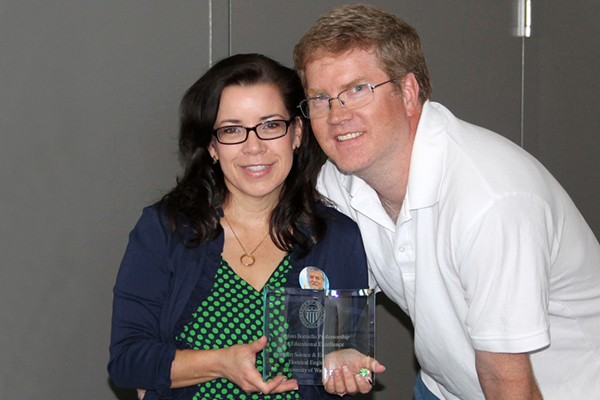
Melissa Westbrook (left), Gaetano’s widow, recognizes Scott Hauck with the Gaetano Borriello Professorship for Education Excellence

This sentiment was echoed by another former student, Scott Hauck (Ph.D., ‘95), who now holds the Gaetano Borriello Professorship for Educational Excellence in UW’s Department of Electrical & Computer Engineering.

“I know that advisors can have a big impact on people’s careers, but Gaetano was truly a role model to me,” Hauck said. “I saw in him someone who combined impactful research, careful mentoring, and a passion for education, and have tried to be as graceful and compelling a faculty member as he was. I often think about what Gaetano would have done when trying to structure my own teaching.

“I also try to put the students first, just as Gaetano did for me,” Hauck continued. “And I do still find myself wandering over to Sylvan Grove to sit on Gaetano’s bench sometimes and commune with him a bit.”

Gaetano also served as a mentor and role model to his faculty colleagues — whether intentional or not.

“Out of everything I can think of that has made me a better mentor and advisor over my 17 years at UW, being next door to Gaetano’s office for about five of those years, in a building with fairly thin walls, is near the top of the list,” observed professor Dan Grossman, vice director of the Allen School. “When I needed thoughtful advice on something, I would ask Gaetano. Nowadays, I try to guess the advice he would give me if he were still here.

“Gaetano was the full package — an excellent researcher who evolved his focus over his career, a gifted teacher, an award-winning mentor, and always one to carry more than his share of service,” Grossman continued. “He was also humble, self-aware, and grateful — a true role model for me and many others.”

Gaetano’s legacy:

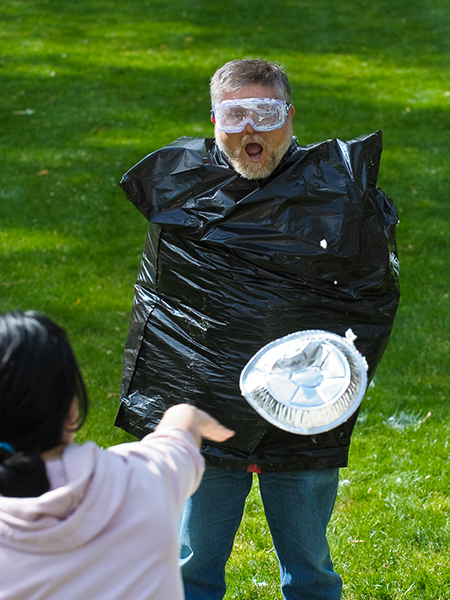
Gaetano Borriello wears a trash bag to protect his clothes from cream pie
Gaetano’s affection for students extended to willingly taking a pie in the face at the ACM spring picnic

Gaetano’s ability to educate and inspire those around him ensures his legacy will endure beyond the impact of the technologies he created. It’s a legacy that his former students and colleagues aim to expand through their own work.

“I would not be where I am today without Gaetano. As I learn how to advise Ph.D. students myself, I become more and more grateful for the incredible advocate and champion that Gaetano was for me, and for all his students,” remarked Allen School alumna Nicola Dell (Ph.D., ‘15), who is now a faculty member at Cornell Tech.

“I can’t believe that he has been gone five years,” she said. “I also can’t count the times I’ve wished I could call him up and ask for his advice. He is truly missed. I hope every day that he would be proud of the work we continue to do, that he continues to inspire.”

“Gaetano’s impact is felt every day, at UW and around the world,” said professor Ed Lazowska, who holds the Bill & Melinda Gates Chair in Computer Science & Engineering in the Allen School. “Scott Hauck, who was advised by Gaetano and his close colleague Carl Ebeling, now holds the Gaetano Borriello Professorship for Educational Excellence at UW. Open Data Kit, a project Gaetano launched with several of his students, sees ever-expanding adoption for mobile data collection around the world — an expansion supported by Nafundi, a company co-founded by two of Gaetano’s former Ph.D. students, Yaw Anokwa and Carl Hartung. And ODK-X is building on that legacy, guided by Gaetano’s faculty colleague Richard Anderson and alumni who previously worked with Gaetano.

“Other alumni have gone on to faculty positions at other universities, where they are building on Gaetano’s legacy in technology for development,” Lazowska continued. “Gaetano may not be physically with us, but five years on, he is everywhere.”

Following Gaetano’s passing, tributes poured in from colleagues and collaborators around the world, including primatologist and wildlife conservationist Jane Goodall, the International Red Cross, IEEE, PATH, and others. Read more here.

Read more →

Seeing the forest for the trees: UW team advances explainable AI for popular machine learning models used to predict human disease and mortality risks

Tree-based machine learning models are among the most popular non-linear predictive learning models in use today, with applications in a variety of domains such as medicine, finance, advertising, supply chain management, and more. These models are often described as a “black box” — while their predictions are based on user inputs, how the models arrived at their predictions using those inputs is shrouded in mystery. This is problematic for some use cases, such as medicine, where the patterns and individual variability a model might uncover among various factors can be as important as the prediction itself.

Now, thanks to researchers in the Allen School’s Laboratory of Artificial Intelligence for Medicine and Science (AIMS Lab) and UW Medicine, the path from inputs to predicted outcome has become a lot less dense. In a paper published today in the journal Nature Machine Intelligence, the team presents TreeExplainer, a novel set of tools rooted in game theory that enables exact computation of optimal local explanations for tree-based models. 

While there are multiple ways of computing global measures of feature importance that gauge their impact on the model as a whole, TreeExplainer is the first tractable method capable of quantifying an input feature’s local importance to an individual prediction while simultaneously measuring the effect of interactions among multiple features using exact fair allocation rules from game theory. By precisely computing these local explanations across an entire dataset, the tool also yields a deeper understanding of the global behavior of the model. Unlike previous methods for calculating local effects that are impractical or inconsistent when applied to tree-based models and large datasets, TreeExplainer produces rapid local explanations with a high degree of interpretability and strong consistency guarantees.

“For many applications that rely on machine learning predictions to guide decision-making, it is important that models are both accurate and interpretable — meaning we can understand how a model combined and weighted the various input features in predicting a certain result,” explained lead author and recent Allen School alumnus Scott Lundberg (Ph.D., ‘19), now a senior researcher at Microsoft Research. “Precise local explanations of this process can uncover patterns that we otherwise might not see. In medicine, factors such as a person’s age, sex, blood pressure, and body mass index can predict their risk of developing certain conditions or complications. By offering a more robust picture of how these factors contribute, our approach can yield more actionable insights, and hopefully, more positive patient outcomes.”

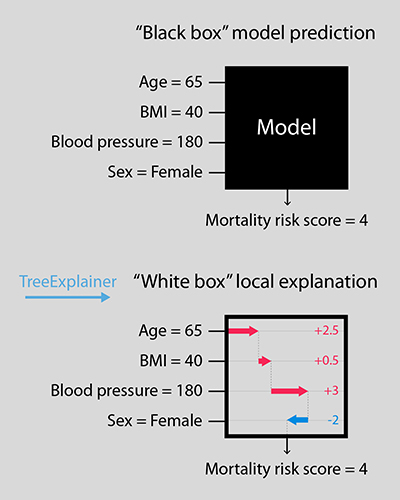
Diagram illustrating difference between "black box" and TreeExplainer models
Many predictive AI models are a “black box” that offer predictions without explaining how they arrived at their results. TreeExplainer produces local explanations by assigning a numeric measure of credit to each input feature, such as factors that contribute to mortality risk shown in the example above. The ability to compute local explanations across all samples in a dataset can yield a greater understanding of global model structure.

Lundberg and his colleagues offer a new approach to attributing local importance to input features in trees that is both principled and computationally efficient. Their method draws upon game theory to calculate feature importance as classic Shapley values, reducing the complexity of the calculation from exponential to polynomial time to produce explanations that are guaranteed to always be both locally accurate and consistent. To capture interaction effects, the team introduces Shapley Additive Explanation (SHAP) interaction values. These offer a new, richer type of local explanation that employs the Shapley interaction index — a relatively recent concept in game theory — to produce a matrix of feature attributions with uniqueness guarantees similar to Shapley values.

This dual approach enables separate consideration of the main contributions and the interaction effects of features that lead to an individual model prediction, which can uncover patterns in the data that may not be immediately apparent. By combining local explanations from across an entire dataset, TreeExplainer offers a more complete global representation of feature performance that both improves the detection of feature dependencies and succinctly shows the magnitude, prevalence, and direction of each feature’s effect — all while avoiding the inconsistency problems inherent in previous methods.

In a clinical setting, TreeExplainer can provide a global view of the dependency of certain patient risk factors while also highlighting variabilities in individual risk. In their paper, the UW researchers describe several new methods they developed that make use of the local explanations from TreeExplainer to capture global patterns and glean rich insights into a model’s behavior, using multiple medical datasets. For example, the team applied a technique called local model summarization to uncover a set of rare but high-magnitude risk factors for mortality. These are inputs such as high blood protein that are shown to have low global importance, and yet they are extremely important for some individuals’ mortality risk. Another experiment in which the researchers analyzed local interactions for chronic kidney disease revealed a noteworthy connection between high white blood cell counts and high blood urea nitrogen; the team found that the model assigned higher risk to the former when it was accompanied by the latter.

In addition to discerning these patterns, the researchers were able to identify population sub-groups that shared mortality-related risk factors and complementary diagnostic indicators for kidney disease using a technique called local explanation embeddings. In this approach, each sample is embedded into a new “explanation space” to enable supervised clustering in which samples are grouped together based on their explanations. For the mortality dataset, the experiment revealed certain sub-groups within the broader age groups that share specific risk factors, such as younger individuals with inflammation markers or older individuals who are underweight, that would not be apparent using a simple unsupervised clustering method. Unsupervised clustering also would not have revealed how two of the strongest predictors of end-stage renal disease — high blood creatinine levels, and a high ratio of urine protein to urine creatinine — can each be used to identify a set of unique at-risk individuals and should be measured in parallel. 

Portraits of AIMS Lab researchers with white block "W" on purple background
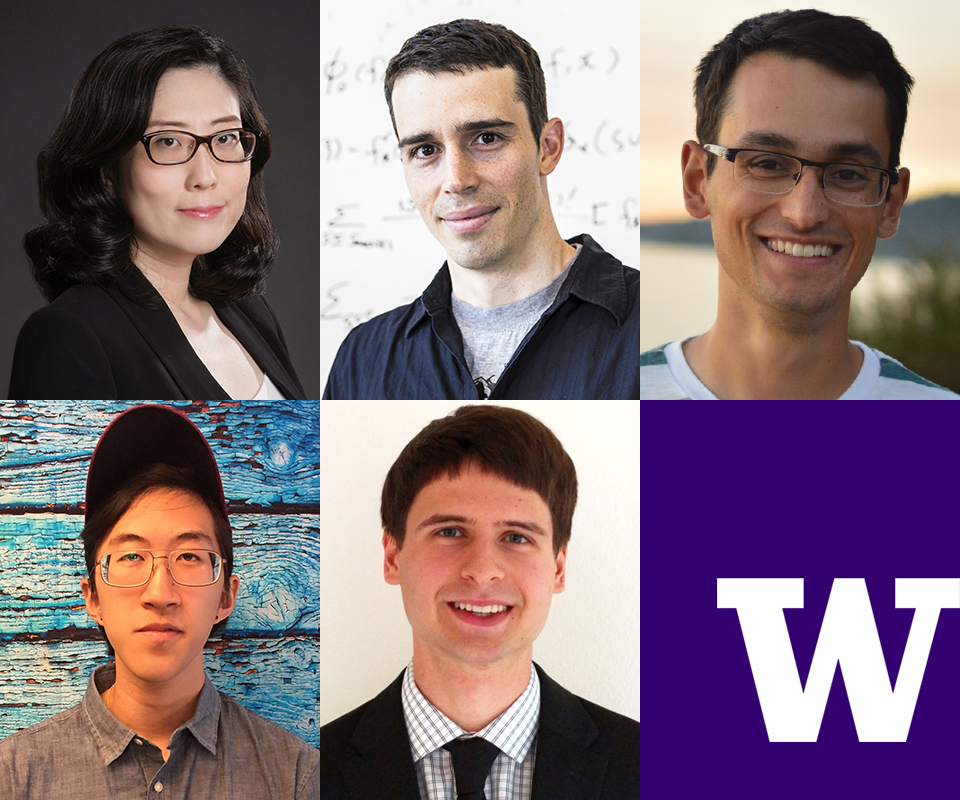
AIMS Lab researchers, top row from left: Su-In Lee, Scott Lundberg, and Gabriel Erion; bottom row, from left: Hugh Chen and Alex DeGrave

Beyond revealing new patterns of patient risk, the team’s approach also proved useful for exercising quality control over the models themselves. To demonstrate, the researchers monitored a simulated deployment of a hospital procedure duration model. Using TreeExplainer, they were able to identify intentionally introduced errors as well as previously undiscovered problems with input features that degraded the model’s performance over time.

“With TreeExplainer, we aim to break out of the so-called black box and understand how machine learning models arrive at their predictions. This is particularly important in settings such as medicine, where these models can have a profound impact upon people’s lives,” observed Allen School professor Su-In Lee, senior author and director of the AIMS Lab. “We’ve shown how TreeExplainer can enhance our understanding of risk factors for adverse health events.

“Given the popularity of tree-based machine learning models beyond medicine, our work will advance explainable artificial intelligence for a wide range of applications,” she said.

Lee and Lundberg co-authored the paper with joint UW Ph.D./M.D. students Gabriel Erion and Alex DeGrave; Allen School Ph.D. student Hugh Chen; Dr. Jordan Prutkin of the UW Medicine Division of Cardiology; Bala Nair of the UW Medicine Department of Anesthesiology & Pain Medicine; and Ronit Katz, Dr. Jonathan Himmelfarb, and Dr. Nisha Bansal of the Kidney Research Institute.

Learn more about TreeExplainer in the Nature Machine Intelligence paper here and the project webpage here.

Read more →

Allen School faculty and alumni honored by ACM and IEEE for advancing the field of computing through research and service

Two of the premier professional societies in the field of computing, the Association for Computing Machinery (ACM) and the IEEE, recently announced their latest class of Fellows representing the highest status accorded to their respective memberships. Three Allen School faculty members reached that pinnacle this year: Magdalena Balazinska and Paul Beame, who were named Fellows of the ACM, and Joshua R. Smith, who was elevated to Fellow of the IEEE. In addition to this year’s faculty honorees, former Allen School postdoc Aaron Hertzmann of Adobe Research and undergraduate alumnus Brad Calder (B.S., ‘91) of Google were named Fellows of the IEEE and ACM, respectively.

With the latest announcements, a total of 24 current or former Allen School faculty members have been elevated to ACM Fellow, and 16 have achieved IEEE Fellow status.

Magdalena Balazinska, Fellow of the ACM

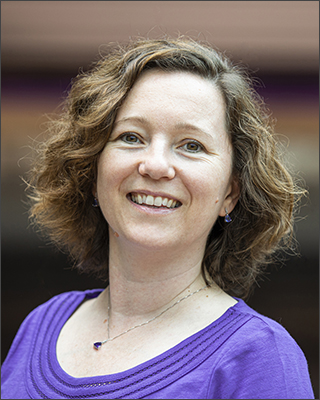
Portrait of Magda Balazinska

Professor and incoming Allen School director Magdalena Balazinska was named a Fellow of the ACM for her contributions to scalable distributed data systems. Balazinska, who is a member of the UW Database Group and former director of the eScience Institute, focuses on advancing new and improved data management tools and techniques for data science, big data systems, cloud computing, and the rapidly growing field of imaging and video analytics. 

“The ACM Fellow recognition is an immense honor, and I would like to thank the ACM and everyone who contributed to this nomination for their support,” said Balazinska. “I would also like to thank all my students and collaborators over the years. While I’m the one recognized today, the research accomplishments were a team effort.”

Balazinska, who joined the University of Washington faculty in 2006, was among a wave of researchers driving technical innovation in the early days of stream processing systems. She was lead author of a seminal paper in 2005 that introduced a new method for increasing the fault tolerance of distributed data-intensive stream processing applications. At the time, these applications were becoming increasingly prevalent in a variety of domains, including computer networking, financial services, medical information systems, and the military. The paper, which drew upon Balazinska’s Ph.D. research at MIT as part of the Borealis project, employed a replication-based approach that increased the resiliency of applications while offering a configurable trade-off between availability and consistency. Balazinska and her collaborators were recognized for the enduring impact of their work in 2017 with a Test of Time Award from the ACM’s Special Interest Group on the Management of Data (ACM SIGMOD). Previously, Balazinska earned a Test of Time Award from the Working Conference on Reverse Engineering (WCRE) in 2000 for her work on advanced clone analysis for automatically refactoring software code.

An internationally recognized leader in data management research and innovation, Balazinska earned the inaugural VLDB Women in Database Research Award from the conference on Very Large Data Bases in 2016 for her inspirational record of contributions to scalable distributed data systems. That record includes the Nuage project, which enabled scientists in a variety of domains to store, share, and analyze massive quantities of data in the cloud using Hadoop. Nuage was a product of her work with AstroDB, a group she co-founded with her fellow computer scientists and UW astronomers to develop new capabilities for analyzing the massive quantities of data generated by high-powered telescopes and simulations. Balazinska also co-led the Myria project to accelerate big data as a service that incorporated her work on new techniques for efficient iterative processing, multi-way join processing, and federated analytics. She and the team designed the Myria system to provide a fast, flexible, cloud-based service for scaling and optimizing data manipulation tasks — including otherwise time-consuming tasks such as cleaning, filtering, grouping, and evaluation — in preparation for statistical analysis or deployment in machine learning. Along the way, the Myria project introduced an array of innovative approaches to the provision of cloud-based database services, such as basing them on performance levels rather than resources, offering shared optimizations, enabling elastic memory-management, and more.

Balazinska’s contributions to the field of data management extend beyond her research contributions to curriculum development and leadership. Under a major IGERT grant from the National Science Foundation, she led the creation of the UW’s Data Science and Advanced Data Science Ph.D. options — currently offered to students in more than a dozen departments or schools — and co-led the effort to create an Undergraduate Data Science option for students to supplement their major program of study by acquiring skills in this rapidly burgeoning field. Before her appointment to lead the Allen School, Balazinska served as the university’s first Associate Vice Provost for Data Science and spent two years at the helm of the interdisciplinary eScience Institute, which promotes programs and best practices that support data-intensive discovery across campus.

“The overarching goal of my work is to empower people to work with data so that they do not need to be data management specialists to gain new knowledge and accelerate the pace of innovation,” Balazinska explained. “I also think we need to give students the opportunity to become well-versed in these techniques, which are becoming increasingly important to many different fields other than computer science.”

Paul Beame, Fellow of the ACM

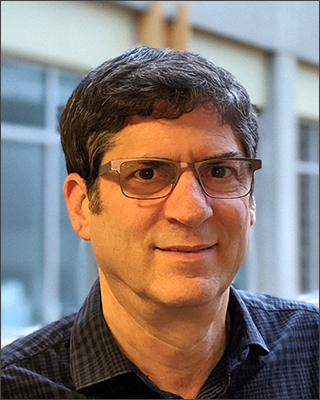
Portrait of Paul Beame

Paul Beame, a professor in the Allen School’s Theory of Computation group, was named a Fellow of the ACM for his contributions in computational and proof complexity and their applications as well as for outstanding service to the computing community. Beame, who has been a member of the UW faculty since 1987 and currently serves as an associate director of the Allen School, is widely known for his work that spans both pure and applied complexity. The latter is unusual, since the subject of computational complexity is generally not regarded as an applied discipline.

Beame is widely known for his work in computational complexity that provides lower bounds and algorithms that yield optimal bounds for a range of core computational problems. Notable contributions include the first optimal depth circuits for integer division, which matched the depth for the other basic arithmetic operations, and optimal time-space tradeoff lower bounds for integer sorting. He and his co-authors proved the strongest time-space tradeoff lower bounds known for any Boolean function in P — a result that has not been improved upon in nearly 20 years — and devised an optimal data structure for the predecessor problem, which is a substantial improvement over binary search.

Beame’s fundamental work in proof complexity, which examines the sizes of proofs and ways of expressing them, played a significant role in the growth of the field. Proof complexity seeks to answer the question of whether there is a method that always permits the writing of small proofs; if there is, then NP=coNP. Among Beame’s most significant achievements in this domain was the establishment of the first exponential lower bounds on the size of constant-depth proofs, which were previously only known for resolution, a depth one proof system. He also introduced an algebraic proof system based on multivariate polynomial equations for Hilbert’s Nullstellensatz and described the first non-trivial lower bounds for algebraic proofs of propositional logic. 

Another area in which Beame has made significant contributions is applied computational complexity. This work has involved taking insights from computational complexity and proof complexity building on them and applying them to research problems in a variety of other domains, including formal methods for software engineering, computer-aided verification, database theory, satisfiability (SAT) solving, artificial intelligence, and machine learning. For example, Beame and his collaborators were among the first to apply model checking to issues related to software by showing how symbolic model checking could be effectively applied to software specifications in addition to the hardware models for which it previously had been used. His paper analyzing SAT solvers using proof complexity, which presented the first precise characterization of clause learning as a proof system, is among his most cited work. Beame has also contributed influential research on the complexity of probabilistic inference, including the Cachet model counter and lower bounds for knowledge representation for probabilistic inference. His research on optimal lower bounds and algorithms for database query evaluation in the massively parallel computation (MPC) model not only introduced the lower bound model, but actually coined the MPC term for such computations that is now widely used.

“Throughout my career, I have been drawn to understanding the complexity of solving concrete computational problems,” Beame said. “In the collaborative atmosphere of the Allen School, I have been able to learn about new concrete problems and find areas where I can apply computational complexity ideas just by walking down the hall and talking with colleagues. This has led me to a broader view of computational complexity as both a pure and applied field. The success of those collaborations has been very gratifying, as is this recognition by ACM.”

In addition to his research accomplishments, Beame has devoted decades of service to the computing community. He spent more than 15 years in volunteer leadership — first as vice chair, and then chair — of the IEEE Computer Society’s Technical Committee on Mathematical Foundations of Computing (TCMF), sponsor of the annual Symposium on Foundations of Computer Science (FOCS). He went on to chair the ACM Special Interest Group on Algorithms and Computation Theory (SIGACT), sponsor of the annual Symposium on the Theory of Computing (STOC). In that role, he was instrumental in the creation of the STOC Theoryfest. He simultaneously served for 4 years as a member-at-large of the ACM Council, where he successfully advocated for providing open access to ACM conference proceedings. Beame also has earned the appreciation of colleagues for taking the lead in creating and maintaining a comprehensive online history of both the STOC and FOCS conferences as a reference for the theoretical computer science community.

“The theoretical computer science community has provided a great environment for research and involves an extraordinarily talented group of people,” Beame observed. “I have just wanted to do my part in sustaining that community and keeping it vibrant; doing that has naturally led me to work on broader issues, like open access, that are of interest to all researchers.”

Joshua R. Smith, Fellow of the IEEE

Professor Joshua R. Smith, who holds a joint appointment in the Allen School and Department of Electrical & Computer Engineering, was named a Fellow of the IEEE in recognition of his contributions to far‐ and near‐field wireless power, backscatter communication, and electric field sensing.

“I am so grateful for this award, which recognizes the impact of work with many wonderful students and collaborators over the years,” said Smith, who is the Milton and Delia Zeutschel Professor in Entrepreneurial Excellence at UW, where he leads the Sensor Systems Laboratory. “I thank my family for their support and enthusiasm over so many years.”

Smith’s work on sensing and wireless power has had far-reaching impact in a variety of industries. His early research while a Ph.D. student at MIT focused on electric field sensing, now known as mutual capacitance sensing, which enables non-contact sensing of the three-dimensional position, orientation and mass distribution of a person’s body. This work formed the basis for a system adopted by automobile manufacturers that enables intelligent airbag deployment decisions based on a passenger’s size and body configuration. Mutual capacitance went on to be widely adopted in touchscreens starting with Apple’s iPhone, and subsequently, most other smartphones. Later, Smith built mutual capacitance sensors into robot fingers to create electric field pretouch, which improves a robot’s manipulation capabilities by allowing its finger to detect an object before contact. 

Before joining the UW faculty in 2011, Smith spent five years at Intel Research Seattle, where he focused on creating new capabilities in wireless power, wireless sensing, and robotics. One of the projects initiated during his time at Intel was the Wireless Identification and Sensing Platform (WISP). A collaboration between Intel and UW, WISP offered the first fully programmable platform for wireless, battery-free sensing and computation powered by radio waves. The team went on to earn a Best Paper Award at the 2009 IEEE International Conference on RFID for integrating capacitive touch sensing into passive RFID tags using WISP technology. Smith also led the development of the wireless resonant energy link (WREL), which uses magnetically coupled resonators to efficiently transfer of wireless power even as range, orientation and load vary. Smith’s first Ph.D. student, Alanson Sample, now a faculty member in Electrical Engineering & Computer Science at the University of Michigan, was a key contributor to both WISP and WREL. Smith, together with heart surgeon Dr. Pramod Bonde of Yale University, evolved the WREL technology into FREED, the free-range resonant electrical energy delivery system for powering a ventricular assist device implanted in the human body — without requiring the traditional wire through the patient’s chest. This work on wireless power for implanted devices led to a series of other projects on power and communication for neural implants through the Center for Neurotechnology, a National Science Foundation Engineering Research Center, where Smith is Thrust Leader for Communication and Interface; and the University of Washington Institute for Neuroengineering (UWIN) funded by the Washington Research Foundation.

After his arrival at UW, Smith continued to build upon his previous work. Aiming to push the boundaries of wireless computing even further, he teamed up with Allen School professor Shyam Gollakota to develop ambient backscatter, a technique that leverages existing, ambient wireless television and cellular signals into a source of power as well as a communication medium which earned a Best Paper Award at SIGCOMM 2013. The researchers later extended backscatter communication to WiFi with passive WiFi, which received a Best Paper Award at NSDI 2016. To enable internet-connected implantable devices to communicate with commodity devices such as smartphones and smart watches, they developed interscatter, a technique for using backscatter to transform wireless transmissions over the air from one technology to another that earned a Best Paper Award at SIGCOMM 2016. Smith and his collaborators extended the utility of their approach with long-range backscatter, the first wide-area backscatter communication system that achieves coverage at distances up to 2.8 kilometers — orders of magnitude greater than prior systems — that garnered a Distinguished Paper Award at IMWUT 2017. Smith also co-led the UW team behind the world’s first battery‐free phone. The team has also developed a series of ultra-low-power battery-free wireless cameras that communicate via backscatter.

Smith has co-founded three venture-backed UW start-up companies based on his work: Wibotic, developer of near-field wireless robot charging systems, with CEO Ben Waters, a UW Ph.D. alumnus; Jeeva Wireless, developer of ultra-low power communication systems based on backscatter innovation, with Gollakota and UW alumni Bryce Kellogg, Aaron Parks, and Vamsi Talla; and Proprio, developer of light-field capture and visualization solutions to aid surgery, with Allen School Ph.D. student James Youngquist; UW Foster Business School alumnus Gabe Jones; Ken Denman, venture partner at Sway Ventures and member of the UW Foundation Board; and Dr. Sam Browd, a neurosurgeon at UW Medicine and Seattle Children’s Hospital.

“UW is such a supportive environment,” Smith said. “It is a privilege to work with so many wonderful colleagues and students, at an institution that is firing on all cylinders.”

Aaron Hertzmann, Fellow of the IEEE

Portrait of Aaron Hertzmann

Smith is joined among the latest class of IEEE Fellows by Aaron Hertzmann, who completed a postdoc in the Allen School’s Graphics & Imaging Laboratory (GRAIL) before going on to spend 10 years on the computer science faculty at the University of Toronto. Hertzmann is currently a principal scientist at Adobe Research and has been an affiliate professor at the Allen School since 2005. He was recognized by IEEE for contributions to computer graphics and animation, following on the heels of his selection as a Fellow of the ACM last year.

Hertzmann’s research draws from computer graphics, machine learning, animation and other fields. He devoted his early research career to advancing new methods for extracting meaning from images and for modeling human visual capabilities, motion, and 3D structure. Hertzmann also produced a variety of novel software tools for creating expressive, artistic imagery and animation that mimics human drawing and painting. Many of his contributions have been adopted by the broader graphics, gaming, and special effects communities. 

Hertzmann’s most recent work focuses on the development of techniques for producing robust, seamless immersive experiences in virtual reality. These include a new method for incorporating gated clips and view-dependent video textures in 360-degree video to ensure the user doesn’t miss important narrative elements, and a novel approach for introducing motion parallax and real-time 360-degree video playback in VR headsets that improves the immersive experience while reducing the risk of motion sickness. Hertzmann also contributed to the development of Vremiere, a system for direct editing of spherical video for VR environments that was the basis of Adobe’s Project Clover in-VR editing interface.

Lately, Hertzmann has shifted his attention to pushing boundaries in the realm of visual perception and the interplay between art and AI. “I’m currently interested in ways that insights from computer science can inform our understanding of art: of understanding how we create and perceive aesthetics and line drawings,” he explained.

Brad Calder, Fellow of the ACM

Portrait of Brad Calder

Allen School alumnus Brad Calder was named a Fellow of the ACM in recognition of his contributions to cloud storage, processor simulation, replay, and feedback-directed optimization of systems and applications. Calder, who went on to earn his Ph.D. in computer science from the University of Colorado Boulder after graduating from UW, is currently Vice President of Product and Engineering of Technical Infrastructure and Cloud at Google overseeing compute, networking, storage, database and data analytics services. 

Before joining Google, Calder spent nearly 9 years at Microsoft, where he was among the co-founders of the Microsoft Azure cloud computing service. Calder and his team earned a Best Paper Award at USENIX 2012 for introducing a new approach to erasure coding in Windows Azure Storage using local reconstruction codes (LRC) that enabled durable storage with low overhead and consistently low read latencies. Calder previously spent over a decade as a faculty member at the University of California, San Diego, where he co-directed the High Performance Processor Architecture and Compilation Lab. During his tenure at UCSD, where he now serves as an adjunct professor, Calder published more than 100 research papers spanning systems, architecture, and compilers.

The ACM is the world’s largest educational and scientific professional society devoted to advancing the field of computing. The ACM Fellow designation is held by less than 1% of the organization’s global membership. Learn more about the 2019 Class of ACM Fellows here.

IEEE has more than 400,000 members in 160 countries representing diverse engineering fields, from aerospace systems and biomedical engineering, to computing and telecommunications, to electric power and consumer electronics. Each year, IEEE elevates a select group — representing less than one-tenth of 1% of the organization’s global membership — to the status of Fellow based on their extraordinary contributions. View the complete list of 2020 IEEE Fellows here.

Congratulations to Magda, Paul, Josh, Aaron and Brad on this well-deserved recognition!

Read more →

Back-to-school ritual takes on new significance for Allen School graduates turned faculty members

Fall in Seattle is signified by the sight of trees turning from green to rust, the sound of raindrops striking rooftops, and the energy infusing the University of Washington campus as students embark upon a new journey of intellectual and personal exploration. For a group of graduating Allen School Ph.D. students, this quintessential autumn ritual carries an added significance as they look forward to their new careers as faculty members at universities across the country and beyond.

Meet the 11 outstanding scholars who are set to extend the Allen School’s impact through teaching, research, and service:

James Bornholt: University of Texas at Austin

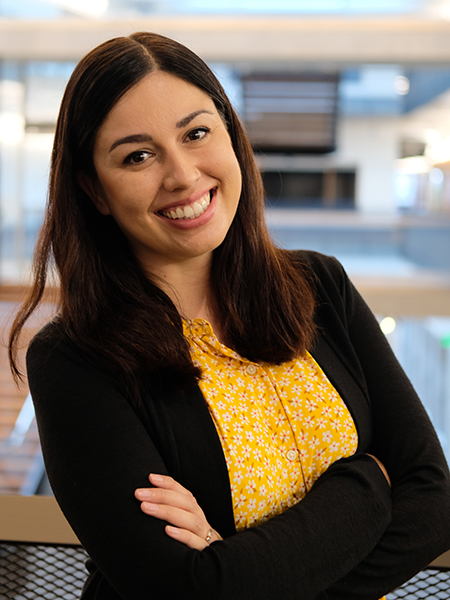
James Bornholt

James Bornholt will join the computer science faculty at the University of Texas at Austin next fall after spending a year as an applied scientist in Amazon Web Services’ Automated Reasoning Group. Bornholt completed his Ph.D. working with professors Emina Torlak, Dan Grossman, and Luis Ceze on research spanning programming languages, systems, and architecture as a member of the Allen School’s UNSAT and Programming Languages & Software Engineering (PLSE) groups. Bornholt earned a Best Paper Award at OSDI 2016 for Yggdrasil, a toolkit enabling programmers to write file systems with push-button verification, and a Distinguished Artifact Award at OOPSLA 2018 for SymPro, a novel technique for diagnosing performance bottlenecks in solver-aided code through symbolic evaluation. Bornholt was also an early contributor to the development of an archival storage system for digital data in synthetic DNA as part of the Molecular Information Systems Lab, a collaboration between the University of Washington and Microsoft Research. The project was selected as an IEEE Micro Top Pick in computer architecture for 2016.

Tianqi Chen: Carnegie Mellon University

Tianqi Chen

Tianqi Chen will join the faculty of Carnegie Mellon University in 2020 after spending a year at UW spinout OctoML. He completed his Ph.D. working with Allen School professors Carlos Guestrin, Luis Ceze, and Arvind Krishnamurthy as a member of both the MODE Lab and interdisciplinary SAMPL group. Chen’s research encompasses machine learning and multiple layers of the system stack. He was one of the principal architects of the TVM framework, an end-to-end compiler stack designed to bridge the gap between deep learning and hardware innovation by enabling researchers and technologists to rapidly deploy deep learning applications on a range of devices without sacrificing power or speed. The Allen School team transitioned TVM to the non-profit Apache Software Foundation as an Apache Incubator project earlier this year. Chen also co-created XGBoost, an open-source, end-to-end tree boosting system that is designed to be highly efficient, flexible, and portable and which has been widely adopted by industry, and Apache MXNet, an open-source, deep learning framework that supports flexible prototyping and production that was adopted by Amazon Web Services.

Eunsol Choi: University of Texas at Austin

Eunsol Choi

Eunsol Choi will join the faculty of the University of Texas at Austin next fall after spending a year as a visiting research scientist at Google AI in New York City. Choi completed her Ph.D. as a member of the Allen School’s Natural Language Processing group working alongside professors Luke Zettlemoyer and Yejin Choi. Her research focuses on methods of extracting and querying information from text, particularly structured representations of human information such as scientific findings, historical facts, and opinions using natural language questions. Choi was lead author of  multiple papers on this topic, including a novel framework for coarse-to-fine question answering that matched or outperformed existing models while scaling to longer documents, and a new dataset for exploring question answering in context (QuAC) that draws upon 14,000 information-seeking dialogs between teacher and student. Choi also contributed to an analysis of the linguistic patterns of news articles and political statements to determine whether content is trustworthy, unreliable, or satirical.

Jialin Li: National University of Singapore

Jialin Li

Jialin Li accepted a faculty position at the National University of Singapore after completing his Ph.D. in the Computer Systems Lab, where he worked with Allen School professors Arvind Krishnamurthy and Tom Anderson and affiliate professor Dan Ports of Microsoft Research. Li builds practical distributed systems that combine strong consistency with high performance. One example is Arrakis, a project that earned a Best Paper Award at OSDI 2014. Arrakis is a new operating system that separates the OS kernel from normal application execution to allow applications access to the full power of the unmediated hardware. Li and his colleagues later received a Best Paper Award at NSDI 2015 for Speculative Paxos, a new replication protocol for distributed systems deployed in the data center that employs a new primitive, Multi-Order Multicast (MOM), to achieve significantly higher throughput and lower latency than the standard Paxos protocol. Li was lead author of a subsequent paper that introduced Network-Ordered Paxos (NOPaxos), a system for dividing replication responsibility between the network and protocol layers using another new primitive, Ordered Unreliable Multicast (OUM). NOPaxos achieves replication in the data center without the performance cost of traditional approaches.

Dominik Moritz: Carnegie Mellon University

Dominik Moritz

Dominik Moritz is currently a research scientist at Apple and will join the faculty of CMU’s Data Interaction Group next year. Moritz recently completed his Ph.D. working with Allen School professor Jeffrey Heer and iSchool professor Bill Howe as a member of the Interactive Data Lab and the Database Group. His research focuses on the development of scalable interactive systems for data visualization and analysis. Moritz was a member of the team that developed Vega-Lite, a high-level grammar for rapidly generating interactive data visualizations that earned a Best Paper Award at InfoVis 2016. He subsequently received another Best Paper Award at InfoVis 2018 for Draco, an extension of Vega-Lite that offers a constraint-based tool for building visualizations. Draco formalizes guidelines for visualization design while permitting trade-offs based on user preferences. Moritz also co-created user-centered tools such as Pangloss, which applies optimistic visualization to enable interactive, exploratory data analysis of approximate query results, and Falcon, a web-based system for optimizing latency-sensitive interactions such as brushing and linking that eliminates costly precomputation and enables cold-start exploration of large-scale datasets.

Rajalakshmi Nandakumar: Cornell University

Rajalakshmi Nandakumar

Rajalakshmi Nandakumar will join the faculty of Cornell University next spring as a member of the Jacobs Technion–Cornell Institute at Cornell Tech. Nandakumar earned her Ph.D. working with professor Shyam Gollakota in the Allen School’s Networks & Mobile Systems Lab, where she focused on the development of mobile health applications and novel interaction technologies leveraging the Internet of Things. Her projects included ApneaApp, a mobile app that employed active sonar technology to detect signs of sleep apnea that was commercialized by ResMed as part of the publicly available SleepScore app, and SecondChance, a mobile app for detecting signs of opioid overdose that was presented in the journal Science Translational Medicine and is being commercialized by Sound Life Sciences Inc. She and her colleagues also earned a Best Paper Award at SenSys 2018 for µLocate, a low-power wireless localization system for subcentimeter sized devices. During her time at the Allen School, Nandakumar was recognized with a Paul Baran Young Scholar Award from the Marconi Society, a Graduate Student Innovator of the Year Award from UW CoMotion, and a GeekWire feature as “Geek of the Week.”

Pavel Panchekha: University of Utah

Pavel Panchekha

Pavel Panchekha joined the University of Utah faculty after earning his Ph.D. working with professors Michael Ernst and Zachary Tatlock in the Allen School’s PLSE group. Panchekha’s research focuses on mechanical reasoning and synthesis for domain specific languages, including floating-point numerical programs and web page layout code. He and his colleagues earned a Distinguished Paper Award at PLDI 2015 for Herbie, a tool for finding and fixing floating-point problems. Herbie automatically rewrites floating-point expressions to eliminate numerical rounding errors and improve the accuracy of programs. Panchekha was also a major contributor to the Cassius Project, a framework for reasoning about web page layouts that offers tools for verification, synthesis, and debugging based on an understanding of how web pages render. As part of that project, Panchekha led the development of VizAssert, which verifies the accessibility of page layouts across a range of possible screen sizes, browsers, fonts, and user preferences.

Aditya Vashistha: Cornell University

Aditya Vashistha

Aditya Vashistha is joining Cornell University’s Department of Information Science this fall after completing a stint as a visiting researcher at Microsoft. Vashistha, who has the distinction of having earned the 600th Ph.D. granted by the Allen School, completed his degree working with professor Richard Anderson in the Information & Communication Technology for Development (ICTD) Lab. His research focuses on the development and deployment of novel computing systems for people with disabilities or low literacy and residents of rural communities, including the first-ever analysis of the use of social media platforms by low-income people in India, which earned a Best Student Paper Award at ASSETS 2015, and Sangeet Swara, a voice forum that relies on community moderation to disseminate cultural content in rural India that earned a Best Paper Award at CHI 2015. He and his collaborators later earned an Honorable Mention at CHI 2017 for Respeak, a low-cost, voice-based speech transcription system that provides dignified digital work opportunities in low-resource settings. Vashistha’s work, which earned him a Graduate Student Researcher Award from the UW College of Engineering, so far has reached an estimated 220,000 people in Africa and southern Asia.

Doug Woos: Brown University

Doug Woos

Doug Woos joined the Brown University faculty as a lecturer focused on introductory computer science and courses in systems and programming languages. He recently earned his Ph.D. working with Allen School professors Tom Anderson in the Computer Systems Lab and Michael Ernst and Zachary Tatlock of the PLSE group. In his research, Woos applies techniques from programming languages to systems problems, with a focus on new approaches for verifying and debugging distributed systems. He was a member of the team behind the award-winning Arrakis operating system and co-led the development of Verdi, a novel framework for the formal verification of distributed systems using the Coq proof assistant that supports fault models ranging from idealistic to realistic. Woos and his colleagues later used Verdi to achieve the first full formal verification of the Raft consensus protocol, a critical component of many distributed systems. He also led the development of Oddity, a graphical interactive debugger for distributed systems that combines the power of traditional step-through debugging with the ability to perform exploratory testing.

Mark Yatskar: University of Pennsylvania

Mark Yatskar

Mark Yatskar will take up a faculty position at the University of Pennsylvania next fall after completing his time as an AI2 Young Investigator. He completed his Ph.D. working with Allen School professors Luke Zettlemoyer in the NLP group and Ali Farhadi of GRAIL on research that uses the structure of language to advance new capabilities in computer vision. Yatskar was a member of the team that developed ImSitu, a situation recognition tool that uses visual semantic role labeling to move computers beyond simple object or activity recognition. ImSitu is designed to achieve a more human-like understanding of how participants and objects interact in a scene, enabling computers to predict what will happen next. Yatskar has also studied ways to reduce gender bias in machine learning datasets. For example, he and his collaborators earned a Best Long Paper Award at EMNLP 2017 for presenting Reducing Bias Amplification (RBA), a technique for calibrating the outputs of a structured prediction model to avoid amplifying gender biases ingrained in image labels incorporated into training datasets.

Danyang Zhuo: Duke University

Danyang Zhuo

Danyang Zhuo will join the faculty of Duke University next fall after completing a postdoc in the RISE Lab at the University of California, Berkeley. Zhuo recently completed his Ph.D. working with professors Tom Anderson and Arvind Krishnamurthy in the Allen School’s Computer Systems Lab. His research spans operating systems, distributed systems, and computer networking, with an emphasis on improving the efficiency and reliability of infrastructure and applications in the cloud. One of his early contributions was Machine Fault Tolerance (MFT), a new failure model that improves the resilience of data center systems against undetected CPU, memory and disk errors. Zhuo was lead author of a paper presenting Slim, a low-overhead container overlay network that improves the performance of large-scale distributed applications. Slim manipulates connection-level metadata to enable network virtualization to improve throughput and reduce latency. He also led the development of CorrOPT, a system for mitigating packet corruption in data center networks that was shown to reduce corruption losses by up to six orders of magnitude and improve repair accuracy by 60% compared to the current state of the art.

“Whether our graduates are heading to academia or industry, we are extremely proud of their past achievements and ongoing contributions to our field,” said Allen School director Hank Levy. “But I am thrilled that so many of our outstanding alumni this year will be guiding the next generation of students in using computing to make a positive impact on society. It is exciting to see so many former students become faculty colleagues who will extend the reach of the Allen School and University of Washington around the world.”

In addition to the 11 alumni of the Allen School’s Ph.D. program, two graduates with strong ties to the program also went on to faculty positions. Edward Wang, a graduate of UW’s Department of Electrical & Computer Engineering, recently joined the faculty of the University of California, San Diego. Wang recently earned his Ph.D. working with professor Shwetak Patel in the Allen School’s Ubicomp Lab on new sensing techniques for detecting and monitoring health conditions using mobile devices. Sarah Chasins, meanwhile, spent the past several years embedded in the Allen School and working with professor Rastislav Bodik while completing her Ph.D. from the University of California, Berkeley, where Bodik was previously a faculty member. Chasins, whose research is aimed at democratizing programming and developing tools that make it easy to automate programming tasks, will join the Berkeley faculty next fall.

Congratulations and best wishes to all of our newly-minted faculty colleagues — see you on the conference circuit!

Read more →

Ph.D. student Benjamin Lee named Library of Congress Innovator in Residence

Benjamin Lee (right) poses with fellow Innovator in Residence Brian Foo in Washington, D.C. Kinedy Aristud, Library of Congress

Benjamin Lee, a second-year Ph.D. student in the Allen School’s Artificial Intelligence group working with professor Daniel Weld, has been named a 2020 Innovator in Residence by the Library of Congress. Now in its second year, the Innovator in Residence program aims to enlist artists, researchers, journalists, and others in developing new and creative ways of using the library’s digital collections.

During his residency, Lee will apply deep learning to enable the automatic extraction and tagging of photographs and illustrations contained in the more than 15 million newspaper scans comprising the library’s Chronicling America collection. His goal is to produce interactive visualizations, searchable by topic, that will make the content more accessible to users and support cultural heritage research.

“A primary motivation behind my project is to excite the American public by demonstrating the possibilities of applying machine learning to library collections,” Lee explained in an interview posted on the library’s blog. “Given the widespread enthusiasm about machine learning, this project could draw new people to the Library of Congress’s digital collections, as well as excite the Library’s regular users about emerging technological advances. My hope is that this project could also inspire members of the public to start their own coding projects involving the Library of Congress’s digital collections.”

Lee is no stranger to combining technology and culture, having first developed an interest in digital humanities as an undergraduate at Harvard College. That led to a year-long fellowship at the United States Holocaust Memorial Museum, where he used machine learning to enable new ways for users and researchers to search the archives of the International Tracing Service. His journey into this line of research was a deeply personal one, inspired by his grandmother who survived Auschwitz-Birkenau Concentration Camp during the Holocaust.

Lee previously earned a Graduate Research Fellowship from the National Science Foundation to support his work at the Allen School on explainable artificial intelligence and human-AI interaction. He is one of only two Innovators in Residence named by the library this year; the other, Brian Foo, is a data visualization artist at the American Museum of Natural History who plans to make interesting and culturally relevant material from the library’s audio and moving image collections more accessible to the public by embedding it into hip hop music.

Read the Library of Congress press release here, and an interview with Lee and Foo here. Learn more about the Innovator in Residence program here.

Congratulations, Ben!

Read more →
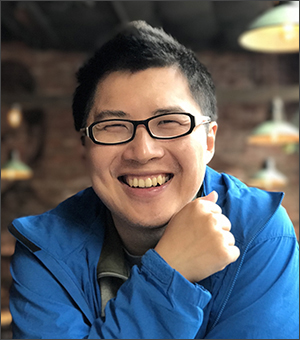
Allen School and Madrona Venture Group highlight student and faculty innovation at 2019 Research Showcase

Man standing in front of PowerPoint slide titled "Wearable and Mobile Devices"
Professor Tim Althoff presents his research on data science for human well-being during the luncheon keynote

Every fall, the Allen School’s Industry Affiliates program hosts a research showcase to highlight the ways in which our faculty and student researchers are advancing the frontiers of computing. The day-long event features sessions devoted to various topics in computing and culminates in an open house and poster session that gives our industry partners, alumni, and friends an opportunity to learn more about the latest innovations emerging from Allen School labs.

Among the many highlights of the 2019 Research Showcase, which was held Wednesday in the Paul G. Allen Center and Bill & Melinda Gates Center on the University of Washington’s Seattle campus, was a keynote by professor Tim Althoff. Althoff, who joined the Allen School faculty last year, combines techniques from data mining, social network analysis, and natural language processing to generate actionable insights about people’s physical and mental health.

For example, Althoff is pursuing ground-breaking research that aims to use data generated by people’s everyday behavior to better understand the level and variance of physical activity of populations around the world. As part of this work, he found that the inequality of physical activity within a country is a predictor of obesity rates. Althoff believes that such insights can inform how our environment influences our behavior and health, and in the future could support the data-driven design of cities.

“This research is uniquely enabled by the massive digital traces generated by wearables and mobile devices,” explained Althoff. “It revealed the existence of a health inequality that we were previously unaware of.”

Madrona Prize winners Joseph Janizek (left) and Gabriel Erion (center) of the CoAI team with Madrona’s Tim Porter

For another project, Althoff analyzes online search engine interactions to gauge the impact of sleep on cognitive performance in the workplace and among athletes. He is also exploring a data-driven approach to mental health counseling to identify the most effective conversational strategies to support peer-to-peer counseling and improve client outcomes. 

In addition to Althoff’s talk, the program included in-depth sessions in which participants had an opportunity to explore the latest developments across a variety of domains, including data management, programming languages and software engineering, robotics, systems, augmented and virtual reality, ubiquitous computing, machine learning, deep learning for natural language processing, and the intersection of computation and biology. At the end of the day, Allen School leadership and representatives of Madrona Venture Group announced the recipients of the 14th annual Madrona Prize and the People’s Choice Award — a tradition in which we celebrate the innovative contributions of our student researchers with prizes and public bragging rights.

This year’s grand prize winner, CoAI: Cost-Aware Artificial Intelligence for Health Care from the Allen School’s Laboratory of Artificial Intelligence for Medicine and Science (AIMS) led by Professor Su-In Lee, was chosen by Madrona Venture Group for combining excellence in research with the potential for commercial success. CoAI is a machine learning method for making cost-sensitive predictions in clinical settings that maintains or improves accuracy while dramatically reducing the time it takes to predict a variety of patient outcomes. The team, which includes Lee, Allen School Ph.D./M.D. students Gabriel Erion and Joseph Janizek, and Drs. Carly Hudelson and Nathan White of UW Medicine, developed CoAI to integrate with existing machine learning packages with just a few lines of code to improve patient care when it comes to time-sensitive clinical prediction tasks in all areas of medicine.

Katie Doroschak (center) demonstrates molecular tagging using nanowire-orthogonal DNA strands to the Madrona team

Madrona also recognized three runners-up that also exemplify high-quality research combined with commercial potential:

AuraRing: Precise Electromagnetic Finger Tracking via Smart Ring, from the UbiComp Lab, by Electrical & Computer Engineering Ph.D. students Farshid Salemi Parizi and Alvin Cao; Allen School alumnus Eric Whitmire (Ph.D., ‘19), now a research scientist at Facebook Reality Labs; Allen School Ph.D. student Ishan Chatterjee; GIX master’s student Tianke Li; and professor Shwetak Patel, who holds a joint appointment in the Allen School and Department of Electrical & Computer Engineering

Molecular Tagging with Nanopore-orthogonal DNA Strands, from the Molecular Information Systems Lab, by Allen School Ph.D. students Katie Doroschak and Melissa Queen; Chemistry undergraduate Karen Zhang; Allen School master’s student Aishwarya Mandyam (B.S., ‘19); research scientist Jeff Nivala; Allen School affiliate professor Karin Strauss, Principal Research Manager at Microsoft Research; and Allen School professor Luis Ceze.

HomeSound: Exploring Sound Awareness in the Home for People Who Are Deaf and Hard of Hearing, from the Makeability Lab, by Allen School Ph.D. students Dhruv Jain and Kelly Mack; Human-Centered Design & Engineering Ph.D. student Steven Goodman; professor Leah Findlater of the Department of Human-Centered Design & Engineering; and Allen School professor Jon Froehlich.

Farshid Salemi Parizi lets a guest take AuraRing for a spin

Calling the Allen School showcase “one of the highlights of our year,” Madrona managing director Tim Porter said, “The Allen School at the UW is an incredibly important resource for our region and as the school has grown and actively attracted researchers from many different areas, we have seen the breadth and depth of innovation grow.”

HomeSound also took home the coveted People’s Choice Award, which is voted on by attendees at the open house as their favorite poster or demo of the evening. The runner-up for People’s Choice was ALFRED: A Benchmark for Interpreting Grounded Instructions for Everyday Tasks. The team behind ALFRED spans the Allen School’s Robotics and Natural Language Processing groups, including Allen School Ph.D. students Mohit Shridhar and Daniel Gordon; Allen School postdoc Jesse Thomason; former postdoc Yonatan Bisk, currently a visiting researcher at Microsoft; Winson Han and Roozbeh Mottaghi of the Allen Institute for Artificial Intelligence; and Allen School professors Luke Zettlemoyer and Dieter Fox.

“Our students and faculty aim for real-world impact, and it really shows in the presentations we saw this week,” said Hank Levy, director of the Allen School. “We’re pleased that so many of our industry partners could join us to learn about the exciting developments happening in our labs — developments that not only will advance our field, but also have the potential to improve millions of people’s lives. I want to thank Madrona Venture Group, in particular, for their friendship and support to the school and our students throughout the years.”

Dhruv Jain (center) of the Makeability Lab explains People’s Choice winner HomeSound to attendees

This is the 14th year in which Madrona has formally recognized student research with commercial potential emerging from the Allen School.

Read more in the Madrona press release here, and check out GeekWire’s coverage of Althoff’s keynote here and the poster session here. See a complete list of past Madrona Prize winners here, and learn more about the Allen School’s Industry Affiliates program here.

Thanks to Madrona and to all of our industry partners, alumni and friends who showed up yesterday in support of our students, and congratulations to the winners — see you next year!

Read more →
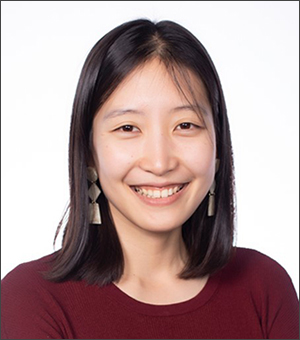
Allen School’s first-generation college students are breaking down barriers and building a foundation for others to succeed

For students who are among the first in their families to attend college, the experience of navigating a four-year degree can be daunting. From decoding the campus lingo to overcoming imposter syndrome, the more than 250 undergraduates currently pursuing their bachelor’s degree as first-generation students in the Allen School are breaking down barriers and carving their own paths. We caught up with a few members of our community who are either finding their footing as first-generation students, or have been there, done that, and are happy to share what they learned in honor of the National First-Generation College Celebration taking place today at the University of Washington and across the nation.

Meet undergraduates Andres Eligio and Aaron Pham, graduate student Alyssa La Fleur, and academic adviser Chelsea Navarro — each with an inspirational story to tell about where they have been and where they are going as first-generation college students.

Andres Eligio

Andres Eligio is a freshman from Des Moines, Washington whose parents immigrated from Mexico in 1996 to provide a better life for their children. He is the first in his family to pursue an education after high school. Eligio credits the College Access Now (CAN) program as an important factor in his pursuit of a college degree. CAN helped him navigate and learn about colleges and the application process, while robotics, mathematics, and computer science classes in middle and high school solidified his interest in computer science.

Allen School: What does being a first-generation student mean to you?

Andres Eligio: To me it means facing the challenge of pursuing an education without having your parents’ support. It means working towards a goal which you can’t truly see. It can be scary to try and break away from what your parents have done. But I hope to fulfill all the work they did by coming to this country and take advantage of all the opportunities I am given. 

Allen School: What is your favorite part about being an Allen School student?

AE: My favorite part by far of the Allen School is how hard they work to make sure you feel like a part of the community. The faculty are very friendly and provide countless opportunities to make connections and learn more about being a UW student. I almost didn’t go to college. It took me a very long time to decide whether to continue my education after high school or work for my father’s landscaping company. I decided to try. I didn’t think I’d feel like I belonged, but I took part in the CSE Startup, a program for direct admit students that help them get used to life and classes at the UW. Before taking this course, I didn’t feel like I belonged. Now, having completed the program, I feel as if I am a part of the UW and more importantly, meant to be here in the Allen School. I feel confident about the rest of the school year and my success academically.

Allen School: What advice do you have for future first-gen students?

AE: I would tell them that I know it can be scary trying to pursue an education after high school. You can’t necessarily look to your parents for help, and they can only try to understand the struggle of finding the right college and choosing which field to study. Even though it seems hard and confusing, if you truly want to go to college you can do it. Look into your school or programs for support. Talk to counselors and friends. There will always be people to support you. It isn’t easy to leave your parents. Personally, it was really hard for me to leave. I worked hard to support my family, both in my dad’s business and in taking care of my brother. Many of you are in a similar situation, be it helping your parents or taking care of siblings. Your parents have worked really hard to provide you opportunities they didn’t have, and you should take full advantage of it.

Aaron Pham

Aaron Pham, a junior who transferred to the University of Washington in the spring, moved to the United States with his family in February of 2016. Born in Vietnam, he is the oldest child in his family and the first to go to college. His father worked for the U.S. Embassy in Vietnam; when the U.S. government gave him the opportunity to come to the States, the whole family moved to Washington, where Pham began his college career the following year at South Seattle College.

Allen School: What does being a first-generation student mean to you?

Aaron Pham: While it is such an honor, this also comes with challenges and responsibility. I will be a good example to my nephew and my younger cousins. It is a great motivation for me to keep learning, improving and pushing myself out of my own limits to become a successful student.

Allen School: What is your favorite part about being an Allen School student?

AP: My favorite part is the opportunities I have to connect with other friends and professors who also have a great passion for computer science. Studying and working in this environment not only improves my technical coding skills, but also guides me to become a person who wants to make impacts and contribute to the community and society by applying my knowledge and my passion for computer science. Being in the Allen School allows me to reach my full potential.

Allen School: What advice do you have for future first-gen students?

AP: Get involved at school, find your community, connect with a counselor, attend orientation activities, know where to get help on campus, and embrace who you are and don’t compare yourself to others. Everyone has their own weaknesses and strengths — so do you. No one is perfect. We are all here to learn and push ourselves out of our own limits. 

Alyssa La Fleur

Alyssa La Fleur, from Monroe, Washington, is a student in the Allen School’s full-time Ph.D. program. She fell in love with computational biology as an undergraduate and is now developing the skills to build a successful research career. La Fleur was homeschooled and attended a co-op before enrolling in Cascadia Community College through the Running Start program in high school. She graduated in the spring from Whitworth University with a triple major in math, bioinformatics and biochemistry. 

Allen School: What does being a first-generation student mean to you?

Alyssa La Fleur: It means that I will have greater job opportunities and financial security than my parents.

Allen School: What is your favorite part about being an Allen School student?

AL: So far, my favorite thing has been the friendly community and the diverse fields of study represented in it.

Allen School: What advice do you have for future first-gen students?

AL: Don’t be afraid to ask questions, even if you think they might be stupid. It’s also fine if you don’t know what questions you should be asking in the first place, as you are in a new environment and probably won’t realize what the gaps are in your knowledge right away. Also, if someone ever makes you feel uncomfortable when asking for help, there are plenty of other campus resources to use instead. I particularly recommend asking senior students in your major for advice.

Chelsea Navarro

Chelsea Navarro is an academic adviser at the Allen School focused on serving undergraduate students, including students transferring to UW from two-year colleges. As a first-generation student from San Diego, California, she credits services such as the Educational Opportunity Program (EOP) and Federal TRIO Programs in helping her begin her college career at Palomar Community College before transferring to San Diego State University, where she received her bachelor’s degree in sociology. The dedicated student affairs professionals and advisers that worked with her along the way inspired her to pursue a career in higher education. Navarro subsequently earned a Master’s of Education in student affairs from the University of California, Los Angeles and is proud of being a first-generation student. 

Allen School: What does being a first-generation student mean to you?

Chelsea Navarro: Growing up, my biggest ambition was to graduate from high school since it’s an accomplishment that not many people in my family are able to fulfill. My parents met as teenagers and had me when they were teens themselves. My father is a high school graduate and my mom dropped out of school when she was in middle school. I am the eldest of two daughters. One saying that has guided my practice is “remember why you started,” as so much of what I do is rooted in my higher education experience. I got into this field to help others and to hopefully be part of the support network that makes a student successful, like many advisers and faculty were for me when I was a student.

Allen School: What is your favorite part about working at the Allen School?

CN:  Working at the Allen School is an opportunity for me to continue to give back as faculty and advisers did for me. Part of my role as an undergraduate adviser at the Allen School is to work with our transfer students, which I absolutely enjoy doing. In many ways, it feels like I’ve come full circle and working at the Allen School is an amazing opportunity for me to continue to help others. 

Allen School: What advice do you have for future first-gen students?

CN:  When I first started at community college, I was incredibly lost and had a difficult time understanding university policies and interpreting my degree requirements: What is a credit? What happens in a lab? What is an associate’s degree? Is it okay to meet with professors? I’ll never forget the first time I met with an adviser and brought a huge list of questions with me to my appointment. I learned so much in those 30 minutes. Given my experience, my advice would be to encourage first-year, first-generation college students to be up front with the questions they want to have answered. It’s okay to admit that you feel lost and that you need help. As a first-generation student, I often felt like I was the only one going through the overwhelming experience of being the first in my family to go into higher education. Plus, I was scared to talk about my problems because in my mind, an administrator would notice and tell me that my greatest fear was true — they would say that I didn’t belong in higher education. Imposter syndrome is a difficult reality for many first-year, first-generation college students, so I encourage any students going through it to talk about it so they can get the support they need. 

We are grateful for the many contributions our first-generation students, faculty and staff have made to the Allen School community! Learn more about the National First-Generation College Celebration here, and activities celebrating UW’s first-generation community here.

Check out our student profiles from last year’s celebration here.

Read more →
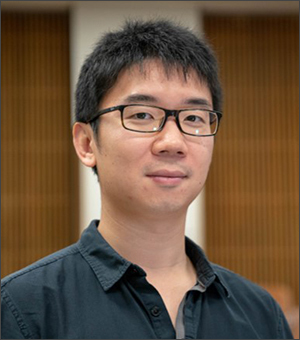
« Newer PostsOlder Posts »