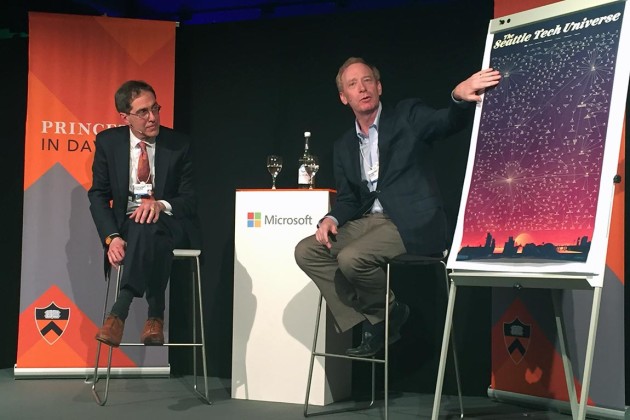
Daphne Koller delivers first annual Ben Taskar Memorial Lecture

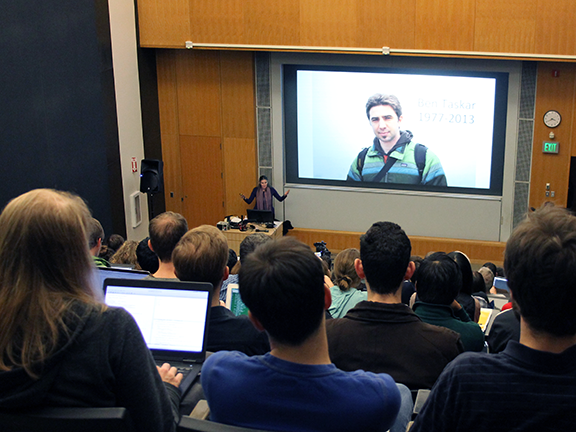
Daphne Koller at UWUW CSE professor Ben Taskar passed away tragically, in his 30’s, in 2013, of sudden and severe heart failure.

UW CSE has commemorated Ben in a number of ways, including the establishment of the Taskar Center for Accessible Technology, and of the annual Ben Taskar Memorial Lecture.

Today, the inaugural Ben Taskar Memorial Lecture was delivered to a packed house by Ben’s Stanford Ph.D. advisor and founder of Coursera, Daphne Koller.

The event began with remarks honoring Ben by UW CSE professor Carlos Guestrin – like Ben, a Daphne Koller Ph.D. alumnus and machine learning star – and a overview of the Taskar Center by its director (and Ben’s wife) Anat Caspi.

Daphne followed her own remarks honoring Ben with an inspirational talk describing the mission and impact of Coursera.

“Anyone, anywhere can transform their life by accessing the world’s best learning experience.”

That is the vision of Coursera, which has transformed access to higher education through a robust platform for delivering massive open online courses (MOOCs) to people around the world.

Daphne talked about the growth of Coursera as an online learning platform and the impact that it has had on learners and instructors. She shared some impressive numbers: four years ago, the first online courses offered by Stanford reached around 100,000 learners. Today, Coursera has surpassed 17 million registered learners around the globe, with more than 130 institutions and 1,000 instructors offering classes on the platform (including the UW, which was an early partner). And it is opening up pathways to learning for people who would not otherwise have access to quality higher education: 40% of active learners on Coursera are from emerging economies.

The data tell a compelling story on their own, but Daphne also shared personal anecdotes that illustrate the tremendous impact that Coursera and MOOCs in general have had on people’s lives around the globe—real people who gained access to a world of learning they otherwise would not have had.

In keeping with the day’s theme of accessibility, Daphne shared the touching story of Jerry Vickers. Vickers was diagnosed with ALS, for which the life expectancy is around 18 months. After losing his ability to move his limbs, Vickers spent what precious time remained of his life studying programming and a variety of other subjects on Coursera using a tablet controlled with his eye movements. From the Indian baker who took business classes so she could save her female friends from being sold into servitude, to the professor whose course about human trafficking enabled victims to pursue restitution for their own tragic experiences with it, Daphne’s stories revealed what a powerful—and empowering—tool MOOCs have become for both learners and instructors.

The standing-room-only lecture capped off a day of workshops and events focused on accessibility to mark the first anniversary of UW CSE’s Taskar Center for Accessible Technology. Today’s program was a terrific way to honor Ben’s memory, and a terrific celebration of the work being done at the Taskar Center. Many thanks to Daphne for sharing the Coursera story with us. Read more →

AAAI shows UW CSE’s Dieter Fox some love with its Classic Paper Award

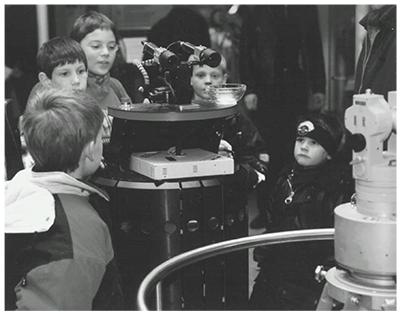
RHINO and museum visitors

Museum visitors interact with RHINO the robot

A paper co-authored by UW CSE professor Dieter Fox in his graduate student days was one of two papers selected this year for special recognition by the Association for the Advancement of Artificial Intelligence (AAAI) with its Classic Paper Award, which recognizes papers that have been the most influential in the field. AAAI will show Fox and his colleagues the love during the opening ceremony of its 2016 conference on February 14th in Phoenix, Arizona.

The winning paper, “The Interactive Museum Tour-Guide Robot,” was originally presented at the 15th National Conference on Artificial Intelligence held in 1998 in Madison, Wisconsin. In it, the research team described RHINO, an autonomous, interactive robot that was designed to entertain and assist the public in highly dynamic environments.

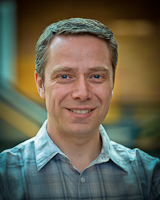
Dieter Fox

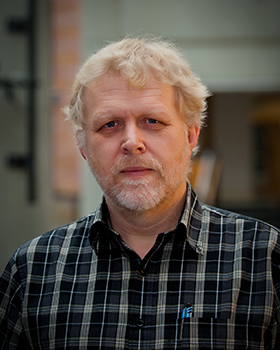
Dieter Fox

The team focused on two priorities when building RHINO: achieving safe and reliable navigation at high speeds, and providing an intuitive and appealing user experience. Fox and his colleagues incorporated a number of innovations in localization, mapping, collision avoidance, and planning into RHINO’s software to enable it to operate under challenging conditions without having to modify the environment to aid its navigation. Because RHINO’s main purpose was to interact with people, they also placed special emphasis on user interaction, taking care to make the robot interface intuitive and user-friendly for non-experts—a relatively new concept in robotics research at the time. The team then put RHINO through its paces over the course of six days in the crowded Deutsches Museum Bonn in Germany. In addition to visitors interacting with RHINO in person, people around the world had the ability to control RHINO remotely via the Web.

In a related article on the RHINO experiment, the team noted that while most people found the robot entertaining, some took the entertainment too far and attempted to “break the system.” (In at least one case, someone who must not have received enough affection as a child attempted to lead RHINO dangerously close to a stairwell.) Happily, such attempts failed, and the robot was able to fulfill a total of 2,400 requests to tour the museum, either in-person or online—a whopping 99.75% success rate.

Fox’s Ph.D. research was a significant contribution to the paper, which was co-authored by Fox’s advisor, Armin Cremers, and colleagues at the University of Bonn, Aachen University of Technology, and Carnegie Mellon University. Their RHINO experiment pointed to the future of robotics with its focus on adaptability and human-computer interaction. It was a truly astounding result at the time, for which the team deserves this accolade from the AAAI today.

Congratulations, Dieter! Read more →

Business Insider: Washington’s economy ranks No. 1 in the nation

seattle_skyline-1-680x380“We ranked the economies of all the states and DC on seven measures: Unemployment rates; GDP per capital; average weekly wages; recent growth rates for nonfarm payroll jobs; GDP; house prices; and wages,” Business Insider explained.

In ranking Washington state #1, Business Insider said:

“Washington state scored extremely well on most of our metrics. Its Q2 annualized Gross Domestic Product growth was a stunning 8.0 percent, by far the highest among the states and D.C.  The November 2015, average weekly wage of $1,073 was the second highest in the country, and was 5.6 percent higher than the weekly wage in November of 2014.”

Read the full report here. Washington slide here. Read more →

UW CSE’s Richard Anderson talks to KPLU about digital financial services for the developing world

Richard AndersonUW CSE professor Richard Anderson recently spoke to KPLU’s Jennifer Wing about our new Digital Financial Services Research Group that was announced last week. The new group, which aims to accelerate the development of secure mobile banking services for people in the developing world, is a collaboration between UW CSE’s Information & Communications Technology for Development (ICTD) Lab, Security and Privacy Research Lab, and the iSchool.

From the radio segment:

“In developing and third-world countries, moving money around digitally can be very complicated and risky. Computer science professors and students at the University of Washington are trying to make that task easier and safer.

“In remote parts of India or Africa, ‘It’s very common for a farmer to leave his village, go the city, drive a taxi and then, every month, he wants to send his wages back to his family,’ said Richard Anderson…

“But how can that taxi driver do that without worrying about financial security threats and identity theft?”

Read or listen to the full segment online here.

Read our previous coverage of the new group here and the UW news release here. Read more →

UW CSE alum Ben Hindman, co-creator of Mesos, wins UW College of Engineering Diamond Award

Ben HindmanEach year, the UW College of Engineering honors a select group of alumni for their contributions to the field of engineering and to society with its Diamond Awards. Among the 2016 honorees is CSE alum Ben Hindman (B.S., ’07), Founder of Mesosphere, Inc. – an outgrowth of his graduate work at UC Berkeley – who is recognized with the “Early Career” award.

From the citation:

“Few people outside the tech industry have heard of Apache Mesos, software that provides essential infrastructure enabling applications to interact with data servers. But for anyone who has asked Apple’s Siri a question, used Yelp to look up restaurants, or watched a movie on Netflix, Mesos has helped to provide the resulting content with speed, ease and reliability. Ben Hindman is the co-creator of Mesos technology and founder of the company Mesosphere. In the ten years since graduating from the UW, Ben has transformed the way software runs within data centers, the backbone of some of the most popular applications in the world, and sparked an innovative new technology industry….

“With tens of millions in funding raised to date, offices in two cities and over 100 employees, Mesosphere continues to be the biggest “infrastructure computing” company quietly serving countless end-users every day.”

Read the full citation here, and learn more about Ben’s journey since graduating from UW CSE—which he shared with a group of current undergrads as part of last year’s UW CSE Leadership Seminar Series—here and here.

Ben and his fellow 2016 award winners will be the guests of honor at a dinner on May 20th.

Ben joins a stellar group of CSE alumni who have been recognized with Diamond Awards over the past decade: Yaw Anokwa and Christophe Bisciglia (2015); Brad Fitzpatrick (2014); Kevin Ross (2013); Greg Badros and Anne Condon (2012); Loren Carpenter and Tapan Parikh (2010); Gail Murphy and Rob Short (2008); Ed Felten (2007); and Jeff Dean and Jeremy Jaech (2006).

Congratulations, Ben! Read more →

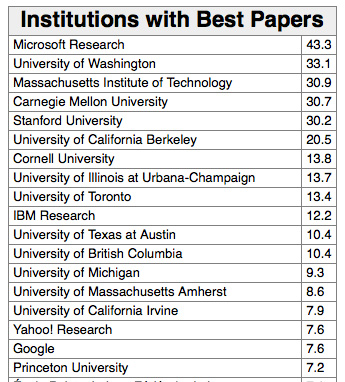
UW rocks in “Best Paper” awards!

bp2015Brown University computer science professor Jeff Huang maintains a list of “Best Paper” awards at the major computer science conferences, going back to 1996. The list displays the award papers at each conference for each year, and the total number of award papers from each institution (with appropriate treatment of papers with co-authors from multiple institutions).

The 2015 update has just been posted.

UW has always ranked well … but we are now the #1 academic institution – bested only by Microsoft Research (which has roughly 20X as many Ph.D. researchers as UW CSE). It’s another sign of our ever-increasing impact.

Check it out here. Read more →

UW CSE launches Digital Financial Services Research Group to accelerate innovative banking solutions for developing regions

M-Pesa agent in Africa

Photo credit: Brian Harries/Flickr

UW CSE revolutionized data collection and analysis in low-resource settings with the creation of the Open Data Kit (ODK), a suite of free, open-source mobile tools. ODK – a project spearheaded by the late professor Gaetano Borriello – has been deployed in more than 40 countries to monitor elections, to conserve natural resources, to track health care outcomes, and much more.

Now, UW CSE is poised to do for money management what we did for data with the launch of our new Digital Financial Services Research Group.

Led by professor Richard Anderson of the Information & Communications Technology for Development (ICTD) Lab, the new group will focus on accelerating the development and deployment of secure, practical and culturally relevant digital banking solutions to people in developing regions, where mobile phone usage is surging.

From the UW news release:

“In Kenya, the ease of transferring money via mobile phone has increased incomes in rural areas, enabled small businesses to thrive and reshaped the country’s economy….

“But the success of that service — called M-Pesa — has been difficult or impossible to replicate in other parts of the developing world.

“University of Washington computer scientists and engineers, with a grant from the Seattle-based Bill & Melinda Gates Foundation, will develop, test and deploy new technological solutions to make financial products more available to the lowest-income people around the world.

“‘This technology can have tremendous impact — both for allowing people to send remittances from the city back to rural regions, and to establish savings accounts so people can have reserves so that an event like an accident or a pregnancy doesn’t send them over the edge,’ said Richard Anderson, a UW professor of computer science and engineering.”

In addition to Anderson, the core research team will include Kurtis Heimerl, an expert in community-based cellular networks who will join the UW CSE faculty in the fall; professors Yoshi Kohno and Franzi Roesner, co-directors of UW CSE’s Security and Privacy Research Lab; and iSchool professor (and CSE adjunct) Joshua Blumenstock. The group will work with mobile providers and financial institutions to test and refine new technologies in the communities they will serve.

Read the complete UW news release to learn more about this exciting new line of research for us. We look forward to sharing many success stories from this stellar group of faculty and their students in the future! Read more →

UW CSE’s Martin Tompa welcomes students to weekly Schnapsen-fest

Schnapsen game in the Allen CenterUW CSE professor Martin Tompa welcomed “a veritable horde” of undergraduate students to the first weekly Schnapsen game of the winter quarter. Schnapsen is the national card game of Austria, which Tompa uses to illustrate many probability topics in his CSE 312 course. Tompa published the definitive guide to winning at Schnapsen last September.

The very active UW Schnapsen Club provided pizza and hand-made cookies in the shapes of the Austrian card suits. Club members partnered with novice Schnapsen players from CSE 312 to teach them the basics.

Tompa reflected, “In the age of distributed video games, it’s surprising and heart-warming that so many students are engaged in this old-school, face-to-face activity and having so much fun with it.”

The students play every Friday afternoon from 3:00 to 5:00 pm, and they welcome all comers. Read our previous coverage of Tompa’s devotion to Schnapsen here. Read more →

UW CSE’s Aditya Vashistha wins Facebook Graduate Fellowship

Aditya VashisthaAditya Vashistha, a third-year Ph.D. student working in the Information & Communications Technology for Development (ICTD) Lab led by UW CSE professor Richard Anderson, has been selected as a Facebook Graduate Fellow for 2016-2017. The highly competitive program is designed to support emerging leaders who demonstrate the potential to advance Facebook’s mission of making the world more open and connected.

Social media platforms play an essential role in people’s lives, and they are an increasingly vital tool for those engaged in political activism and to manage crisis response in communities across the globe. Vashistha’s research is focused on enabling people of low incomes and low literacy to access social media platforms and crowdsourcing systems so they can reap the benefits of these increasingly popular technologies, particularly the creation of voice-based platforms for people with basic mobile phones and no Internet connectivity and the development of voice-based social media and crowdsourcing platforms for people with smartphones and only intermittent Internet connectivity.

In addition to receiving financial support for academic years 2016-17 and 2017-18, Vashistha will have the opportunity to present his research and meet with engineers at Facebook’s headquarters.

Vashistha has been on a roll lately, having previously earned a Best Student Paper Award at ASSETS 2015, a Best Paper Award at CHI 2015 and the 2014 Access Facebook Award.

Two other UW graduate students were named finalists by Facebook: CSE’s Konstantin Weitz, who works with professor Michael Ernst in the Programming Languages & Software Engineering group, and Alexis Hiniker, who works with professor (and CSE adjunct faculty member) Julie Kientz in Human Centered Design & Engineering.

Congratulations to Aditya on this latest win, and to Konstantin and Alexis for their strong showing in this year’s competition! Read more →

Doug Walker, 1950-2015

160101-doug-walker-mn-1415_7b143d6d86faac3bf2d7e181b2a7064d.nbcnews-ux-600-480We remember Doug Walker, a long-time friend of UW CSE and co-founder in 1981 of WRQ, a top-20 software company in its day. Doug went missing Thursday afternoon while snowshoeing with friends on Granite Mountain in the Cascades, and was found dead on Friday by a search and rescue team.

It’s impossible to convey what Doug (always along with his wife Maggie) has meant to the Seattle community. Obviously WRQ. Philanthropy – to the University of Washington, the Seattle Parks Foundation, the Hutch, MOHAI, and many other causes – including the co-founding of Social Venture Partners and the Seattle Parks Foundation. Conservation. Mountaineering. Cycling.

A truly wonderful human being, who died doing what he loved.

NBC News here. Seattle Times here, here, and here. GeekWire here. Seattle PI here. KING5 TV here. New York Times here. Wall Street Journal here. Excellent biography here. Read more →

« Newer PostsOlder Posts »